


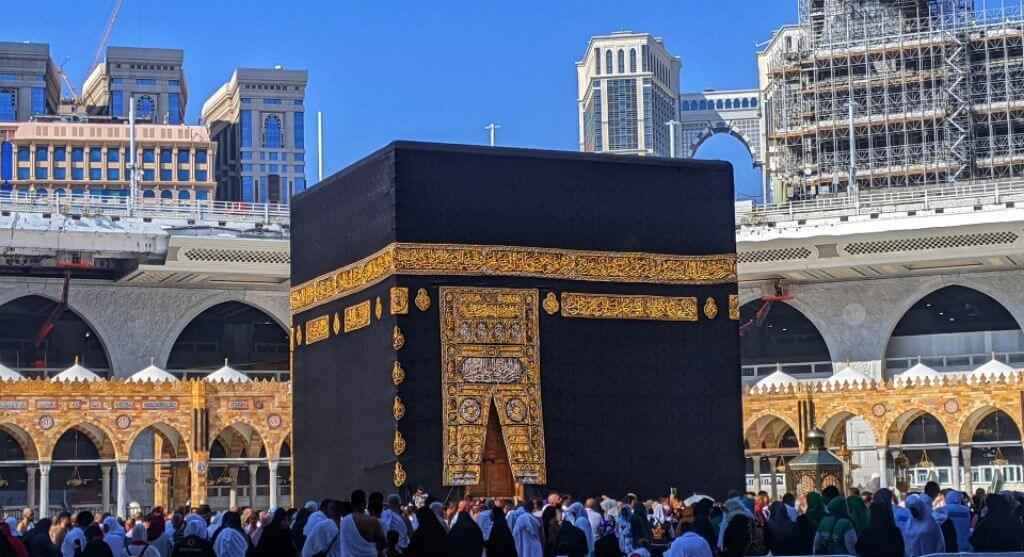
For nearly every Muslim traveling to Makkah, the first glimpse of the Kaaba inside Masjid al-Haram is a moment that stays with them for life. It is the structure Muslims around the world turn toward five times a day in prayer, and the focal point of both Umrah and Hajj. Yet despite its centrality to Islamic life, many pilgrims arrive knowing surprisingly little about the building itself – its history, its dimensions, or the traditions surrounding it.
This guide walks through ten facts about the Kaaba that add real context to your visit, whether you’re performing Tawaf for the first time or returning for another pilgrimage. We’ve also included practical guidance at the end for pilgrims arranging Umrah taxi or Hajj transportation to Makkah, since understanding the Kaaba’s setting inside Masjid al-Haram also helps with planning airport transfers, hotel pickup, and Ziyarat visits around the holy city.
1. The Kaaba Is a Cube-Shaped Structure at the Center of Masjid al-Haram
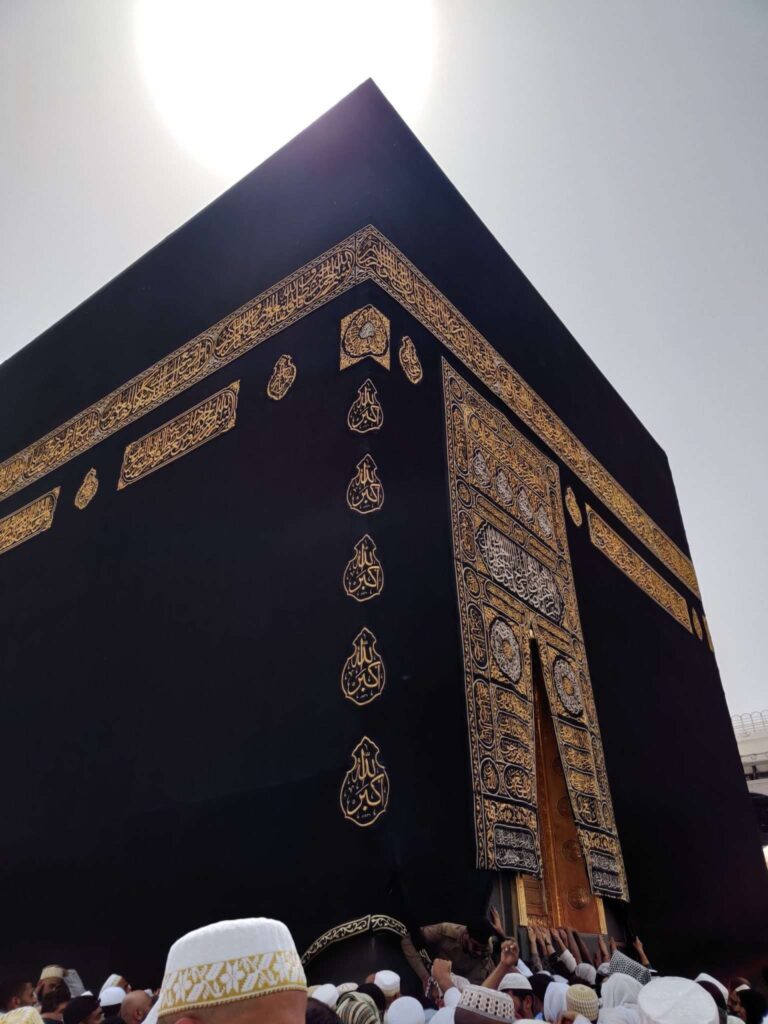
The word “Kaaba” comes from the Arabic for “cube,” which describes its shape precisely. It stands roughly 15 meters (about 50 feet) tall, with a base of approximately 10 by 12 meters. It’s built from gray Makkah stone and marble, and sits at the center of the open courtyard of Masjid al-Haram, the Grand Mosque. Because it sits at the exact center of the mosque, every entrance, colonnade, and prayer row is designed to orient worshippers toward it – which is why the Kaaba is also called the Qibla, the direction Muslims face during Salah wherever they are in the world.
2. Muslims Believe It Was Built by Prophet Ibrahim and His Son Ismail
Islamic tradition holds that the Kaaba was originally built by Prophet Ibrahim (Abraham) and his son Prophet Ismail (Ishmael) as the first house of worship dedicated to the oneness of God. The Maqam Ibrahim – a stone said to bear the Prophet Ibrahim’s footprints – still stands near the Kaaba today, and pilgrims often pray two rakats behind it after completing Tawaf. Before Islam, the Kaaba had become a site housing idols and was a pilgrimage destination for various Arabian tribes; after the conquest of Makkah in 630 CE, Prophet Muhammad ﷺ ordered it cleared of idols and restored it as a place of monotheistic worship.
3. The Black Stone (Hajar al-Aswad) Is Set Into Its Eastern Corner
Embedded in the Kaaba’s southeastern corner is the Hajar al-Aswad, or Black Stone – a dark, oval relic that marks the starting and ending point of Tawaf. According to Islamic tradition, it was given to Ibrahim and Ismail, and pilgrims try to touch or kiss it in emulation of Prophet Muhammad ﷺ, though Islamic teaching is clear that the stone itself holds no independent power; its significance is symbolic and historical. The stone has been damaged and repaired multiple times over the centuries and is now held together by a silver frame. Given how large the crowds around it can be, pilgrims should treat this as a moment to approach with patience rather than a required part of Tawaf – a simple hand gesture toward the stone from a distance is an accepted alternative.
4. It Is Covered by the Kiswah, a Black Silk Cloth Replaced Every Year
The Kaaba’s black covering, known as the Kiswah, is remade annually and installed on the 9th of Dhul Hijjah, the second day of Hajj. It’s woven from hundreds of kilograms of silk and embroidered with gold and silver thread carrying Quranic verses, produced by skilled Saudi artisans at a dedicated complex in Makkah. The old Kiswah is cut into pieces and gifted to dignitaries, institutions, and embassies around the world. Interestingly, the Kiswah hasn’t always been black – historical accounts describe it being covered in white, red, and green cloth at different points before black became the standard.
5. It Has Been Rebuilt Several Times Throughout History
The Kaaba’s structure as it stands today isn’t the original build. It has been damaged by flooding, fire during the early sieges of Makkah, and structural wear, and was rebuilt or reinforced on multiple occasions – including a major reconstruction under the Umayyad governor Abd al-Malik’s era after conflict damaged the building. Each rebuilding has preserved the same cube form, footprint, and orientation, which is part of why Muslims regard the site itself – not just the current physical structure – as the sacred constant.
6. Tawaf Involves Circling the Kaaba Seven Times, Counterclockwise
Whether during Umrah or Hajj, pilgrims perform Tawaf by walking around the Kaaba seven times in a counterclockwise direction, starting and ending at the Black Stone. This ritual is one of the core acts of both pilgrimages. Because Masjid al-Haram can host well over a million people at once during peak Hajj days, understanding the flow of Tawaf – and when the courtyard is less crowded – makes a real difference to how comfortable the experience is, especially for elderly pilgrims or families with children.
7. Only the Kaaba’s Direction Matters for Prayer – Not Its Interior
While the Kaaba’s interior does hold historical and religious significance (it contains marble flooring, pillars, and hanging lamps, and is opened for ceremonial cleaning a few times a year), the vast majority of pilgrims will never enter it. What matters for daily prayer is the Qibla – the direction toward the Kaaba – which is why mosques worldwide are physically aligned toward Makkah. This distinction often surprises first-time visitors who expect to walk inside; instead, the meaningful experience for almost every pilgrim is Tawaf around the exterior.
8. No Aircraft Are Permitted to Fly Directly Over It
Saudi aviation authorities maintain restricted airspace over the Grand Mosque, and commercial flights are routed around Makkah rather than over it, out of respect for the site’s sanctity. This is a matter of regulation and airspace control rather than any physical phenomenon, but it’s a detail many pilgrims find interesting when they notice Makkah itself has no commercial airport – travelers fly into Jeddah’s King Abdulaziz International Airport (JED) or Madinah’s Prince Mohammad Bin Abdulaziz Airport and then travel by road, which is where a reliable Jeddah airport to Makkah taxi becomes part of most pilgrims’ journey.
9. The Kaaba Sits Inside the World’s Largest Mosque
Masjid al-Haram, which surrounds the Kaaba, is the largest mosque in the world and can accommodate several million worshippers during peak Hajj periods. Within its grounds are other significant sites pilgrims typically visit in sequence: the Maqam Ibrahim, the Zamzam well, and Safa and Marwah, the two hills between which pilgrims perform Sa’i. Together, these sites form the core ritual geography of both Umrah and Hajj, all within a short walk of one another inside the mosque complex.
10. It Has Represented the Same Spiritual Center for Over 1,400 Years
Despite changes in rulers, empires, and architecture around it – from the early Caliphates through the Ottoman period to the modern Kingdom of Saudi Arabia – the Kaaba has remained the unchanged spiritual focal point of Islam since the Prophet Muhammad ﷺ rededicated it in 630 CE. Today, custodianship rests with the Saudi government, which oversees its maintenance, the annual Kiswah replacement, and the enormous logistical effort of hosting millions of Umrah and Hajj pilgrims safely each year.
Visiting the Kaaba: What Pilgrims Should Plan For
Understanding the Kaaba is one part of preparing for Umrah or Hajj – getting to Masjid al-Haram comfortably and on time is the other. Most pilgrims arrive at Jeddah or Madinah and need reliable ground transportation for the final leg of the journey. A few practical points worth planning around:
- Airport pickup: Book a private Umrah taxi or airport transfer in advance so a licensed driver is waiting with flight tracking, rather than negotiating transport after a long flight.
- Hotel transfers: Most hotels near Masjid al-Haram are within a short private transfer of the Haram gates; a private chauffeur service can drop you close to your preferred entrance based on your riyadah (Tawaf) plans.
- Peak seasons: During Ramadan and the Hajj season, roads around Makkah get significantly busier. Booking Hajj transportation ahead of time, rather than on arrival, avoids unnecessary delays.
- Family and group travel: Larger families or groups often do better in a Hyundai Staria, Toyota Hiace, or Coaster bus rather than splitting into multiple cars, especially with luggage and elderly relatives.
- Ziyarat visits: Many pilgrims combine their Umrah with Ziyarat taxi visits to nearby historical sites – Jabal al-Nour (Cave of Hira), Jabal Thawr, and the route to Madinah’s Masjid an-Nabawi, Quba Mosque, and Jannat al-Baqi.
FAQs
1. What does “Kaaba” mean?
“Kaaba” is Arabic for “cube,” referring to its cubic shape.
2. Who built the Kaaba?
Islamic tradition holds it was originally built by Prophet Ibrahim and his son Prophet Ismail as a house of monotheistic worship.
3. What is the Black Stone, and where is it located?
The Hajar al-Aswad, or Black Stone, is a dark relic set into the Kaaba’s southeastern corner. It marks the start and end point of Tawaf.
4. Can non-Muslims visit or see the Kaaba?
Non-Muslims are not permitted to enter Makkah or Masjid al-Haram; access to the Kaaba is reserved for Muslims performing Umrah, Hajj, or prayer.
5. Why is the Kaaba covered in black cloth?
The covering, called the Kiswah, is a tradition of honoring the site; it’s remade in black silk with gold-embroidered Quranic verses and replaced every year during Hajj.
6. How many times do pilgrims walk around the Kaaba during Tawaf?
Seven times, in a counterclockwise direction, starting and ending near the Black Stone.
7. Is it true no planes can fly over the Kaaba?
Saudi authorities enforce restricted airspace over the Grand Mosque out of respect for the site, so commercial flights are routed around Makkah rather than directly overhead.
8. What is inside the Kaaba?
The interior has a marble floor, three supporting pillars, and hanging lamps. It is opened for ceremonial cleaning a few times a year and is otherwise closed to the public.
9. What is the Maqam Ibrahim?
It’s a stone near the Kaaba said to carry the footprints of Prophet Ibrahim; pilgrims often pray two rakats near it after Tawaf.
10. How do I get from Jeddah Airport to the Kaaba in Makkah?
Jeddah’s King Abdulaziz International Airport is the main arrival point for most Umrah pilgrims; from there, a private Jeddah airport to Makkah taxi typically takes around 1–1.5 hours by road, depending on traffic and time of day.
11. What’s the best time to visit the Kaaba to avoid crowds?
Late night and pre-dawn hours generally see smaller crowds around the Kaaba compared to after Maghrib or during peak Ramadan and Hajj periods.
12. Do I need to book transportation in advance for Umrah or Hajj?
Yes – during Ramadan and Hajj season especially, pre-booking a private taxi or chauffeur service for airport transfers and intercity travel helps avoid long waits and last-minute price surges.
13. Can I visit Madinah’s Masjid an-Nabawi on the same trip?
Most pilgrims combine Makkah and Madinah in one Umrah trip, traveling between the two cities by intercity taxi, a journey of roughly 4–5 hours by road.
14. What should families traveling with children know about visiting the Kaaba?
Crowds during Tawaf can be intense, so keeping young children close, choosing quieter times, and using a stroller-friendly route around the mataf area are recommended for family safety and comfort.
15. Is the Kaaba the same building that existed at the time of Prophet Muhammad ﷺ?
The site and cubic footprint have remained the same for over 1,400 years, though the physical structure has been repaired and rebuilt several times due to fire, flooding, and structural wear.

Zeeshan is a professional driver and tour guide who has been living and driving in Saudi Arabia for the past 5 years. With deep knowledge of the roads, landmarks, and Ziyarat locations across Makkah, Madinah, Jeddah, and Taif, he helps pilgrims and travelers enjoy safe, smooth, and well-organized journeys. His experience in Umrah transport, city tours, and airport transfers makes him a trusted expert for visitors exploring Saudi Arabia.