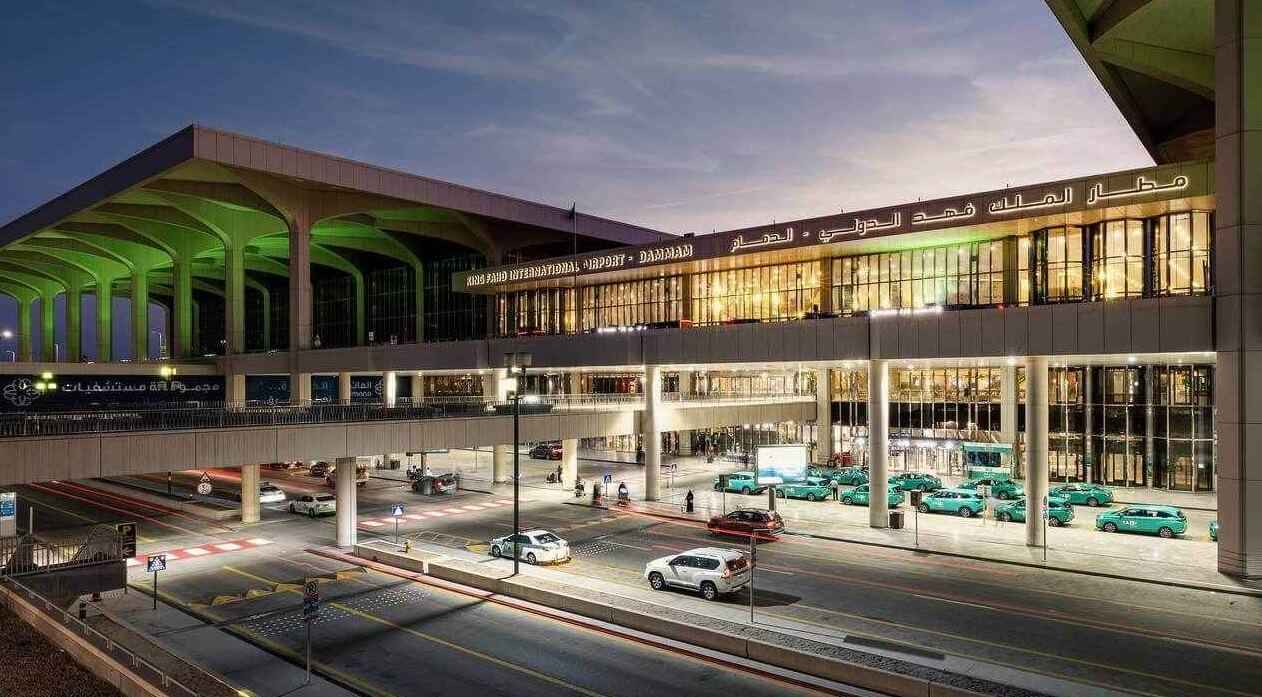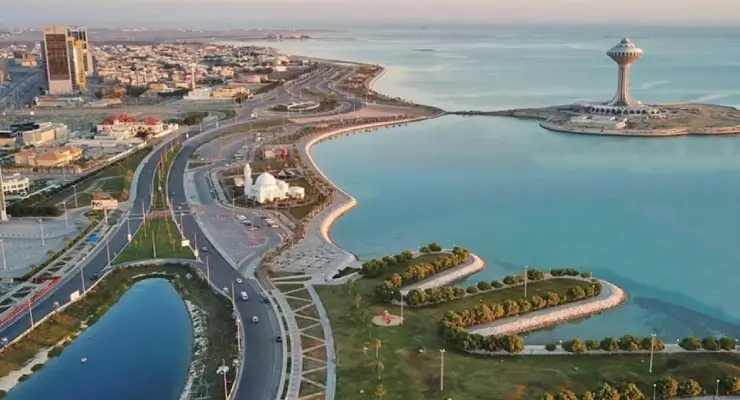



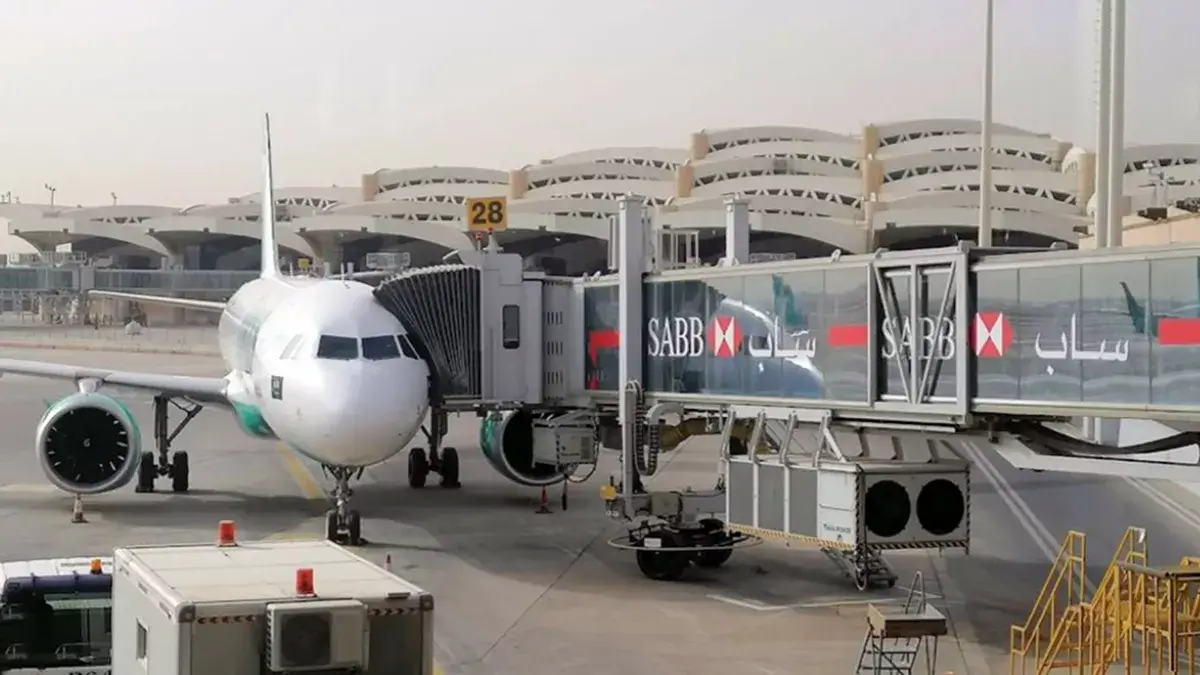
Landing at King Abdulaziz International Airport (JED) is, for millions of people each year, the true beginning of a journey to the holy cities. Whether you are arriving for Umrah, Hajj, a family visit, or a Red Sea holiday, the airport itself is where your trip is either made simple or made stressful – and the difference usually comes down to knowing which terminal you’re in, how far you actually have to travel, and who is picking you up.
This guide covers the airport in full: its terminals, its role as Saudi Arabia’s busiest gateway, and – most importantly – exactly how to get from arrivals to Makkah, Madinah, or your Jeddah hotel without confusion, overpaying, or losing time you could be spending in prayer.
What Is King Abdulaziz International Airport?
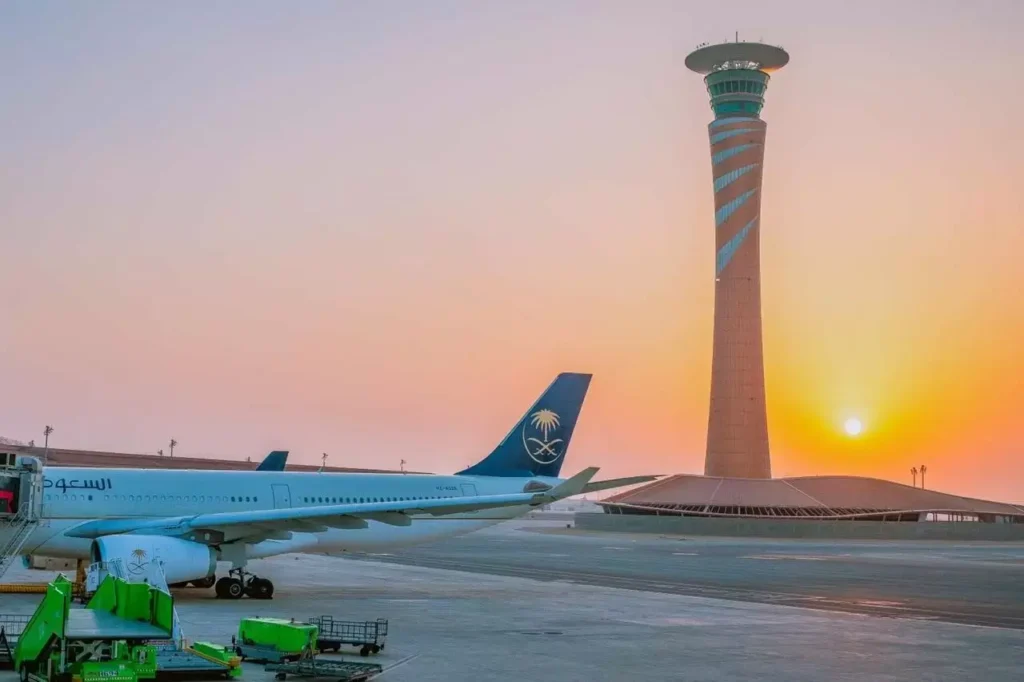
King Abdulaziz International Airport (IATA: JED, ICAO: OEJN) is the principal international airport serving Jeddah and, by extension, the two holiest cities in Islam. Located about 19 kilometers north of central Jeddah, it is Saudi Arabia’s busiest airport, having handled 53.4 million passengers in 2025 – a national record that put it ahead of King Khalid International Airport in Riyadh.
The airport’s importance goes beyond passenger numbers. Because Jeddah sits on the Red Sea coast roughly midway between Makkah and Madinah, JED functions as the main entry point for Umrah and Hajj pilgrims from almost every country in the world. A roughly $31 billion expansion programme aligned with Vision 2030 is currently underway, reflecting how central this airport is to the Kingdom’s plans to welcome far larger numbers of religious travelers in the years ahead.
JED Airport Terminals Explained
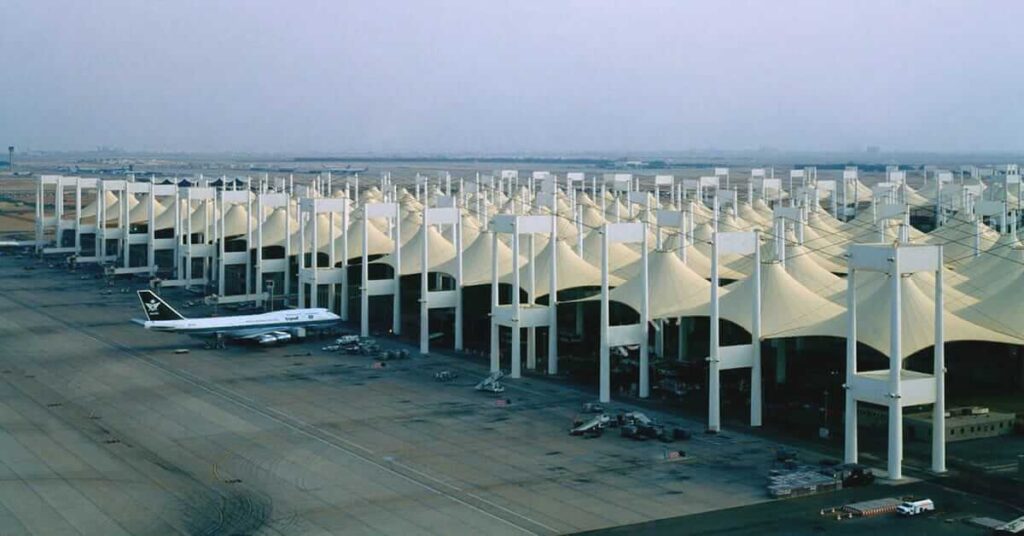
One of the most common sources of confusion for arriving passengers is that JED is not one building – it is a small city of terminals, each built for a different purpose. Knowing which one applies to you before you land will save real time and stress.
Terminal 1 (the main international terminal)
Terminal 1, sometimes called the “Jeddah New Airport,” opened in 2019 and is one of the largest airport terminals in the world, spanning over 1.05 million square meters. It is instantly recognizable from the approach road by its wave-shaped, crescent roof. Terminal 1 handles all Saudia flights, both domestic and international, along with the national low-cost carriers flynas and flyadeal. Inside, you’ll find around 120 shops, an airside transit hotel with 120 rooms, and several lounges offering Wi-Fi, food, and a children’s area, plus one of the world’s largest airport aquariums in the central transport hub.
North Terminal
The North Terminal handles international airlines outside the Saudia group – including SkyTeam, Oneworld, Star Alliance carriers, British Airways, Emirates, and others, and takes on extra international flights during Hajj and Umrah season. A shuttle bus connects it to Terminal 1 for travelers who need to transfer between the two.
Hajj Terminal
The Hajj Terminal is unlike anything else in commercial aviation. It operates only during the Hajj and Umrah season each year – for 2026 it is scheduled to run from 18 May to 16 June, according to official KAIA guidance. Built as a tent-roofed, open-air complex spanning around 105 acres, it can hold up to 50,000 arriving pilgrims for as long as 18 hours and up to 80,000 departing pilgrims for up to 36 hours. If you fly in specifically for Hajj, this is very likely where you will clear immigration.
A practical detail worth remembering: your Tawafa Establishment will typically move your group from Makkah back to Jeddah at least 12 hours before your departing flight, which is why the terminal is designed for such long dwell times. Pack a power bank, snacks, and patience for that leg of the trip.
Getting Between Terminals and Through the Airport
- Check-in and processing: Terminal 1 has over 80 self-service kiosks for boarding passes and bag drop, plus 220 manual check-in counters, so lines move faster than the sheer size of the building might suggest.
- Moving around Terminal 1: an Automated People Mover (APM) shuttles passengers between the check-in area and the international boarding gates.
- Immigration: returning residents and previously enrolled travelers can use Biometric Smart Gates for faster processing.
- Accessibility: JED is a recognized leader in support for Passengers with Reduced Mobility (PRM), with wheelchair services available 24/7 – it’s best practice to request this through your airline about 48 hours ahead of travel, which matters a great deal for elderly pilgrims and those performing Hajj or Umrah with mobility needs.
- Essentials: multiple ATMs, currency exchange, multi-faith prayer rooms, and 24/7 medical clinics are available across all terminals.
From the Airport to the City: Your Transport Options
Once you clear arrivals, you have several ways to continue your journey – but not all of them suit a tired traveler, a family with children, or a group carrying Hajj/Umrah luggage.
Public buses
AlShatei buses run 24/7 across all terminals with departures every 30 minutes, with tickets starting around 23 SAR. A separate Al Balad shuttle connects the airport to Jeddah’s historic Al Balad district and its markets, with fares from about 25 SAR. These are economical, but they are shared, fixed-route services – not ideal if you’re carrying Ihram bags, traveling with elderly family members, or need to go directly to a specific hotel.
Haramain High-Speed Railway
The Haramain train connects the airport area to Jeddah’s Sulaymaniyah station, King Abdullah Economic City, Makkah, and Madinah, departing roughly every hour with Standard Class tickets from about 65 SAR. It’s fast between stations, but you’ll still need a taxi from the train station to your hotel or the Haram – and the station is not inside the terminal itself, so it adds a transfer step.
Private taxi and chauffeur service
For most pilgrims and travelers, a pre-booked private taxi remains the most practical option: door-to-door, no transfers, no shared waiting, and a driver who already knows exactly where your hotel or the Haram gate you need is located. This is where Al Maqam Transport’s Umrah taxi, Hajj transportation, and airport transfer services are designed specifically to remove the guesswork the moment you land.
Jeddah Airport to Makkah: Distance, Time, and What to Expect
This is the single most searched question by travelers landing at JED, and for good reason – it’s usually the very next decision you have to make.
Distance: Sources place the road distance between JED and Makkah in a range of roughly 75–105 km depending on the exact route and starting terminal, with around 90 km being the most commonly cited figure via the main highway.
Travel time: In normal traffic, expect 1 to 1.5 hours door-to-door. During Ramadan, peak Hajj weeks, or Friday afternoons, allow up to 2 hours; late-night or early-morning trips can be closer to 55–70 minutes.
Typical private taxi fares (2026):
| Vehicle type | Typical fare (SAR) | Best for |
|---|---|---|
| Sedan (e.g., Toyota Camry) | 180–300 | Solo travelers, couples, small families |
| SUV (e.g., GMC Yukon) | 250–400 | Families with extra luggage |
| Van (Hyundai Staria / Toyota Hiace) | 300–450 | Groups of 6–10 |
Pre-booking is consistently the smarter choice: fixed rates agreed before you land mean no surge pricing and no roadside negotiation while you’re jet-lagged. Your driver can also drop you at the Haram gate nearest your hotel – commonly King Fahd Gate, Al-Salam Gate, Umrah Gate, or King Abdul Aziz Gate – so you can begin Tawaf without wandering Makkah’s streets looking for your accommodation first.
Jeddah Airport to Madinah: Distance, Time, and Options
Many pilgrims split their trip between Makkah and Madinah, and JED is the natural starting point for both directions.
By road: The direct driving distance from Jeddah to Madinah is approximately 420–430 km, taking around 4 to 5 hours depending on route and stops. The most-used highway route passes through Badr and the coastal town of Rabigh; a longer, scenic alternative runs through the Hejaz mountains via Taif and takes 6–7 hours.
By air: A domestic flight between JED and Prince Mohammad Bin Abdulaziz International Airport (MED) takes about an hour, making it the fastest option if your itinerary is time-constrained – though it adds airport transfer time on both ends.
By private transfer: Many travelers prefer a single long-distance private car or van directly from JED to a Madinah hotel, especially families and groups who’d rather avoid an extra flight connection and additional baggage handling. Al Maqam Transport’s intercity taxi service covers this route directly, with rest stops built into the itinerary for prayer and refreshment.
Choosing the Right Vehicle for Your Trip
Not every journey calls for the same car, and matching vehicle to trip type is one of the most overlooked parts of planning airport transport:
- Toyota Camry (sedan): ideal for solo pilgrims, couples, or business travelers who want a comfortable, efficient ride with minimal luggage.
- GMC Yukon (SUV): suited to families needing extra boot space, or travelers who prefer a higher-riding, more spacious vehicle for the Jeddah–Makkah highway.
- Hyundai Staria / Toyota Hiace (van): the practical choice for groups of 6–10, ideal for extended families performing Umrah together or small tour groups.
- Coaster bus: for larger Hajj groups or organized tours moving as a single unit between airport, hotel, and holy sites.
- Luxury/VIP chauffeur vehicles: for travelers who want a private, unhurried, executive-level experience – particularly popular for VIP Umrah packages, honeymooners, and business delegations.
Booking Airport Transfers the Right Way
A well-organized airport transfer removes almost all the friction of arrival. Here’s what a properly run service should include:
- Flight tracking – so your driver knows if your flight is early, delayed, or has landed, and adjusts pickup timing automatically rather than leaving you waiting.
- Meet & Greet at arrivals – a driver holding a name board inside the terminal, not a vague “call when you land” arrangement that leaves tired travelers searching a crowded curb.
- Fixed, agreed pricing before pickup – confirmed by WhatsApp or online booking, with no surprise charges added at the vehicle.
- Licensed, experienced drivers – familiar with Hajj and Umrah routes, Haram gate locations, and how to navigate Makkah’s pilgrim traffic and security checkpoints during peak season.
- Vehicle matched to group size and luggage – confirmed at the time of booking, not guessed at curbside.
- Child-friendly options – car seats or booster arrangements available on request for families traveling with young children.
Seasonal Considerations: Ramadan, Umrah Peak, and Hajj
Traffic patterns and airport crowding at JED change dramatically depending on the time of year:
- Ramadan: Umrah demand surges, and roads into Makkah can be significantly busier in the hours before Iftar. Building extra time into your transfer schedule is wise.
- Hajj season: The Hajj Terminal opens for a defined window each year (18 May–16 June for 2026), traffic management around Makkah tightens considerably, and drivers experienced with Hajj-specific routes and checkpoints are essential.
- Off-peak months: Travel between JED and the holy cities is noticeably faster, often at the lower end of the time ranges given above.
If you’re traveling for Hajj specifically, keep your Nusuk Card on you at all times – it is the official document used inside the Kingdom to confirm your identity and Hajj authorization – and note that only the factory-sealed 5-liter Zamzam container purchased at official airport counters is accepted in checked baggage; Zamzam bought elsewhere in Makkah or Madinah will not be permitted through airline check-in.
Ziyarat and Beyond: Making the Most of Your Trip
Once you’ve settled into Makkah or Madinah, many travelers extend their trip to visit historically and spiritually significant sites nearby – a practice known as Ziyarat. In Madinah, common stops include Quba Mosque, Qiblatain Mosque, Mount Uhud, and Jannat al-Baqi. In and around Makkah, travelers often visit sites connected to early Islamic history along with day trips to Taif for its cooler mountain climate. A private Ziyarat taxi, booked with a driver who knows these routes and their visiting etiquette, is generally far more comfortable than trying to coordinate shared transport between sites on a tight schedule.
FAQs
How many terminals does King Abdulaziz International Airport have?
JED has three main terminals: Terminal 1 (the main international terminal, handling Saudia, flynas, and flyadeal), the North Terminal (for other international airlines), and the seasonal Hajj Terminal, which only operates during the Hajj and Umrah season.
Which terminal will I arrive at for Umrah?
Most Umrah travelers arrive at either Terminal 1 or the North Terminal, depending on their airline. Pilgrims flying specifically for Hajj during the official Hajj season typically pass through the dedicated Hajj Terminal instead.
How far is King Abdulaziz International Airport from Makkah?
Approximately 90 km via the main highway, with a typical private taxi journey of 1 to 1.5 hours, longer during peak Hajj or Ramadan traffic.
How far is King Abdulaziz International Airport from Madinah?
About 420–430 km by road (roughly 4–5 hours by car) or a one-hour domestic flight to Prince Mohammad Bin Abdulaziz Airport.
Is it better to pre-book a taxi or find one at the airport?
Pre-booking is almost always the better choice. Fixed rates are agreed in advance, avoiding surge pricing and curbside negotiation, and your driver can meet you inside arrivals with flight tracking already in place.
How much does a taxi from JED to Makkah cost?
Typically 180–300 SAR for a sedan, 250–400 SAR for an SUV, and 300–450 SAR for a van, depending on vehicle type and season.
What is the Haramain High-Speed Railway, and can I use it from the airport?
It’s a high-speed train connecting Jeddah, King Abdullah Economic City, Makkah, and Madinah. It runs roughly hourly from Standard Class tickets around 65 SAR, though you’ll still need onward transport from the station to your final hotel.
What is the Hajj Terminal and when does it operate?
It’s a dedicated, tent-roofed, seasonal facility used only for Hajj and Umrah arrivals and departures. For Hajj 2026, it is scheduled to operate from 18 May to 16 June.
Do I need to book transport in advance for Hajj season?
Yes. Roads, terminals, and demand for vehicles are all significantly busier during the Hajj window, and pre-arranged transport with an experienced driver avoids long waits and inflated on-the-spot pricing.
Can I get wheelchair assistance at the airport?
Yes. JED offers 24/7 wheelchair services for passengers with reduced mobility; it’s recommended to request this through your airline around 48 hours before travel.
What vehicle should I choose for a family of five with luggage?
An SUV such as a GMC Yukon typically offers the best balance of space and comfort for a family group, while larger families or groups of 6–10 are usually better served by a van such as the Hyundai Staria or Toyota Hiace.
Is there a direct train from the airport to Makkah or Madinah?
The Haramain train serves Jeddah (Sulaymaniyah station), Makkah, and Madinah, but the station is not located inside the airport terminal itself, so a short taxi or shuttle connection is required either side of the rail journey.
What should I pack for a long wait at the Hajj Terminal?
Because processing at the Hajj Terminal can take many hours, especially during peak departure periods, pack snacks, a power bank, any medication you need, and your Nusuk Card, which should be kept on you at all times during Hajj.
Are there currency exchange and prayer facilities at the airport?
Yes, all terminals offer ATMs, currency exchange counters, multi-faith prayer rooms, and 24-hour medical clinics.
How does Al Maqam Transport handle airport pickups?
Al Maqam Transport tracks your flight in real time, meets you inside arrivals with a name board, confirms your fare before you travel, and matches your vehicle to your group size – whether that’s a sedan for a couple, an SUV for a family, or a van for a larger group heading to Makkah, Madinah, or a Jeddah hotel.

Zeeshan is a professional driver and tour guide who has been living and driving in Saudi Arabia for the past 5 years. With deep knowledge of the roads, landmarks, and Ziyarat locations across Makkah, Madinah, Jeddah, and Taif, he helps pilgrims and travelers enjoy safe, smooth, and well-organized journeys. His experience in Umrah transport, city tours, and airport transfers makes him a trusted expert for visitors exploring Saudi Arabia.