


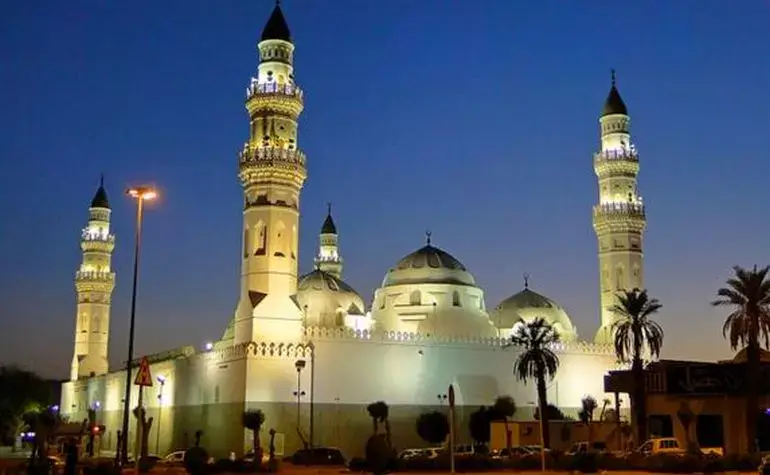
Among the most revered sites in all of Islam, Masjid Quba (مسجد قباء) occupies a position of unparalleled historical and spiritual importance. Located on the southern outskirts of Madinah, Saudi Arabia, this sacred mosque is recognized as the first mosque ever built in the history of Islam, established by the Prophet Muhammad ﷺ himself in 622 CE – the very year of the Hijrah.
For millions of Hajj and Umrah pilgrims who travel to the holy cities each year, visiting Masjid Quba is not simply a tourist excursion – it is an act of worship, a connection to the earliest roots of the Muslim faith, and an opportunity to earn the spiritual reward equivalent to a complete Umrah. Whether you are planning your first pilgrimage or returning for a deeper Madinah Ziyarat experience, understanding the history, significance, and practical details of Masjid Quba will enrich every moment you spend within its blessed walls.
At Al Maqam Transport, we are proud to serve pilgrims traveling between Makkah, Madinah, and the sacred Ziyarat sites – ensuring that your journey to Masjid Quba and beyond is comfortable, timely, and spiritually fulfilling.

What Is Masjid Quba? – Overview and Location
Masjid Quba, also written as Masjid e Quba, Masjid al-Quba, or the Quba Mosque, is a historic Islamic mosque situated in the Quba district on the southwestern outskirts of Madinah. It sits approximately 3.5 to 4 kilometers south of Masjid al-Nabawi (the Prophet’s Mosque), making it the closest major Ziyarat site to the heart of Madinah that requires dedicated transport.
The mosque is easily identified by its distinctive white marble exterior, six large domes, 32 smaller domes, and four towering minarets. Its vast prayer hall is arranged around a serene central courtyard crafted from black, white, and red marble. The mosque currently holds a capacity of over 20,000 worshippers at one time – a testament to its enduring spiritual magnetism.
Key Facts at a Glance:
- Full Name: Masjid Quba (مسجد قباء)
- Location: Quba district, southern Madinah, Saudi Arabia
- Year Founded: 622 CE (1 AH)
- Founded By: Prophet Muhammad ﷺ
- Capacity: 20,000+ worshippers
- Distance from Masjid al-Nabawi: ~3.5–4 km
- Notable Feature: First mosque ever built in Islam; mentioned in the Holy Quran
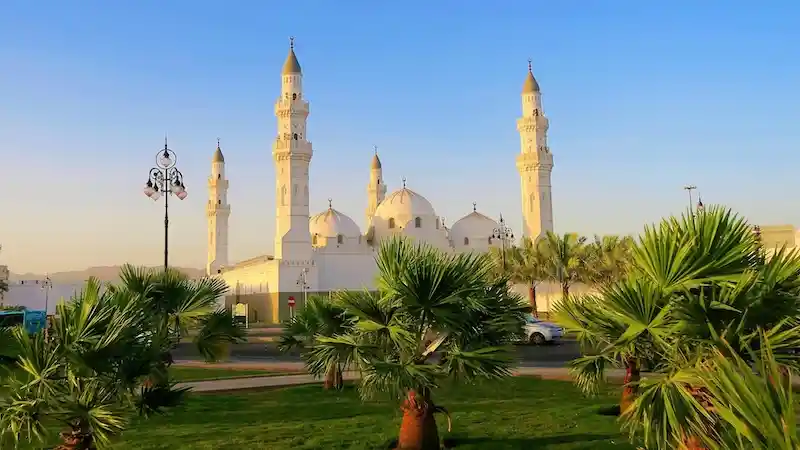
The History of Masjid Quba – From the First Stone to the Present Day
The Hijrah and the Foundation of the First Mosque
The history of Masjid Quba is inseparable from one of the most pivotal events in Islamic history: the Hijrah – the migration of Prophet Muhammad ﷺ from Makkah to Madinah in 622 CE. This journey, which marks the beginning of the Islamic Hijri calendar, was not only a geographical transition but a defining moment for the nascent Muslim community.
As the Prophet ﷺ and his close companion Abu Bakr (R.A.) arrived at the village of Quba after days of travel, they were welcomed with immense joy by the local Ansar (helpers). Rather than immediately proceeding to Madinah, the Prophet ﷺ stayed in Quba for approximately 14 days, awaiting the arrival of his cousin Ali ibn Abi Talib (R.A.), who had remained in Makkah to fulfill certain obligations.
During this stay, the Prophet ﷺ – with his own blessed hands – laid the first stones of what would become Masjid Quba. It is reported that he carried stones himself, and his companions completed the construction. According to tradition, a divine sign guided the Prophet ﷺ in selecting the exact location of the mosque. Remarkably, the camel he rode knelt near a well in the area – and it was here that the foundation was established.
This act of personally laying the mosque’s foundation was profound: it signaled to the Muslim community that prayer, worship, and community would be the cornerstone of their new home in Madinah.
Quranic Reference – The Mosque Founded on Piety (Taqwa)
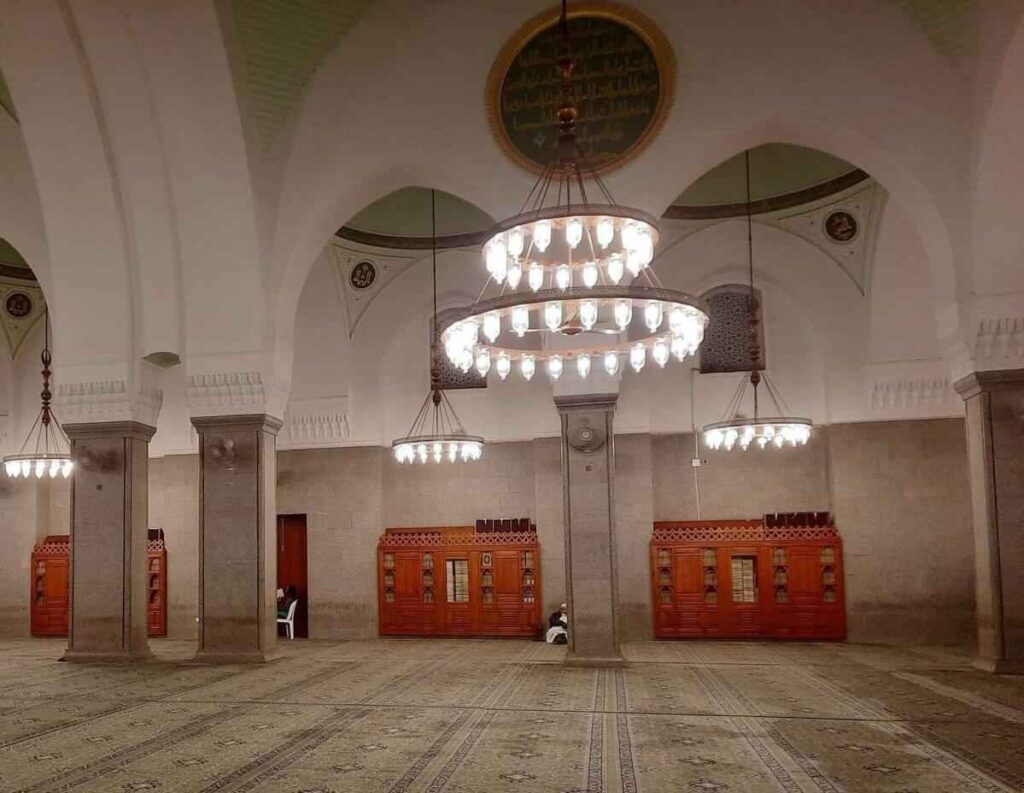
One of the most powerful distinctions of Masjid Quba is that it is directly mentioned in the Holy Quran. In Surah At-Tawbah, Allah (SWT) describes it as the mosque “founded on righteousness (Taqwa) from the first day”:
“A mosque founded on righteousness from the first day is more worthy for you to stand in.” – Quran 9:108
Islamic scholars widely hold that this verse refers to Masjid Quba. This Quranic recognition elevates it above nearly every other mosque in the world – for it is explicitly blessed and endorsed by Allah’s own words. This makes it not merely a historical landmark, but a living embodiment of faith, sacrifice, and divine approval.
From Mud and Palm Branches to Marble and Minarets – Centuries of Renovation
The original Masjid Quba was humble in its construction – built using stones, mud, and palm branches available at the time. This simplicity reflected the early Muslim community’s faith and determination rather than worldly resources.
Over the centuries, the mosque underwent multiple significant renovations under various Islamic caliphs and rulers, each expanding and beautifying the structure while preserving its spiritual essence. The most significant modern renovation was undertaken by the Saudi government, which transformed Masjid Quba into the striking contemporary structure visitors see today. The current mosque features:
- White marble flooring and exterior – elegant and serene
- Six large domes over the main southern prayer hall
- 32 smaller domes over the northern prayer area
- Colonnaded walkways on the eastern and western sides
- Separate women’s prayer area in the northern section, surrounded by a screen
- Zamzam water taps installed inside the mosque
- Air-conditioned prayer spaces with modern ablution facilities
- Large shaded outdoor courtyards with umbrella structures for overflow worshippers
Most recently, plans for a major expansion have been announced to increase the mosque’s capacity ninefold, accommodating even greater numbers of pilgrims in the years to come – a reflection of both the growing Muslim ummah and the mosque’s timeless appeal.
The Spiritual Significance of Masjid Quba – The Hadith of the Umrah Reward
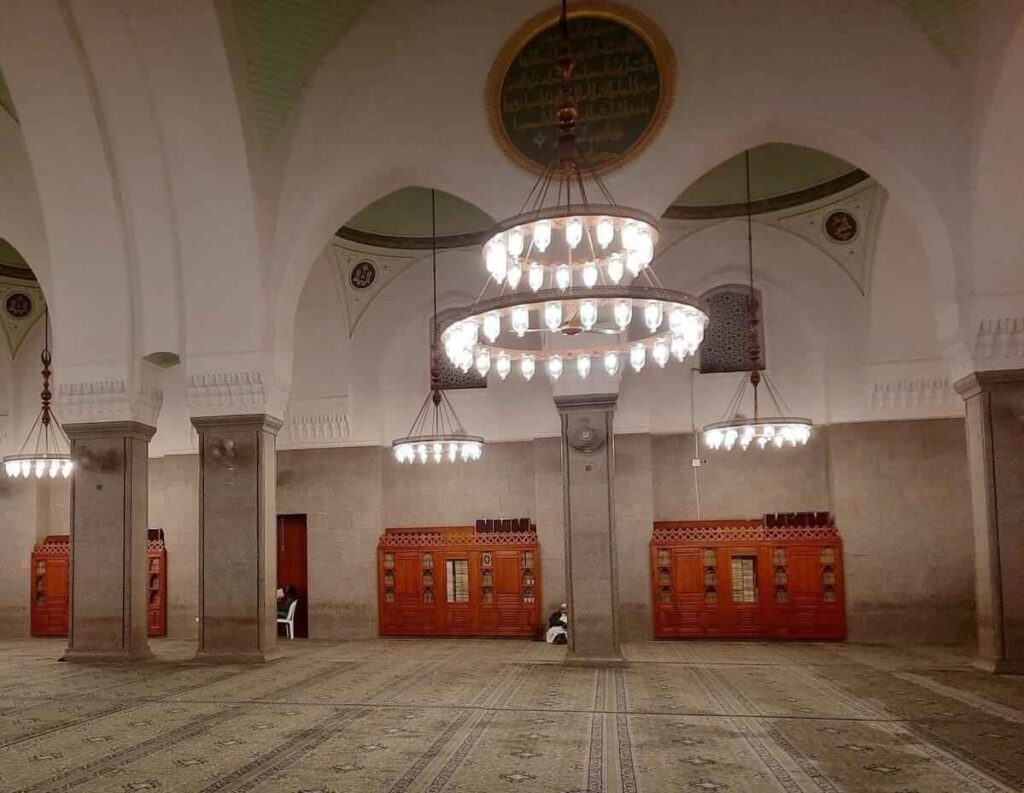
Perhaps the most widely cited reason Muslims make a dedicated visit to Masjid Quba is an authentic Hadith of the Prophet Muhammad ﷺ, recorded in Sahih al-Bukhari:
“Whoever purifies himself in his house, then comes to the Masjid of Quba and prays two rak’ahs therein, will have a reward like that of ‘Umrah.” – Sahih Bukhari
This Hadith carries enormous significance. Performing a full Umrah (the lesser pilgrimage) is one of the most spiritually meritorious acts in Islam, requiring travel, ihram, Tawaf around the Kaaba, and Sa’i between Safa and Marwa. The fact that the Prophet ﷺ declared two voluntary rak’ahs (nafl prayers) at Masjid Quba – preceded by wudu (ablution) made at home – to be equivalent in reward is extraordinary.
This is why pilgrims visiting Madinah almost universally include Masjid Quba in their Ziyarat itinerary. Some devout visitors even make it a point to visit every Saturday, following another Sunnah of the Prophet ﷺ himself:
“The Prophet ﷺ used to go to Masjid Quba, riding or on foot, every Saturday and offer a two rak’ah prayer.” – Sahih Bukhari and Muslim
Spiritual Benefits of Visiting Masjid Quba
- Earn the reward of a complete Umrah through two rak’ahs of nafl prayer
- Follow the Sunnah of the Prophet ﷺ who visited regularly, especially on Saturdays
- Connect deeply with the earliest days of the Muslim community
- Reflect on the Hijrah and the sacrifices of the Sahabah (Companions)
- Offer du’a in a space blessed by Allah in the Quran and by the Prophet’s ﷺ presence
- Experience the profound serenity and peace that pervades the mosque’s atmosphere
Architecture and Features of Masjid Quba – A Modern Marvel Rooted in Tradition
The current Masjid Quba is a breathtaking architectural achievement that blends classical Islamic design principles with modern construction excellence. Its white façade shimmers under the Saudi sun, and its multiple domes and minarets create a skyline that is both iconic and deeply calming.
Prayer Areas
The mosque has two main prayer areas: the primary prayer hall to the south, capped by six large domes, and a northern prayer area topped with 32 smaller domes. The two areas are connected by roofed colonnades on the east and west sides, all arranged around a spacious central courtyard.
Women’s Prayer Area
A dedicated and dignified women’s prayer hall is located on the northern side, enclosed by a screen for privacy. It is divided into two sections with a passageway connecting the northern entrance to the main courtyard.
Facilities for Pilgrims
- Clean and spacious ablution (wudu) areas for men and women
- Zamzam water dispensers within the mosque
- Air conditioning throughout the prayer halls
- Wheelchair accessibility and ramps for elderly pilgrims and those with special needs
- Ample parking and public access routes from Madinah city center
- Nearby cafes and restaurants in the mosque plaza for light refreshments
Masjid Quba and Its Role in Madinah Ziyarat
For any pilgrim undertaking Madinah Ziyarat – the tradition of visiting the sacred historical sites of Madinah – Masjid Quba is invariably the first and most essential stop. A complete Madinah Ziyarat tour typically covers:
- Masjid Quba – First mosque in Islam; Umrah reward for two rak’ahs
- Masjid al-Nabawi – The Prophet’s Mosque; home to his blessed tomb
- Masjid al-Qiblatain – Where the Qiblah direction changed from Jerusalem to Makkah
- Mount Uhud (Jabal Uhud) – Site of the Battle of Uhud; burial place of martyrs including Hamza (R.A.)
- Jannat al-Baqi – The blessed cemetery of Madinah where many Companions are buried
- Masjid al-Jumu’ah – Where the Prophet ﷺ led the first Friday prayer in Madinah
- Masjid Ghamama – Associated with Eid and rain prayers led by the Prophet ﷺ
Many pilgrims organize these visits into a half-day or full-day Ziyarat tour, often beginning with Masjid Quba after Fajr prayers when the temperatures are cool and the mosque is at its most peaceful.
Best Time to Visit Masjid Quba
- Early morning after Fajr – Cooler temperatures, fewer crowds, deeply spiritual atmosphere
- After Asr prayer – Afternoon calm with beautiful light
- Saturday – Following the specific Sunnah of the Prophet ﷺ
- Ramadan – The spiritual atmosphere is heightened; rewards are multiplied
- Winter months (November–February) – Most comfortable weather for pilgrims
How to Get to Masjid Quba – Transport Options from Makkah and Madinah
Masjid Quba is located approximately 3.5 to 4 kilometers south of Masjid al-Nabawi, making it easily accessible from central Madinah. For pilgrims arriving from Makkah, the journey typically takes 3 to 4 hours by road, covering the approximately 450 km between the two holy cities.
Transport Options
1. Private Taxi / Hired Car (Recommended) The most convenient and spiritually focused way to visit Masjid Quba – and all Madinah Ziyarat sites – is by private transport. A private vehicle allows you to:
- Travel at your own pace and schedule
- Stop as long as you wish for prayers and reflection
- Accommodate elderly pilgrims, families, and those with limited mobility
- Avoid the stress of public transport navigation in an unfamiliar city
Al Maqam Transport offers dedicated Madinah Ziyarat transport packages, covering Masjid Quba and all major sacred sites in comfort, with experienced drivers who know the routes and respect the sanctity of your journey.
2. Makkah to Madinah Transfer Many pilgrims travel to Madinah from Makkah after completing Umrah. Al Maqam Transport provides reliable, air-conditioned vehicle transfers between the two holy cities, arriving directly at your Madinah hotel or at Ziyarat sites including Masjid Quba, Masjid Qiblatain, and Jabal Uhud.
3. Local Buses and Hop-On Hop-Off Services Public bus services operate routes covering Masjid Quba at a very low cost (around 10 SAR per trip). These are a budget-friendly option for solo travelers with flexible schedules, though less ideal for elderly pilgrims or families.
4. Walking from Masjid al-Nabawi While the distance of ~3.5 km is walkable, it is not recommended during summer months due to the extreme heat. Walking is feasible in cooler winter months for those in good health.
Tips for Visiting Masjid Quba – Etiquette and Spiritual Preparation
To make the most of your visit to Masjid Quba and to earn the full spiritual reward described in the Hadith, follow these guidelines:
- Make wudu (ablution) at your hotel or home before departing – this is specifically mentioned in the Hadith as the condition for earning the Umrah reward
- Dress modestly – wear appropriate Islamic attire; women should ensure their hijab is complete
- Arrive with intention (niyyah) – mentally and spiritually prepare yourself for worship, not just sightseeing
- Offer two rak’ahs of nafl (voluntary) prayer upon entering – this is the Sunnah-recommended act
- Make du’a in the courtyard or prayer hall – these are blessed spaces with a special connection to Islamic history
- Maintain silence and respect throughout the mosque – avoid loud conversations or distractions
- Visit on a Saturday if possible – following the Prophet’s ﷺ own practice
- Do not rush – allow time to absorb the history, make dhikr (remembrance of Allah), and reflect
- Drink Zamzam water available at the dispensers inside the mosque
FAQs
Q: Where is Masjid Quba located?
Masjid Quba is located on the southern outskirts of Madinah, Saudi Arabia, approximately 3.5 to 4 kilometers from Masjid al-Nabawi (the Prophet’s Mosque).
Q: Why is Masjid Quba important in Islam?
Masjid Quba is the first mosque ever built in the history of Islam, established by Prophet Muhammad ﷺ in 622 CE. It is mentioned in the Holy Quran (9:108) as a mosque founded on righteousness (Taqwa), and praying two rak’ahs here carries the reward of a complete Umrah according to authentic Hadith.
Q: What is the Hadith about praying in Masjid Quba?
The Prophet Muhammad ﷺ said: “Whoever purifies himself in his house, then comes to Masjid Quba and prays two rak’ahs, will have a reward like that of Umrah.” (Sahih Bukhari)
Q: When did the Prophet Muhammad ﷺ visit Masjid Quba?
The Prophet ﷺ visited Masjid Quba every Saturday, either on foot or riding, and offered two rak’ahs of prayer. Muslims are encouraged to follow this Sunnah.
Q: What is the capacity of Masjid Quba?
The current structure of Masjid Quba can accommodate over 20,000 worshippers at one time. An ongoing expansion project is planned to increase this capacity ninefold.
Q: Is Masjid Quba open to non-Muslims?
Masjid Quba, like all mosques in Madinah, is restricted to Muslim visitors only.
Q: How do I get from Makkah to Masjid Quba?
The most comfortable way is a private vehicle or taxi service (approximately 3–4 hours by road). Al Maqam Transport provides direct, air-conditioned transfers from Makkah to Madinah with stops at Masjid Quba and other Ziyarat sites.
Q: What are the visiting hours of Masjid Quba?
Masjid Quba is open throughout the day for prayers, aligned with the five daily prayer times. The best times to visit are after Fajr (dawn) or after Asr (afternoon) prayers.
Plan Your Visit to Masjid Quba with Al Maqam Transport
Visiting Masjid Quba is one of the most spiritually rewarding acts a pilgrim can undertake in Madinah. Whether you are in Madinah as part of your Umrah, Hajj, or a dedicated Ziyarat journey, this blessed mosque deserves a place at the heart of your itinerary.
Al Maqam Transport specializes in providing safe, comfortable, and punctual transportation for pilgrims visiting the holy sites of Makkah and Madinah. Our services include:
- Makkah to Madinah transfers – comfortable intercity travel for families and groups
- Madinah Ziyarat tours – covering Masjid Quba, Masjid Qiblatain, Jabal Uhud, Jannat al-Baqi, and more
- Airport transfers – Jeddah Airport to Makkah or Madinah
- Private vehicles for elderly and special needs pilgrims – ensuring dignity and ease of travel
- 24/7 availability – supporting your worship schedule at any hour
We understand that your pilgrimage is a once-in-a-lifetime spiritual journey for many. Our commitment is to handle every logistical detail – so that you can focus entirely on your worship, your du’a, and your connection with Allah ﷻ.
Contact Al Maqam Transport today to book your Madinah Ziyarat tour or intercity transfer, and let us be a trusted part of your blessed journey.
Conclusion
Masjid Quba is far more than a historical monument. It is a living spiritual sanctuary – the first house of Allah built by the Prophet Muhammad ﷺ, blessed in the Quran, and showered with rewards that few places on earth can match. Every stone of its foundation carries the weight of Islam’s earliest days, every dome echoes the devotion of the Sahabah (Companions), and every prayer offered within its walls draws the worshipper closer to the divine reward of Umrah.
Whether you are arriving from Makkah after completing Tawaf around the Kaaba, or stepping out of Masjid al-Nabawi to honor the Sunnah of visiting Quba on a Saturday, make sure this sacred mosque is part of your pilgrimage experience. And when you are ready to make the journey, Al Maqam Transport is here to take you there – safely, comfortably, and with the respect your pilgrimage deserves.

Zeeshan is a professional driver and tour guide who has been living and driving in Saudi Arabia for the past 5 years. With deep knowledge of the roads, landmarks, and Ziyarat locations across Makkah, Madinah, Jeddah, and Taif, he helps pilgrims and travelers enjoy safe, smooth, and well-organized journeys. His experience in Umrah transport, city tours, and airport transfers makes him a trusted expert for visitors exploring Saudi Arabia.