


For most pilgrims, the journey to the Holy Cities doesn’t begin at the Kaaba or the Prophet’s Mosque – it begins the moment they step off the plane at Jeddah’s Hajj Terminal. This single building, tucked inside King Abdulaziz International Airport (JED), has welcomed millions of travelers from every corner of the Muslim world, and understanding how it works can make the difference between a stressful first hour in Saudi Arabia and a calm, well-organized start to your pilgrimage.
This guide covers exactly what the Hajj Terminal is, where it sits inside the airport, what happens once you land, and – most importantly for anyone planning a trip – how to get from the terminal to Makkah, Madinah, or your hotel safely and comfortably.
What Is the Hajj Terminal at Jeddah Airport?
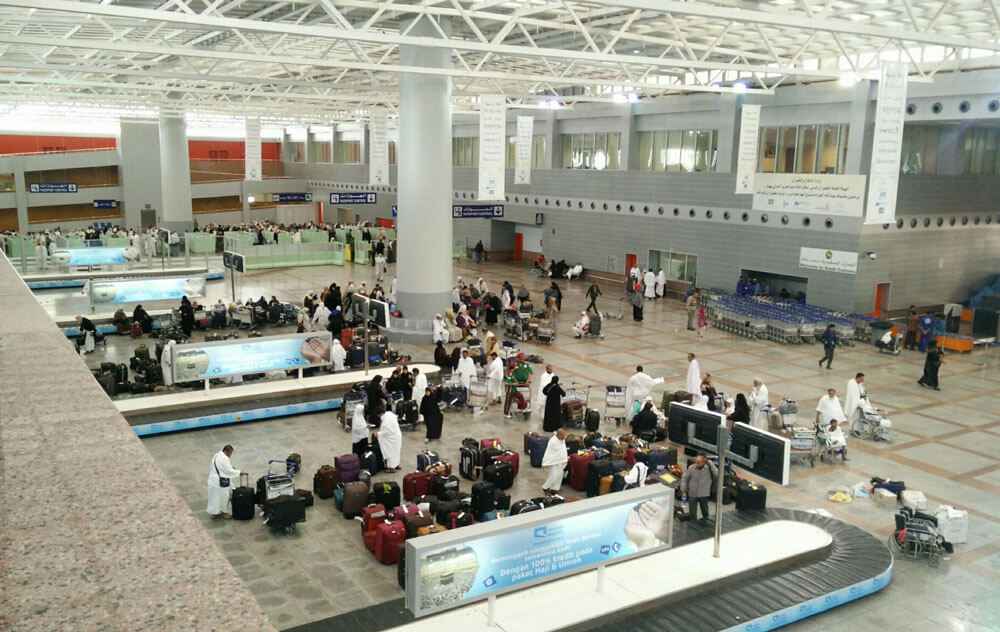
The Hajj Terminal is a purpose-built passenger facility inside King Abdulaziz International Airport, designed specifically to process the huge seasonal influx of pilgrims arriving for Hajj and, increasingly, peak Umrah periods. Unlike a conventional airport terminal, it isn’t organized around retail and lounges – it’s organized around moving very large groups of people through immigration, customs, and onward transport as smoothly as possible.
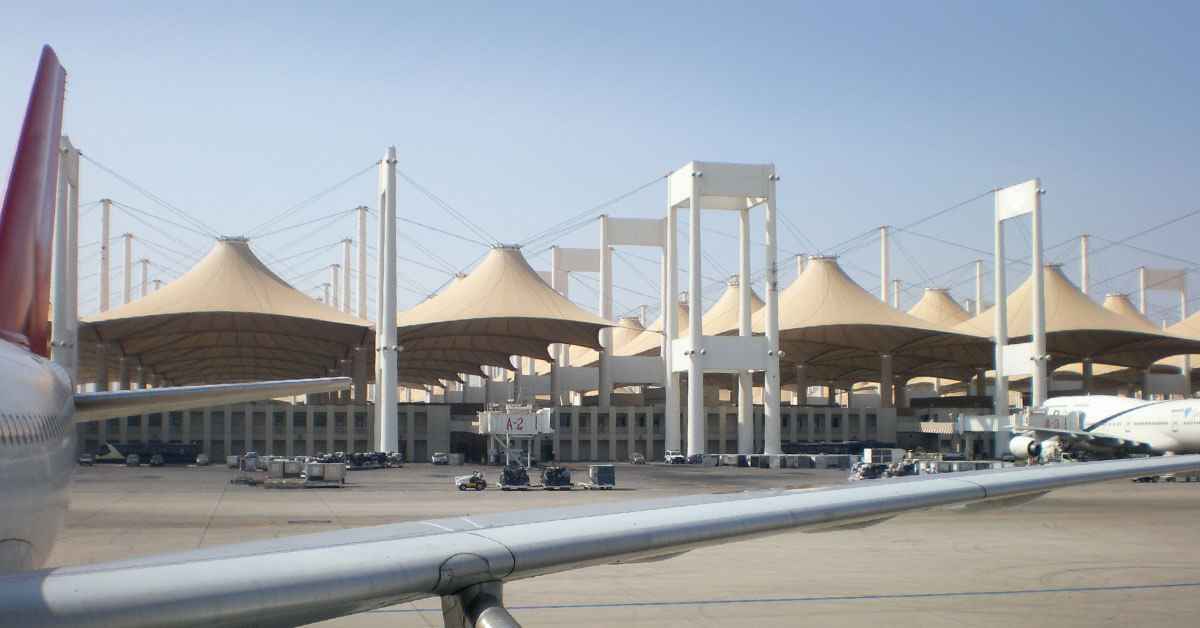
Since it opened in 1981, the terminal became known for the world’s largest cable-stayed, fabric-roofed structure at the time, and it later received the Aga Khan Award for Architecture in 1983. The building was designed by the American firm Skidmore, Owings & Merrill, and its tent-like canopy remains one of the most photographed pieces of airport architecture anywhere in the world.
Capacity and Scale
The numbers behind the Hajj Terminal explain why it needed such an unconventional design. It is built to serve up to 80,000 pilgrims simultaneously, making it one of the largest structures of its kind anywhere, and it processes hundreds of thousands of pilgrims during the Hajj season each year. Combined with the airport’s other terminals, King Abdulaziz International Airport now handles over a hundred destinations and is the country’s main gateway for Hajj and Umrah travelers because of its proximity to Mecca and Medina.
The distinctive roof isn’t just decorative. Its 210 fiberglass roof panels are engineered to promote natural ventilation and reduce heat, keeping the open-air waiting areas comfortable for pilgrims arriving in the middle of the Saudi summer.
Where the Hajj Terminal Sits Inside King Abdulaziz International Airport
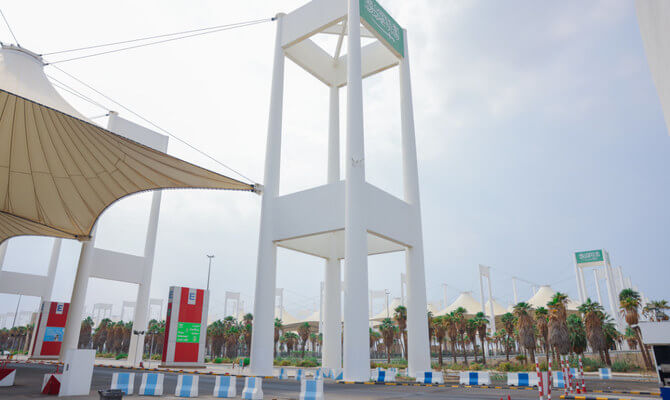
King Abdulaziz International Airport isn’t a single building – it’s a cluster of separate terminals, and confusing them is one of the most common mistakes travelers make when planning airport pickup.
| Terminal | Primary Use | What to Know |
|---|---|---|
| Terminal 1 | Main international terminal, most full-service airlines | The newest and largest terminal, used year-round |
| North Terminal | Selected international and low-cost carriers | Connected to Terminal 1 by shuttle bus |
| Hajj Terminal (Terminal H) | Pilgrim-only operations during Hajj and peak Umrah season | Separate arrivals area, its own pickup/drop-off zones, and dedicated immigration lanes |
The Hajj Terminal has its own flexible open area, called the Terminal Support Area, designed to function like a small village, complete with a souk (market) and a mosque. A large airport mosque sits directly adjacent to the terminal, one of the largest airport mosques in the world – a meaningful detail for pilgrims whose first act on Saudi soil is often prayer.
Practical tip: always confirm which terminal your flight is scheduled to use before you land. Airlines can shift between Terminal 1, North Terminal, or the Hajj Terminal depending on the season, and the pickup points for each are physically far apart. Special shuttle buses run between terminals, but the distances are large enough that a taxi or private transfer is the more practical option for anyone carrying luggage or traveling with family.
Facilities Inside the Hajj Terminal
Because the terminal is designed for mass movement rather than dwell time, its facilities are focused on essentials rather than shopping and entertainment:
- Immigration and customs zones built for group processing rather than individual queues
- Medical centers and clinics for pilgrims who need attention after long flights
- Prayer rooms and ablution areas, including the large adjacent mosque
- A souk-style market area within the Terminal Support Area for essentials
- Rest areas designed for extended waits during peak arrival days
- Dining options including cafes and takeout counters serving local cuisine
If you’re arriving during the peak weeks before Hajj, expect the terminal to feel busy but organized – Saudi authorities plan for these volumes every year, and the facility exists specifically to absorb them.
Getting From the Hajj Terminal to Makkah or Madinah
Once you clear immigration, the next decision is how to actually reach your destination – and this is where most first-time pilgrims lose time, money, or peace of mind. There are three realistic options.
Option 1: Private Taxi or Chauffeur Service
A pre-booked private transfer remains the most practical choice for families, elderly travelers, or anyone arriving with significant luggage. A pre-booked airport transfer typically covers the roughly 90-kilometer journey in about 1 hour and 30 minutes, with the added benefit of a driver who tracks your flight and guarantees pickup timing. Your driver meets you directly in the arrivals hall and takes you straight to your Makkah accommodation, skipping the queues and transfers involved in public transport.
Typical fare ranges (subject to season, vehicle, and current promotions):
- Sedan (Toyota Camry or similar): 180–300 SAR for up to 4 passengers
- SUV (GMC Yukon or similar): 250–400 SAR
- Van (Hyundai Staria / Toyota Hiace): 300–450 SAR for groups of 6–10
Travel usually takes 60 to 90 minutes under normal traffic, though peak-hour congestion, prayer-time closures, and the seasonal rush during Ramadan or Hajj can extend the journey by 20–30 minutes.
Option 2: Haramain High-Speed Railway
The Haramain High-Speed Railway connects the airport directly to Jeddah, King Abdullah Economic City, Makkah, and Madinah, with trains departing every hour and standard-class tickets starting from around 65 SAR. It’s fast and affordable, but it requires reaching the correct station, managing your own luggage, and a further onward journey (taxi or shuttle) from the train station to your actual hotel – which adds time and complexity that a door-to-door transfer avoids.
Option 3: Shared Bus
The cheapest option, typically taking around two hours to Makkah’s bus station, with less predictable departure times and no door-to-door service. This works for solo, budget-conscious travelers but is rarely comfortable for families, elderly pilgrims, or anyone arriving after a long international flight.
Quick Comparison
| Method | Approx. Time | Door-to-Door | Best For |
|---|---|---|---|
| Private Taxi/Chauffeur | 60–90 min | Yes | Families, elderly pilgrims, groups, luggage |
| Haramain Train | ~60 min (plus onward transfer) | No | Solo travelers comfortable managing transfers |
| Shared Bus | ~2 hours | No | Budget travel, no time pressure |
How Al Maqam Transport Makes This Easier
Al Maqam Transport specializes in exactly this first and last leg of the pilgrimage journey – the transfer between Jeddah’s terminals (Terminal 1, North Terminal, or the Hajj Terminal) and your hotel in Makkah, Madinah, or elsewhere in Saudi Arabia. Every driver tracks your flight in real time, so delays don’t leave you stranded, and pickup happens directly at the arrivals hall rather than at a distant parking structure.
Depending on your group size and comfort needs, you can choose:
- Umrah Taxi or Luxury Umrah Taxi for a private, direct hotel transfer
- Hajj Transportation for the full pilgrimage journey, including Mina, Arafat, and Muzdalifah routing during the Hajj days
- Airport Transfers between JED, Makkah, and Madinah
- Private Chauffeur Services for families and groups who want a fixed vehicle and driver for the whole trip
- Ziyarat Taxi for visiting sites like Quba Mosque, Mount Uhud, or Jannat al-Baqi once you’ve settled into Madinah
Fares are agreed before pickup, vehicles range from sedans to vans and coaster buses for larger groups, and every driver is licensed and experienced with the specific routing challenges around Hajj Terminal traffic, checkpoint procedures, and prayer-time road closures.
Best Times to Travel and What to Expect
Traffic and processing times at the Hajj Terminal shift dramatically depending on the calendar:
- Peak Hajj season: Expect higher volumes, longer immigration queues, and additional security checkpoints on the road to Makkah. Booking your onward transfer several days in advance is strongly recommended.
- Ramadan: A secondary peak for Umrah travel, with similar congestion patterns, especially in the final ten nights.
- Off-peak months: Processing is typically faster, and onward transfer times are closer to the standard 60–90 minutes without added checkpoint delays.
Whatever the season, it’s worth checking well in advance which terminal your specific flight uses, since regulations, pickup zones, and even parking rules can differ between Terminal 1, the North Terminal, and the Hajj Terminal.
Travel Tips for a Smoother Arrival
- Confirm your terminal with your airline 24–48 hours before departure, since Hajj-season schedules sometimes shift between terminals.
- Book your onward transfer in advance – ideally 24–48 hours ahead outside of Hajj season, and 3–7 days ahead during Hajj or Ramadan, so your driver can track your flight and meet you promptly.
- Keep your Ihram and essential documents accessible in carry-on luggage rather than checked bags, in case you need them before reaching your hotel.
- Expect a short wait at prayer times – many drivers pause briefly around Maghrib and Isha, which is normal and worth building into your schedule.
- Traveling with elderly family members? Ask for a sedan or SUV with easy entry/exit rather than a high-clearance van, and mention any mobility needs when booking.
- Group of 6 or more? A van or coaster bus is usually more cost-effective and comfortable than splitting into multiple sedans.
Frequently Asked Questions
Where exactly is the Hajj Terminal located?
It’s a dedicated terminal within King Abdulaziz International Airport (JED) in Jeddah, physically separate from Terminal 1 and the North Terminal, with its own arrivals hall, immigration lanes, and pickup zones.
Is the Hajj Terminal used all year round?
No. It operates primarily during Hajj season and peak Umrah periods. Outside these windows, most flights use Terminal 1 or the North Terminal instead.
How far is the Hajj Terminal from Makkah?
Roughly 90 kilometers, with a typical private transfer taking 60 to 90 minutes depending on traffic and the time of year.
How far is it from Madinah?
Direct road travel to Madinah is considerably longer, so most pilgrims either fly directly into Prince Mohammad Bin Abdulaziz Airport (MED) or travel from Makkah to Madinah by road or the Haramain train after their initial arrival.
What’s the fastest way from the Hajj Terminal to Makkah?
The Haramain High-Speed Railway is the fastest single leg, but it requires a further onward transfer from the train station to your hotel. A private door-to-door taxi is usually faster overall once that extra step is factored in.
How much does a taxi from the Hajj Terminal to Makkah cost?
Fares typically range from 180 SAR for a sedan up to around 450 SAR for a van, depending on vehicle size and season.
Can I book a taxi from the Hajj Terminal before I land?
Yes, and it’s strongly recommended. Pre-booking allows your driver to track your flight, meet you directly in arrivals, and avoid last-minute price surges or vehicle shortages.
Is there a mosque inside the Hajj Terminal?
Yes, one of the largest airport mosques in the world sits directly adjacent to the terminal.
What facilities are available while waiting at the Hajj Terminal?
Medical clinics, prayer and ablution areas, a souk-style market, rest areas, and food outlets are all part of the Terminal Support Area.
Do I need to know which terminal my flight uses in advance?
Yes. Pickup zones for Terminal 1, the North Terminal, and the Hajj Terminal are physically separate, and confirming this in advance prevents confusion or delays when arranging transport.
Is a private taxi better than a shared bus for families?
For families, elderly travelers, or anyone with significant luggage, a private taxi is almost always more comfortable and predictable, since it offers direct, door-to-door service without transfers.
How early should I book Hajj Terminal transport during peak season?
3 to 7 days in advance during Hajj or Ramadan is recommended; 24–48 hours is usually sufficient the rest of the year.
Can Al Maqam Transport pick up large groups at the Hajj Terminal?
Yes. Vans, GMC Yukons, and coaster buses are available for groups, with fares agreed in advance based on group size and route.
Final Thoughts
The Hajj Terminal is more than an architectural landmark – it’s the literal starting point of a spiritual journey for millions of people every year. Knowing what to expect inside the terminal, how it differs from Jeddah Airport’s other terminals, and how to arrange a safe, comfortable transfer onward removes one of the biggest sources of stress from an already significant trip.
Whether you’re arriving for Hajj, Umrah, or a family visit, Al Maqam Transport can meet you directly at the Hajj Terminal, Terminal 1, or the North Terminal and take you straight to Makkah, Madinah, or your hotel – with your flight tracked, your fare agreed in advance, and a licensed driver who knows these routes well.

Zeeshan is a professional driver and tour guide who has been living and driving in Saudi Arabia for the past 5 years. With deep knowledge of the roads, landmarks, and Ziyarat locations across Makkah, Madinah, Jeddah, and Taif, he helps pilgrims and travelers enjoy safe, smooth, and well-organized journeys. His experience in Umrah transport, city tours, and airport transfers makes him a trusted expert for visitors exploring Saudi Arabia.