


Anyone researching “King Fahd Gate” quickly runs into a common mix-up: there are actually two King Fahd Gates in Saudi Arabia’s holiest cities – one at Masjid al-Haram in Makkah, and another at Masjid an-Nabawi in Madinah. This guide is about the Madinah gate, the grand northern entrance to the Prophet’s Mosque, and it covers everything you need to identify it, understand its history, and reach it comfortably whether you’re walking from a nearby hotel or arriving by private taxi from the airport.
As a transport service that moves pilgrims and travelers between Makkah, Madinah, and Jeddah every day, Al Maqam Transport gets this question often from guests planning their Ziyarat routes and hotel bookings. Below is a practical, accurate breakdown built from real route knowledge – not just historical trivia.
What Is King Fahd Gate in Madinah?
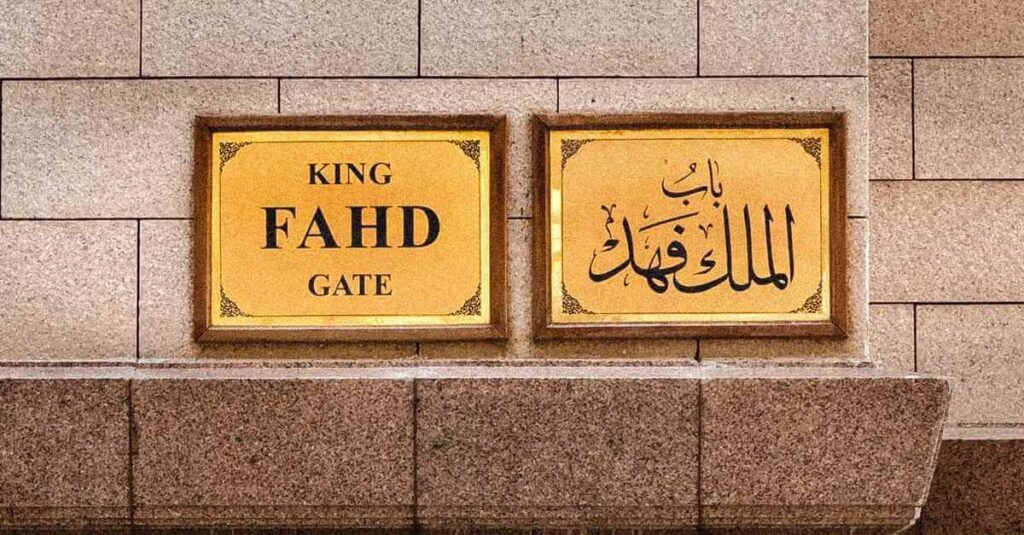
King Fahd Gate – known in Arabic as Bab al-Malik Fahad (باب الملك فهد) – is the main entrance to Masjid an-Nabawi from the northern side of the mosque. It sits along the mosque’s outer perimeter facing King Abdul Aziz Road, one of the principal roads encircling the Prophet’s Mosque.
It is officially numbered as Gates 20, 21, and 22, since the structure is actually a cluster of gates built as one grand facade:
- Gate 21 is the central, tall single-arched gate.
- Gate 20 sits on one flank.
- Gate 22 sits on the opposite flank.
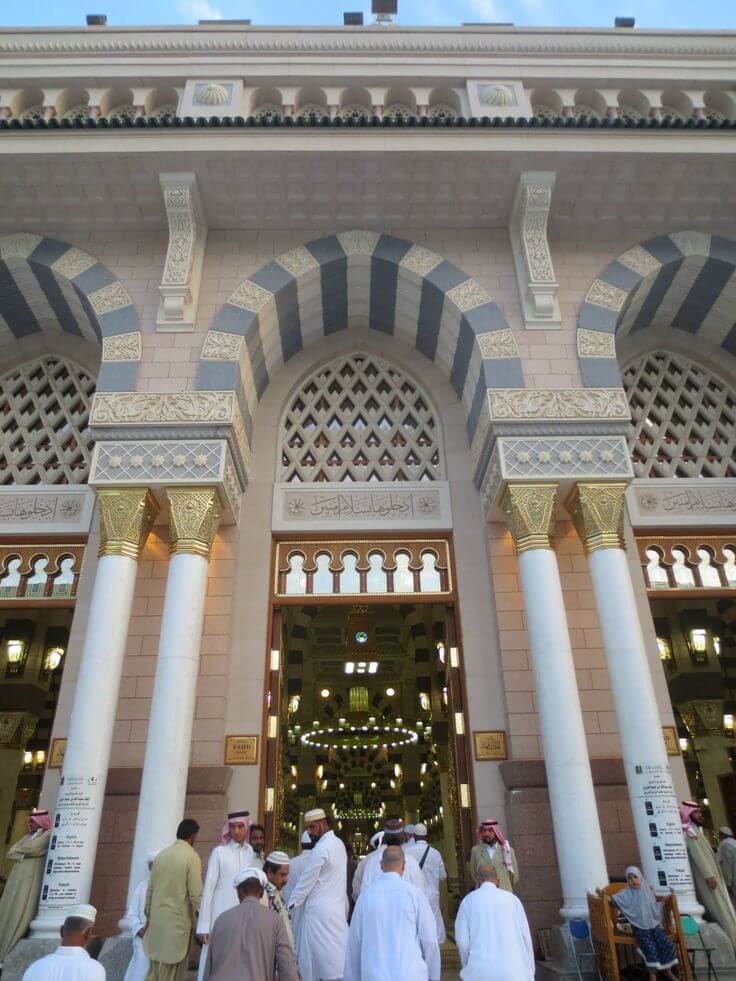
Together, this makes King Fahd Gate the largest single gate complex in Masjid an-Nabawi, with seven separate door portals, two flanking minarets, and five domes crowning the structure. It is the only gate in the mosque with two minarets, which makes it easy to spot from a distance – a useful landmark if you’re coordinating a pickup point with a driver.
Why Is It Called King Fahd Gate?
The gate is named after King Fahd bin Abdulaziz Al Saud, who served as Custodian of the Two Holy Mosques and ruled Saudi Arabia from 1982 to 2005. It was built as part of the Second Saudi Expansion of Masjid an-Nabawi, the multi-year construction program that dramatically increased the mosque’s prayer space, added new minarets, and modernized pilgrim facilities across both Makkah and Madinah during his reign.
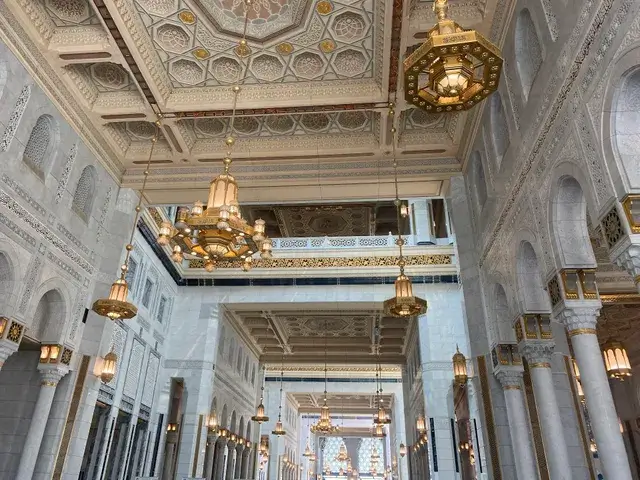
Inside the gate, the craftsmanship reflects the scale of that expansion: the doors are carved from solid teakwood by craftsmen in Jeddah, and the wooden panels and column capitals are finished with 23-karat gold plating – details that reward a slower look if you’re walking through rather than rushing past.
King Fahd Gate (Madinah) vs. King Fahd Gate (Makkah) – Don’t Confuse Them
This is the single biggest point of confusion for first-time pilgrims searching this topic, so it’s worth stating clearly:
| Madinah | Makkah | |
|---|---|---|
| Mosque | Masjid an-Nabawi | Masjid al-Haram |
| Gate number | 20, 21, 22 | Gate 79 |
| Side of mosque | North | Varies by expansion phase |
| Notable feature | Two minarets, seven doors, five domes | Prominent minaret, alternative entrance during peak crowding |
| Named after | King Fahd bin Abdulaziz | King Fahd bin Abdulaziz |
If your hotel confirmation, driver instructions, or Ziyarat itinerary mentions “King Fahd Gate,” always double-check which city it refers to – the name alone doesn’t tell you. If you’re heading to the Kaaba, you want the Makkah gate; if you’re heading to the Prophet’s Mosque and the Rawdah, you want the Madinah gate covered in this guide.
Location and How to Identify It
King Fahd Gate faces King Abdul Aziz Road on the mosque’s northern boundary. If you’re walking from the mosque’s main courtyard, you’ll exit onto this road and immediately recognize the gate by its twin minarets and wide, multi-domed facade – it’s noticeably larger and more ornate than most of the mosque’s other numbered gates.
The surrounding area on King Abdul Aziz Road is walkable and lined with hotels, though direct vehicle access right up to the gate is restricted during prayer times and peak pilgrim hours, since the immediate Haram perimeter is a pedestrian zone.
Hotels Near King Fahd Gate
Because it’s one of the mosque’s primary entrances, the area around King Fahd Gate has a dense concentration of hotels within a short walk, ranging from 3-star budget options to 5-star properties with Haram-facing rooms. Many pilgrims specifically choose accommodation on this side of the mosque because:
- It offers quick access for the five daily prayers without a long walk.
- It’s closer to the northern Ziyarat route toward Quba Mosque and Qiblatain Mosque.
- Several properties advertise direct sightlines to the mosque’s domes and minarets.
If you’re booking a hotel in this area, mention “King Fahd Gate” or the specific gate number in your transport request so your driver can plan the closest legal drop-off point – the exact street entrance can shift slightly depending on temporary barriers set up during Ramadan or Hajj season.
Parking and Vehicle Access
Private vehicles cannot park directly beside the gate itself – the plaza and immediate perimeter around Masjid an-Nabawi are pedestrian-only for crowd safety. Street parking near the wider King Abdul Aziz Road area is limited and typically metered through Saudi Arabia’s Mawqif parking app.
For this reason, most private drivers – including our own – drop passengers at a designated pickup/drop-off point a short, comfortable walk from the gate rather than attempting to reach the gate directly. This is normal practice around all major Masjid an-Nabawi gates, not just King Fahd Gate, and it’s one of the reasons booking a driver who already knows the current road closures and temporary barriers saves real time, especially for elderly travelers or families with children.
Getting to King Fahd Gate From Prince Mohammad Bin Abdulaziz International Airport (MED)
If you’re flying directly into Madinah, Prince Mohammad Bin Abdulaziz International Airport is the gateway most pilgrims use. From the airport to the Masjid an-Nabawi area – including the King Fahd Gate side – is a manageable private transfer, generally faster and more predictable outside of Umrah peak season and Ramadan nights, when road traffic around the mosque increases significantly.
A private airport transfer has three practical advantages over public transport or shared shuttles for this specific route:
- Direct hotel drop-off near your chosen gate, instead of a shared shuttle stop.
- Flight tracking, so your driver adjusts for early or delayed arrivals without extra charges.
- Luggage handling suited to families, elderly pilgrims, or groups traveling with Ihram bags and extra baggage.
Explore our Jeddah Airport Taxi and Madinah Ziyarat Taxi services if you’re arriving via Jeddah first and continuing on to Madinah.
Using King Fahd Gate for Ziyarat Trips
Because it sits on the mosque’s northern side, King Fahd Gate is a natural starting or ending point for Ziyarat routes heading toward:
- Quba Mosque – the first mosque built in Islam, a short drive south of central Madinah.
- Qiblatain Mosque – known for its historic two-prayer-direction significance.
- Mount Uhud and Jannat al-Baqi – sites frequently combined into a single half-day Ziyarat tour.
Many of our guests exit through King Fahd Gate after Fajr or Isha prayers, then continue directly into a pre-booked Ziyarat itinerary rather than returning to the hotel first. If you’re planning a similar route, our Madinah Ziyarat Taxi service is built around exactly this kind of flexible, gate-to-gate itinerary.
Practical Tips for Visiting King Fahd Gate
- Best time to visit: Early morning after Fajr or late evening after Isha, when foot traffic is lighter and the architecture is easier to appreciate without crowds.
- Families with strollers or wheelchairs: The gate’s wide, multi-portal design generally accommodates mobility needs better than smaller numbered gates, though it still gets busy during Ramadan and Hajj.
- Photography: The twin minarets and domed facade are best photographed from across King Abdul Aziz Road, where you can capture the full structure.
- Peak season crowding: During Ramadan and the Hajj season, expect significantly heavier pedestrian traffic and temporary barrier changes around all northern gates, including this one – build extra walking time into your plans.
- Gender-specific access: Like most Masjid an-Nabawi gates, entry points inside the complex are organized to route men and women toward their respective prayer areas; look for posted signage once inside, as internal routing can change seasonally.
FAQs
What is King Fahd Gate in Madinah?
It’s the main northern entrance to Masjid an-Nabawi, officially numbered Gates 20, 21, and 22, named after King Fahd bin Abdulaziz Al Saud.
Is King Fahd Gate the same in Makkah and Madinah?
No. Madinah’s King Fahd Gate (Gates 20–22) is at Masjid an-Nabawi. Makkah’s King Fahd Gate (Gate 79) is a separate entrance at Masjid al-Haram.
How many minarets does King Fahd Gate have?
Two – making it the only gate at Masjid an-Nabawi with two minarets.
How many doors does King Fahd Gate have?
Seven individual door portals across its three connected gate sections.
Which side of Masjid an-Nabawi is King Fahd Gate on?
The northern side, facing King Abdul Aziz Road.
Can I park my car right next to King Fahd Gate?
No. The area immediately around the gate is a pedestrian zone. Nearby street parking is limited and metered via the Mawqif app; most visitors are dropped off a short walk away.
Which hotels are closest to King Fahd Gate?
Several 3- to 5-star hotels sit within a few hundred meters along King Abdul Aziz Road and the surrounding streets, with some offering direct Haram-facing views.
Is King Fahd Gate a good starting point for Ziyarat?
Yes. Its northern position makes it a convenient starting or ending point for trips to Quba Mosque, Qiblatain Mosque, and Mount Uhud.
How do I get from Madinah Airport to King Fahd Gate?
A private airport transfer is the most direct option, dropping you at your hotel near the gate with flight tracking and luggage assistance included.
Is King Fahd Gate crowded during Ramadan?
Yes, along with all major mosque entrances. Expect heavier foot traffic and possible temporary barrier changes; arriving well before prayer times helps.
Who was King Fahd bin Abdulaziz?
He was King of Saudi Arabia from 1982 to 2005 and Custodian of the Two Holy Mosques, overseeing the major Second Saudi Expansion of both Masjid al-Haram and Masjid an-Nabawi.
Can wheelchairs and strollers access King Fahd Gate easily?
Its wide, multi-portal design generally makes access easier than smaller gates, though it still gets crowded during peak pilgrimage periods.
Planning Your Madinah Visit
Whether you’re arriving for Umrah, continuing on from Makkah, or organizing a Ziyarat itinerary around Masjid an-Nabawi’s northern side, getting the logistics right around a landmark like King Fahd Gate makes the rest of your trip smoother. Al Maqam Transport offers private airport transfers, hotel transfers, and Ziyarat taxi routes across Makkah, Madinah, and Jeddah – with drivers who know current road closures, gate access points, and peak-season routing in both holy cities.
Book your private Madinah transfer or explore our full range of Umrah taxi services to plan the rest of your journey.

Zeeshan is a professional driver and tour guide who has been living and driving in Saudi Arabia for the past 5 years. With deep knowledge of the roads, landmarks, and Ziyarat locations across Makkah, Madinah, Jeddah, and Taif, he helps pilgrims and travelers enjoy safe, smooth, and well-organized journeys. His experience in Umrah transport, city tours, and airport transfers makes him a trusted expert for visitors exploring Saudi Arabia.