



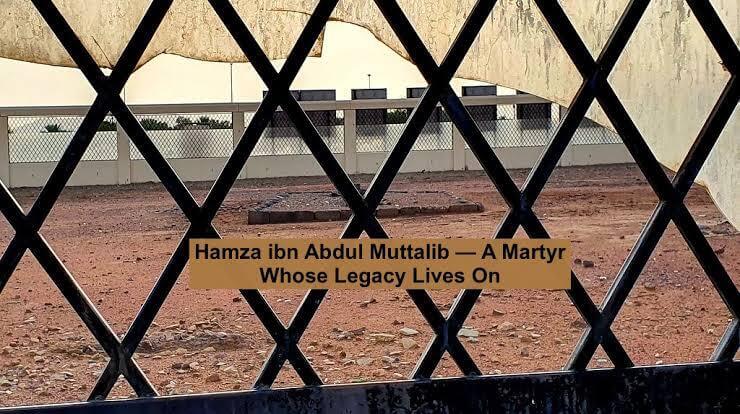
Most pilgrims arrive in Madinah with a list of places to visit – Masjid an-Nabawi, the Rawdah, Quba, Jannat al-Baqi – and Mount Uhud almost always sits near the top of it. But few visitors fully understand why the grave of Hamza ibn Abd al-Muttalib, tucked quietly at the base of that mountain, carries the weight it does. This guide answers that directly, then walks you through everything practical: where the grave is, how far it is from your hotel, when to go, how to behave once you’re there, and how to arrange transport so the visit is calm rather than rushed.
The grave of Hamza ibn Abd al-Muttalib is located inside the Martyrs of Uhud Cemetery (Maqbarat Shuhada Uhud), at the foot of Mount Uhud, roughly 5–6 km north of Masjid an-Nabawi in Madinah. Hamza, the Prophet Muhammad’s (PBUH) paternal uncle, was martyred there during the Battle of Uhud in 625 CE and is honored as Sayyid al-Shuhada – the Chief of Martyrs.
Who Was Hamza ibn Abd al-Muttalib?
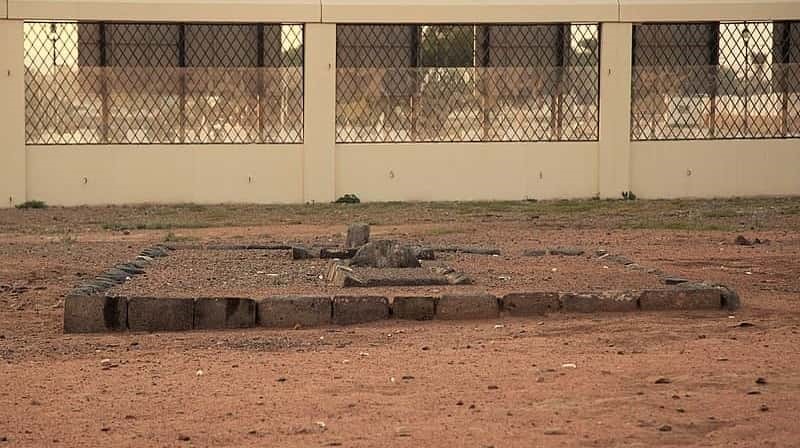
Hamza ibn Abd al-Muttalib was born in Makkah around 568 CE, only a couple of years before his nephew, Prophet Muhammad (PBUH) – the two grew up close in age and closer in bond. He was the son of Abd al-Muttalib and Halah bint Wuhayb, making him a full member of Banu Hashim and a paternal uncle of the Prophet.
Before Islam, Hamza was already known across Makkah as one of its finest hunters and most formidable fighters. His conversion to Islam is one of the more dramatic moments in early Islamic history: after hearing that Abu Jahl had insulted the Prophet (PBUH) near the Kaaba, Hamza confronted and struck him in public, then declared his acceptance of Islam on the spot. From that day, he became one of the faith’s most fearless defenders.
He fought at the Battle of Badr in 2 AH, where his combat skill against the Quraysh nobility earned him the title Asadullah – the Lion of Allah, said to have been used by the Prophet (PBUH) himself.
The Battle of Uhud and Hamza’s Martyrdom
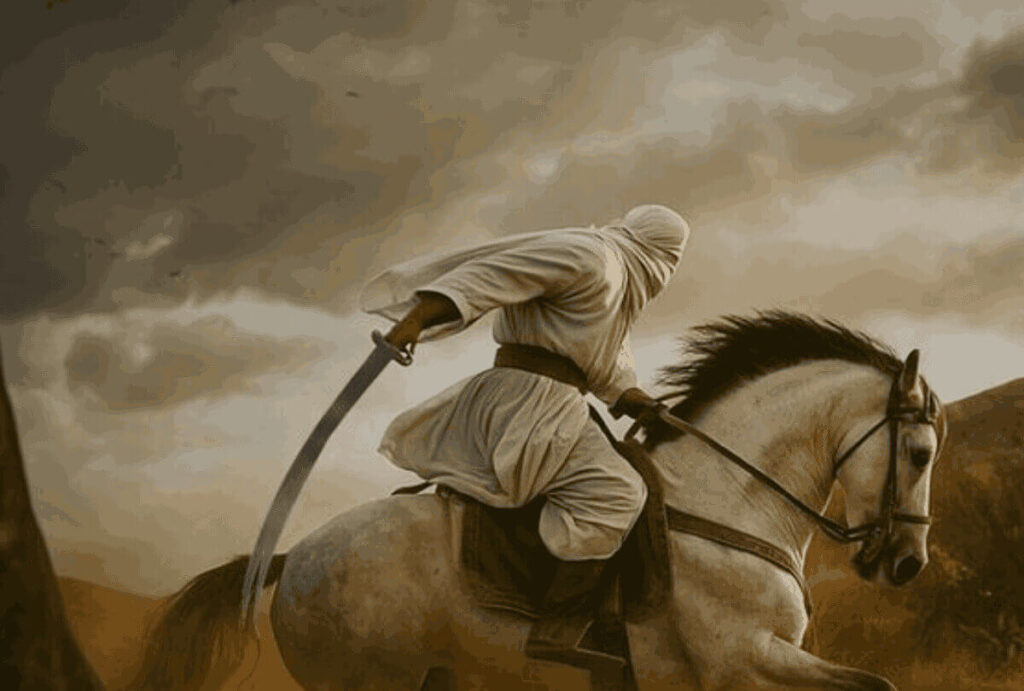
The Battle of Uhud took place on 7 Shawwal, 3 AH (23 March 625 CE) on the plain beneath Mount Uhud, on the outskirts of Madinah. It was the Quraysh’s attempt to avenge their defeat at Badr.
The battle began in the Muslims’ favor. Hamza fought with the same ferocity he had shown at Badr, cutting through the Quraysh ranks. But the tide turned when a group of archers, stationed on a hill to guard the Muslim army’s rear, left their position early to claim war spoils – exposing the army to a flanking attack.
In the chaos that followed, Hamza was killed by Wahshi ibn Harb, an Abyssinian slave who had been promised his freedom by Hind bint Utbah (wife of Abu Sufyan) and by his master Jubayr ibn Mut’im in exchange for killing Hamza, who had killed Jubayr’s uncle at Badr. Wahshi used a javelin, a weapon he was known to throw with unusual accuracy, and struck Hamza fatally. Hind then mutilated his body on the battlefield in an act of revenge – one of the more painful episodes the Prophet (PBUH) is recorded to have witnessed.
He was 54–57 years old at the time of his death, depending on the historical account followed.
Why He Is Called “Chief of the Martyrs”
Islamic tradition holds that the Prophet (PBUH) said: “The chief of martyrs is Hamza ibn Abd al-Muttalib.” He is remembered under several honorific titles:
- Asadullah (Lion of Allah) – for his courage at Badr and Uhud
- Asad ar-Rasul (Lion of the Messenger) – recognizing his role as the Prophet’s fiercest defender
- Sayyid al-Shuhada (Chief of Martyrs) – the highest rank given to any martyr in Islamic history
The Prophet (PBUH) is reported to have prayed the funeral prayer over the seventy martyrs of Uhud, returning each time to also pray specifically over Hamza – a mark of the grief and honor attached to his death.
Where Exactly Is the Grave Located?
The grave of Hamza ibn Abd al-Muttalib sits inside the Martyrs of Uhud Cemetery, a fenced enclosure at the foot of Mount Uhud in northern Madinah, close to King Fahd Road. Around 70 companions martyred in the same battle are buried in and around this same site, though Hamza’s grave – alongside that of his nephew Abdullah ibn Jahsh and companion Mus’ab ibn Umair – sits at the center of the enclosure and is the one most visitors ask for by name.
For orientation, the site sits:
- Approximately 5–6 km north of Masjid an-Nabawi
- A roughly 10–15 minute drive from most central Madinah hotels, traffic depending
- Directly below Jabal Rumah (Archers’ Hill), the elevated position the archers abandoned during the battle
- Within the same visitor area as the Uhud Martyrs’ museum and mosque complex
The structure marking the grave itself is deliberately simple – a low stone enclosure rather than an ornate shrine, in keeping with Islamic guidance against elaborate grave monuments. You will not enter the enclosure or approach individual graves directly; visitors stand respectfully outside the boundary fence to make dua.
Best Time to Visit the Grave of Hamza
Several scholars have noted that visiting the martyrs of Uhud is a virtuous act with clear support in hadith, though the specific recommendation to visit on a Thursday is a scheduling custom rather than a firmly established sunnah – some pilgrims plan their week so that Friday is kept for Jumu’ah at Masjid an-Nabawi, Saturday for Quba, and Thursday for Uhud.
Beyond that, practical timing matters more than the day of the week:
- Early morning or late afternoon avoids both the heat and the crowds that build up after Dhuhr and Asr prayers.
- November to March is the most comfortable season weather-wise, since Madinah’s midday sun in summer months can make the open-air walk from the parking area genuinely uncomfortable.
- Ramadan and Hajj season bring significantly larger crowds and traffic on King Fahd Road; if your schedule allows flexibility, visiting outside these peak weeks makes for a calmer, more reflective ziyarat.
Visiting Etiquette: What You Should Know Before You Go
This is a cemetery of martyrs, not a tourist landmark, and the way you carry yourself there matters.
- Dress modestly. Men should keep shoulders and knees covered; women should wear an abaya or loose clothing with a headscarf.
- Keep your voice low. Loud conversation, phone calls, or group photography right at the fence line is considered disrespectful.
- There is no prescribed ritual beyond greeting the martyrs and making dua for them – Islam does not require or encourage elaborate rites at graves.
- Photography is generally tolerated at a distance, but avoid photographing other visitors mid-prayer or treating the site as a backdrop for casual photos.
- On women visiting: this is one of the more commonly misunderstood points. The strict prohibition some visitors have heard cited (via hadith warning against “frequent” grave-visiting) is understood by the majority of scholars as a caution against excessive or improper visiting, not an outright ban – women do visit Uhud and al-Baqi’ respectfully, in modest dress, without issue. If you’re uncertain, it’s worth asking your group’s guide or scholar for the school of thought your itinerary follows.
- Mind your footing. The ground around the enclosure is uneven gravel with some slope; sturdy, closed shoes are more practical than sandals.
What Else to See Around Mount Uhud
Since you’re already making the trip, most pilgrims combine the visit with a few nearby sites rather than turning back immediately:
- Jabal Rumah (Archers’ Hill) – the elevated position overlooking the cemetery, still climbable via a marked path for those able to manage the incline.
- Uhud Martyrs’ Museum – a small on-site museum with models and displays covering the battle’s timeline, useful for context before or after the ziyarat.
- The battlefield plain itself – the open ground between the mountain and the cemetery where the fighting took place.
- Local shops near the parking area – souvenirs, dates, and refreshments, useful if your group needs a short rest stop.
A single visit typically takes 45 minutes to 1.5 hours, depending on whether you also walk up to Jabal Rumah or spend time at the museum.
How to Get There: Arranging Transport for Your Uhud Ziyarat
Public transport options to Uhud from central Madinah are limited, and most pilgrims – whether solo travelers, couples, or full families – rely on a private vehicle to make the trip comfortably, especially if it’s combined with stops at Masjid Quba, Masjid Qiblatain, and Jannat al-Baqi in the same outing.
Al Maqam Transport runs guided Madinah Ziyarat Taxi tours that cover Mount Uhud, the Martyrs’ Cemetery, Masjid Quba, Masjid Qiblatain, and Jannat al-Baqi in a single, unhurried private trip. A few practical reasons this matters for a site like Uhud specifically:
- Flexible prayer-break timing – Ziyarat schedules built around Dhuhr, Asr, or Maghrib rather than a fixed tour clock, so you’re not rushed out mid-dua.
- Private, non-shared vehicles – a Toyota Camry for solo travelers and couples, Hyundai Staria or GMC Yukon for families, and Toyota Hiace or Coaster Bus for larger groups and delegations – no splitting your party across cars.
- Drivers familiar with the etiquette expected at religious sites – useful if you have elderly family members or children who need a slower pace.
- Fixed, transparent pricing – agreed before you leave the hotel, with no surge pricing during Ramadan or Hajj season.
- Instant WhatsApp booking – message your pickup hotel, preferred time, and group size, and get a confirmed driver and price within minutes.
If you’re flying in specifically for Ziyarat and Umrah, it’s also worth arranging your airport transfer and any intercity travel between Makkah and Madinah with the same provider, so your driver already knows your itinerary and timing preferences rather than starting from scratch each leg of the trip.
FAQs
Where exactly is the grave of Hamza ibn Abd al-Muttalib?
It is inside the Martyrs of Uhud Cemetery at the foot of Mount Uhud, roughly 5–6 km north of Masjid an-Nabawi in Madinah.
Who was Hamza ibn Abd al-Muttalib?
He was the paternal uncle of Prophet Muhammad (PBUH), a companion known for his bravery, and one of the most significant martyrs in early Islamic history, honored as Sayyid al-Shuhada, the Chief of Martyrs.
How did Hamza ibn Abd al-Muttalib die?
He was killed at the Battle of Uhud in 625 CE by Wahshi ibn Harb, who used a javelin and had been promised his freedom for killing Hamza.
Can women visit the grave of Hamza and the Martyrs of Uhud?
Yes. While some hadith caution against excessive grave-visiting, the majority scholarly view permits respectful, modest visits by women to sites like Uhud and Jannat al-Baqi. If you follow a specific school of thought, it’s worth confirming with your group’s scholar.
How far is Mount Uhud from Masjid an-Nabawi?
Approximately 5–6 km, which is typically a 10–15 minute drive depending on traffic on King Fahd Road.
Can I enter the enclosure and stand directly at Hamza’s grave?
No. Visitors stand respectfully outside the fenced boundary of the cemetery rather than entering or approaching individual graves.
What is the best time of day to visit?
Early morning or after Asr tends to be quieter and cooler than midday, especially outside Ramadan and Hajj season.
Is there an entrance fee to visit the Martyrs of Uhud Cemetery?
No. The site is open to visitors free of charge, though the adjacent small museum may have its own visiting arrangements.
How long does a visit to Uhud typically take?
Most visits take 45 minutes to 1.5 hours, longer if you also climb Jabal Rumah or visit the on-site museum.
What should I wear to visit the grave of Hamza?
Modest clothing – men should cover shoulders and knees, and women should wear an abaya or loose clothing with a headscarf.
Is Jabal Rumah (Archers’ Hill) part of the same visit?
Yes, it overlooks the cemetery and is a short, walkable climb for most visitors, offering context on where the archers were stationed during the battle.
Can I combine a visit to Uhud with Quba and Qiblatain mosques in one trip?
Yes, this is the most common way pilgrims structure a Madinah Ziyarat day, typically covering Uhud, Quba, Qiblatain, and Jannat al-Baqi in a single guided outing.
Do I need to book a guide, or can I visit independently?
You can visit independently, but a knowledgeable driver or guide adds useful historical context and helps manage timing around prayers, which is why most pilgrims book a private Ziyarat taxi rather than arranging transport ad hoc.
Is photography allowed at the Martyrs’ Cemetery?
General photography of the site is tolerated at a respectful distance, but avoid photographing other visitors while they are praying or making dua.
How do I get from my Madinah hotel to Mount Uhud?
The most straightforward option is a private Ziyarat taxi, which picks you up directly from your hotel, waits during your visit, and returns you afterward without fixed group timing.

Zeeshan is a professional driver and tour guide who has been living and driving in Saudi Arabia for the past 5 years. With deep knowledge of the roads, landmarks, and Ziyarat locations across Makkah, Madinah, Jeddah, and Taif, he helps pilgrims and travelers enjoy safe, smooth, and well-organized journeys. His experience in Umrah transport, city tours, and airport transfers makes him a trusted expert for visitors exploring Saudi Arabia.