



If you’re planning a Ziyarat trip in Madinah, the Dar Al Madinah Museum is one of the most rewarding stops you can add to your itinerary. Located in the Knowledge Economic City on the eastern edge of the city, it tells the story of Madinah – from the life of Prophet Muhammad ﷺ to the growth of Masjid an-Nabawi over the centuries – through models, rare artifacts, and guided tours in several languages.
This guide covers everything you need to plan your visit: what the museum contains, how much it costs, when it’s open, how far it is from the Prophet’s Mosque, and the easiest way to get there, whether you’re arriving by taxi from your hotel or combining it with other Ziyarat sites in one trip.
What Is the Dar Al Madinah Museum?
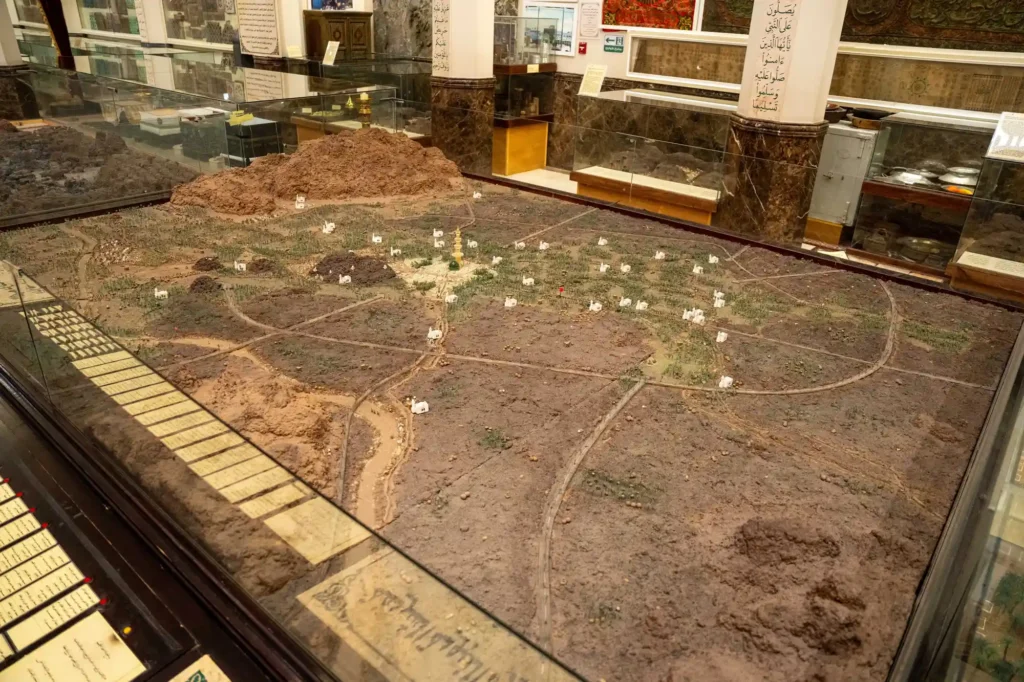
Dar Al Madinah Museum (also written Dar Al-Madinah or Dar Al-Madina Museum) is a heritage museum dedicated to the history of Madinah Al-Munawwarah. According to Madinah’s official tourism authority, it was inaugurated in 2011 and is described as one of the first museums to present Islamic cultural heritage through creative displays, simulation models, and photographs documenting the city’s urban history.
Its core purpose is preservation. The museum was built to safeguard Islamic and architectural monuments, and historical inscriptions that were removed from the vicinity of the Prophet’s Mosque during its various expansions – effectively giving these pieces of history a permanent home rather than letting them disappear as the mosque grew.
Since opening, the museum has built a genuine following among both researchers and everyday visitors. It has released more than 44 publications on Madinah’s landmarks and architectural heritage, and more than 300,000 visitors from 52 countries have passed through its halls.
A Brief History of the Museum
Understanding why this museum exists makes the visit far more meaningful. As Masjid an-Nabawi was expanded across several Saudi-era construction phases, historic columns, doors, inscriptions, and architectural fragments from the mosque’s older structure had to be removed. Rather than lose these artifacts, Madinah’s heritage authorities established Dar Al Madinah Museum to house them permanently, alongside items connected to the Prophet’s ﷺ life, the early Muslim community, and the city’s pre-Islamic and Islamic-era history.
You’ll sometimes see the museum’s opening date listed differently across travel sites (some reference earlier heritage projects tied to Madinah’s old Hejaz Railway history). The official Madinah tourism authority lists 2011 as the inauguration year for the museum in its current form at Knowledge Economic City, and that’s the most reliable reference point for planning purposes.
What You’ll See Inside: Halls and Exhibits
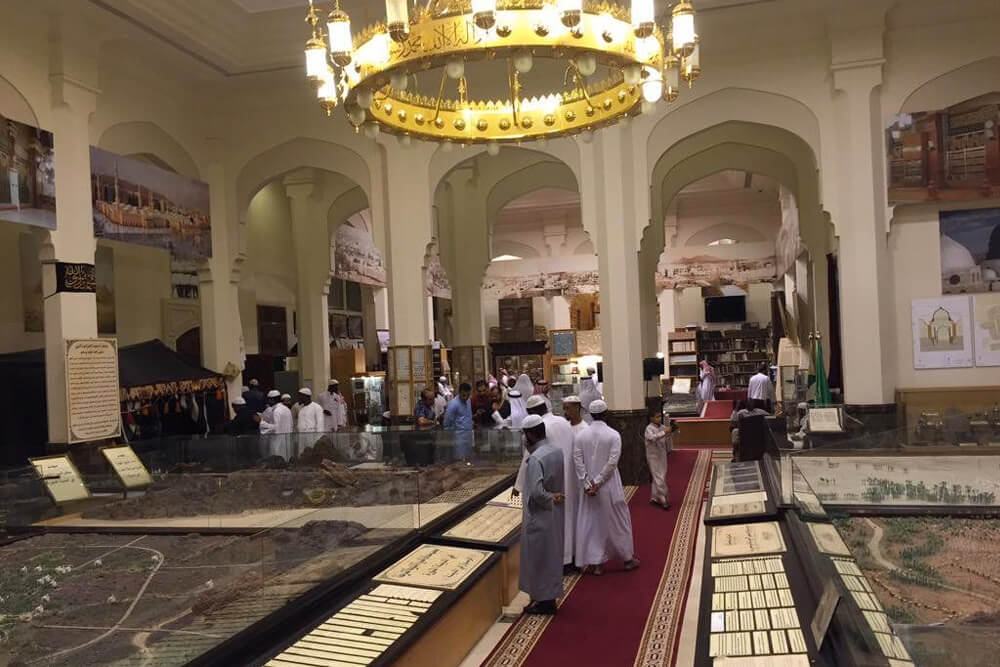
The museum is organized into distinct sections, each covering a different layer of Madinah’s story. It consists of the Prophet’s Biography Hall, the Architectural and Cultural Heritage Hall, a Hospitality Hall, an outer garden, a heritage bazaar, and a museum store.
Inside, expect to see:
- Detailed scale models of Masjid an-Nabawi showing how it looked in different centuries, plus reconstructions of key events such as the Battle of Uhud and the Battle of Khandaq (the Trench).
- Rare artifacts, including pieces of the Kiswa (the cloth covering) of the Kaaba, coins dating back to the Prophet’s era and later periods, Umayyad-era pottery, Islamic manuscripts, rare jewelry, and traditional Madinah clothing and antiques, along with items from the pre-Islamic period.
- A guided narrative, usually structured chronologically: the lineage of the Prophet ﷺ, the pre-revelation period, the Makkah years, the Hijrah, the Madinah years, and the era of the Rightly Guided Caliphs, told largely through the lens of how the city and the mosque changed over time.
- Multilingual tours. Guides typically speak English, Arabic, and Urdu, with some sources noting additional languages are available on request – useful if you’re travelling as a family or in a mixed-nationality group.
- A hospitality touch. Many visitors mention being welcomed with dates, Arabic coffee, and water at the start of the tour – a nice reflection of Madinah’s culture of hospitality.
Families in particular tend to find the model-based storytelling easier for children to follow than a text-heavy museum, since major events like the Hijrah and the early battles are shown visually rather than just explained.
Where Is the Museum Located?
Dar Al Madinah Museum is located in the Knowledge Economic City, in front of the Haramain High-Speed Railway Station, in the eastern part of Madinah. This puts it a short drive – not a walk – from the central Haram area.
Distance from Masjid an-Nabawi: roughly 10.3 km, about a 15–20 minute drive depending on traffic, typically via King Abdul Aziz Road.
Because it sits outside the walking radius of the Haram, almost every visitor arrives by taxi, private transfer, or the Al-Madinah Hop-On Bus rather than on foot. If you’re staying at a hotel near the Prophet’s Mosque, you’ll need transport both ways – something worth planning ahead of time rather than trying to arrange on the spot outside the museum gate.
Opening Hours and Ticket Prices
Reported hours vary slightly between sources – this is common for smaller heritage museums in Saudi Arabia, where schedules can shift seasonally (especially around Ramadan and peak Hajj/Umrah periods). As a general guide:
- Typical hours: late morning to early evening, roughly 11:00 AM–6:00 PM on most days, with the museum closed or operating reduced hours on Fridays.
- Ticket price: around SAR 25 per adult, sold at the gate, making it one of the more affordable cultural stops in Madinah.
- Guided tour: included in the ticket price at most visits, with a dedicated guide walking you through each hall.
Because exact hours can shift, it’s worth confirming the same-day schedule – either through your hotel concierge, the museum’s official social media page, or your transport provider – before heading out, particularly if you’re planning to combine it with other Ziyarat stops in a single afternoon.
How Long Should You Spend There?
Most guided visits take 60 to 90 minutes, covering all the halls plus the outdoor garden and heritage bazaar area. If you enjoy reading inscriptions and examining manuscripts closely, or you’re visiting with a large family group, budget closer to two hours.
Best time to visit: Weekday mornings tend to be quieter than weekends and evenings. If you’re travelling during Ramadan or the Hajj season, expect higher visitor numbers and consider booking your transport for early morning, right after Fajr prayers and breakfast, before the day gets busy.
Getting to Dar Al Madinah Museum: Your Transport Options
Since the museum sits outside easy walking distance from the Haram, most pilgrims and tourists choose one of these options:
- Private taxi from your hotel – the most convenient option, especially for families, elderly pilgrims, or anyone travelling with luggage between Ziyarat stops. A private driver can wait for you at the museum and take you straight to your next destination.
- Al-Madinah Hop-On Bus – a fixed-route tourist bus that stops near several attractions, including the museum. Convenient if your schedule is flexible, but less ideal if you’re short on time or travelling as a family with young children.
- Ride-hailing apps – available in Madinah, though availability and wait times can be inconsistent, particularly during peak pilgrimage seasons.
For pilgrims who want to see the museum as part of a broader Ziyarat route – combining it with Quba Mosque, Qiblatain Mosque, Mount Uhud, and Jannat al-Baqi in the same trip – a private Madinah Ziyarat taxi is generally the most time-efficient option. A licensed driver familiar with the route can plan the order of stops to minimize backtracking, wait while you’re inside each site, and get you back to your hotel comfortably.
Al Maqam Transport offers private Madinah taxi and Ziyarat services with licensed drivers, comfortable vehicles (including sedans for smaller groups and Hyundai Staria or Toyota Hiace vans for families), and flexible stop-and-wait arrangements — useful if your day includes the Dar Al Madinah Museum alongside other historic sites.
Nearby Attractions Worth Combining With Your Visit
Since you’ll already be arranging transport to reach the museum, it makes sense to group it with other landmarks on Madinah’s east side or along the way:
- Quba Mosque – the first mosque built in Islam
- Qiblatain Mosque – where the direction of prayer was changed
- Mount Uhud – site of the Battle of Uhud, discussed extensively inside the museum
- Jannat al-Baqi – the historic cemetery near Masjid an-Nabawi
- Masjid an-Nabawi and the Rawdah – for context before or after seeing the mosque’s historical models
Planning these together in one Ziyarat route, rather than as separate trips, saves both time and transport costs.
Practical Tips for Visiting
- Wear comfortable shoes. Some halls provide shoe covers to keep exhibits clean.
- Bring your camera, but check with your guide about photography rules in specific halls, especially near sensitive artifacts like Kiswa fragments.
- Ask questions. Guides are generally knowledgeable and happy to go deeper into specific periods if you’re interested.
- Visit before or after Ziyarat, not instead of it. The museum adds historical context that makes visiting the actual sites — Uhud, Quba, the Prophet’s Mosque — more meaningful.
- Children benefit from the visual storytelling, but younger kids may lose interest after 45–60 minutes, so plan your pace accordingly.
- Accessibility: several sources note wheelchair-accessible pathways, though it’s worth confirming current accessibility arrangements directly with the museum or your tour operator if this is a specific need.
FAQs
1. What is the Dar Al Madinah Museum known for?
It’s known for its detailed scale models of Masjid an-Nabawi’s historical expansion, artifacts removed from the mosque during renovation work, and a chronological walkthrough of the Prophet’s ﷺ life told through exhibits rather than text alone.
2. Where exactly is the Dar Al Madinah Museum located?
It’s in the Knowledge Economic City, in front of the Haramain High-Speed Railway Station, on the eastern side of Madinah – around 10 km from Masjid an-Nabawi.
3. How much does it cost to enter the Dar Al Madinah Museum?
Tickets are typically around SAR 25 per adult, purchased at the gate, and usually include a guided tour.
4. What are the opening hours?
Hours generally fall in the late-morning-to-early-evening window, with Fridays typically closed or reduced. Since hours can shift seasonally, confirm the current schedule before your visit.
5. Is the museum walking distance from the Prophet’s Mosque?
No. It’s roughly a 15–20 minute drive from Masjid an-Nabawi, so you’ll need a taxi, private transfer, or the hop-on bus to get there.
6. How long does a typical visit take?
Most visits take 60–90 minutes, including all halls, the outdoor garden, and the heritage bazaar.
7. Are guided tours available in English?
Yes. Guides commonly speak English, Arabic, and Urdu, with the tour usually included in the ticket price.
8. Is the museum suitable for children?
Yes – the model-based storytelling of major events like the Hijrah and the early battles tends to hold children’s attention better than text-heavy exhibits, though very young children may tire after about 45–60 minutes.
9. Can I combine a visit with other Ziyarat sites in Madinah?
Yes, and it’s recommended. Many visitors pair it with Quba Mosque, Qiblatain Mosque, Mount Uhud, and Jannat al-Baqi in a single private-taxi route.
10. What kind of artifacts are on display?
Exhibits include pieces of the Kaaba’s Kiswa, historic coins, Umayyad-era pottery, Islamic manuscripts, rare jewelry, and traditional Madinah clothing, alongside models of the Prophet’s Mosque through different eras.
11. Is the museum wheelchair accessible?
Several visitor reports mention accessible pathways, but it’s best to confirm current accessibility features directly with the museum or your transport/tour provider beforehand.
12. What’s the best way to get to the museum from my hotel?
A private taxi is the most convenient option, particularly if you’re combining the museum with other Ziyarat stops, since the driver can wait between locations and manage the route for you.
13. Is the museum open during Ramadan and Hajj season?
It generally remains open, though visitor numbers and possibly hours can shift during peak pilgrimage periods. Confirm same-day timing before heading out.
14. Is photography allowed inside the museum?
Generally yes in most halls, though it’s good practice to check with your guide, since certain sensitive artifacts may have restrictions.
15. How far is the museum from Jeddah or Madinah Airport?
It’s on the Madinah side of the country, roughly a 15–25 minute drive from Prince Mohammad Bin Abdulaziz International Airport (MED), depending on traffic and your exact route.
Plan Your Ziyarat Route With Al Maqam Transport
Visiting the Dar Al Madinah Museum is easiest as part of a planned Ziyarat route rather than a standalone trip. Al Maqam Transport provides private Madinah taxi and Ziyarat services with licensed, English-speaking-friendly drivers who can take you to the museum, wait while you visit, and continue on to Quba Mosque, Mount Uhud, or Jannat al-Baqi — all in one comfortable, unhurried trip. Vehicles range from sedans for couples and small groups to spacious vans for families, with fixed, transparent fares agreed before you set off.
This article is intended as a general planning resource. Opening hours, ticket prices, and access details can change, so confirm current information with the museum or Madinah’s tourism authority before your visit.

Zeeshan is a professional driver and tour guide who has been living and driving in Saudi Arabia for the past 5 years. With deep knowledge of the roads, landmarks, and Ziyarat locations across Makkah, Madinah, Jeddah, and Taif, he helps pilgrims and travelers enjoy safe, smooth, and well-organized journeys. His experience in Umrah transport, city tours, and airport transfers makes him a trusted expert for visitors exploring Saudi Arabia.