



If you’ve searched for the “Al Hijrah walk,” you’ve probably come across two different things: a peaceful, modern walkway in Madinah, and the historic 622 CE journey of Prophet Muhammad ﷺ from Makkah to Madinah. This guide clears up that confusion in the first few lines, then gives you everything you need to actually plan a visit — location, distances, timing, nearby landmarks, and how to get there safely from your hotel or the airport.
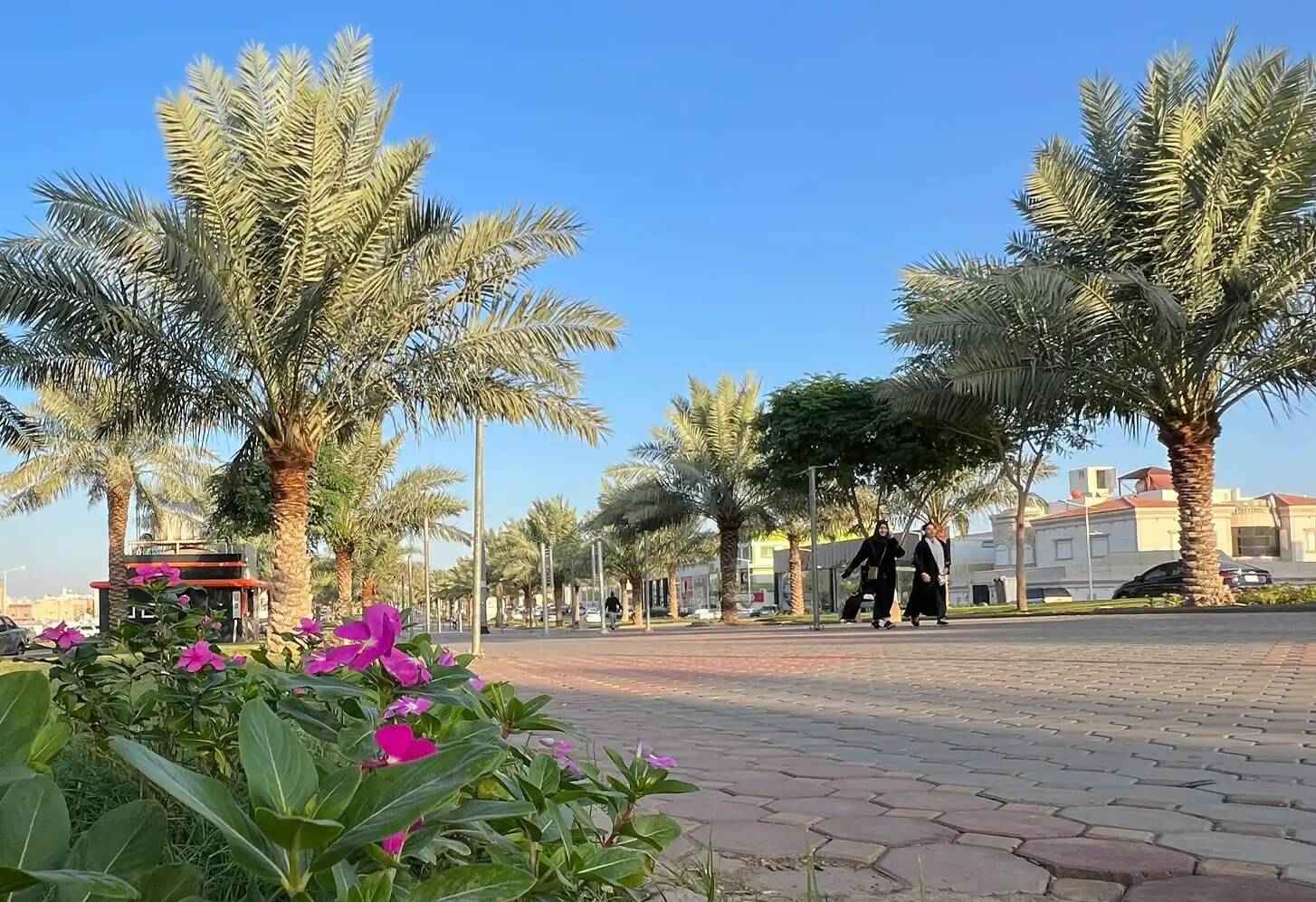
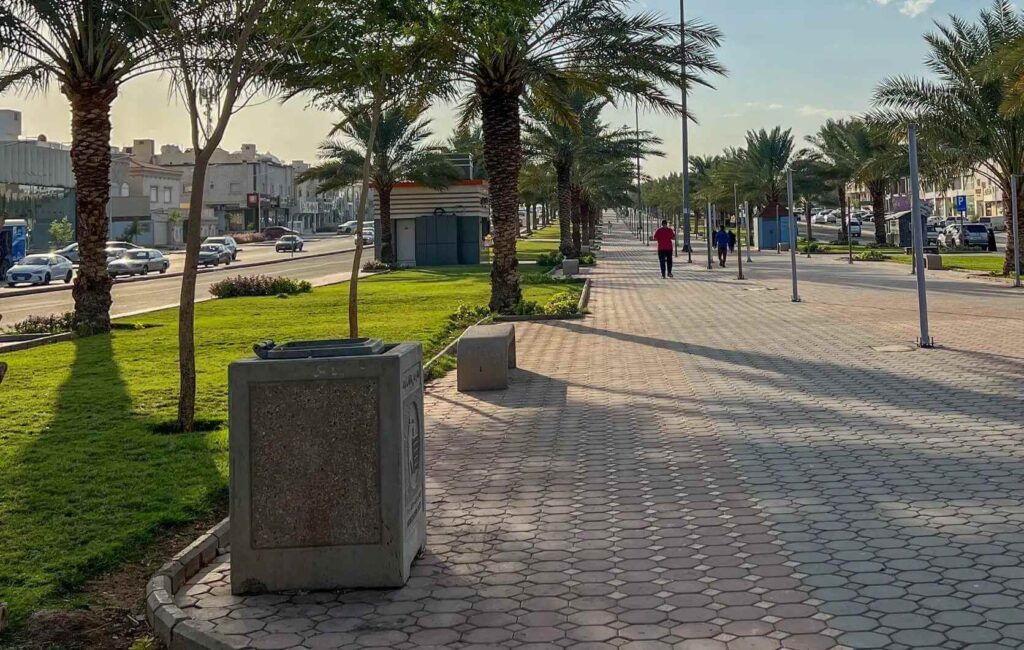
The Al-Hijrah Walking Trail is a 3-kilometre public walkway in Madinah, running along Abbas bin Ubadah Street between King Abdullah Road and Zarara bin Qais Road, about 2.8 km from Quba Mosque. It is a modern recreational trail – lit at night, lined with palm trees, and fitted with benches and exercise equipment – built under Saudi Arabia’s Vision 2030 Quality of Life Program. It is not the ancient desert route the Prophet ﷺ travelled during the Hijrah, though the name honours that migration.
What Exactly Is the Al-Hijrah Walking Trail?
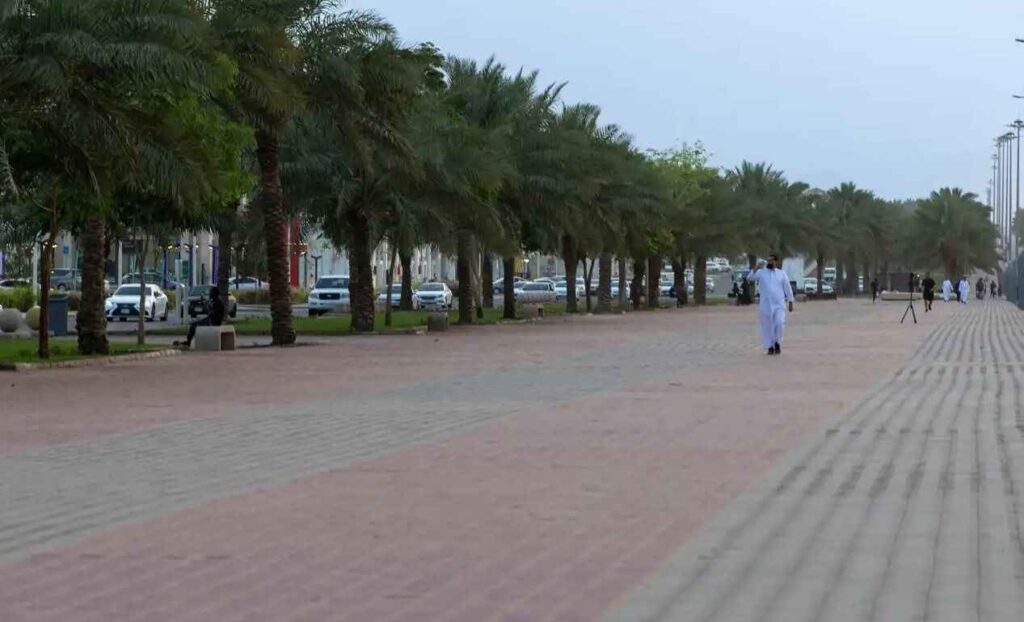
The Al-Hijrah Walking Trail (sometimes written “Al Hijrah Walkway” or “Hijrah Walk”) is one of the largest and busiest walking paths in Madinah. It was developed as part of a wider push to give residents and visitors safe, shaded, purpose-built spaces for walking, jogging, and cycling – the kind of everyday wellness infrastructure that Vision 2030’s Quality of Life Program prioritises across Saudi cities.
The trail itself is straightforward:
- Length: approximately 3 km, one of the longer dedicated walkways in the city
- Location: Abbas bin Ubadah Street, extending from King Abdullah Road to Zarara bin Qais Road
- Distance from Quba Mosque: roughly 2.8 km
- Surface and lighting: paved, well-lit pathway suitable for evening and night walks
- Facilities: benches, shaded rest areas, outdoor exercise equipment, parking on both sides
- Surroundings: palm trees and landscaped greenery along both edges
- Nearby amenities: grocery stores, cafés, and restaurants clustered at both trailheads
- Access hours: open to the public throughout the day and night
Locals use it for daily exercise, but pilgrims increasingly add it to their Madinah itinerary too – it’s close enough to Quba Mosque that many combine the two in a single outing, and reviewers frequently mention timing their walk around prayer times so they can step into a nearby mosque along the way.
Al-Hijrah Walking Trail vs. the Historical Hijrah Route: Don’t Confuse Them
Because the name “Hijrah” carries such deep meaning in Islamic history, it’s worth separating two very different things clearly:
- The Al-Hijrah Walking Trail (Madinah) – the modern 3-km recreational walkway described above. This is almost certainly what you’ll actually visit on a trip to Madinah.
- The historical Hijrah route – the roughly 550-km desert path that Prophet Muhammad ﷺ and Abu Bakr (RA) travelled from Makkah to Madinah in 622 CE, fleeing persecution to establish the first Muslim community. This journey marks the start of the Islamic (Hijri) calendar and is commemorated today through organised, multi-day trekking expeditions and reenactment walks led by scholars and charity groups, often taking 10–16 days with full desert-camping support.
If your interest is spiritual reflection on the Hijrah journey itself, you’ll find that context in Seerah literature and in guided desert-trek programs – not on the paved walkway in Madinah. If you simply want a pleasant, safe place to walk near the holy sites during your Umrah or Hajj trip, the Al-Hijrah Walking Trail is exactly that.
Why Pilgrims and Tourists Add It to Their Madinah Itinerary
Most visitors to Madinah spend their days moving between Masjid an-Nabawi, the Rawdah, Quba Mosque, Qiblatain Mosque, Mount Uhud, and Jannat al-Baqi. Between these spiritually intense visits, the Al-Hijrah Walking Trail offers something different: unhurried, open-air movement.
A few reasons it has become popular:
- Proximity to Quba Mosque. At under 3 km away, it’s an easy add-on after visiting the mosque where the Prophet ﷺ prayed on his arrival in Madinah.
- Family-friendly layout. Wide, flat, well-lit paths make it suitable for children, elderly relatives, and wheelchair users, with parking on both sides for easy drop-off.
- A break from crowds. Unlike the Haram areas during peak Umrah season or Ramadan, the trail rarely feels congested.
- Food and rest stops built in. Cafés, juice bars, and small restaurants sit at both ends, so a walk can easily turn into a relaxed evening out.
- Safe for solo and group walkers. Good lighting and steady foot traffic make it comfortable for an early morning or after-Isha walk.
Best Time to Visit the Al-Hijrah Walking Trail
Madinah’s climate is hot and dry for most of the year, so timing your visit matters more than almost anything else.
- Early morning (before 8 AM): Coolest conditions, good light for photos, quieter paths.
- After Asr to after Isha: The most popular window — temperatures drop, the trailhead cafés fill up, and many pilgrims combine the walk with evening prayers at a nearby mosque.
- Midday (11 AM–4 PM), especially April–September: Best avoided; direct sun on an open walkway gets uncomfortable quickly, particularly for families with young children or elderly travellers.
- During Ramadan: Post-Iftar walks are common and pleasant, though trailhead restaurants can be busy in the hour after breaking fast.
- During Hajj and peak Umrah seasons: The trail itself stays relatively calm even when the Haram areas are packed, making it a good decompression stop for pilgrims.
Nearby Landmarks Worth Combining With Your Walk
Because the trail sits in the Quba district, it pairs naturally with a short Ziyarat (visitation) circuit. Popular combinations include:
- Quba Mosque – the first mosque built in Islam, roughly 2.8 km from the trail
- Qiblatain Mosque – where the qibla direction changed from Jerusalem to Makkah
- Masjid an-Nabawi and the Rawdah – the Prophet’s Mosque, the spiritual centre of Madinah
- Jannat al-Baqi – the historic cemetery adjacent to the Prophet’s Mosque
- Mount Uhud – site of the Battle of Uhud, a short drive from central Madinah
A typical half-day Ziyarat plan looks like: hotel pickup → Quba Mosque → Al-Hijrah Walking Trail for a rest stop and light meal → Qiblatain Mosque → return to Masjid an-Nabawi in time for a prayer.
Getting to the Al-Hijrah Walking Trail: Transportation Options
The trail sits away from the immediate footprint of Masjid an-Nabawi, so most visitors need private transport rather than walking the whole way from their hotel — especially families, elderly pilgrims, or anyone travelling in Madinah’s midday heat.
By Private Taxi (Recommended for Most Visitors)
A private Madinah taxi is the most practical option for reaching the trail because it removes the guesswork around parking, timing, and route knowledge. Al Maqam Transport arranges direct hotel-to-trail transfers, as well as combined Ziyarat taxi packages that include Quba Mosque, Qiblatain Mosque, and the walking trail in a single, pre-arranged trip.
This matters most for:
- Families with children or elderly members, who benefit from door-to-door pickup rather than navigating ride-hailing apps on the ground
- Groups performing Umrah, who can book one vehicle for the whole Ziyarat circuit instead of arranging transport for each stop separately
- Evening walkers, who want a reliable pickup arranged in advance rather than searching for a taxi after dark
Recommended Vehicles by Group Size
- Toyota Camry — solo travellers or couples
- Hyundai Staria / GMC Yukon — small families or groups of 4–6 with luggage
- Toyota Hiace — mid-size groups of 6–10
- Coaster Bus — larger groups, tour parties, or Hajj/Umrah delegations
Arriving From Jeddah or Prince Mohammad Bin Abdulaziz Airport
Pilgrims flying into King Abdulaziz International Airport (JED) for Umrah, then continuing to Madinah, or flying directly into Prince Mohammad Bin Abdulaziz Airport (MED), can book an airport transfer straight to their Madinah hotel, then arrange a separate short trip to the trail and Quba area once settled. Booking both legs with the same provider – airport pickup and local Ziyarat transport – keeps the schedule simple and avoids last-minute negotiating with unfamiliar drivers.
Booking Process
- Share your arrival details (flight number, hotel name, group size, and preferred pickup time).
- Choose your vehicle type based on group size and luggage.
- Confirm whether you want a single trail visit or a combined Ziyarat package (Quba Mosque, Qiblatain Mosque, and the trail).
- Receive driver and vehicle confirmation before your pickup window.
- A licensed driver arrives at your hotel or the airport, tracks your flight if relevant, and handles the route from there.
Practical Travel Tips
- Wear comfortable, closed walking shoes – the trail is paved but long enough that sandals become uncomfortable after the first kilometre.
- Carry water, even during cooler months; Madinah’s dry heat causes faster dehydration than visitors expect.
- Check prayer times before you go so you can time your walk to end near a mosque for Maghrib or Isha.
- Bring a light jacket for winter evenings – Madinah nights can be noticeably cool between November and February.
- Confirm return pickup time with your driver rather than assuming you’ll find transport on the spot, particularly late at night.
- Respect the trail’s shared use – it’s used by joggers, cyclists, and families with strollers, so keep to one side when walking in a group.
Safety and Accessibility
The trail is well-lit and monitored, with steady foot traffic most evenings, which makes it comfortable for solo walkers and families alike. The flat, paved surface and bench seating at intervals also make it manageable for elderly pilgrims and those with mobility limitations, though anyone using a wheelchair should still arrange door-to-door transport rather than parking a distance away and walking in. Licensed drivers familiar with the Quba district can advise on the least crowded pickup and drop-off points along Abbas bin Ubadah Street.
Final Thoughts
The Al-Hijrah Walking Trail is a small but genuinely useful addition to a Madinah itinerary – not a religious site in itself, but a well-designed, restful space near one that is. Whether you’re stretching your legs after Ziyarat, taking an evening walk with family, or simply looking for a calm break between mosque visits, knowing the exact location, the best time of day, and how to get there comfortably makes the difference between a pleasant stop and a frustrating detour. Al Maqam Transport can handle that last part – reliable, licensed drivers, clean vehicles suited to your group size, and pickup timed around your schedule, whether that’s a hotel transfer, an airport pickup, or a full Ziyarat taxi package.
FAQs
1. What is the Al-Hijrah Walking Trail in Madinah?
It’s a 3-km public walkway along Abbas bin Ubadah Street in Madinah, built for walking, jogging, and cycling, and developed under Saudi Arabia’s Vision 2030 Quality of Life Program. It is separate from the historical Hijrah journey of the Prophet ﷺ.
2. Is the Al Hijrah walk the same as the Prophet’s Hijrah journey route?
No. The walking trail is a modern recreational path in Madinah. The historical Hijrah was the roughly 550-km journey Prophet Muhammad ﷺ and Abu Bakr (RA) made from Makkah to Madinah in 622 CE, which is commemorated separately through guided desert treks, not through this walkway.
3. How far is the Al-Hijrah Walking Trail from Quba Mosque?
About 2.8 km, making it easy to visit both in one trip.
4. How long is the trail?
Approximately 3 kilometres, running from King Abdullah Road to Zarara bin Qais Road.
5. Is the trail suitable for families and children?
Yes. It’s flat, paved, well-lit, and has parking on both sides, plus cafés and restaurants at the trailheads for breaks.
6. What is the best time of day to walk the trail?
Early morning before 8 AM or from late afternoon through after Isha, when temperatures are cooler. Midday, especially from April to September, is best avoided.
7. Are there restaurants or shops near the trail?
Yes, grocery stores, cafés, and restaurants are available at both trailheads.
8. Can I combine the trail with Quba Mosque and Qiblatain Mosque in one trip?
Yes, this is one of the most common ways visitors use the trail — as a rest stop within a broader Ziyarat circuit that includes Quba Mosque and Qiblatain Mosque.
9. How do I get from my Madinah hotel to the Al-Hijrah Walking Trail?
The most convenient option is a private taxi transfer, since the trail is a few kilometres from the central Haram area. Al Maqam Transport offers direct hotel-to-trail transfers and combined Ziyarat taxi packages.
10. Is the trail open at night?
Yes, it’s open and lit throughout the day and evening, and is a popular after-Isha walking spot.
11. What vehicle should I book for a family Ziyarat trip that includes the trail?
A Hyundai Staria or GMC Yukon works well for small families with luggage; a Toyota Hiace suits larger groups of six to ten; a Coaster bus is better for full tour groups or Hajj/Umrah delegations.
12. Does Al Maqam Transport offer airport transfers to Madinah before visiting the trail?
Yes. Pilgrims arriving via Jeddah’s King Abdulaziz International Airport or directly into Prince Mohammad Bin Abdulaziz Airport in Madinah can book an airport-to-hotel transfer, then arrange a separate local Ziyarat or trail visit once settled.
13. Is it safe to walk the trail alone in the evening?
Yes, the trail is well-lit with regular foot traffic, though solo travellers, especially women, may still prefer arranging a fixed pickup time with a driver rather than waiting on the street after dark.
14. Do I need to book transport in advance or can I find a taxi on-site?
Booking in advance is strongly recommended, particularly during peak Umrah season, Ramadan, and Hajj, when on-the-spot availability near the trail is less predictable.
15. Is the walking trail free to access?
Yes, it’s a public walkway open to residents and visitors at no cost; only transport to and from the trail needs to be arranged.

Zeeshan is a professional driver and tour guide who has been living and driving in Saudi Arabia for the past 5 years. With deep knowledge of the roads, landmarks, and Ziyarat locations across Makkah, Madinah, Jeddah, and Taif, he helps pilgrims and travelers enjoy safe, smooth, and well-organized journeys. His experience in Umrah transport, city tours, and airport transfers makes him a trusted expert for visitors exploring Saudi Arabia.