



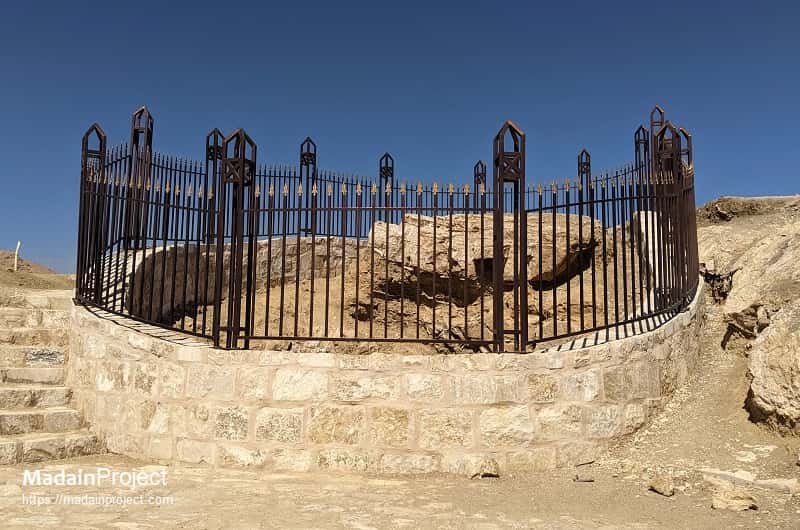
In the northwestern corner of Saudi Arabia, where rugged sandstone formations meet ancient desert valleys, lies Al Bada, a historic oasis closely associated with the ancient land of Madyan (Midian). Located in the Tabuk Region, Al Bada is one of the Kingdom’s fascinating destinations for travelers interested in Islamic history, archaeology, ancient civilizations, and the landscapes of northwestern Arabia.
Unlike Saudi Arabia’s larger tourism destinations, Al Bada offers a quieter encounter with the past. Its archaeological landscape includes monumental Nabataean tombs, ancient wells, settlement remains, and evidence of communities that inhabited this oasis over thousands of years.
For Muslim travelers, the area holds particular significance because Islamic historical tradition associates Madyan with Prophet Shu’ayb (peace be upon him) and the journey of Prophet Musa (Moses, peace be upon him). For archaeology enthusiasts, Al Bada provides an opportunity to explore the history of Nabataean civilization beyond the better-known sites of Hegra and Petra.
Whether you are planning a historical excursion from Tabuk, exploring the northwestern region of Saudi Arabia, or arranging a private vehicle for a family trip, this guide explains what makes Al Bada important, what you can see, how to reach it, and how to plan a comfortable visit.
What Is Al Bada in Saudi Arabia?
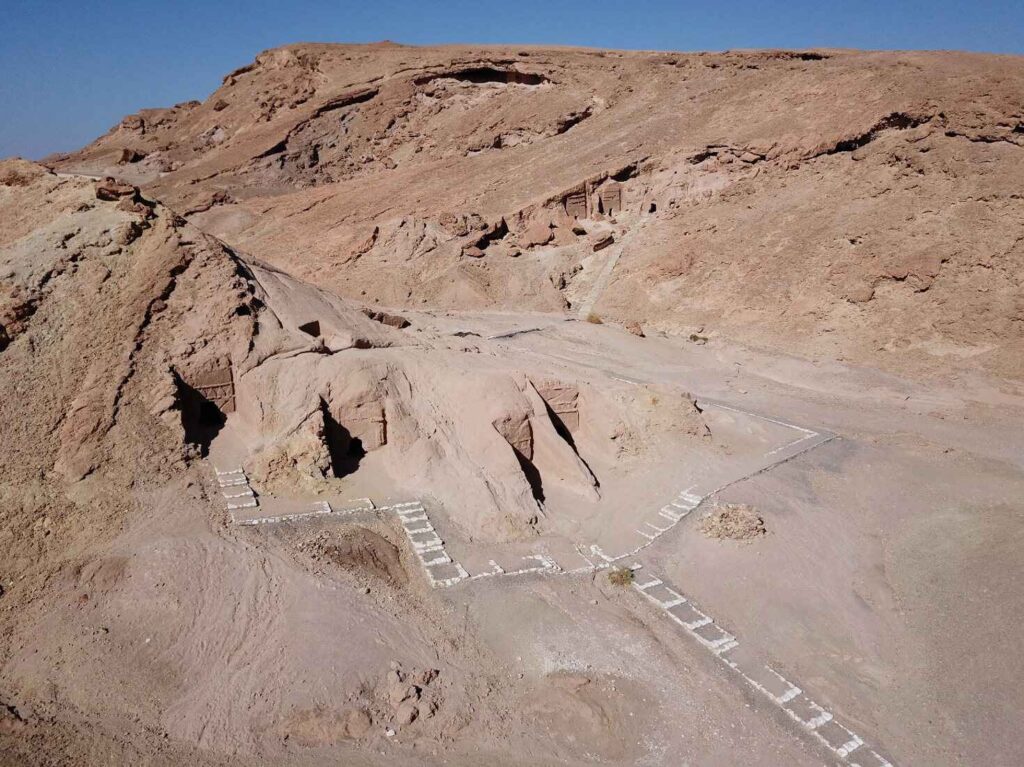
Al Bada (البدع), also written Al Bad, Al-Badʿ, Al-Bad’a, or Al Bida, is a town and historic oasis in the Tabuk Region of northwestern Saudi Arabia. It is associated with ancient Madyan and is especially known for the rock-cut tombs of Mughayr Shu’ayb.
The area has long been important because of its natural water resources and its position along routes connecting the Arabian Peninsula with the Sinai Peninsula, Egypt, and the Levant.
Today, Al Bada attracts interest from several types of visitors. Religious travelers come to understand the geography and traditions associated with Madyan. History enthusiasts explore the remains of ancient settlements and Nabataean architecture. Nature lovers appreciate the surrounding desert, valleys, and mountain landscapes.
Archaeological investigations have identified evidence of human activity extending back into prehistory, followed by occupation during several later historical periods. The oasis is therefore much more than a single monument: it represents a landscape of settlements, water systems, burial sites, and historic routes. culture.gouv.fr+1
Al Bada at a glance
| Feature | Details |
|---|---|
| Arabic name | البدع |
| Region | Tabuk, Saudi Arabia |
| Historical association | Ancient Madyan (Midian) |
| Famous landmark | Mughayr Shu’ayb |
| Main heritage | Nabataean tombs, ancient wells, settlement remains |
| Approximate distance from Tabuk | 225 km |
| Suggested visit duration | Half-day locally or full-day excursion from Tabuk |
| Best general visiting season | October to April |
| Suitable for | History enthusiasts, families, cultural tourists, religious-history travelers |
Where Is Al Bada Located?
Al Bada lies in the western part of Saudi Arabia’s Tabuk Region, east of the Gulf of Aqaba and inland from the northwestern Red Sea coast.
The historic oasis developed along Wadi Afal, a valley that helped shape the area’s settlement patterns and water management. Archaeological research describes an oasis extending approximately seven kilometers in length, with its width varying considerably along the valley.
The surrounding geography combines desert plains, rocky hills, sandstone formations, and mountain landscapes. These natural features helped determine where ancient communities established settlements, built wells, and carved burial monuments.
Al Bada is approximately 225 kilometers from Tabuk city and around 45 kilometers from the Gulf of Aqaba coast, according to Saudipedia.
Why was Al Bada’s location important?
Ancient settlements in dry regions depended on reliable access to water. An oasis such as Al Bada could support people, livestock, agricultural activity, and travelers crossing otherwise challenging terrain.
Its location also connected different geographical zones. Routes through northwestern Arabia linked coastal communities, inland settlements, and commercial centers farther north.
As trade networks developed, Al Bada became part of a wider regional landscape influenced by several ancient cultures. Later, during the Islamic period, the area retained importance for travelers and pilgrims moving toward the holy cities of Makkah and Madinah.
History of Al Bada: From Ancient Madyan to the Islamic Period
The history of Al Bada extends across several periods, making it an important location for understanding the development of northwestern Arabia.
Although the name Madyan is strongly associated with religious history, archaeological research provides a broader picture of how the oasis was occupied and developed.
Early human activity and prehistoric settlement
The earliest evidence of human activity in the Al Bada region dates to prehistoric times.
Researchers have identified early sites in and around the oasis, including locations associated with the Palaeolithic period. Archaeological investigations have documented settlement areas and burial remains that help establish the region’s long history of human occupation.
These discoveries demonstrate that the area attracted communities long before the appearance of the monumental Nabataean tombs visible today.
The availability of water, access to surrounding landscapes, and connections with neighboring regions likely contributed to its long-term importance.
Al Bada and the ancient land of Madyan
Madyan, or Midian, is a historical geographical name associated with northwestern Arabia and the wider region surrounding the Gulf of Aqaba.
Islamic geographical sources identify Al Bada with Madyan. Modern archaeological research supports the importance of this identification in understanding the oasis’s historical geography, while acknowledging that the boundaries and political organization of ancient Midian remain subjects of research.
During the late second millennium BCE, the oasis may have formed part of a regional entity associated with Midian.
The location later developed through different periods of occupation, showing that the significance of Al Bada did not end with the ancient communities remembered in religious traditions. culture.gouv.fr+1
Al Bada during the Nabataean period
One of the most visible chapters of Al Bada’s history belongs to the Nabataeans, an ancient Arabian civilization known for trade networks, stone architecture, and elaborate rock-cut tombs.
The Nabataeans are particularly associated with Petra in present-day Jordan and Hegra in Saudi Arabia.
Al Bada formed another important center of Nabataean activity in northwestern Arabia.
Archaeological investigations have revealed evidence of a substantial settlement at Al-Malha, together with surrounding burial grounds, smaller habitation areas, and public or administrative structures.
Finds from the oasis include pottery, coins, inscriptions, architectural remains, and objects reflecting everyday life.
The presence of monumental tombs and refined material culture suggests that Al Bada supported a socially complex community rather than merely serving as a temporary caravan stop.
Researchers have identified significant occupation from approximately the middle of the first century BCE through the second century CE, with continued activity into the Byzantine period. culture.gouv.fr
Al Bada during the Islamic period
Following the spread of Islam, the oasis remained connected to regional travel networks.
Its position along the Egyptian pilgrimage route gave it particular importance for travelers heading toward Makkah and Madinah.
Pilgrimage caravans crossing long desert routes required access to water, rest areas, and places where animals and supplies could be managed.
Historical wells, reservoirs, and settlement remains help explain the practical importance of Al Bada during these journeys.
Archaeological sites such as Al-Malqata contain evidence of early Islamic occupation, including structures, pottery, and water-related installations.
The history of Al Bada therefore connects ancient Arabian civilizations with the later development of Islamic travel and pilgrimage routes.
Al Bada and Prophet Shu’ayb: Religious and Historical Significance
One of the main reasons Al Bada is known among Muslim travelers is its association with Prophet Shu’ayb (peace be upon him).
In Islamic tradition, Prophet Shu’ayb was sent to the people of Madyan, who are mentioned in the Holy Quran.
His message emphasized the worship of Allah, honesty in commercial dealings, justice, and the importance of giving people their rightful measure and weight.
The story of Madyan is therefore associated not only with faith but also with ethical conduct in society and trade.
What does the Quran say about the people of Madyan?
The Quran mentions Madyan in several passages, including Surah Al-A’raf (7:85–93), Surah Hud (11:84–95), and Surah Al-Ankabut (29:36–37).
These passages describe Prophet Shu’ayb’s call to his people and his warnings against dishonesty and corruption.
The references to commercial fairness are especially meaningful when considered alongside the historical role of northwestern Arabia in regional trade.
However, the Quran does not provide modern geographical coordinates for the settlement, and religious references should not be treated as archaeological identification of individual buildings or tombs.
The connection between Prophet Musa and Madyan
Madyan is also important in the story of Prophet Musa (Moses, peace be upon him).
According to Surah Al-Qasas (28:22–28), Musa traveled toward Madyan after leaving Egypt. Upon arriving at a watering place, he encountered two women waiting to water their animals.
Musa helped them, and the Quran subsequently describes his meeting with their elderly father, his marriage arrangement, and his years of service.
Many Islamic traditions identify the father with Prophet Shu’ayb, although the Quranic passage does not explicitly name him.
For travelers visiting Al Bada, this story provides religious context for the area’s traditional association with Madyan.
It is important, however, to distinguish the Quranic account from later local identifications of particular wells and monuments.
Are the Caves of Shu’ayb actually connected to the prophet?
The site known as Mughayr Shu’ayb is traditionally associated with Prophet Shu’ayb, but its surviving monumental rock-cut tombs are primarily attributed to the Nabataean period.
This is an important chronological distinction.
The archaeological monuments visible today belong to a period much later than the era traditionally associated with the prophetic narratives.
Consequently, visitors should understand the caves as historically significant Nabataean structures located in a landscape associated with Madyan, rather than as archaeologically verified residences of Prophet Shu’ayb.
This distinction respects both religious tradition and the evidence established through archaeological study.
Best Historical Places to Visit in Al Bada
Al Bada’s attractions are concentrated around its archaeological landscape, ancient water sources, and nearby natural formations.
The following sites provide the clearest introduction to its history.
1. Mughayr Shu’ayb – The Famous Caves of Shu’ayb
Mughayr Shu’ayb, also called Magha’ir Shu’ayb or Mada’in Shu’ayb, is the best-known archaeological attraction in Al Bada.
The site contains ancient rock-cut tombs carved into sandstone formations.
Visitors can observe architectural features associated with Nabataean funerary traditions, including rectangular entrances, carved columns, stepped decorative elements, and monumental facades.
Some tombs have relatively simple exteriors, while others display more elaborate architectural ornamentation.
The site is often compared with Petra and Hegra because all three preserve examples of Nabataean rock-cut architecture.
However, Mughayr Shu’ayb has its own character, shaped by the local sandstone, the arrangement of the tombs, and the surrounding oasis landscape.
What makes Mughayr Shu’ayb special?
The tombs illustrate how ancient builders used natural rock formations to create lasting funerary monuments.
Instead of constructing an entire building from separate stone blocks, craftsmen carved architectural forms directly into the rock face.
This required careful planning, skilled stoneworking, and an understanding of the geological material.
The surviving facades also provide evidence of artistic influences and architectural traditions shared across the Nabataean world.
For visitors, the most rewarding approach is to examine the different facades slowly, comparing their entrances, proportions, decorative features, and positions within the landscape.
How long should you spend at Mughayr Shu’ayb?
Allow approximately 60–90 minutes for a relaxed visit, depending on permitted access, weather conditions, and personal interest.
Travelers particularly interested in archaeology or photography may want more time.
Wear comfortable walking shoes, carry drinking water, and follow any marked paths or heritage-site instructions.
Do not enter closed chambers, climb fragile facades, or touch carved surfaces unnecessarily.
2. Al-Suaidani Well – An Ancient Water Source
Al-Suaidani Well is another historically important feature of the Al Bada oasis.
Located east of the Mughayr Shu’ayb area, the well is associated with the ancient water system that supported settlement in the valley.
The well was cut into bedrock and has been linked archaeologically to the Nabataean period, although its origins may be older.
Historical accounts and local traditions also associate the area with the watering place mentioned in the story of Prophet Musa.
The well is sometimes referred to as the Well of Moses, but the precise identification of a surviving archaeological structure with the Quranic account cannot be independently established.
Why is the well important?
In an arid environment, access to groundwater could determine whether a settlement prospered.
A reliable well could support agriculture, livestock, domestic needs, and passing caravans.
The remains at Al-Suaidani help visitors understand how water shaped the history of Al Bada and why this oasis remained important through different historical periods.
The surviving structure is an archaeological feature rather than a recreational water attraction. Visitors should observe it from permitted areas and avoid approaching unstable edges.
3. Al-Malha – Remains of an Ancient Settlement
Al-Malha is one of the most significant archaeological settlement areas in the oasis.
Excavations have revealed evidence of substantial occupation during the Nabataean and Roman periods, with later phases of use.
The settlement occupied approximately 26 hectares and formed part of a wider landscape that included tombs, smaller habitation areas, and other structures.
Archaeological work has identified domestic buildings, architectural remains, and objects associated with daily life.
One particularly interesting discovery was a building containing multiple rooms and evidence of different occupation phases.
These findings provide a more complete picture of ancient Al Bada than the rock-cut tombs alone.
The tombs reveal funerary architecture, while the settlement remains help researchers understand how people lived, organized households, and participated in regional economic networks.
Visitor note: Al-Malha is an archaeological research area, not necessarily a freely accessible tourist attraction. Confirm current access arrangements before including it in your itinerary.
4. Al-Malqata – Early Islamic Archaeological Remains
Al-Malqata provides evidence of occupation during the Islamic period.
The site includes archaeological remains associated with buildings, pottery, and water-related infrastructure.
Its significance lies in demonstrating that Al Bada continued to support communities after the decline of Nabataean political influence.
For visitors interested in Islamic history, Al-Malqata helps connect the oasis’s ancient past with its later role in regional travel and pilgrimage.
The remains are less visually dramatic than the monumental tombs, but they are valuable for understanding the continuity of settlement.
As with Al-Malha, access should be confirmed before visiting.
5. Wadi Afal – The Valley That Shaped Al Bada
Wadi Afal is a central geographical feature of the Al Bada oasis.
The valley provided a natural corridor through the landscape and influenced the placement of settlements, water sources, and archaeological monuments.
Its surrounding terrain offers an opportunity to appreciate the environmental conditions that shaped human activity in the region.
The contrast between dry rocky formations and the historic oasis setting is particularly interesting for landscape photography.
Wadi environments also require caution.
Rainfall in upstream areas can produce sudden flooding, even when conditions appear dry at a visitor’s immediate location.
Avoid entering narrow drainage channels during unstable weather and never attempt to cross flowing floodwater.
6. Ancient Water Systems and Pilgrimage Infrastructure
Beyond the main well, Al Bada contains evidence of historical water management, including cisterns and installations associated with later periods.
Such infrastructure was essential to the survival of oasis communities and the movement of travelers.
For pilgrimage caravans, dependable water supplies were especially important because journeys across the Arabian Peninsula could involve long stretches between major settlements.
These remains are a reminder that the history of Al Bada is not limited to monumental architecture.
Everyday systems for storing and distributing water were equally important in sustaining the oasis.
Al Bada vs Hegra and Petra: What Is the Difference?
Travelers familiar with the famous Nabataean sites of Petra and Hegra may wonder whether Al Bada offers a similar experience.
All three sites share architectural connections, but they differ in scale, setting, and visitor infrastructure.
| Feature | Al Bada | Hegra | Petra |
|---|---|---|---|
| Country | Saudi Arabia | Saudi Arabia | Jordan |
| Famous for | Mughayr Shu’ayb tombs | Monumental Nabataean tombs | Extensive rock-cut city |
| Historical context | Ancient oasis and Nabataean settlement | Major Nabataean settlement and necropolis | Nabataean capital |
| Landscape | Oasis, wadi, sandstone | Desert sandstone formations | Mountain valleys and sandstone |
| Visitor experience | Smaller, heritage-focused excursion | Organized heritage tourism | Extensive archaeological exploration |
Al Bada is particularly appealing to travelers who want to explore a less prominent part of Nabataean history.
Rather than expecting another Petra, visitors should approach Al Bada as an ancient oasis whose monuments reveal different aspects of regional settlement and cultural exchange.
How to Reach Al Bada in Saudi Arabia
The most practical way to reach Al Bada is by road. Because the destination lies outside Saudi Arabia’s main urban tourism centers, travelers should arrange transportation before departure.
A private car, rental vehicle, or prearranged chauffeur offers greater flexibility than relying on public transport, particularly when visiting multiple archaeological locations.
Tabuk to Al Bada by car
Tabuk is one of the most convenient starting points for visiting Al Bada.
The distance is approximately 225 kilometers, and the journey generally takes around 2.5–3 hours under suitable road and traffic conditions.
Travelers should allow additional time for fuel stops, photography, meals, and any road restrictions.
A typical excursion begins in Tabuk, continues toward Al Bada, and focuses on the Mughayr Shu’ayb archaeological area before returning to the city.
For families or visitors who prefer not to drive, a prearranged private vehicle with a driver can make the journey easier.
Approximate road travel information
| Starting point | Approximate distance | Travel planning advice |
|---|---|---|
| Tabuk city | 225 km | Allow 2.5–3 hours each way |
| Gulf of Aqaba coast | 45 km to the general coastal area | Depends on the exact starting location |
| AlUla | Route-dependent | Plan as a long intercity journey |
| Madinah | Route-dependent | Better suited to an extended itinerary |
| Makkah | Long-distance journey | Consider a multi-day road trip or flight to Tabuk |
These are planning references, not live route estimates. Distances and driving times can change according to the chosen road, traffic, weather, and access restrictions.
Can you visit Al Bada from Makkah or Madinah?
Yes, Al Bada can be included in a wider Saudi Arabia travel itinerary beginning in Makkah or Madinah.
However, it is not a convenient short excursion from either holy city.
Travelers arriving for Umrah or visiting Madinah may prefer to complete their pilgrimage-related activities first and then plan a separate journey to the Tabuk Region.
For a more efficient itinerary, consider flying to Tabuk and arranging onward ground transportation.
A long-distance private transfer may also be considered when the journey includes several stops, sufficient rest periods, and overnight accommodation.
Traveling from Tabuk Airport to Al Bada
Prince Sultan bin Abdulaziz Airport (TUU) serves Tabuk and provides a useful arrival point for visitors exploring northwestern Saudi Arabia.
Travelers can arrange transportation from the airport to a hotel in Tabuk or continue toward Al Bada, depending on their arrival time and travel plans.
For visitors arriving after a long flight, staying overnight in Tabuk before beginning the archaeological excursion may be more comfortable.
Airport transfer planning tips
Before confirming an airport pickup, travelers should communicate their flight details, number of passengers, luggage requirements, and intended destination.
If the journey continues directly to Al Bada, ask the transport provider whether the quoted service includes waiting time, sightseeing stops, and the return journey.
Families with children should also request suitable child restraints in advance.
Travelers carrying substantial luggage may benefit from a larger vehicle rather than a standard sedan.
Private Taxi and Chauffeur Services for Al Bada
A private taxi or chauffeur-driven vehicle can be a practical choice for exploring Al Bada, especially for visitors who are unfamiliar with northwestern Saudi Arabia.
Unlike a short city transfer, a historical excursion involves several travel considerations, including long driving distances, waiting time at attractions, and the possibility of visiting multiple locations.
For this reason, it is useful to arrange the complete journey rather than booking separate one-way rides.
Why consider private transportation?
Private transportation allows travelers to plan departure times around the weather, spend longer at places of interest, and avoid the uncertainty of finding a return vehicle in a less populated area.
For international visitors, a prearranged journey can also simplify communication about pickup locations, luggage, and sightseeing priorities.
The most suitable vehicle depends on the number of passengers, the amount of luggage, the route, and whether the journey involves paved roads or more challenging terrain.
Which vehicle is suitable for an Al Bada trip?
Sedan – couples and small families
A Toyota Camry or comparable sedan can be suitable for two or three travelers with modest luggage on normal paved-road journeys.
Passenger van – families and small groups
A Hyundai Staria or similar vehicle provides more passenger space and may be more comfortable for longer excursions.
Premium SUV – travelers seeking extra comfort
A GMC Yukon or comparable SUV may suit travelers who prefer a spacious cabin, subject to actual seating and luggage capacity.
Minibus – larger groups
A Toyota Hiace or comparable minibus can be useful for organized family or group excursions, provided the vehicle has adequate seats and luggage space.
These vehicle types are examples for trip planning, not a confirmed fleet list or a statement that every vehicle is available for Al Bada transfers.
Al Bada taxi fare: What affects the price?
The cost of a private journey to Al Bada depends on several factors.
The most important is the total distance, including whether the vehicle must return to its original location.
Other factors include vehicle category, passenger count, trip duration, sightseeing stops, driver waiting time, and the travel season.
A full-day excursion from Tabuk may be priced differently from a direct one-way transfer because the driver and vehicle remain assigned to the travelers for a longer period.
Before booking, request a written quotation that specifies the complete itinerary.
Check whether the price includes fuel, driver expenses, tolls where applicable, waiting time, and any additional charges.
Avoid relying on generic taxi fare estimates that do not account for the actual route and service arrangement.
How to arrange transportation with Al Maqam Transport
Travelers planning a wider Saudi Arabia journey can contact Al Maqam Transport to inquire about private transfers and chauffeur arrangements.
When requesting a quotation for Al Bada, provide the departure city, preferred travel date, number of passengers, luggage requirements, and intended sightseeing stops.
Because Al Bada is a specialized long-distance destination, route coverage, vehicle availability, and pricing should be confirmed directly before making travel commitments.
Best Time to Visit Al Bada
The most comfortable period for exploring Al Bada is generally from October to April, when temperatures in northwestern Saudi Arabia are usually milder than during the summer.
This is particularly important for archaeological sightseeing, where visitors may spend time outdoors near exposed rock formations.
Winter: December to February
Winter is often a good season for visiting Al Bada.
Daytime conditions can be comfortable for sightseeing, although mornings and evenings may be cold.
Travelers should carry an additional layer of clothing, especially when planning an early departure or returning after sunset.
Spring: March to April
Spring can offer pleasant conditions for exploring the archaeological landscape.
However, temperatures may vary, and visitors should monitor weather forecasts before departure.
Summer: June to September
Summer is generally the least comfortable period for prolonged outdoor exploration.
High temperatures, strong sunlight, and limited shade can make walking around archaeological sites difficult.
If traveling during warmer months, plan activities early in the morning, carry sufficient water, and avoid unnecessary exposure during the hottest hours.
What is the best time of day to visit?
Morning is generally preferable for comfortable walking and photography.
Late-afternoon light can also enhance the colors and textures of sandstone formations, but visitors must account for closing times, sunset, and the return journey.
Always verify current site access hours before departure.
Nearby Attractions to Combine with Al Bada
Al Bada can form part of a wider historical and scenic itinerary through northwestern Saudi Arabia.
The Tabuk Region contains coastal landscapes, mountain formations, archaeological locations, and places associated with local religious traditions.
Maqna
Maqna is a coastal settlement near the Gulf of Aqaba, known for its natural setting and springs associated with local traditions about Prophet Musa. It can be considered for an extended excursion, subject to road access.
Tayeb Al Ism
A striking landscape of steep mountain walls and a narrow valley near the Gulf of Aqaba. Access conditions may vary, and some areas may require permission or a suitable vehicle.
Haql
A coastal destination offering Gulf of Aqaba views and a contrasting experience to the inland archaeological landscape of Al Bada.
Jabal Al Lawz
A mountain area known for dramatic scenery and occasional winter snow. Mountain travel should be planned separately, with attention to weather, road conditions, and access restrictions.
These attractions are not all suitable for a single short excursion. Travelers should consider the distances between destinations and avoid overloading a one-day itinerary.
Suggested One-Day Al Bada Itinerary from Tabuk
A full-day excursion from Tabuk is a practical way to explore the main historical attractions without requiring an overnight stay in Al Bada.
The following schedule is illustrative rather than a confirmed tour program.
- 7:00 AM – Depart from TabukBegin the road journey after breakfast. Carry water, snacks, sun protection, and any necessary medication.
- 10:00 AM – Arrive in the Al Bada areaAllow time to orient yourself, check local access conditions, and begin exploring the archaeological landscape.
- 10:15 AM – Visit Mughayr Shu’aybExplore the permitted viewing areas around the Nabataean rock-cut tombs and examine the different architectural facades.
- 11:45 AM – Explore the historical oasis contextVisit accessible viewpoints and, where permitted, the area associated with Al-Suaidani Well.
- 12:30 PM – Lunch and restTake a break and allow time for prayer. Confirm food availability in advance or carry suitable refreshments.
- 1:30 PM – Additional heritage or landscape stopsDepending on access, visit other permitted viewpoints around the oasis and Wadi Afal.
- 2:30 PM – Begin the return journeyDepart with sufficient daylight and allow for rest stops.
- 5:30 PM – Estimated arrival in TabukComplete the excursion, subject to traffic, weather, and the actual route.
This itinerary focuses on the historical oasis itself. Adding Maqna, Tayeb Al Ism, or Haql may require a longer day or a separate excursion.
Practical Travel Tips for Visiting Al Bada
Visiting Al Bada requires slightly more preparation than visiting a major city attraction.
The area’s historical appeal is closely connected to its relatively remote setting, so travelers should prioritize comfort, safety, and realistic scheduling.
What should you bring?
- Drinking water and light refreshments, especially during warmer months.
- Comfortable walking shoes with good grip.
- A hat, sunglasses, and sunscreen.
- A charged mobile phone and offline maps.
- Identification and any required travel documents.
- A light jacket during cooler months.
- Essential medication and a basic first-aid kit.
Respect archaeological sites
Ancient stone surfaces can be damaged by climbing, scratching, or repeated touching.
Visitors should never remove pottery fragments, stones, or other objects from archaeological areas.
Even small fragments may be important to researchers because their location provides historical information.
Photography should be conducted from permitted areas, and drones should not be used without the necessary authorization.
Travel safety and road conditions
Check the weather forecast before leaving Tabuk.
Avoid driving through flooded wadis or attempting unfamiliar off-road routes in a standard vehicle.
Make sure the vehicle is in good condition and has sufficient fuel for the planned journey.
For longer excursions, share the itinerary with someone and allow extra time for unexpected delays.
Family travel considerations
Families traveling with children should schedule regular breaks and avoid prolonged exposure to direct sunlight.
Choose a vehicle with appropriate seating and child restraints.
Older travelers or visitors with reduced mobility may need additional assistance because archaeological sites can include uneven ground, steps, and limited accessible infrastructure.
Confirm the suitability of specific viewing areas before traveling.
Is Al Bada Worth Visiting?
Al Bada is worth visiting for travelers who appreciate historical places, ancient architecture, Islamic heritage, and distinctive desert landscapes.
Its appeal differs from that of a conventional holiday destination.
Visitors should not expect large shopping districts, extensive entertainment facilities, or the same tourism infrastructure found in major Saudi cities.
Instead, Al Bada offers an opportunity to understand how people lived in an ancient oasis, how the Nabataeans shaped the region’s architecture, and how the area’s historical identity became connected with Islamic geographical traditions.
The destination is particularly rewarding when approached with an interest in both archaeology and history.
For travelers already exploring Tabuk or the northwestern Red Sea region, Al Bada can be a valuable addition to a wider itinerary.
FAQs
1. Where is Al Bada located in Saudi Arabia?
Al Bada is located in the Tabuk Region of northwestern Saudi Arabia, east of the Gulf of Aqaba. It is approximately 225 kilometers from Tabuk city and is known for its ancient oasis and archaeological sites.
2. What is Al Bada famous for?
Al Bada is famous for its association with ancient Madyan and the Nabataean rock-cut tombs of Mughayr Shu’ayb. The area also contains historical wells, ancient settlement remains, and archaeological evidence of different civilizations.
3. Is Al Bada the same as Madyan?
Al Bada is identified with Madyan in Islamic historical and geographical sources. Archaeological research supports this historical identification, although the exact extent of ancient Midian and its political boundaries remain subjects of scholarly investigation.
4. What is the connection between Al Bada and Prophet Shu’ayb?
Islamic tradition associates the ancient land of Madyan with Prophet Shu’ayb (peace be upon him), who was sent to its people. Al Bada is historically identified with Madyan, but the surviving Nabataean tombs should not be interpreted as proven structures from the prophet’s lifetime.
5. Did Prophet Musa visit Al Bada?
The Quran describes Prophet Musa traveling to Madyan after leaving Egypt. Al Bada is traditionally identified with that historical region, but there is no conclusive archaeological evidence establishing the exact locations of the events described in the Quran.
6. What are the Caves of Shu’ayb?
The Caves of Shu’ayb, or Mughayr Shu’ayb, are ancient rock-cut tombs near Al Bada. They are primarily associated with Nabataean civilization and are notable for their carved entrances, architectural decorations, and sandstone setting.
7. How far is Al Bada from Tabuk?
Al Bada is approximately 225 kilometers from Tabuk city. The drive usually requires around 2.5–3 hours, depending on the route and road conditions.
8. Can tourists visit Mughayr Shu’ayb?
Mughayr Shu’ayb is recognized as an archaeological and tourism destination. However, entry arrangements, permitted viewing areas, and operating hours may change. Visitors should verify current access before traveling.
9. What is the best time to visit Al Bada?
October through April is generally the most comfortable period because the weather is usually cooler than during summer. Morning visits are especially suitable for outdoor sightseeing.
10. Is there an airport near Al Bada?
Prince Sultan bin Abdulaziz Airport in Tabuk is a practical airport for travelers planning to reach Al Bada by road. Visitors can arrange onward transportation from Tabuk.
11. Can I visit Al Bada in one day?
Yes. A day trip from Tabuk is possible if you depart early and focus on the main archaeological attractions. Travelers who want to explore nearby coastal and mountain destinations should consider a longer itinerary.
12. Is Al Bada suitable for families?
Yes, Al Bada can be an educational destination for families interested in history and archaeology. Parents should prepare for outdoor walking, uneven terrain, changing weather, and potentially limited facilities at some locations.
13. Is public transportation available to Al Bada?
Travelers should not assume that convenient scheduled public transportation is available between Tabuk and individual archaeological sites. A rental car or prearranged private vehicle is generally a more flexible option.
14. How much does a taxi from Tabuk to Al Bada cost?
The fare depends on vehicle type, total travel distance, waiting time, and whether the journey includes sightseeing or a return transfer. Request a current quotation from the transport provider rather than relying on an unverified fixed fare.
15. Can Al Bada be included in an Umrah trip?
Yes. Travelers visiting Saudi Arabia for Umrah may include Al Bada in a separate cultural excursion after completing their pilgrimage activities. Because Al Bada is far from Makkah and Madinah, it is best planned as part of an extended journey through northwestern Saudi Arabia.
Plan Your Al Bada Journey with Al Maqam Transport
Exploring Al Bada is an opportunity to discover a lesser-known chapter of Saudi Arabia’s history, from ancient Madyan and Nabataean architecture to the heritage of Islamic pilgrimage routes.
A successful trip begins with realistic travel planning. Choosing the right vehicle, allowing enough time for archaeological sightseeing, and confirming local access arrangements can make the experience more comfortable and rewarding.
For travelers planning private transportation in Saudi Arabia, Al Maqam Transport provides a point of contact for discussing airport transfers, intercity travel, family transportation, and chauffeur requirements.
If Al Bada is part of your itinerary, contact the company to confirm whether a suitable transfer can be arranged for your travel dates and route.Visit Al Maqam Transport to inquire about your journey
Whether you are interested in the history of Madyan, the carved tombs of Mughayr Shu’ayb, or the wider landscapes of Tabuk, Al Bada offers a memorable perspective on the Kingdom’s archaeological and cultural heritage.

Zeeshan is a professional driver and tour guide who has been living and driving in Saudi Arabia for the past 5 years. With deep knowledge of the roads, landmarks, and Ziyarat locations across Makkah, Madinah, Jeddah, and Taif, he helps pilgrims and travelers enjoy safe, smooth, and well-organized journeys. His experience in Umrah transport, city tours, and airport transfers makes him a trusted expert for visitors exploring Saudi Arabia.