



If you’ve spent any time researching Ziyarat sites in Madinah, you’ve probably come across two names for the same place: the Well of Salman Al-Farsi and the Al-Fuqayr Well (also spelled Al-Foqair or Al-Faqir). They refer to the same historic site, and once you know the story behind it, you’ll understand why so many pilgrims add it to their Madinah itinerary.
This guide covers the history of the well, exactly where it sits in Madinah, what to expect when you visit, and the most practical way to get there – whether you’re coming from Masjid an-Nabawi, your hotel, or combining it with a wider Ziyarat tour.
What Is the Well of Salman Al-Farsi?
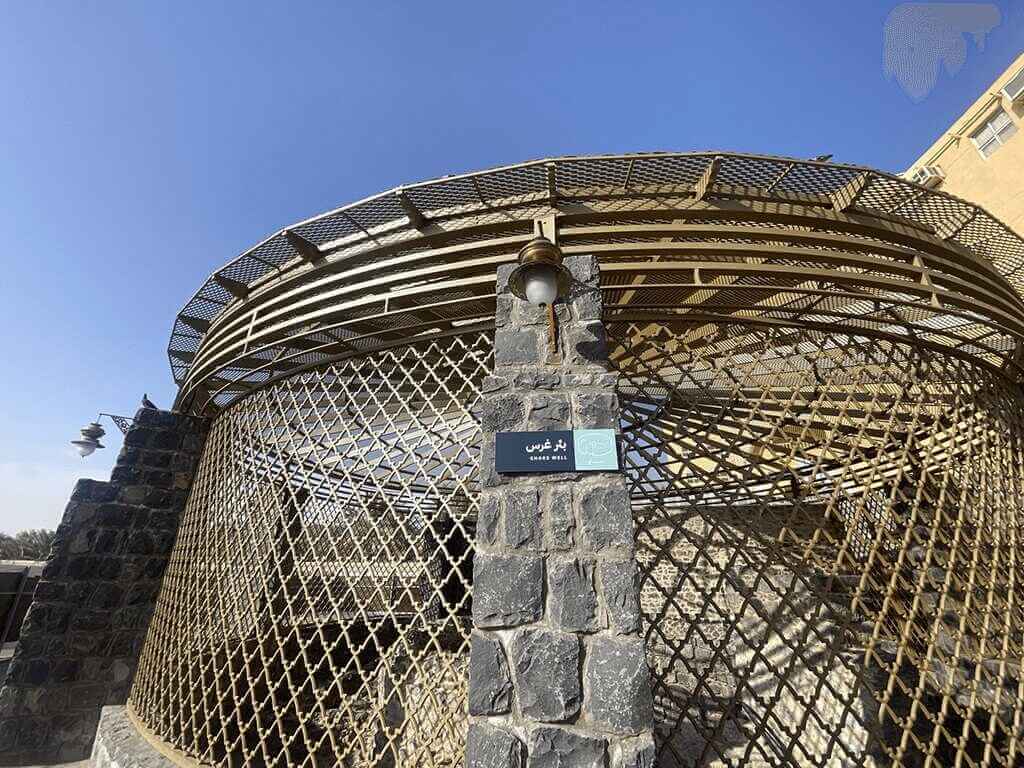
The Well of Salman Al-Farsi, known locally as Bir Al-Fuqayr (بئر الفقير), is a historic well in the Al-Aliyah district of Madinah, roughly 3 to 6 kilometers southeast of the Prophet’s Mosque depending on the route taken. It sits among working date-palm orchards and is tied directly to one of the most well-known stories in early Islamic history: the freeing of the companion Salman Al-Farsi (RA).
The site is sometimes called Bir Al-Mithab as well, though Al-Fuqayr and Salman Al-Farsi Well are the names most visitors and taxi drivers will recognize.
The Story Behind the Well
Salman Al-Farsi was originally from Persia. According to Islamic tradition, he traveled widely in search of the true faith, studying under Christian scholars who told him about the coming of a final prophet. During his travels he was captured and sold into slavery, eventually ending up in Madinah in the service of a man from the Banu Qurayzah tribe.
When Prophet Muhammad ﷺ arrived in Madinah after the migration from Makkah, Salman recognized the signs he had been told about and embraced Islam. The Prophet ﷺ then advised him to negotiate his freedom through a manumission contract. His master set two conditions: Salman had to plant 300 date palms that would bear fruit within a year, and pay 40 uqiyyah of gold.
The companions of the Prophet ﷺ donated the palm saplings, Salman himself dug the pits, and – according to the narration – the Prophet ﷺ planted the palms with his own hands. Every single one bore fruit that year. The Prophet ﷺ then gave Salman a piece of gold weighing exactly 40 uqiyyah, and his freedom was secured.
The well at Al-Fuqayr was the water source used to irrigate those palms, and it stands today as a physical reminder of that story – a small site, but one that carries a lot of meaning for visitors interested in the Seerah (the life of the Prophet ﷺ) and the early Muslim community.
What You’ll See at the Site Today
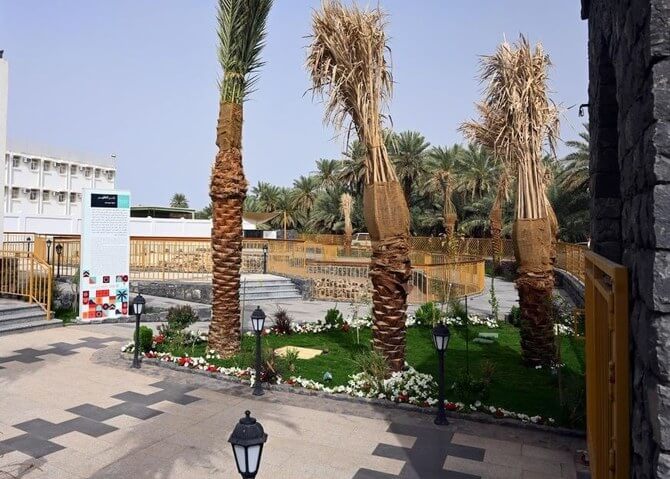
The Al-Fuqayr Well has been restored and reopened to the public by Madinah’s regional development authority, with facilities added to make the visit more comfortable. What you can expect on arrival:
- A well roughly three meters wide, historically drawn using pulleys, now set within a landscaped area
- Surrounding date-palm orchards, some still actively farmed
- A seating and rest area suitable for families and groups
- Informational signage explaining the history of the site
- Free entry, with no formal ticketing required
Because it sits inside working farmland, the atmosphere is quiet and unhurried compared to busier Ziyarat stops. Most visitors spend 15 to 30 minutes here, which makes it easy to combine with other nearby historical sites such as the Salman Al-Farsi Date Garden, Ghars Well, and Masjid Quba, all of which sit in the same general direction from central Madinah.
Where Is the Well of Salman Al-Farsi Located?
The well is located in the Al-Aliyah district, southeast of Al-Masjid an-Nabawi, in an area known for its date orchards. If you’re driving or being driven from the Prophet’s Mosque, the general route runs east along King Abdulaziz Road before turning onto Ali Ibn Abi Talib Street, where the site sits among the surrounding groves.
Because it’s tucked inside a residential and agricultural area rather than on a main tourist strip, it’s not a site you want to try to find on foot or by guessing directions – a taxi or private driver who already knows the area saves a lot of time and avoids the wrong turns that are common here.
How to Get to the Well of Salman Al-Farsi
By Private Taxi (Recommended)
The most straightforward way to reach the well is by private taxi from your hotel or from Masjid an-Nabawi. A licensed driver familiar with Madinah’s Ziyarat circuit can take you directly to the site, wait while you visit, and continue on to nearby locations like the Salman Al-Farsi Date Garden, Ghars Well, or Masjid Quba without you needing to arrange separate transport for each stop.
This matters more than it might seem – public transport doesn’t run directly to the well, and ride-hailing drivers unfamiliar with the area sometimes struggle to locate it, since it isn’t marked the way major landmarks are.
At Al Maqam Transport, our Madinah Ziyarat Taxi service is built specifically for this kind of route: a single private vehicle for the day, an experienced local driver, and a flexible schedule that lets you spend as long as you want at each historical stop.
Typical Journey Details
- Distance from Al-Masjid an-Nabawi: approximately 3–6 km, depending on the exact route
- Estimated travel time: 10–15 minutes by car under normal traffic
- Recommended vehicle: a sedan (such as a Toyota Camry) for individuals or couples; a Hyundai Staria or Toyota Hiace for families and small groups
- Best time to visit: early morning or late afternoon, when temperatures are lower and the orchards are at their most pleasant
Combining It With a Wider Ziyarat Tour
Because the well is close to several other historically significant sites, most pilgrims don’t visit it in isolation. A typical half-day Ziyarat route from Madinah city center might include:
- Quba Mosque
- Ghars Well
- Salman Al-Farsi Date Garden
- Well of Salman Al-Farsi (Al-Fuqayr Well)
- Return to Masjid an-Nabawi or your hotel
Booking a private chauffeur for the full route, rather than arranging individual trips, is generally more efficient and far less stressful – especially for families traveling with children or elderly relatives.
Practical Tips for Visiting
- Dress modestly, as you would for any religious or historical site in Madinah.
- Bring water and sun protection if visiting during the warmer months, since the site is outdoors among the orchards.
- Ask your driver about the history – many local drivers who regularly take pilgrims on Ziyarat routes can share additional context and stories about the site.
- Check accessibility in advance if traveling with elderly family members, since the surrounding terrain includes some uneven, unpaved ground typical of farmland.
- Combine your visit with nearby dates shopping – local farms near the well and the Salman Al-Farsi Date Garden often sell fresh dates directly to visitors.
FAQs
What is the Well of Salman Al-Farsi?
It’s a historic well in Madinah’s Al-Aliyah district, also known as Al-Fuqayr Well, linked to the story of the companion Salman Al-Farsi being freed from slavery after the Prophet ﷺ and the companions helped him plant 300 date palms.
Is the Well of Salman Al-Farsi the same as Al-Fuqayr Well?
Yes. Al-Fuqayr Well and the Well of Salman Al-Farsi refer to the same site. Some sources also call it Bir Al-Mithab.
How far is the well from Al-Masjid an-Nabawi?
It’s roughly 3 to 6 kilometers southeast of the Prophet’s Mosque, about a 10–15 minute drive depending on traffic and the route taken.
Is there an entrance fee?
No. The site has free entry and no formal ticketing.
Can I walk to the well from central Madinah?
It’s not practical to walk, since the site is several kilometers away in a farming area without dedicated pedestrian routes. A taxi or private driver is the recommended way to get there.
Is the well open to non-Muslim visitors?
The site is a public historical landmark managed by Madinah’s regional tourism authority and is generally open to visitors interested in its history, though as with any religious site in Madinah, visitors should be mindful of local customs and dress modestly.
What else is nearby that I can visit on the same trip?
The Salman Al-Farsi Date Garden, Ghars Well, and Quba Mosque are all in the same general area and are commonly combined into one Ziyarat route.
Is the well suitable for families with children?
Yes. The site is quiet, has seating areas, and is often described by visitors as a relaxed, family-friendly stop.
What’s the best time of day to visit?
Early morning or late afternoon, to avoid the midday heat, especially if you plan to walk around the surrounding orchards.
Do I need to book a taxi in advance to visit the well?
It’s recommended, since not all ride-hailing drivers know the exact location. Booking a private Ziyarat taxi in advance guarantees a driver familiar with the site and lets you plan a full multi-stop route.
Can I drink the water from the well?
Some visitors describe being able to taste water from the site depending on access at the time of their visit, though this isn’t guaranteed on every visit and depends on current conditions.
What vehicle should I book for a family visiting several Ziyarat sites?
For a family of 4–6, a Hyundai Staria or Toyota Hiace is generally the most comfortable option; larger groups may prefer a Coaster bus.

Zeeshan is a professional driver and tour guide who has been living and driving in Saudi Arabia for the past 5 years. With deep knowledge of the roads, landmarks, and Ziyarat locations across Makkah, Madinah, Jeddah, and Taif, he helps pilgrims and travelers enjoy safe, smooth, and well-organized journeys. His experience in Umrah transport, city tours, and airport transfers makes him a trusted expert for visitors exploring Saudi Arabia.