


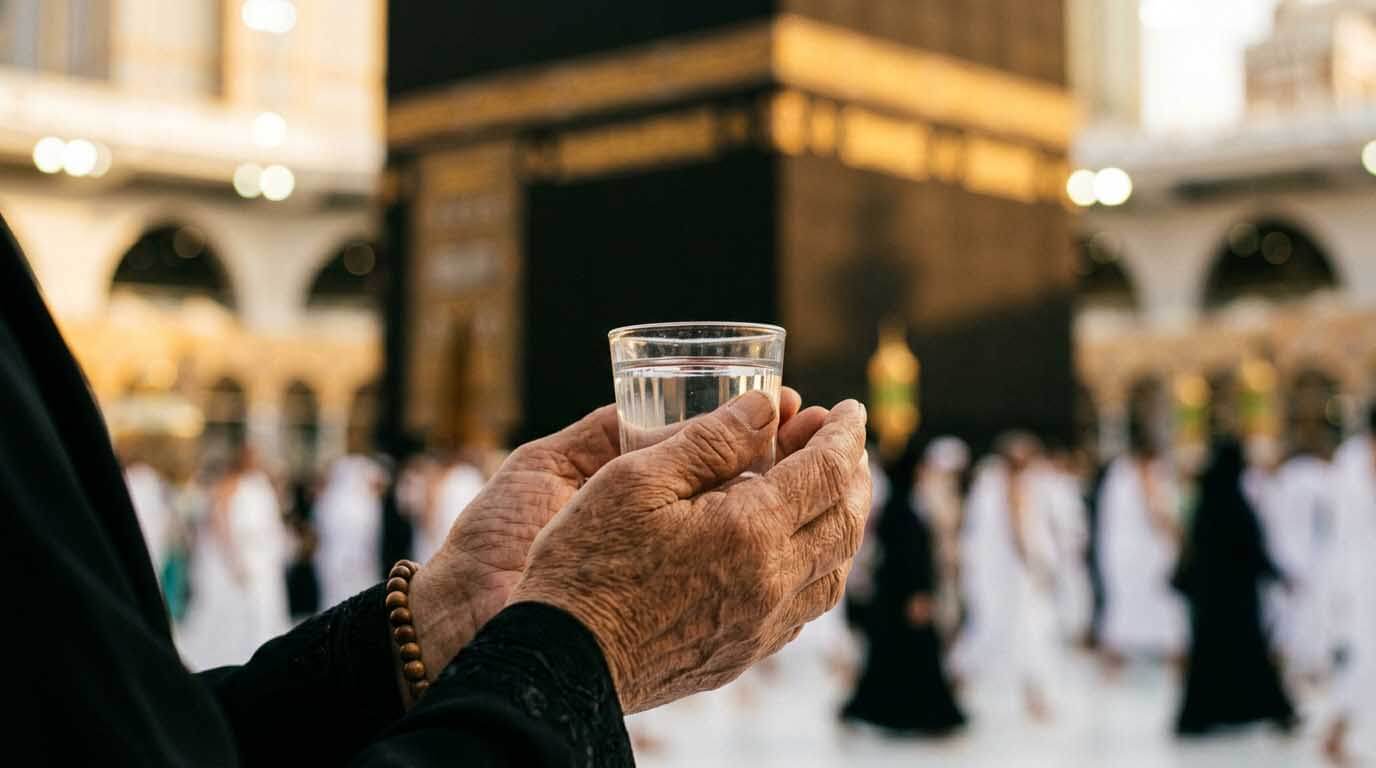
For most Umrah and Hajj pilgrims, the first sip of Zamzam water inside Masjid al-Haram is one of the most emotional moments of the entire journey. It’s more than a drink – it’s a connection to a story that is nearly 4,000 years old. In this guide, we’ll walk through the history of the Zamzam well, what modern research actually says about its composition, the spiritual significance Muslims attach to it, and practical answers to the questions pilgrims ask most.
Whether you’re preparing for your first Umrah or planning a family Hajj trip, understanding Zamzam water – and knowing how to reach the well, your hotel, and Makkah’s other sacred sites comfortably – is part of getting the most out of your pilgrimage. That’s also where reliable Umrah taxi and Ziyarat transport come in, and we’ll touch on that toward the end.
What Is Zamzam Water?
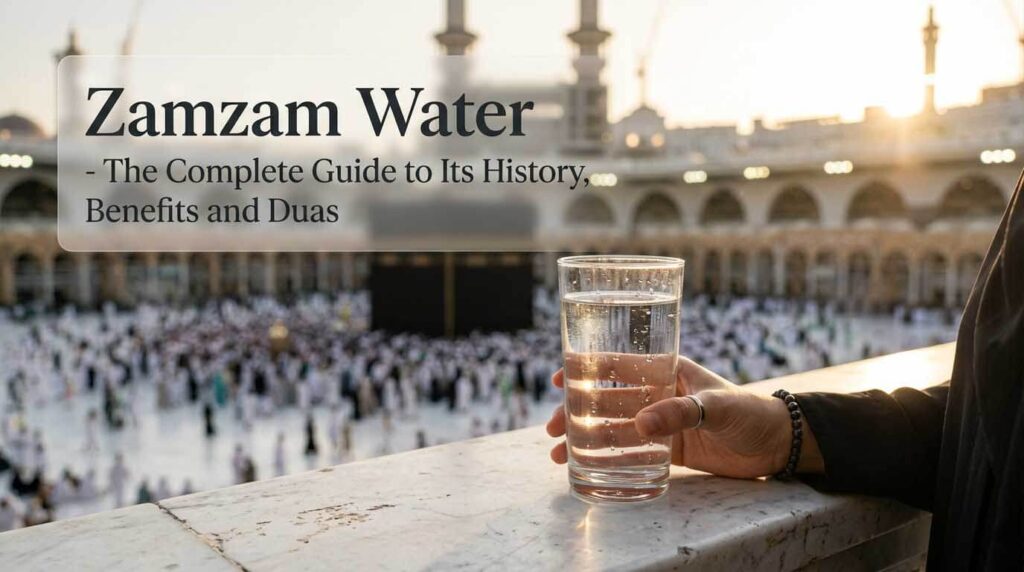
Zamzam water is the water drawn from the Zamzam well, located just a few dozen metres from the Kaaba inside Masjid al-Haram in Makkah. For Muslims, it is the most sacred water on Earth – believed to be a miracle from Allah (SWT) and a source of blessing (barakah) for anyone who drinks it with sincere intention. It is available free of charge to every pilgrim and visitor at coolers throughout the Grand Mosque, and it is also distributed globally in sealed bottles through official channels.
The History of the Zamzam Well
The story of Zamzam begins with Hajar (RA), the wife of Prophet Ibrahim (AS), and their infant son, Ismail (AS). According to Islamic tradition, Ibrahim (AS) left Hajar and Ismail in the barren valley of Makkah on Allah’s command, leaving them with a limited supply of water and dates. When the water ran out and Ismail began to cry from thirst, Hajar ran back and forth seven times between the hills of Safa and Marwah, searching desperately for help or a passing caravan.
This act of running between Safa and Marwah is preserved today as Sa’i, one of the core rituals of Umrah and Hajj that every pilgrim performs.
Returning to her son in distress, Hajar found water miraculously springing from the ground beneath Ismail’s feet. She is said to have called out “zomë zomë” (“stop, stop”) to contain the gushing water, which is where the name Zamzam comes from. She built a small embankment of stones around the spring to keep it from washing away – the same spot where the well stands today.
Years later, Prophet Ibrahim (AS) and Ismail (AS) built the Kaaba near this well, on Allah’s instruction, cementing Zamzam’s place at the spiritual centre of Islam. The well has supplied water almost continuously ever since, through the eras of the early caliphates, the Ottoman period, and into the modern Saudi state, making it one of the longest continuously used water sources in human history.
Where the Zamzam Well Is Located
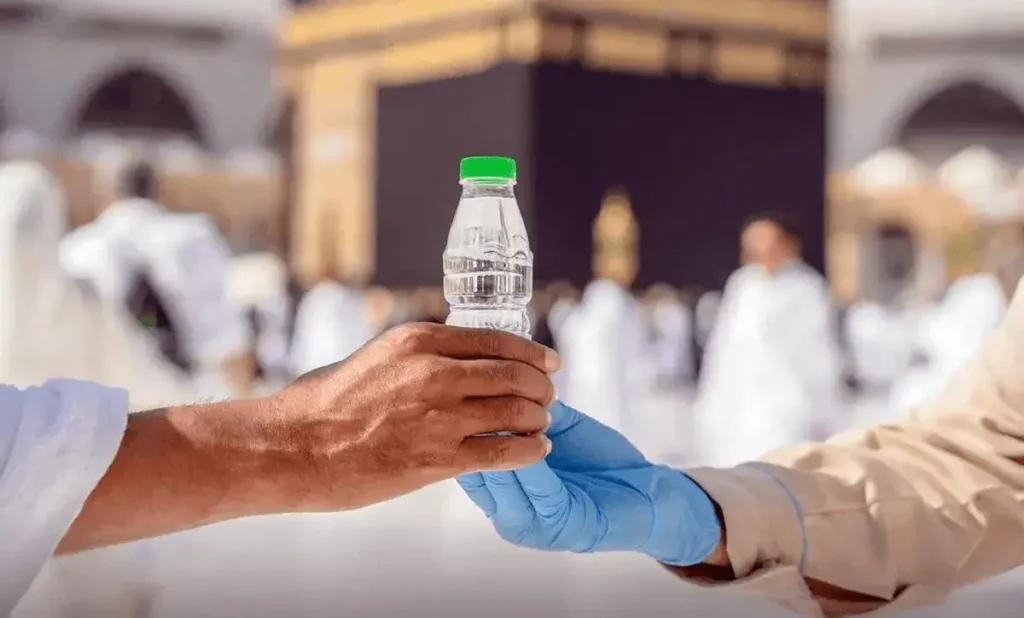
The Zamzam well sits about 20 metres east of the Kaaba, within the boundaries of Masjid al-Haram. The well itself is enclosed and no longer visible to the public in the way it once was – visitors and pilgrims access the water through dedicated dispensers and cooler stations placed throughout the mosque, including in the basement (Mataf level), the ground floor, and the upper floors, so it’s always within easy reach whether you’re praying near the Kaaba or on the higher levels during busy periods.
The well is managed today by the Zamzam Studies and Research Centre under the Saudi Geological Survey, which oversees water quality testing, pumping, and distribution to ensure it remains safe for the millions of pilgrims who drink it each year.
What’s Actually in Zamzam Water: The Science
Because Zamzam water is consumed by such a large number of people, it has been studied repeatedly by hydrologists and food-science researchers over the past several decades, including analyses published by the Saudi Geological Survey and in peer-reviewed journals. Here’s what that research consistently shows:
It’s naturally alkaline. Zamzam water typically has a pH around 8, higher than most tap or bottled water. This is a result of the well drawing from a granite aquifer, which gives the water its distinct mineral profile.
It’s mineral-rich. Laboratory analyses have measured meaningful concentrations of calcium, magnesium, sodium, potassium, chloride, and bicarbonate – generally higher than standard municipal drinking water. Trace elements such as fluoride are also present.
Heavy metals stay within safe limits. Studies checking for arsenic, lead, cadmium, and similar elements have found them present only in trace amounts, well inside the limits set by international drinking-water standards such as those from the World Health Organization and the Saudi Arabian Standards Organization.
It doesn’t run dry. The well is fed by a renewable groundwater system beneath the surrounding hills, and continuous monitoring by Saudi authorities has shown the aquifer replenishing reliably even under heavy pumping.
It’s worth being upfront here: while the mineral profile is well documented, claims that Zamzam water can cure serious illnesses such as cancer are not supported by robust clinical evidence and shouldn’t be treated as medical fact. If you have a health condition, please rely on qualified medical advice rather than any drinking-water remedy – Zamzam water can be part of a meaningful spiritual practice without needing to be presented as a medical treatment.
The Spiritual Significance of Zamzam Water
For the vast majority of Muslims, the importance of Zamzam has never really rested on laboratory results – it rests on faith. A well-known hadith describes Zamzam water as being consumed “for whatever purpose it is drunk for,” which is widely understood to mean it can be taken while making sincere dua (supplication), whether for guidance, healing, forgiveness, or anything else the heart is seeking.
Common spiritual practices associated with Zamzam include:
- Drinking it while facing the Kaaba, in a standing position, taking three breaths as is traditionally recommended
- Making dua before and after drinking, often citing specific personal intentions
- Sprinkling or applying it as a form of blessing on oneself, sick relatives, or personal belongings
- Giving it as a gift to family and friends who could not make the journey themselves
These practices are rooted in centuries of tradition rather than medical claims, and that distinction matters – the value pilgrims find in Zamzam is primarily devotional.
Commonly Discussed Benefits – What’s Supported and What’s Belief
To keep this guide honest and useful, here’s a clear breakdown:
Backed by water-quality research:
- Rich mineral content (calcium, magnesium, potassium, sodium)
- Naturally alkaline pH
- Consistently low levels of harmful contaminants
- Safe for regular consumption by healthy adults, including during pregnancy, according to standard drinking-water safety criteria
Widely believed by Muslims as a matter of faith, not clinical evidence:
- That sincere dua made while drinking Zamzam is more likely to be accepted
- That the water carries spiritual blessing (barakah) beyond its physical properties
- Traditional practices of using it for comfort during illness alongside – not instead of – normal medical care
We think it’s more respectful, and more useful to readers, to be clear about which is which rather than blur spiritual belief with unverified medical claims.
How to Drink Zamzam Water the Sunnah Way
Many pilgrims like to follow the way the Prophet Muhammad (ﷺ) is reported to have consumed Zamzam:
- Face the direction of the Kaaba, if possible.
- Say “Bismillah” before drinking.
- Drink in three separate sips rather than one continuous gulp.
- Make dua for whatever you are seeking, before or after drinking.
- Say “Alhamdulillah” once finished.
There’s no obligation to follow every step precisely – the sincerity behind it matters more than the exact form.
Bringing Zamzam Water Home: Rules and Practical Tips
Many pilgrims want to carry Zamzam water back to family who couldn’t travel. A few practical notes:
- Airline liquid rules apply. Zamzam water counts as a liquid for carry-on purposes, so it must go in checked luggage if you’re bringing it in bottles larger than standard cabin allowances.
- Free allowance in Saudi Arabia. Departing pilgrims are typically given a set quantity of sealed Zamzam water (commonly around 5 litres per person) through official Saudi channels at the airport, free of charge – check current allowances with your airline or the airport authority, as policies are periodically updated.
- Buy only from official sources. Unofficial “Zamzam water” sold outside authorised channels is sometimes counterfeit. Stick to the sealed bottles distributed at the airport or reputable outlets.
- Store it simply. Zamzam water doesn’t need special refrigeration; keep it sealed and in a cool, dark place.
Visiting the Zamzam Well and Nearby Sites
Drinking Zamzam is usually just one stop on a fuller day of worship and reflection in and around Masjid al-Haram. Many pilgrims combine it with visits to:
- Maqam Ibrahim, the stone bearing Prophet Ibrahim’s footprint, near the Kaaba
- Safa and Marwah, the hills where Hajar’s search unfolded, now enclosed within the mosque
- The Kaaba and Mataf area, for Tawaf
- Wider Ziyarat sites across Makkah, such as the Cave of Hira and Jabal Thawr, and – for those continuing on – Madinah’s Masjid an-Nabawi, the Rawdah, and Quba Mosque
Because Masjid al-Haram draws enormous crowds, especially during Ramadan and the Hajj season, getting between your hotel, the mosque, and these Ziyarat locations comfortably and on schedule matters more than most first-time pilgrims expect. This is exactly the kind of door-to-door support Al Maqam Transport was built around – private airport transfers from Jeddah (JED) or Madinah (MED), hotel-to-Haram transport in Makkah and Madinah, and guided Ziyarat taxi routes, all with licensed drivers who know the timing around prayer schedules and peak pilgrim traffic. Families travelling with children or elderly relatives, or groups wanting a private vehicle rather than shared transport, can book Umrah taxi or luxury Umrah taxi services in advance so that transportation is one less thing to plan once you land.
FAQs
Is Zamzam water safe to drink?
Yes. It is continuously tested by Saudi authorities, including the Zamzam Studies and Research Centre, and consistently meets recognised international drinking-water safety standards.
Can Zamzam water cure diseases?
There isn’t reliable clinical evidence that Zamzam water cures illness. Many Muslims drink it while making dua for healing as an act of faith, but it should never replace medical treatment or a doctor’s advice.
Why is Zamzam water considered holy?
It’s linked to the Islamic account of Hajar and Ismail (AS), and its location beside the Kaaba inside Masjid al-Haram. Muslims regard it as a divine mercy and a symbol of Allah’s care for those in need.
Can I bring Zamzam water back home on a flight?
Yes, but it must go in checked luggage due to standard airline liquid restrictions on carry-on bags. Sealed bottles distributed through official Saudi channels are the safest and most reliable option.
How much Zamzam water can I take out of Saudi Arabia?
Pilgrims are commonly permitted to take a set free allowance (often around 5 litres) via official airport distribution points, though exact quantities can change, so it’s worth checking current rules before you travel.
Does Zamzam water expire?
Officially bottled Zamzam typically carries a shelf-life recommendation from the bottler, generally around two years when stored sealed in a cool, dark place, though many pilgrims believe its blessing does not “expire” in a religious sense.
Where exactly is the Zamzam well?
It sits roughly 20 metres from the Kaaba within Masjid al-Haram in Makkah, though the well itself is enclosed; water is accessed via dispensers placed throughout the mosque.
Is Zamzam water different from regular tap water?
Yes – laboratory studies consistently show it has a higher mineral content (calcium, magnesium, potassium) and a more alkaline pH than typical tap water, along with a hydrogeological source distinct from municipal supply.
Can pregnant women drink Zamzam water?
Generally, yes – its documented mineral profile falls within standard safe drinking-water limits. As with any dietary question during pregnancy, it’s sensible to check with your own doctor if you have specific health concerns.
How do I drink Zamzam water according to the Sunnah?
Face the Kaaba if possible, say “Bismillah,” drink in three sips, make dua, and finish with “Alhamdulillah.” These steps are a tradition, not a strict requirement.
Is Zamzam water free inside Masjid al-Haram?
Yes, it is provided free at coolers and dispensers throughout the mosque for all worshippers and visitors.
Can non-Muslims drink Zamzam water?
There’s no religious restriction preventing anyone from drinking the water for its physical properties; the spiritual practices around it, however, are rooted in Islamic tradition.
How do I get from Jeddah Airport to Masjid al-Haram to visit the Zamzam well?
Private airport transfer is the most direct option — a licensed taxi from Jeddah’s King Abdulaziz International Airport (JED) to Makkah typically takes around 60–90 minutes depending on traffic and time of day, and pre-booking avoids delays after a long flight.
What’s the best time to visit the Zamzam dispensers to avoid crowds?
Outside the five daily prayer times and away from peak Umrah season (Ramadan, and the weeks around Hajj), the mosque is noticeably quieter, making it easier to access the water calmly.
Planning your Umrah or Hajj trip? Al Maqam Transport offers licensed, private Umrah taxi, Ziyarat taxi, and airport transfer services across Makkah, Madinah, and Jeddah, with vehicles suited to solo travellers, families, and groups.

Zeeshan is a professional driver and tour guide who has been living and driving in Saudi Arabia for the past 5 years. With deep knowledge of the roads, landmarks, and Ziyarat locations across Makkah, Madinah, Jeddah, and Taif, he helps pilgrims and travelers enjoy safe, smooth, and well-organized journeys. His experience in Umrah transport, city tours, and airport transfers makes him a trusted expert for visitors exploring Saudi Arabia.