


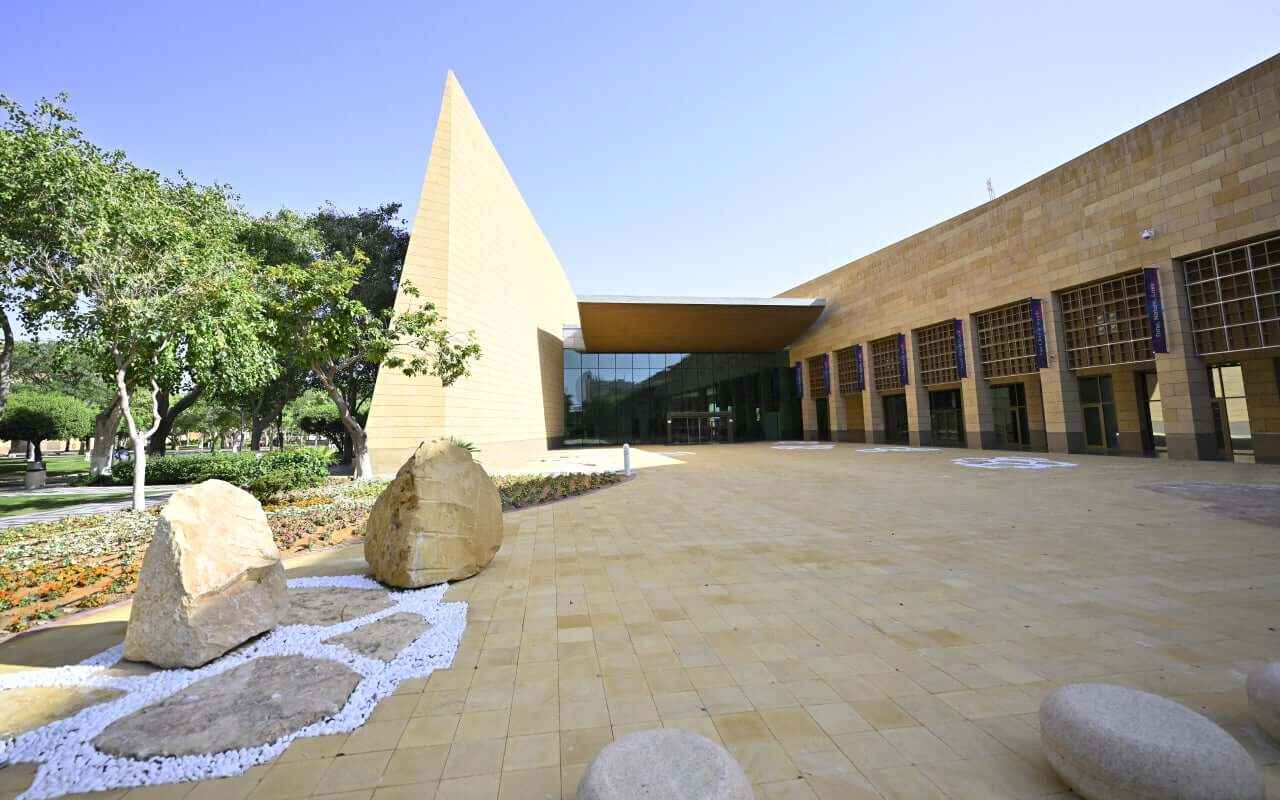
The National Museum of Saudi Arabia sits in Riyadh’s Al Murabba district, inside the King Abdulaziz Historical Center. It is open six days a week, general admission is free, and most visitors need two to three hours to see its main galleries. It is the most complete single stop in the capital for understanding how the Arabian Peninsula, Islam and the modern Kingdom fit together.
If you are travelling for Umrah or Hajj and have a stopover in Riyadh, or you are visiting the capital for work or family, this guide covers what you actually need: hours, entry, the galleries, how to get there, who the museum suits, and how to plan the day around prayer times and traffic.
Quick Facts About the National Museum in Riyadh
- Location: King Saud Road, Al Murabba District, Riyadh, within the King Abdulaziz Historical Center
- Admission: Free for general entry
- Closed: Sundays
- Last entry: One hour before closing
- Time needed: About two hours for highlights, three hours for a relaxed visit
- Best for: First-time visitors to Riyadh, families, history and Islamic heritage enthusiasts, pilgrims with a spare half day
- Main entrance: Eastern entrance on King Faisal Street
What Is the National Museum of Saudi Arabia?
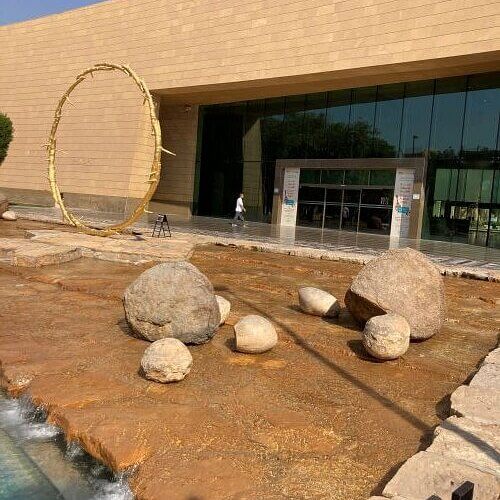
The museum is the Kingdom’s national museum, run under the Ministry of Culture. It opened in 1999 as part of the King Abdulaziz Historical Center, a project created to mark the centenary of the Kingdom’s unification. The building was designed by the Canadian architect Raymond Moriyama and is recognisable by its crescent-shaped façade, with the exhibition spaces arranged behind it over two floors.
The complex around it matters as much as the building. The museum stands next to Murabba Palace, the former residence of the founding king, King Abdulaziz, along with the King Abdulaziz Mosque and the surrounding gardens and plazas. That is why many visitors treat the whole area as one outing rather than a single museum stop.
One small thing to know before you go: sources count the galleries differently. Most travel guides and the museum’s own descriptions of its permanent exhibition refer to eight halls, while the official visitor page describes six main galleries across the ground and first floors. The difference is partly down to how the introductory and Islamic-era halls are grouped. The reception desk can give you the current floor plan.
Why Pilgrims and Umrah Travellers Visit the National Museum
Riyadh is not on the Umrah route, but many pilgrims pass through it. Some fly in on international connections, some are visiting relatives, and some add a few days in the capital before or after Makkah and Madinah. For these travellers the museum is one of the few places that connects directly to the pilgrimage story.
The final gallery, Hajj and the Two Holy Mosques, covers the development of Masjid al-Haram in Makkah and Masjid an-Nabawi in Madinah and features a large model of Makkah and its surroundings. Earlier, the galleries on the Prophet’s mission and on Islam and the Arabian Peninsula set the context for Makkah, Madinah and the early Muslim community.
The museum has also hosted temporary exhibitions linked to Hijrah, the Prophet’s migration from Makkah to Madinah, including one developed with the King Abdulaziz Center for World Culture (Ithra). Temporary exhibitions change, so check the official booking page for what is on during your dates.
To be clear, a museum visit is a cultural stop, not a religious obligation or a substitute for ziyarat in Makkah and Madinah. But for families and first-time visitors, seeing the historical background before arriving in the Holy Cities can make the journey more meaningful.
Opening Hours, Tickets and Entry
The official hours published by the museum are:
| Day | Opening hours |
|---|---|
| Monday, Tuesday, Wednesday, Saturday | 9:00 AM – 7:00 PM |
| Thursday | 9:00 AM – 10:00 PM |
| Friday | 2:00 PM – 10:00 PM |
| Sunday | Closed |
The museum stops admitting new visitors one hour before closing, and hours can change during Ramadan, Eid and national holidays. Always check the official channels before you leave your hotel, especially in Ramadan.
Is the National Museum in Riyadh free? Yes. General admission is free, and tickets can be reserved through the museum’s official booking page. You may still be asked to check in at the main reception desk before entering the galleries. Third-party websites sometimes list old prices of SAR 10 or more; these appear to reflect earlier ticketing and are not what the museum currently publishes.
The building has three entrances. The Eastern entrance on King Faisal Street is the main one, while the Southern and Western entrances are reached through the King Abdulaziz Historical Center. The Southern entrance is sometimes closed during private events, so use the Eastern or Western entrance if you find it shut.
The Galleries: What You Will See
The route is designed to be walked in order, from the formation of the universe to the modern Kingdom. Here is what each section covers.
Man and the Universe
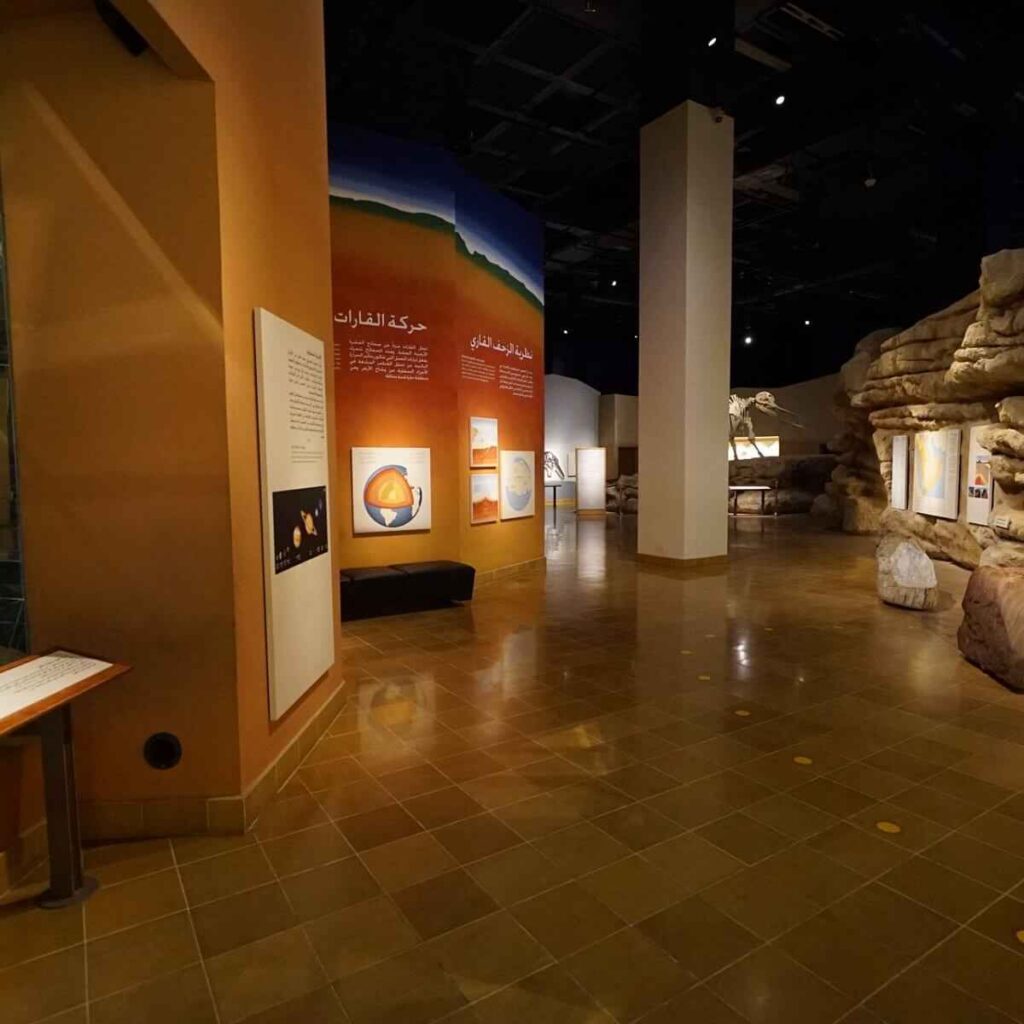
The museum opens with the story of the universe, the solar system and the Earth, then moves through geology, fossils and early human life, ending with Stone Age communities in Arabia. It is a good warm-up, and children usually enjoy it.
Arabian Kingdoms and the Pre-Islamic Era
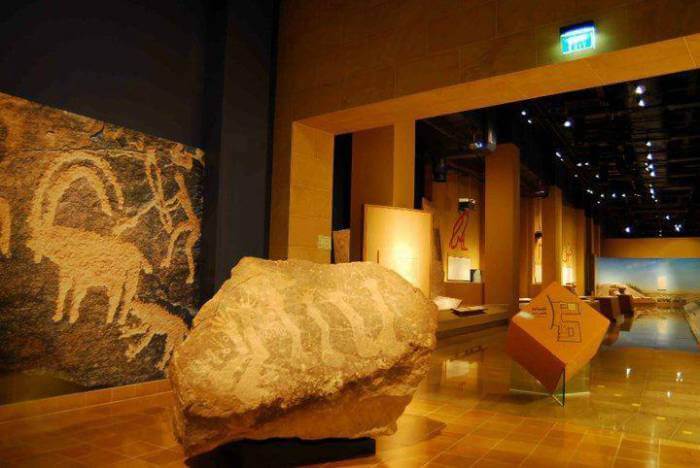
These halls cover the civilisations that lived across the Peninsula, from roughly the fourth millennium BC to the second century AD, through statues, inscriptions and trade-related objects. They show Arabia as a connected region of trade routes, oases and kingdoms rather than an empty desert.
The Prophet’s Mission and Islam and the Arabian Peninsula
This section follows the arrival of Islam, with Qur’anic manuscripts, early Islamic objects and displays that place Makkah and Madinah in their historical setting. For many Muslim visitors it is the emotional centre of the museum.
The First and Second Saudi States
This gallery covers the history and culture of the first two Saudi states, with the period from 1744 to 1824 usually cited for the first. It helps explain why Diriyah, a short drive from the museum, is so important.
Unification of the Kingdom
The hall follows King Abdulaziz’s recapture of Riyadh in 1902 and the formation of the Third Saudi State, with photographs, maps and a documentary. Masmak Fortress, where the events of 1902 began, is a natural next stop afterwards.
Hajj and the Two Holy Mosques
The last gallery shows how Masjid al-Haram and Masjid an-Nabawi have developed over time, and the large model of Makkah lets you picture the layout of the Kaaba, the Mataf, Safa and Marwah and the surrounding city. If you only have an hour, prioritise this gallery and the Islamic-era halls.
How Long Should You Spend There?
Plan for two hours if you want the highlights, and three if you want to read labels, watch the films and sit down between galleries. Tripadvisor reviewers commonly describe two to three hours as comfortable, and some suggest allowing extra time for the gardens around the museum.
A sensible two-hour route is:
- Quickly walk through Man and the Universe.
- Spend most of your time on the Islamic-era galleries.
- Visit the Unification hall.
- Finish with the Hajj and Two Holy Mosques gallery.
With young children or older parents, take it slowly and use the seating areas and lifts rather than trying to complete every hall.
Best Time to Visit
The official visitor page says the museum is generally calmer on Mondays and Tuesdays, so those are the best days if you want space and quiet. Thursday evenings, with hours until 10:00 PM, are good in summer, when daytime heat in Riyadh is intense. Friday opens only in the afternoon, so avoid planning a morning visit on that day.
For weather, the cooler months from about November to March are the most comfortable for walking between the museum, the gardens and nearby sites. In summer, keep outdoor time short and rely on air-conditioned transport.
Also check prayer times when you plan the day. Dhuhr and Asr fall within normal opening hours, and the King Abdulaziz Mosque stands within the historical center.
How to Get to the National Museum in Riyadh
From King Khalid International Airport (RUH)
The museum is roughly 35 km from King Khalid International Airport. Allow about 35 to 50 minutes by road outside peak hours, longer in the evening rush. Because the museum has no luggage storage for suitcases, it is better to check in to your hotel first, or to use a driver who can wait with your bags.
By Riyadh Metro
The National Museum is an interchange station on the Riyadh Metro, linking the Blue Line and the Green Line, and the Yellow Line connects the airport with the wider network. Tickets are bought through the Darb app or at stations. Check the Darb app or the Riyadh Metro website for current service before relying on any single station, as the network is still new and operations can change.
By Private Taxi or Chauffeur
A private taxi is the simplest option for families, older travellers and anyone carrying luggage. The driver can drop you at the Eastern entrance on King Faisal Street, wait while you tour, and take you on to Masmak Fortress, Diriyah or your hotel. There are also car parks on all four sides of the museum, with more than 50 spaces on the north, over 60 on the east, and over 100 each on the south and west, which helps if you are travelling by private car.
Which Option Suits You?
| Option | Best for | Things to consider |
|---|---|---|
| Private taxi / chauffeur | Families, elders, luggage, multi-stop days | Costs more than public transport; agree route and waiting time in advance |
| Riyadh Metro | Solo travellers and budget visits | Check station status; walking in heat; not ideal with heavy bags |
| Ride-hailing apps | Short, one-way trips | Pick-up points can be busy near events; fares vary |
Combining the Museum With Other Riyadh Sites
The museum works well as the anchor of a half-day or full-day route:
- Murabba Palace and the King Abdulaziz Historical Center: Within walking distance, so you can see them on the same ticket-free visit.
- Masmak Fortress: The fortress linked to the 1902 recapture of Riyadh, a short drive away in the old city centre.
- Diriyah (At-Turaif): The birthplace of the first Saudi State, which fits naturally after the First and Second Saudi States gallery. Leave a separate half day if you want to see it properly.
A realistic day for most families is the museum in the morning or late afternoon, lunch, then one more site. Trying to add three or four attractions usually means rushing all of them.
Family, Accessibility and Comfort
The museum is set up to receive a wide range of visitors. According to the official visitor information:
- There are wheelchair-accessible restrooms on all floors.
- Three lifts connect the ground and upper floors.
- Seating areas are spread through the building, and a storage area holds strollers and larger personal items.
- Guide dogs may accompany blind visitors.
- Free Wi-Fi is available through the Zain Public Wi-Fi network.
Some galleries include loud sound or strong visual effects that may not suit everyone, such as very young children or sensitive visitors. Ask a staff member before entering if you have concerns. Large print guides and audiovisual content are available in selected galleries.
Etiquette and Museum Rules
A few rules catch visitors out, so it is worth knowing them in advance:
- Photography for personal use is allowed, but flash and extra equipment such as camera stands are not.
- Do not touch the exhibits.
- Eating inside the galleries is not allowed. Food can be eaten in the plaza and nearby gardens.
- Travel suitcases cannot be taken in, and large bags should go in the lockers.
- Skateboards, bicycles, scooters and musical instruments are not permitted.
- Clothing with offensive images or phrases is prohibited, and modest, comfortable clothing is the sensible choice.
- Security staff may check bags at the entrance.
- Researchers and students who need to write should use pencils only.
Keep your voice low and avoid running; the museum asks visitors to help keep the atmosphere calm.
Planning the Visit Around a Pilgrimage Trip
Riyadh is far from Makkah and Madinah. By road it is roughly 850 to 950 km, depending on the city, so most travellers fly between the capital and the Holy Cities rather than driving. If you are adding Riyadh to an Umrah itinerary, plan the museum for a day when you are not arriving late at night or leaving early the next morning. A rested half day is better than a rushed hour.
Visa and permit rules change, so check the current Saudi visa requirements and the rules for your Umrah or Hajj permit before you finalise any stopover. Pilgrims on Hajj travel on a strict schedule set by their group, so a museum visit is unlikely to fit unless you are in Riyadh before or after the pilgrimage period.
Arranging a Private Transfer With Al Maqam Transport
Al Maqam Transport provides private taxi and chauffeur services across Saudi Arabia, including airport transfers, hotel transfers, Umrah and Hajj transportation, ziyarat tours and intercity journeys. If you want a driver for a museum day in Riyadh or for your onward trip to Jeddah, Makkah or Madinah, send the team your dates, pickup point, number of passengers and luggage so they can recommend the right vehicle.
When you request a quote, it helps to confirm these points in writing:
- Pickup location and time, and whether the driver will track your flight
- Number of passengers, children and bags
- Vehicle type, such as a Toyota Camry for couples, a Hyundai Staria or Toyota Hiace for families and small groups, a GMC Yukon for premium travel, or a Coaster bus for larger groups
- Waiting time at the museum and any additional stops
- Whether the price is fixed and what it includes
Prices depend on the route, vehicle, timing and waiting time, so ask for a clear quote rather than relying on estimates from other websites.
FAQs
Is the National Museum in Riyadh free to enter?
Yes. General admission is free. Tickets can be reserved on the museum’s official booking page, and some temporary exhibitions or events may have separate arrangements.
What are the opening hours of the National Museum in Riyadh?
The museum is open Monday, Tuesday, Wednesday and Saturday from 9:00 AM to 7:00 PM, on Thursday from 9:00 AM to 10:00 PM, and on Friday from 2:00 PM to 10:00 PM. It is closed on Sundays. Hours can change during Ramadan, Eid and national holidays.
How long does it take to see the National Museum?
About two hours for the highlights and up to three hours for a comfortable visit with films and multimedia displays.
Where is the National Museum of Saudi Arabia?
It is in the Al Murabba district of Riyadh on King Saud Road, within the King Abdulaziz Historical Center. The main entrance is the Eastern entrance on King Faisal Street.
Is the National Museum good for families and children?
Yes. It has seating, lifts, stroller storage and a range of visual and interactive displays. The opening galleries on the universe and early life are often popular with children. Some galleries have loud effects, so check with staff if you have young children.
Is there anything related to Hajj and Umrah in the museum?
Yes. The Hajj and the Two Holy Mosques gallery covers the development of Masjid al-Haram and Masjid an-Nabawi and includes a large model of Makkah. Other galleries cover the Prophet’s mission and the early Islamic period.
Can I take photos inside the museum?
Personal photography is permitted without flash and without extra equipment such as stands. Professional production teams need a permit from the museum’s Media Center.
What is the best day to visit?
Mondays and Tuesdays are generally the quietest. Thursday evenings are a good option in hot weather.
Can I bring luggage or a suitcase into the museum?
No. Travel suitcases are not allowed inside. Lockers are available for large bags, and there is a storage area for strollers and larger items. If you are coming straight from the airport, go to your hotel first or arrange a driver who can keep your luggage secure.
Is the museum accessible for wheelchair users and older visitors?
Yes. The museum has wheelchair-accessible restrooms, lifts, seating areas and dedicated spaces for wheelchair users. Ask staff if you need help with specific galleries.
How do I get from King Khalid International Airport to the museum?
By road it is roughly 35 km, usually 35 to 50 minutes outside peak times. You can use a private taxi, a ride-hailing app, or the Riyadh Metro with a connection. A private transfer is easiest if you have luggage, children or elderly family members.
Can Al Maqam Transport arrange a driver for my museum visit?
Al Maqam Transport can arrange private taxis and chauffeur-driven transfers for city trips and intercity journeys. Contact the team with your dates, passengers and itinerary to confirm availability and a price.
Is Riyadh close to Makkah and Madinah?
No. Riyadh is roughly 850 to 950 km from Makkah, Jeddah and Madinah by road, so most travellers fly between them. Plan any Riyadh sightseeing separately from your Umrah or Hajj schedule.
Final Tips Before You Go
- Confirm the opening hours and any temporary exhibitions on the official museum channels.
- Book your free ticket in advance and check in at reception.
- Visit on a Monday or Tuesday for the calmest experience.
- Leave suitcases at your hotel and carry only what you need.
- Combine the museum with Masmak Fortress or Diriyah, but avoid overloading the day.
- Arrange transport in advance if you are travelling with family or elders.
The National Museum is a clear, well-organised introduction to the land that Muslims and visitors from around the world travel to. Whether you are in Riyadh for a few hours or a few days, a well-planned visit gives you the background that makes the rest of your journey in Saudi Arabia more meaningful.

Zeeshan is a professional driver and tour guide who has been living and driving in Saudi Arabia for the past 5 years. With deep knowledge of the roads, landmarks, and Ziyarat locations across Makkah, Madinah, Jeddah, and Taif, he helps pilgrims and travelers enjoy safe, smooth, and well-organized journeys. His experience in Umrah transport, city tours, and airport transfers makes him a trusted expert for visitors exploring Saudi Arabia.