


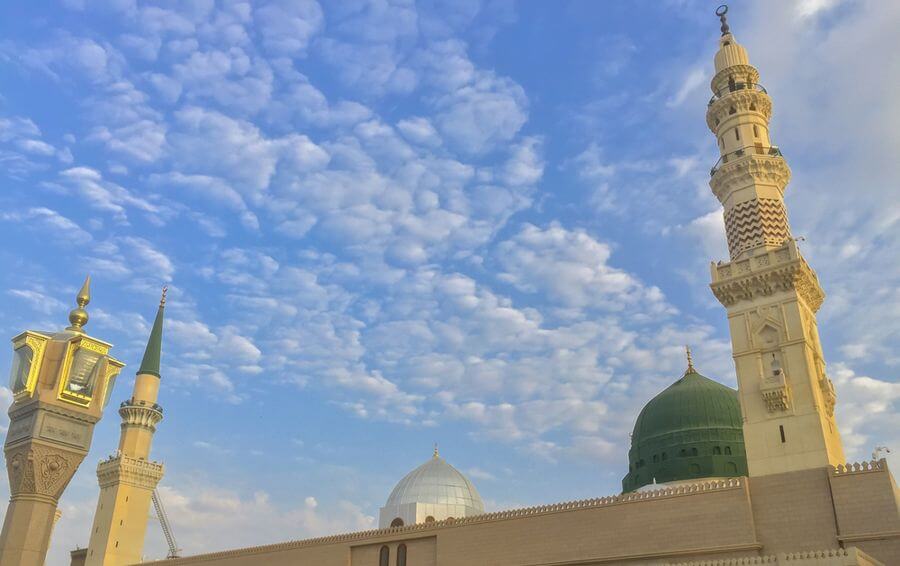
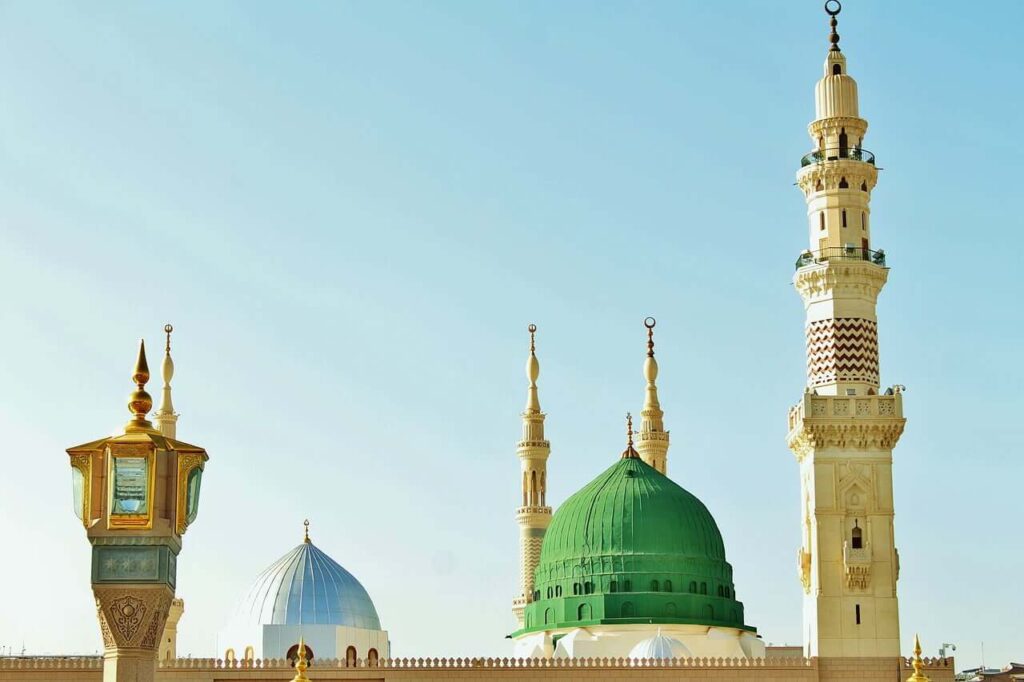
The Green Dome is one of the most recognizable landmarks in the Islamic world. It stands above the blessed chamber where the Prophet Muhammad (peace be upon him) is buried inside Al-Masjid an-Nabawi. The chamber also contains the graves of two of the Prophet’s closest companions and the first two caliphs of Islam: Abu Bakr and Umar ibn al-Khattab.
Located in the southeastern section of the Prophet’s Mosque in Medina, the dome has become a symbol closely associated with the spiritual experience of visiting the mosque. Every year, millions of Muslims traveling for Umrah or Hajj visit the mosque and see the Green Dome while performing ziyārah (a respectful visit).
Although the dome is visually iconic, it is important to understand its history, its religious context, and the proper etiquette when visiting the area around it.
Location of the Green Dome in Masjid an-Nabawi
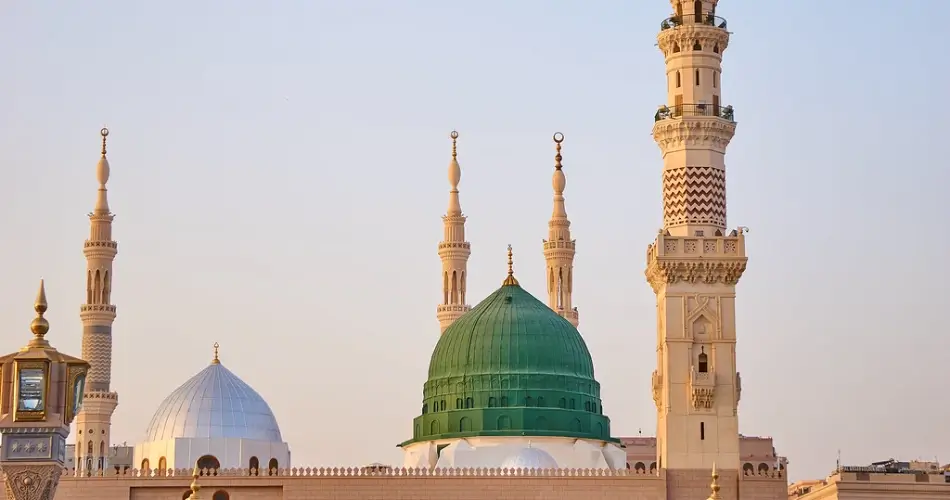
The Green Dome stands directly above the chamber that once belonged to Aisha bint Abu Bakr, the wife of the Prophet Muhammad. This was the place where the Prophet passed away and was buried.
When Al-Masjid an-Nabawi expanded over centuries, the house became part of the mosque structure. The chamber is now enclosed within protective walls and lies beside the sacred area known as Rawdah Riyad ul Jannah, a place described in hadith as a garden from Paradise.
Today, visitors inside the mosque offer greetings (salām) to the Prophet at the grille area near the Rawdah, not directly beneath the dome itself.
Historical Development of the Green Dome
The First Dome (13th Century)
The earliest dome over the Prophet’s chamber was built in 1279 CE (678 AH) during the rule of the Mamluk Sultan Al-Mansur Qalawun.
The first structure was modest. It was made from wood and covered with protective materials such as lead panels and fabric to protect it from rain. At that time, the dome was unpainted and relatively small.
Over the following centuries, several renovations strengthened the structure and replaced damaged materials.
Major Reconstruction After the Fire of 1481
In 1481 CE, a large fire damaged parts of the Prophet’s Mosque and the dome structure. Reconstruction was carried out under the Mamluk Sultan Al-Ashraf Qaitbay.
During this restoration:
- The wooden base of the dome was strengthened.
- Brick and stone elements were added for durability.
- The chamber walls were raised to support the structure.
This renovation significantly changed the architectural form of the dome and helped preserve it for future generations.
Ottoman Era Renovation
A new dome structure was later constructed in the early 19th century under the Ottoman Sultan Mahmud II.
In 1837, the dome was painted green for the first time. Since then, it has been widely known as “The Green Dome.”
Subsequent restorations have preserved the structure, but its iconic green color has remained unchanged.
The Tomb Beneath the Green Dome
Beneath the Green Dome lies the sacred chamber containing three graves:
- Prophet Muhammad
- Abu Bakr
- Umar ibn al-Khattab
The graves themselves are not visible. They are enclosed by a five-sided wall designed during the early Islamic period to prevent people from performing rituals similar to those done around the Kaaba.
This architectural design emphasizes that worship is directed only to Allah.
Can Visitors Enter the Green Dome?
No. The chamber beneath the Green Dome is not accessible to visitors. It has no doors or windows and remains closed.
Visitors instead perform ziyārah by standing at the designated greeting area inside Al-Masjid an-Nabawi, offering salām to the Prophet and his companions.
Best Places to View the Green Dome
Although the chamber cannot be entered, visitors can see the Green Dome from several locations around the mosque.
Western Courtyard
Near Bab as-Salam, the western courtyard provides one of the clearest views of the dome between the mosque’s minarets.
Southern Walkways
Walking along the southern side of the mosque allows pilgrims to see the dome rising above the roofline of the prayer halls.
Northern Umbrella Courtyard
From beneath the famous shade umbrellas in the northern courtyard, the dome can often be seen when looking south toward the mosque structure.
Best Time to See the Green Dome
Crowd levels around Al-Masjid an-Nabawi vary throughout the day.
The most peaceful times to view the Green Dome are:
Before Fajr prayer
The mosque courtyards are calm, and the atmosphere is spiritually serene.
After Fajr prayer
Many pilgrims leave the mosque, creating more space for reflection and quiet walking.
Before Maghrib
The lighting around sunset offers a beautiful view of the mosque and its iconic dome.
Visiting Etiquette Near the Green Dome
When visiting the Prophet’s Mosque, proper etiquette is extremely important.
Visitors should maintain respect and humility when approaching the area near the Prophet’s chamber.
Speak softly and avoid crowding or pushing other visitors. When offering salām, pilgrims should send peace upon the Prophet and then make duʿā while facing the qiblah.
The mosque should never be treated like a tourist site. Photography, loud conversations, or blocking pathways can disturb the spiritual environment for other worshippers.
Maintaining calm behavior reflects the respect due to the Prophet and the sacred place.
Visiting Madinah During Umrah
Many pilgrims visit Medina before or after completing Umrah in Mecca.
Travel between these cities is common for pilgrims who want to perform prayers in both the Sacred Mosque and the Prophet’s Mosque.
If you are planning your journey between the holy cities, arranging a comfortable private taxi can make the trip much easier—especially for families, elderly pilgrims, or those arriving from airports.
For example, services like Al Maqam Transport provide private Umrah taxis for routes such as:
Private transport allows pilgrims to travel peacefully between the holy cities without the stress of public transport or crowded buses.
Conclusion
The Green Dome remains one of the most recognized symbols of Islamic heritage and devotion. Standing above the chamber of the Prophet Muhammad inside Al-Masjid an-Nabawi, it represents centuries of Islamic history and architectural preservation.
Although visitors cannot enter the chamber beneath the dome, seeing it while visiting Madinah is a deeply meaningful moment for many Muslims. By understanding its history and observing proper etiquette, pilgrims can ensure their visit remains respectful, spiritual, and aligned with Islamic tradition.
FAQs
Why is the Green Dome famous?
The Green Dome is famous because it stands above the burial chamber of Prophet Muhammad inside Al-Masjid an-Nabawi. It is one of the most recognized landmarks in Islam.
When was the Green Dome built?
The first dome structure was built in 1279 CE during the Mamluk era. The current dome was constructed in the 19th century during Ottoman rule and painted green in 1837.
Can visitors enter the Green Dome?
No. The chamber beneath the dome is sealed and inaccessible. Visitors perform ziyārah from inside the mosque at the designated greeting area.
Who is buried under the Green Dome?
Three graves are located inside the chamber:
- Prophet Muhammad
- Abu Bakr
- Umar ibn al-Khattab
Where can you see the Green Dome?
The dome can be seen from different courtyards of Al-Masjid an-Nabawi, particularly the western and southern courtyards.

Zeeshan is a professional driver and tour guide who has been living and driving in Saudi Arabia for the past 5 years. With deep knowledge of the roads, landmarks, and Ziyarat locations across Makkah, Madinah, Jeddah, and Taif, he helps pilgrims and travelers enjoy safe, smooth, and well-organized journeys. His experience in Umrah transport, city tours, and airport transfers makes him a trusted expert for visitors exploring Saudi Arabia.