


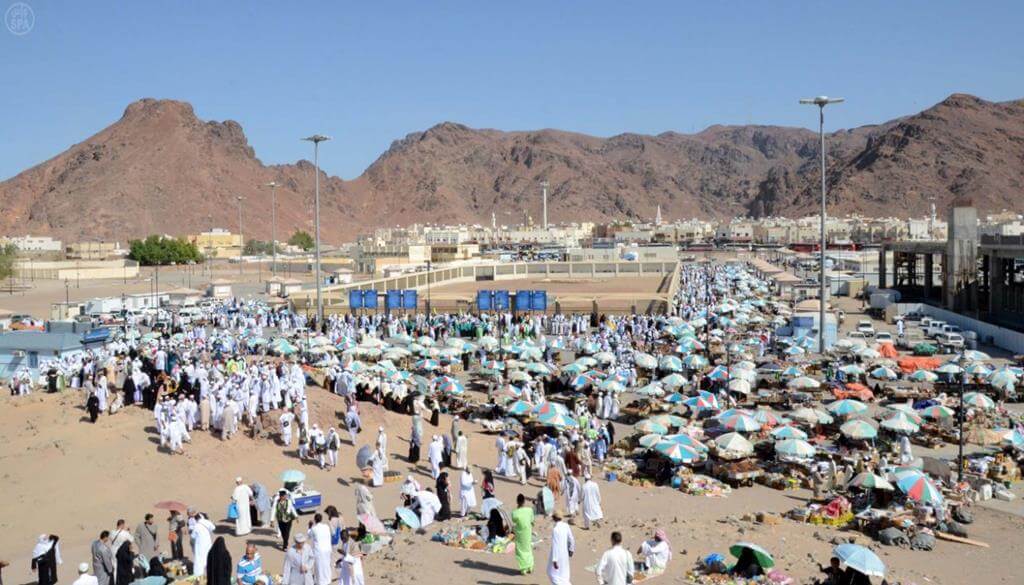
Mount Uhud stands as one of the most spiritually powerful and historically defining landmarks in Madinah. Located approximately five kilometers north of Masjid al-Nabawi, this majestic mountain stretches nearly 7.5 kilometers across the northern horizon of the city. More than a geographical feature, Mount Uhud is inseparably linked to sacrifice, faith, obedience, and divine wisdom, making it one of the most important ziyarat destinations for pilgrims visiting Madinah.
The Prophet Muhammad ﷺ described this mountain with unique affection, saying, “Uhud is a mountain that loves us, and we love it.” This statement alone elevates Mount Uhud beyond history, anchoring it deeply within Islamic spirituality.
Where Is Mount Uhud and Why It Matters in Islam
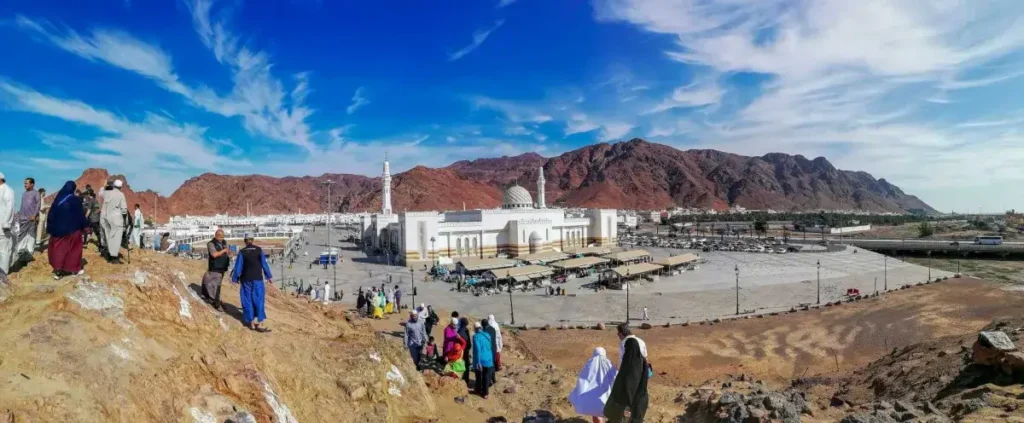
Mount Uhud lies in the Hejaz region of Saudi Arabia and forms a natural boundary on the northern side of Madinah. Its red-brown granite structure and commanding height made it strategically significant during the early Islamic period. Today, it remains a place where history, belief, and reflection converge.
Unlike many historical sites, Mount Uhud is not remembered for victory alone, but for the lessons that shaped the Muslim Ummah. It is a living reminder that success in Islam is tied not only to strength and numbers, but to discipline, sincerity, and obedience to divine guidance.
Historical Background of the Battle of Uhud
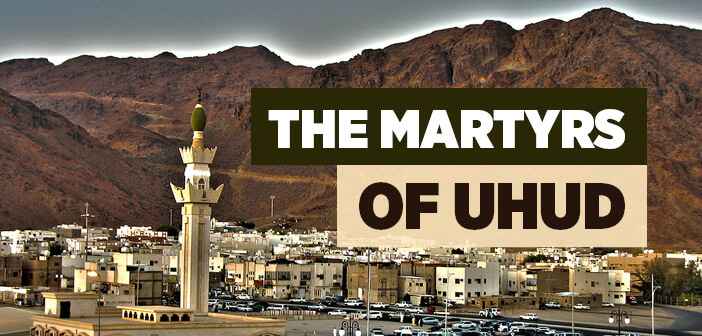
The Battle of Uhud took place in the year 3 AH (625 CE), one year after the Muslims’ decisive victory at the Battle of Badr. Seeking revenge, the Quraysh of Makkah mobilized a force of approximately 3,000 soldiers under the leadership of Abu Sufyan ibn Harb. In response, the Prophet ﷺ led around 700 companions to confront them near Mount Uhud.
Strategic Planning and the Role of Archers
Recognizing the terrain, the Prophet ﷺ placed fifty skilled archers on a small hill now known as Jabal al-Rumah. Their task was clear and explicit: protect the Muslim army from a rear cavalry attack and remain at their position regardless of the battle’s outcome.
Initially, the Muslims gained the upper hand, forcing the Quraysh to retreat. However, believing the battle had ended, most of the archers left their posts to collect spoils of war. This moment of disobedience changed the course of history.
The Turning Point and Its Lessons
Khalid ibn al-Walid, then commanding the Quraysh cavalry, seized the opportunity and attacked from behind. The Muslim army was caught off guard, leading to chaos, heavy losses, and injury to the Prophet ﷺ himself. Seventy companions were martyred, transforming Uhud into a battlefield of sacrifice rather than conquest.
The Battle of Uhud stands as a divine lesson recorded in the Qur’an: victory and loss are both tests. Obedience, patience, and unity remain central principles for the Muslim community.
The Martyrs of Uhud (Shuhada Uhud)
At the base of Mount Uhud lies Maqbarat Shuhada Uhud, the cemetery where the martyrs of the battle are buried. These companions gave their lives defending Islam and protecting the Messenger of Allah ﷺ.
Hamza ibn Abdul-Muttalib – Sayyid al-Shuhada
The most prominent martyr of Uhud is Hamza ibn Abdul-Muttalib, the beloved uncle of the Prophet ﷺ and one of Islam’s greatest warriors. Known as Asadullah (the Lion of Allah), Hamza fought with unmatched courage. His martyrdom deeply grieved the Prophet ﷺ, who honored him with the title Sayyid al-Shuhada (Leader of the Martyrs).
Other Notable Martyrs
Among the martyrs are Mus‘ab ibn Umair, the flag bearer of Islam who held the banner until his final breath, and Hanzala ibn Abi Amir, known as Ghaseel al-Malaikah, whom the Prophet ﷺ said was washed by angels after his martyrdom.
Burial Practices
The Prophet ﷺ ordered that the martyrs be buried as they fell, without washing, wrapped in their blood-stained garments. This unique burial practice reflects the elevated status of martyrs in Islam and remains a powerful symbol of honor and sacrifice.
Sacred Landmarks Around Mount Uhud
Maqbarat Shuhada Uhud
The cemetery is enclosed to preserve its sanctity. Visitors stand outside, offering dua and reflecting quietly. The simplicity of the graves reflects Islamic values of humility, even for the greatest heroes of the faith.
Jabal al-Rumah (Archers’ Hill)
This small hill provides a panoramic view of the battlefield. Standing here allows visitors to understand, with clarity, how a single strategic position shaped the outcome of the battle.
Cave of Mount Uhud
A natural crevice on the mountain’s slope is believed to be where the Prophet ﷺ sought refuge after being injured. Companions such as Abu Bakr, Ali, and Talha ibn Ubaydullah shielded him during this critical moment.
Sayyid al-Shuhada Mosque
This modern mosque near the cemetery serves thousands of worshippers and supports the growing number of pilgrims visiting Uhud. Its presence connects contemporary devotion with historic sacrifice.
Spiritual Significance and Prophetic Connection
Mount Uhud is not visited merely to observe history, but to internalize its message. The Prophet ﷺ frequently visited the martyrs’ graves, teaching the Ummah to honor sacrifice, remember death, and renew faith. Uhud reminds believers that setbacks do not indicate divine abandonment, but divine education.
Visiting Mount Uhud – Practical Ziyarat Guidance
Mount Uhud is open to visitors year-round and does not require an entry fee. Early mornings and late afternoons are ideal due to weather and crowd levels. The terrain is rocky, and respectful attire is essential.
Transportation to Mount Uhud from Masjid al-Nabawi
Given its location just a short distance from the Prophet’s Mosque, Mount Uhud is easily accessible. Many pilgrims prefer private transport for comfort, especially families and elderly visitors. Reliable Umrah and Madinah taxi services make ziyarat smoother, allowing pilgrims to visit Mount Uhud, Masjid Quba, and other sacred sites without time pressure. A dedicated local taxi service familiar with ziyarat routes ensures a spiritually focused and stress-free experience, particularly for Umrah travelers.
Etiquette and Reflection at the Site
Visitors should maintain silence, avoid walking among graves, and direct all supplication to Allah alone. Mount Uhud is a place for reflection, not ritual innovation. Respect for the martyrs reflects respect for the message they died defending.
Why Mount Uhud Remains a Living Lesson for the Ummah
Uhud teaches that faith is tested in moments of apparent loss, that leadership requires obedience, and that true victory lies in moral strength. The mountain stands unchanged, while generations of believers come and go, carrying its lessons into their lives.
Conclusion
Mount Uhud and the Martyrs of Uhud represent one of the most profound chapters in Islamic history. It is a place where courage met trial, where sacrifice shaped the future of Islam, and where believers today find timeless guidance. Visiting Mount Uhud is not simply a historical journey, but a spiritual encounter with faith, humility, and divine wisdom. For every pilgrim in Madinah, Uhud remains a powerful reminder that Islam was built not only through victories, but through steadfastness in the face of hardship.

Zeeshan is a professional driver and tour guide who has been living and driving in Saudi Arabia for the past 5 years. With deep knowledge of the roads, landmarks, and Ziyarat locations across Makkah, Madinah, Jeddah, and Taif, he helps pilgrims and travelers enjoy safe, smooth, and well-organized journeys. His experience in Umrah transport, city tours, and airport transfers makes him a trusted expert for visitors exploring Saudi Arabia.