


Saqifah Bani Sa‘idah is one of the most historically decisive locations in Madinah, representing a turning point in Islamic governance after the passing of the Prophet Muhammad ﷺ. Although modest in appearance today, the site carries immense religious, political, and civilizational importance, as it was here that the Muslim community agreed upon leadership and pledged allegiance to Abu Bakr Al-Siddiq (RA) as the first Caliph of Islam.
For visitors performing Ziyarah in Madinah, Saqifah Bani Sa‘idah is not simply a historical stop; it is a place that reflects the early wisdom, consultation, and unity of the Companions during one of the most sensitive moments in Islamic history.
What Is Saqifah Bani Sa‘idah?
The word Saqifah in Arabic refers to a covered or shaded meeting place, while Bani Sa‘idah was a well-known clan of the Ansar, the residents of Madinah who supported the Prophet ﷺ after his migration from Makkah.
Historically, Saqifah Bani Sa‘idah functioned as a communal gathering area where the Ansar would meet to discuss social and political matters. Its original structure was simple, open, and shaded—designed for consultation rather than ceremony. This functional nature later became central to its role in Islamic history.
Historical Context After the Passing of the Prophet ﷺ
When the Prophet Muhammad ﷺ passed away in 11 AH (632 CE), the Muslim community faced an unprecedented moment. Revelation had ended, yet the Ummah still required leadership to preserve unity, implement Islamic law, and manage communal affairs.
The Role of the Ansar
In the immediate aftermath, members of the Ansar gathered at Saqifah Bani Sa‘idah to discuss leadership responsibilities. Their concern was rooted in responsibility rather than ambition, reflecting their long-standing role as protectors and supporters of Islam in Madinah.
The Arrival of Abu Bakr and Umar (RA)
Upon learning of the gathering, Abu Bakr Al-Siddiq and Umar ibn Al-Khattab (RA) went to the Saqifah. What followed was a crucial consultation (shura) that emphasized merit, proximity to the Prophet ﷺ, and the broader unity of Muslims.
After reasoned discussion, Umar (RA) gave bay‘ah to Abu Bakr, recognizing him as the most suitable successor. This pledge was soon accepted by those present and later affirmed publicly by the wider Muslim community.
Why Saqifah Bani Sa‘idah Is Central to Islamic History
Saqifah Bani Sa‘idah represents the first structured political consultation in Islam after prophethood. It established a precedent that leadership is chosen through consultation, consensus, and accountability—not inheritance or force.
This event marked the beginning of the Rightly Guided Caliphate, shaping Islamic governance, jurisprudence, and political thought for centuries. Without this decisive moment, the unity of the Ummah could have been severely compromised.
Unity of the Ummah and the First Bay‘ah
One of the most powerful dimensions of Saqifah Bani Sa‘idah is how it symbolizes unity between the Muhajirun and the Ansar. Despite differing perspectives, both groups prioritized the survival and cohesion of Islam.
The bay‘ah given to Abu Bakr (RA) was not merely political; it was a collective moral commitment to safeguard the religion, support justice, and continue the Prophet’s mission ﷺ through responsible leadership.
Location of Saqifah Bani Sa‘idah in Modern Madinah
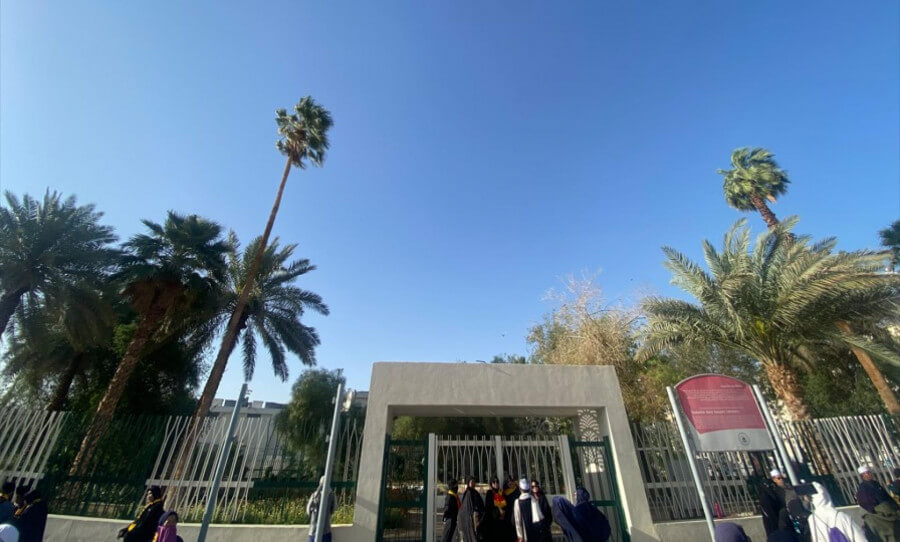
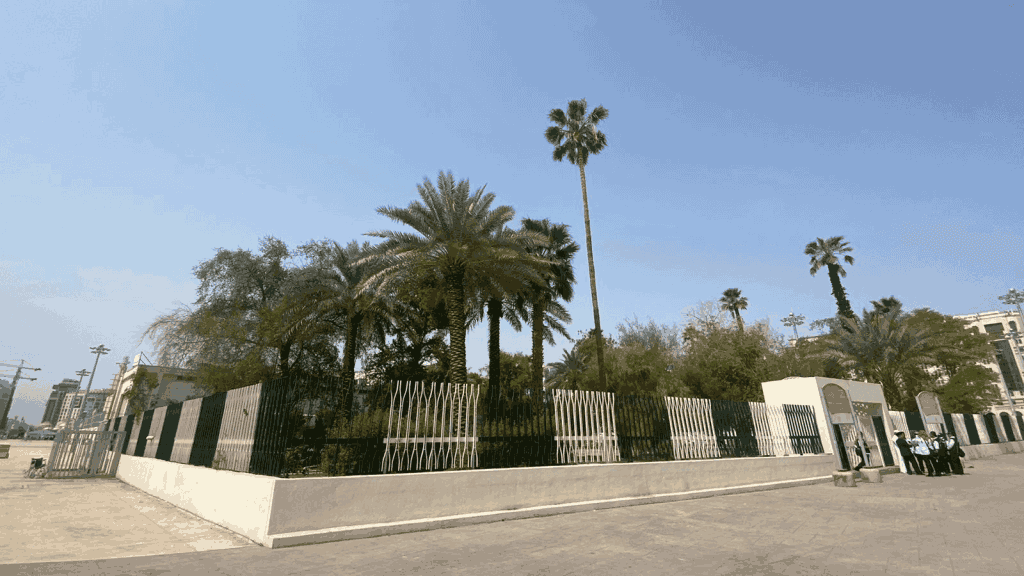
Today, Saqifah Bani Sa‘idah is located on the north-western side of Masjid an-Nabawi, within the broader mosque expansion area. Urban development has integrated the site into the Prophet’s Mosque surroundings, making it easily accessible to visitors.
From the courtyards of Masjid an-Nabawi, the site can be reached within a short walk, and it is clearly marked within the landscaped garden areas.
What Visitors See Today
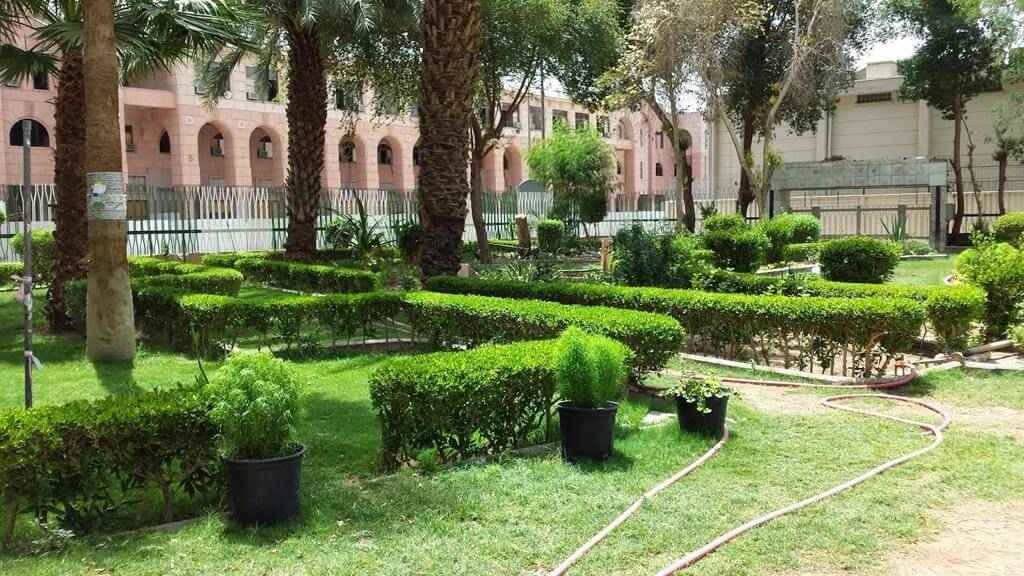
The original structure no longer exists, but the site has been preserved as a quiet public garden. Seating, greenery, and informational panels allow visitors to reflect on the events that occurred there.
Rather than reconstruction, the preservation approach emphasizes historical awareness and contemplation, allowing visitors to connect intellectually and spiritually with the legacy of the Companions.
Visiting Saqifah Bani Sa‘idah During Ziyarah
Most pilgrims visit Saqifah Bani Sa‘idah as part of their Madinah Ziyarah, often alongside Masjid an-Nabawi, Jannat al-Baqi‘, and Masjid Quba.
Morning hours are generally ideal due to lighter crowds and cooler temperatures. The atmosphere is calm, making it suitable for reflection and learning. Visitors are advised to maintain respectful conduct and modest dress, given the proximity to the Prophet’s Mosque.
There is no entrance fee, and access is generally open, subject to local regulations.
Practical Travel and Transport Advice in Madinah
For pilgrims performing Umrah or visiting Madinah with family or elderly members, convenient transport significantly enhances the experience. Reliable local taxi and Umrah transport services allow visitors to comfortably cover multiple Ziyarah sites without stress.
Professional services such as Al Maqam Transport offer Umrah taxi services, Madinah Ziyarah tours, and intercity travel, helping pilgrims reach historical locations like Saqifah Bani Sa‘idah safely and on time. Having a knowledgeable driver familiar with Islamic landmarks adds practical value, especially for first-time visitors.
Saqifah Bani Sa‘idah in the Broader Madinah Ziyarah Experience
Understanding Saqifah Bani Sa‘idah enriches a pilgrim’s visit to Madinah by adding historical depth to the spiritual experience. It reminds visitors that Islam was preserved not only through worship, but also through wisdom, consultation, and unity during times of trial.
When combined with other sacred and historical sites, Saqifah Bani Sa‘idah completes a fuller narrative of how the early Muslim community transitioned responsibly after the Prophet ﷺ.
Conclusion
Saqifah Bani Sa‘idah stands as a quiet yet powerful witness to one of the most critical moments in Islamic history. It was here that the Companions demonstrated foresight, unity, and commitment to the Ummah by establishing leadership through consultation and consensus.
For anyone visiting Madinah, Saqifah Bani Sa‘idah is more than a garden—it is a lesson in responsibility, unity, and Islamic governance. Visiting this site, whether on foot from Masjid an-Nabawi or through a guided Ziyarah with trusted Umrah transport services, deepens one’s understanding of Islam’s early foundations and the legacy of the Rightly Guided Caliphs.

Zeeshan is a professional driver and tour guide who has been living and driving in Saudi Arabia for the past 5 years. With deep knowledge of the roads, landmarks, and Ziyarat locations across Makkah, Madinah, Jeddah, and Taif, he helps pilgrims and travelers enjoy safe, smooth, and well-organized journeys. His experience in Umrah transport, city tours, and airport transfers makes him a trusted expert for visitors exploring Saudi Arabia.