


Masjid Quba holds a unique and unparalleled position in Islamic history. Located in Madinah al-Munawwarah, it is universally recognized as the first mosque built in Islam, making it a cornerstone of Muslim spiritual and communal life. For pilgrims visiting Madinah during Umrah or Ziyarat, Masjid Quba is not simply a historical landmark but a living Sunnah deeply connected to the life of Prophet Muhammad ﷺ.
Historical and Quranic Significance of Masjid Quba

The foundation of Masjid Quba dates back to 622 CE, during the Hijrah of Prophet Muhammad ﷺ from Makkah to Madinah. Upon arriving in the village of Quba, the Prophet stayed among the tribe of Banu ‘Amr ibn ‘Awf, personally laying the first stones of the mosque alongside his companions. This act established Masjid Quba as the earliest physical center of worship in Islam, even before the construction of Masjid al-Nabawi.
Masjid Quba’s status is elevated further by its mention in the Qur’an, where Allah describes it as a mosque “founded on righteousness (taqwa) from the first day.” This divine recognition places Masjid Quba among the most spiritually pure places of worship, symbolizing sincerity, unity, and obedience to Allah at the very beginning of the Islamic community.
Spiritual Virtues and Rewards of Praying at Masjid Quba
One of the most compelling reasons pilgrims visit Masjid Quba is the exceptional spiritual reward associated with prayer there. In an authentic hadith, the Prophet Muhammad ﷺ said that whoever performs ablution at home and then prays in Masjid Quba receives a reward equivalent to performing Umrah. This narration has made the mosque a highly recommended ziyarat site for visitors to Madinah.
The Prophet ﷺ himself regularly visited Masjid Quba, often on Saturdays, sometimes walking and sometimes riding. His consistent practice established a lasting Sunnah, encouraging Muslims to connect with this mosque not merely as tourists but as worshippers seeking closeness to Allah.
Architecture, Expansion, and Modern Development
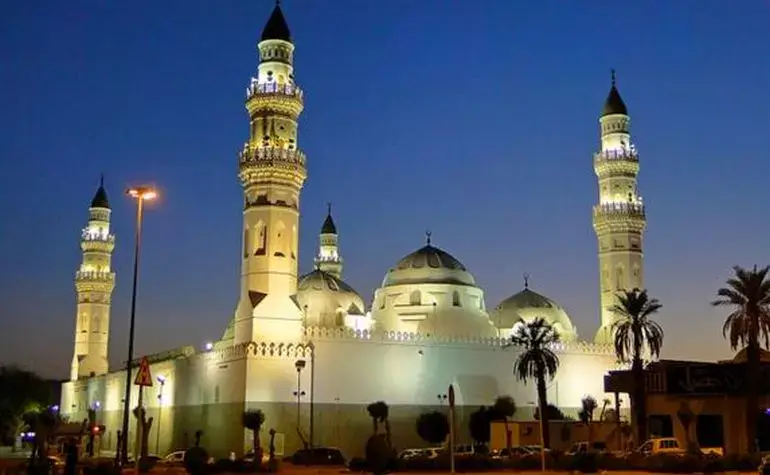
While the original Masjid Quba was a modest structure built from palm trunks and mud bricks, it has undergone several expansions over the centuries. The most transformative reconstruction took place in the 1980s, resulting in the elegant white mosque seen today, characterized by multiple domes, tall minarets, open courtyards, and marble interiors.
Modern Masjid Quba blends classical Islamic aesthetics with contemporary facilities, offering spacious prayer halls, shaded courtyards, advanced cooling systems, and accessibility for elderly and disabled worshippers. In line with Madinah’s growing number of pilgrims, recent expansion initiatives aim to significantly increase the mosque’s capacity, reflecting its enduring importance in the Muslim world.
Location and How to Reach Masjid Quba
Masjid Quba is located approximately 3–4 kilometers south of Masjid al-Nabawi, along Al Hijrah Road. Many pilgrims choose to walk via the Quba Walkway, retracing a path associated with the Prophet ﷺ, which takes around 30–40 minutes at a comfortable pace.
For visitors seeking convenience, especially families, elderly pilgrims, or those on tight schedules, taxis are a popular option and take only a few minutes from central Madinah. For Umrah visitors, arranging reliable transport makes the ziyarat experience smoother and more spiritually focused. Dedicated Umrah and Madinah taxi services allow pilgrims to visit Masjid Quba along with other key sites such as Masjid Qiblatain and Uhud in a single, well-planned journey.
Visiting Masjid Quba – Etiquette and Practical Guidance
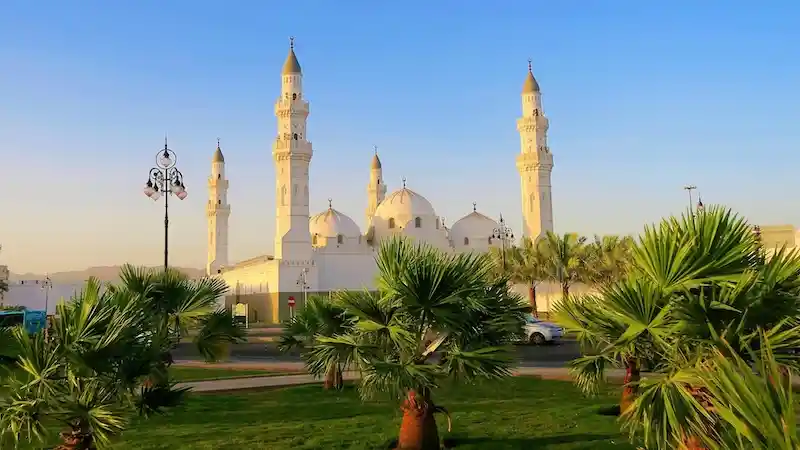
Visitors should approach Masjid Quba with the same reverence shown to all sacred spaces. Modest dress is required, with men covering from shoulders to knees and women observing full Islamic hijab. The mosque is open 24 hours, making it accessible at all times, though quieter periods outside obligatory prayer times offer a more reflective experience.
Pilgrims often pray two rak‘ahs upon entering, following the general Sunnah of mosque prayer, with the intention of worship rather than any fixed ritual unique to Quba. There is no specific surah mandated, though reciting familiar chapters such as Surah Al-Ikhlas or Surah Al-Kafirun is common practice.
Common Questions About Masjid Quba
Masjid Quba is special because it represents the first physical manifestation of Islam as a community, built upon faith and righteousness. The reward of praying there, equated with Umrah, highlights its exceptional virtue. While there is no strict number of rak‘ahs required, offering at least two rak‘ahs with sincerity fulfills the Sunnah and allows worshippers to partake in its blessings.
Masjid Quba in a Madinah Ziyarat Journey
Masjid Quba is often visited alongside other historically significant sites in Madinah, including Masjid al-Nabawi, Masjid Qiblatain, and the area surrounding Mount Uhud. Efficient transport plays a key role in maximizing time and comfort during these visits. Many pilgrims choose professional Umrah and Madinah taxi services to ensure safe, timely, and respectful travel between these sacred locations, allowing them to focus fully on worship and reflection rather than logistics.
Recommended: Jannat al-Baqi
Conclusion
Masjid Quba is far more than the first mosque in Islam; it is a living symbol of sincerity, faith, and the foundations upon which the Muslim Ummah was built. Its deep historical roots, Quranic recognition, and extraordinary spiritual rewards make it an essential destination for every pilgrim visiting Madinah. Whether reached by a reflective walk or a comfortable taxi journey as part of a broader Umrah ziyarat plan, visiting Masjid Quba connects believers directly to the earliest moments of Islamic history and the timeless values established by Prophet Muhammad ﷺ.
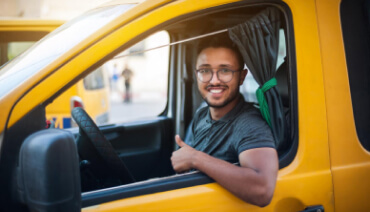
Zeeshan is a professional driver and tour guide who has been living and driving in Saudi Arabia for the past 5 years. With deep knowledge of the roads, landmarks, and Ziyarat locations across Makkah, Madinah, Jeddah, and Taif, he helps pilgrims and travelers enjoy safe, smooth, and well-organized journeys. His experience in Umrah transport, city tours, and airport transfers makes him a trusted expert for visitors exploring Saudi Arabia.