


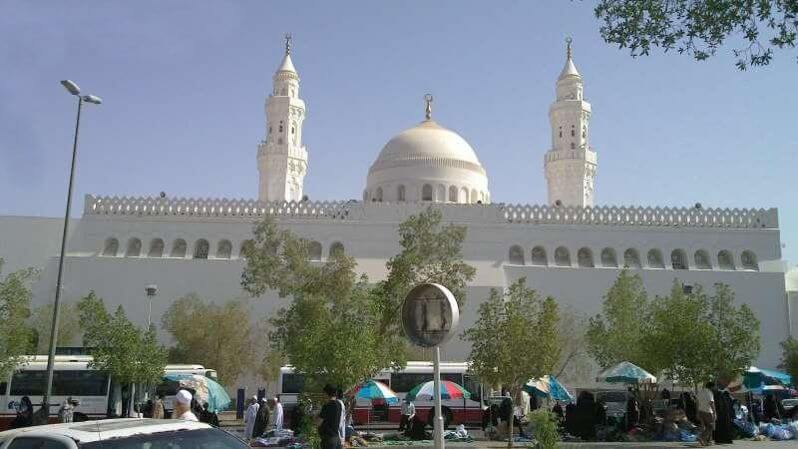
Masjid al-Qiblatain (مسجد القبلتين), meaning “The Mosque of the Two Qiblas,” stands among the most spiritually and historically significant mosques in Madinah. It marks a defining moment in Islamic worship—the divine command that permanently changed the direction of prayer from Bayt al-Maqdis in Jerusalem to the Kaaba in Makkah. This single event shaped Muslim identity, unity, and ritual practice for all generations to follow.
Located northwest of Al-Masjid an-Nabawi, Masjid al-Qiblatain is not merely a place of prayer but a living testimony to revelation, obedience, and transformation in early Islam.
Historical Significance of Masjid al-Qiblatain
The Divine Command to Change the Qibla
In the second year after Hijrah (2 AH), during the Dhuhr prayer, Prophet Muhammad ﷺ received revelation from Allah commanding him to turn toward Al-Masjid al-Haram in Makkah. This command is preserved in Surah Al-Baqarah (2:144), a verse that established the Kaaba as the permanent Qibla for Muslims worldwide.
What makes Masjid al-Qiblatain unique is that this instruction occurred during congregational prayer itself. The Prophet ﷺ and his companions physically turned mid-prayer, creating an unprecedented moment in Islamic worship and earning the mosque its historic name.
Masjid Banu Salama and the Early Muslim Community
Before becoming known as Masjid al-Qiblatain, the mosque was called Masjid Banu Salama, named after the Ansari tribe in whose area it was built. The mosque was constructed by Sawad ibn Ghanam ibn Ka‘ab al-Ansari and ranks among the earliest mosques in Madinah, alongside Masjid Quba and Masjid an-Nabawi. Its naming by the Companions themselves anchors it firmly within the Prophetic era.
What Happened at Masjid al-Qiblatain?
The event at Masjid al-Qiblatain was more than a change in physical direction. It represented the moment when Islam affirmed its independent spiritual orientation while remaining rooted in the monotheistic tradition of Prophet Ibrahim عليه السلام. The companions’ immediate compliance demonstrated absolute submission to divine command, reinforcing the principle that obedience to Allah transcends habit, geography, and precedent.
Why Masjid al-Qiblatain Is Special in Islamic History
Masjid al-Qiblatain symbolizes unity of the Ummah under a single Qibla, obedience without hesitation, and the transition from an earlier phase of Islamic legislation to a complete and distinct religious identity. Few places in the world allow visitors to stand where revelation directly altered daily worship for billions of people across centuries.
Architecture and Reconstruction of Masjid al-Qiblatain
Early Structure and Historical Care
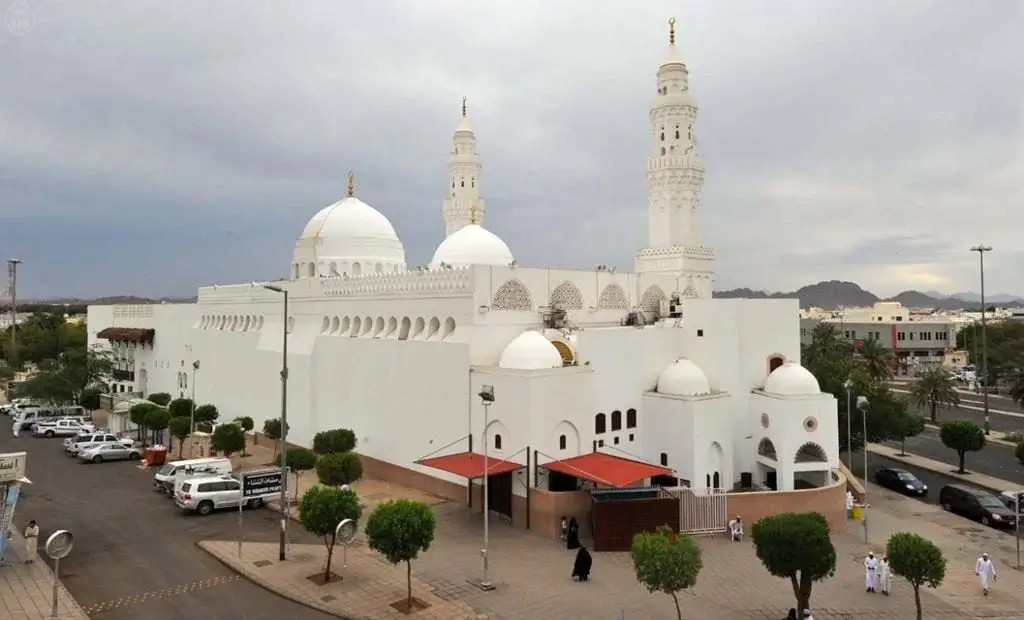
Historically, the mosque contained two mihrabs, each facing a different Qibla—an extremely rare feature. Over the centuries, it received maintenance from prominent Islamic leaders, including Caliph Umar ibn al-Khattab and later Ottoman Sultan Suleiman the Magnificent, preserving its sacred role in Madinah’s religious landscape.
Modern Reconstruction under King Fahd
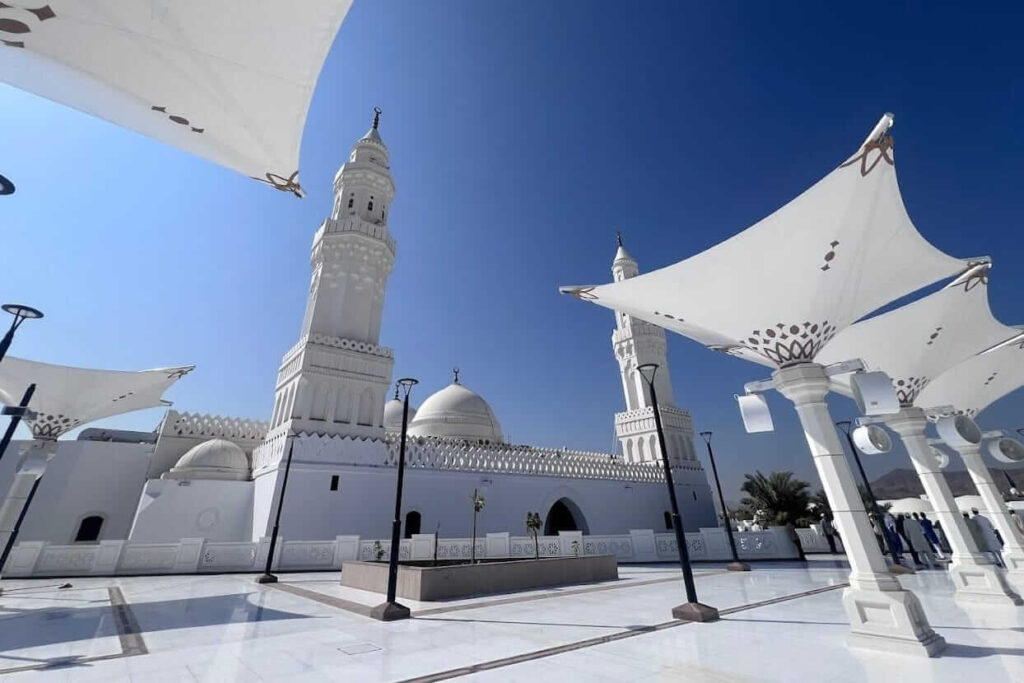
In 1987, during the reign of King Fahd, Masjid al-Qiblatain was completely rebuilt to accommodate modern needs while preserving its historical meaning. The original mihrab facing Jerusalem was removed to maintain congregational unity, but a symbolic marker was installed beneath a secondary dome to honor the earlier direction of prayer.
The mosque now spans approximately 3,900 square meters and comfortably accommodates thousands of worshippers.
Symbolism in Design
The twin domes and twin minarets subtly reflect the mosque’s dual-Qibla heritage. Natural light filters through clerestory windows above the main mihrab, drawing visual focus toward the direction of Makkah. Architectural references to the Dome of the Rock serve as a reminder of Islam’s earliest prayer orientation, making the structure itself a lesson in Islamic history.
Location and How to Reach Masjid al-Qiblatain
Masjid al-Qiblatain is located around 3.8 to 5 kilometers northwest of Masjid an-Nabawi, along Khalid ibn al-Walid Road. It is a regular stop on Madinah ziyarat routes and hop-on hop-off bus tours.
For pilgrims and visitors seeking comfort, flexibility, and time efficiency—especially families, elderly travelers, or Umrah groups—using a dedicated Umrah and Madinah taxi service makes the ziyarat experience far smoother. Professional local drivers familiar with religious landmarks allow visitors to focus on worship rather than navigation, making it easy to combine Masjid al-Qiblatain with Masjid Quba, Uhud, and Jannat al-Baqi in one spiritually fulfilling journey.
Visiting Masjid al-Qiblatain Today
Following royal directives, the mosque is now open 24 hours, allowing worshippers to visit at any time. Early mornings and late evenings offer the most serene atmosphere. Facilities include separate prayer areas for men and women, ablution spaces, wheelchair access, and well-maintained courtyards.
Many visitors offer two rak‘ahs of voluntary prayer and spend time reflecting on the meaning of unity and obedience that this mosque represents.
Masjid al-Qiblatain vs Masjid Quba
Masjid Quba and Masjid al-Qiblatain are often mentioned together but are not the same. Masjid Quba is the first mosque in Islam, while Masjid al-Qiblatain is distinguished by the change of Qibla event. Visiting both provides a complete narrative of early Islamic worship in Madinah.
Masjid al-Qiblatain as Part of a Madinah Ziyarat Journey
Masjid al-Qiblatain is commonly included alongside Masjid Quba, Mount Uhud, and Masjid an-Nabawi in Madinah ziyarat itineraries. Pilgrims arriving for Umrah or visiting after Hajj often rely on organized transport services to move efficiently between these sacred sites, ensuring a spiritually rich experience without physical strain.
FAQs
What is special about Masjid al-Qiblatain?
It is the only mosque historically associated with the change of Qibla during prayer, marking a foundational moment in Islam.
What happened in Masjid al-Qiblatain?
Prophet Muhammad ﷺ received the command to turn toward the Kaaba, and the congregation changed direction mid-prayer.
Are Masjid Quba and Masjid al-Qiblatain the same?
No. Masjid Quba is the first mosque in Islam, while Masjid al-Qiblatain is known for the Qibla change.
What was the old name of Masjid al-Qiblatain?
It was originally called Masjid Banu Salama.
Conclusion
Masjid al-Qiblatain is far more than a historical structure—it is a living reminder of revelation, obedience, and unity in Islam. Standing within its walls connects visitors directly to a moment when divine guidance reshaped Muslim worship forever. For anyone visiting Madinah, especially during Umrah or Hajj journeys, Masjid al-Qiblatain remains an essential ziyarat destination that deepens understanding of Islamic history and strengthens spiritual reflection.

Zeeshan is a professional driver and tour guide who has been living and driving in Saudi Arabia for the past 5 years. With deep knowledge of the roads, landmarks, and Ziyarat locations across Makkah, Madinah, Jeddah, and Taif, he helps pilgrims and travelers enjoy safe, smooth, and well-organized journeys. His experience in Umrah transport, city tours, and airport transfers makes him a trusted expert for visitors exploring Saudi Arabia.