


The Grand Mosque of Makkah, known as Masjid al-Haram, is the holiest mosque in Islam and surrounds the sacred Kaaba, the direction of prayer for Muslims worldwide. Every year, millions of pilgrims visit the mosque for Hajj and Umrah, making efficient navigation essential.
To manage the immense flow of worshippers, the mosque has more than 200 gates spread across multiple levels and expansions. While many entrances exist, pilgrims typically rely on major landmark gates such as King Abdulaziz Gate, King Fahd Gate, Safa Gate, and King Abdullah Gate to orient themselves.
Among all entrances, King Abdulaziz Gate (Gate 1) is one of the most recognized and frequently used entry points for pilgrims arriving from the Clock Tower and Ajyad areas.
King Abdulaziz Gate (Gate 1)
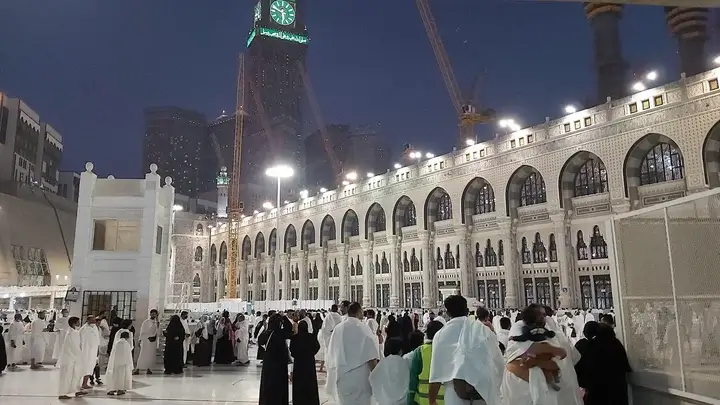
King Abdulaziz Gate, also called Bab al-Malik, is one of the most prominent entrances of Masjid al-Haram. It serves as a primary gateway for pilgrims approaching the mosque from the western side of Makkah.
Location and Orientation
King Abdulaziz Gate is positioned directly opposite Ajyad Street, one of the busiest access routes leading to the Grand Mosque. Because of its location near the famous Abraj Al Bait Clock Tower complex, it is commonly used by pilgrims staying in nearby hotels.
One remarkable feature of this entrance is that when pilgrims walk inside the gate, the Kaaba becomes visible almost immediately, creating a powerful spiritual moment for many visitors performing Umrah for the first time.
The gate area also faces Safwa Towers, a well-known building complex whose grand lobby reflects traditional Arabian hospitality.
Nearby entrances include Bab Ibrahim (Gate 94), named after Prophet Ibrahim (peace be upon him).
Architectural Transformation After Expansion
Historically, the original King Abdulaziz Gate had two minarets and reflected the traditional architectural style that evolved from Ottoman mosque design.
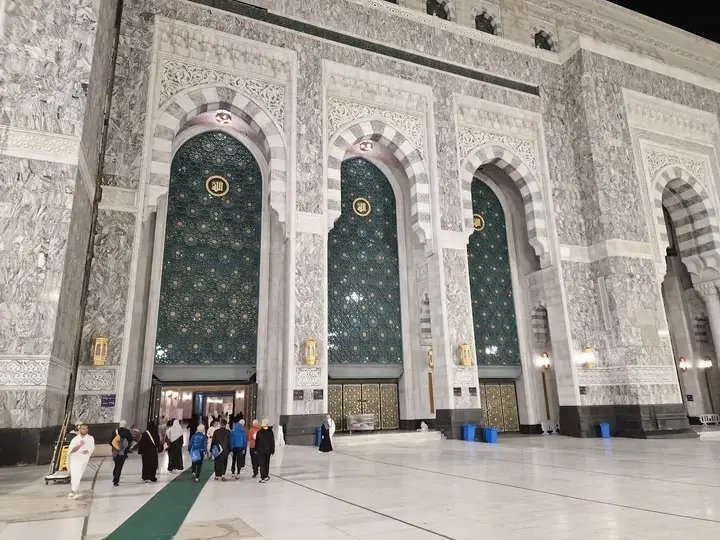
During the major King Abdullah expansion of Masjid al-Haram, the gate was reconstructed and modernized. The current design features:
- A more square architectural profile
- Modern construction elements
- A simplified aesthetic compared to earlier Islamic architectural patterns
This redesign marked a visible shift toward contemporary mosque architecture, while still maintaining the spiritual significance of the entrance.
Why Pilgrims Prefer King Abdulaziz Gate
There are several reasons why this gate remains one of the busiest entrances:
- Direct approach from Ajyad and Clock Tower hotels
- Immediate visual access to the Kaaba
- Easy navigation toward the Mataf area for Tawaf
- Major transportation drop-off points nearby
However, because of its popularity, the gate often becomes extremely crowded during peak Umrah seasons and Hajj days.
Recommended: Haram Boundary Guide
Major Gates of Masjid al-Haram
While King Abdulaziz Gate is widely used, several other entrances play important roles in helping pilgrims move around the mosque.
Ajyad Gate
Located on the Ajyad side of Masjid al-Haram, this entrance is convenient for pilgrims staying in Ajyad hotels or arriving from nearby transport routes.
It is commonly used as an alternative when Gate 1 becomes crowded.
Safa Gate (Gate 11)
Safa Gate is positioned near the starting point of Sa’i at Safa Hill.
Pilgrims intending to perform Sa’i immediately after Tawaf often enter through this gate because it provides direct access to the Mas’a corridor.
Escalators and elevators here also connect to upper Sa’i floors, which are useful during crowded periods.
Marwah Gate (Gate 23)
Marwah Gate is located near the end point of Sa’i at Marwah Hill.
Pilgrims frequently exit here after completing Sa’i, since the surrounding streets provide quick access to:
- Barber shops for shaving or trimming hair
- Taxi pickup points
- Nearby hotels
Al-Mudaa Gate (Gate 25)
This entrance leads directly to the ground-floor Sa’i corridor. Many Umrah groups prefer it because it allows smoother access to the Sa’i path without crossing crowded prayer areas.
Bab al-Fath (Gate 45)
Bab al-Fath is one of the historically significant entrances on the northern side of Masjid al-Haram. It serves pilgrims approaching the mosque from northern neighborhoods.
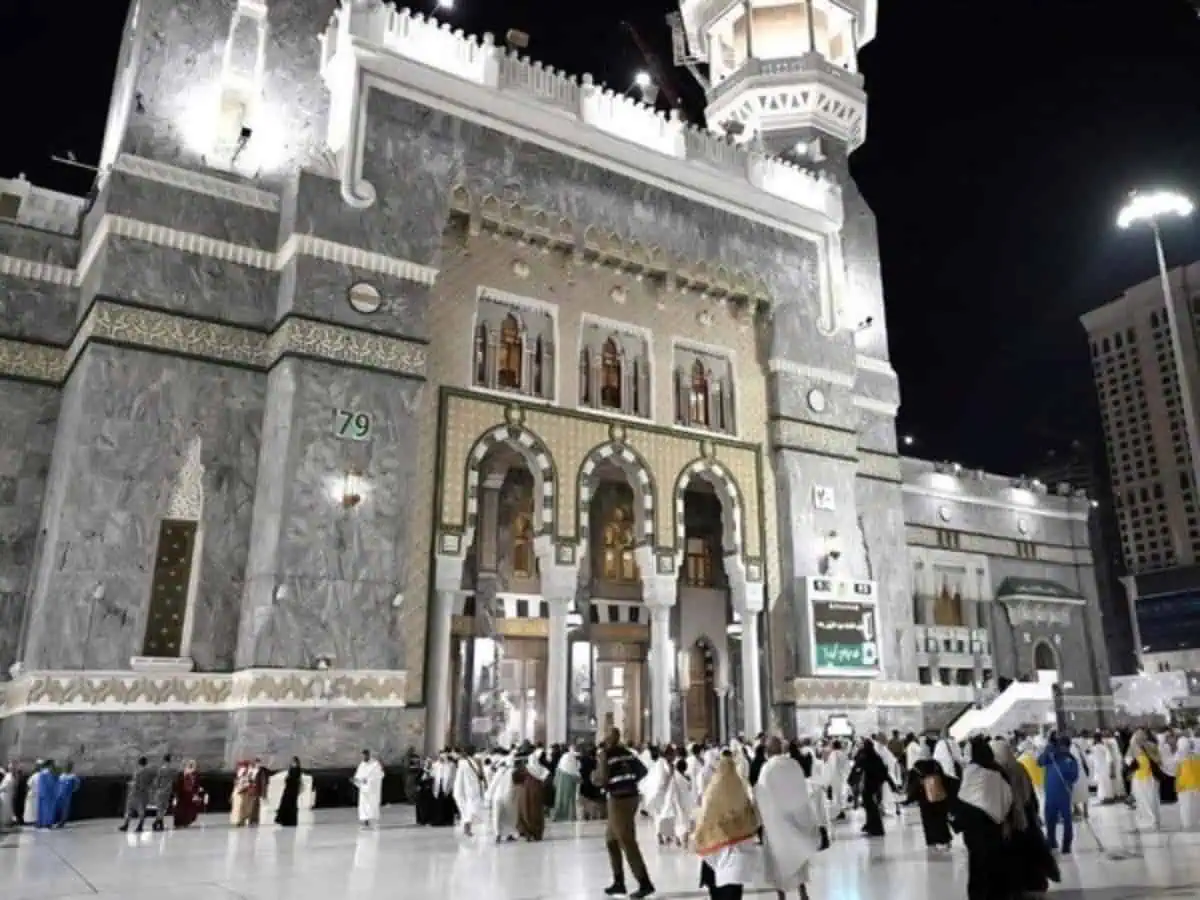
King Fahd Gate (Gate 79)
King Fahd Gate is another major landmark entrance featuring prominent minarets.
During peak seasons, many pilgrims choose this gate as an alternative to King Abdulaziz Gate, since it offers easier movement toward the central prayer areas.
Bab al-Umrah (Gate 63)
Bab al-Umrah is commonly used by pilgrims arriving with Umrah groups or buses. It is well known among tour operators because it connects easily to routes used by group transportation.
King Abdullah Gate (Gate 100)
King Abdullah Gate is one of the largest modern entrances built during the recent mosque expansions.
This massive gate features large archways and connects the northern expansion of Masjid al-Haram with internal corridors leading toward the Mataf.
Because of its large capacity, it is frequently used by groups during busy seasons.
Best Gates for Tawaf and Sa’i
Choosing the correct entrance can make your pilgrimage significantly easier.
For Tawaf, pilgrims typically prefer:
- King Abdulaziz Gate
- King Fahd Gate
- King Abdullah Gate
These entrances provide convenient routes toward the central Mataf area surrounding the Kaaba.
For Sa’i, the best approach is:
- Enter from Safa Gate (11) to begin Sa’i at Safa Hill.
- Exit from Marwah Gate (23) after completing the final lap.
This pattern helps maintain a natural flow of movement.
Best Gates During Hajj Crowds
During peak Hajj days or Ramadan nights, Gate 1 can become heavily congested. Experienced pilgrims and group leaders often use alternative gates such as:
- King Fahd Gate
- King Abdullah Gate
- Bab al-Umrah
These entrances distribute crowd movement more evenly and provide larger access corridors.
Wheelchair Accessible Gates in Masjid al-Haram
Many entrances are designed to support pilgrims with mobility needs.
Accessible gates usually include:
- Elevators
- Escalators
- Ramps leading to upper prayer levels
Entrances like King Abdullah Gate, Safa Gate, and King Fahd Gate offer particularly convenient wheelchair access.
How to Find King Abdulaziz Gate from Ajyad Hotels
Pilgrims staying in the Ajyad and Clock Tower area usually reach Masjid al-Haram through a short walking route.
The typical approach route is:
Ajyad Street → Clock Tower area → King Abdulaziz Gate entrance.
Because this is the closest major gate to many luxury hotels, it remains the most frequently used entrance for first-time Umrah pilgrims.
Transport Tips for Pilgrims Visiting Masjid al-Haram
Many visitors arrive in Makkah from cities like Jeddah, Madinah, or Taif.
If you are traveling between cities for Umrah or ziyarat, arranging reliable private transport can save time and reduce stress during your journey.
Pilgrims often book private transfers such as:
- Jeddah Airport to Makkah
- Makkah to Madinah
- Madinah to Makkah
- Hotel pickup for Haram visits
Services like Al Maqam Transport provide comfortable private Umrah taxis and city-to-city transfers, making it easier for pilgrims to reach their hotels near Masjid al-Haram and access major gates like King Abdulaziz Gate conveniently.
Conclusion
Navigating Masjid al-Haram’s gates becomes much easier once you understand the key landmark entrances. While the mosque has more than 200 gates, a few major ones-especially King Abdulaziz Gate-serve as the main orientation points for millions of pilgrims.
Gate 1 remains one of the most spiritually memorable entrances because it offers a direct visual approach toward the Kaaba, particularly for pilgrims arriving from the Clock Tower side.
Understanding which gate to use for Tawaf, Sa’i, hotel access, and crowd management helps make the pilgrimage smoother and more organized, allowing worshippers to focus on their spiritual journey rather than navigation.
FAQs
Which gate gives the best view of the Kaaba?
King Abdulaziz Gate is famous for offering one of the most immediate visual views of the Kaaba when entering the mosque.
How many gates does Masjid al-Haram have?
Masjid al-Haram has over 200 gates, though pilgrims usually navigate using major landmark entrances.
Which gate is best for starting Sa’i?
Safa Gate (Gate 11) is the most convenient entrance for starting Sa’i.
Which gate is best after finishing Sa’i?
Marwah Gate (Gate 23) is ideal for exiting the mosque after completing Sa’i.
Which gate is closest to the Clock Tower?
King Abdulaziz Gate (Gate 1) is the closest and most commonly used entrance for pilgrims staying near the Clock Tower and Ajyad area.
How can pilgrims travel between Jeddah and Makkah easily?
Pilgrims commonly book private Umrah taxis or transport services for routes like Jeddah Airport to Makkah, Makkah to Madinah, and Madinah to Makkah for a comfortable and direct journey.

Zeeshan is a professional driver and tour guide who has been living and driving in Saudi Arabia for the past 5 years. With deep knowledge of the roads, landmarks, and Ziyarat locations across Makkah, Madinah, Jeddah, and Taif, he helps pilgrims and travelers enjoy safe, smooth, and well-organized journeys. His experience in Umrah transport, city tours, and airport transfers makes him a trusted expert for visitors exploring Saudi Arabia.