


Landing at King Abdulaziz International Airport (JED) after a long flight, most travelers have one question before anything else: how much will it cost to get to Makkah?
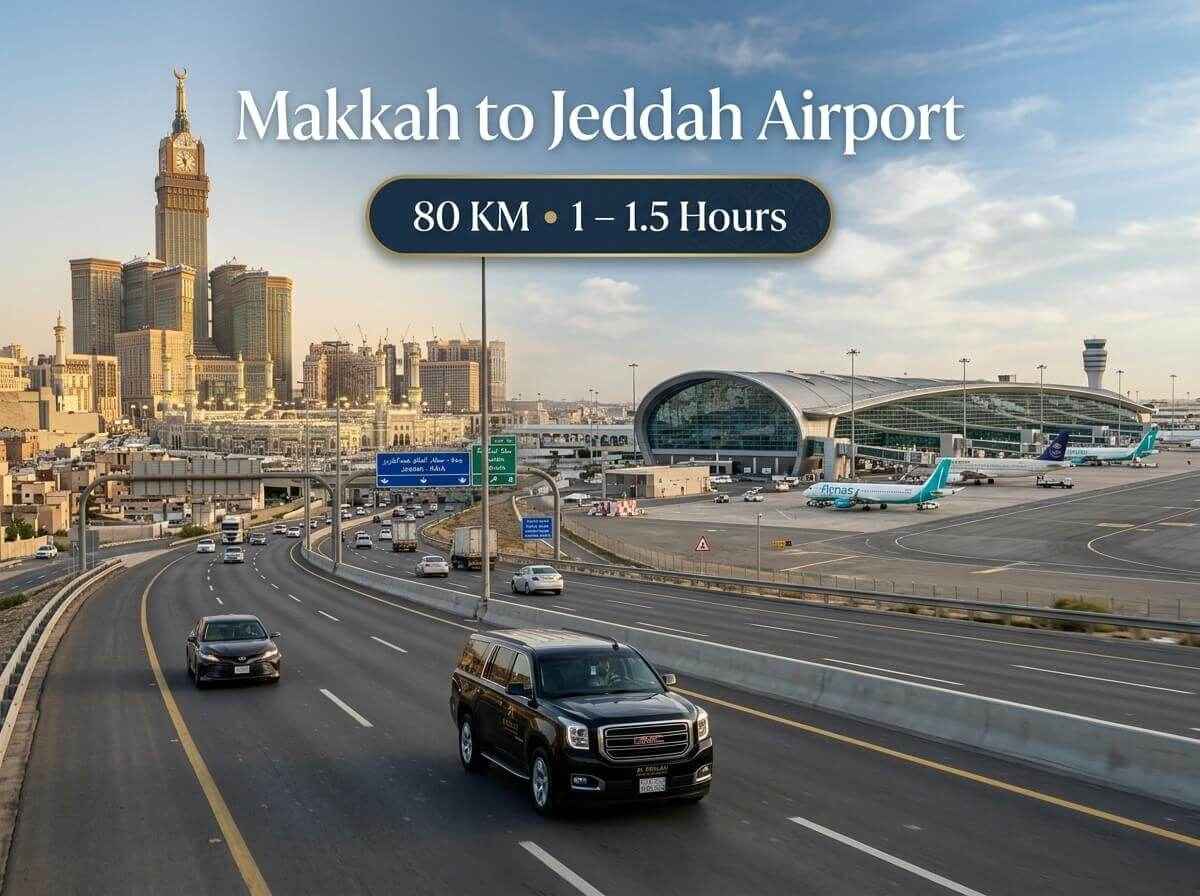
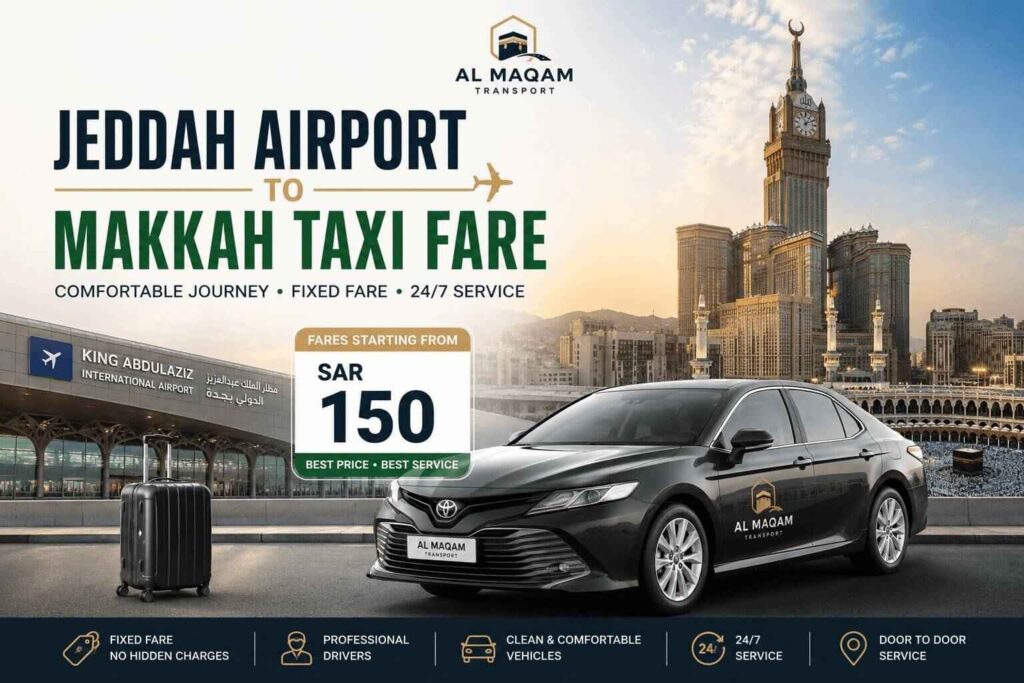
A private taxi from Jeddah Airport to Makkah typically costs between 180 and 450 SAR, depending on the vehicle type. A standard sedan (Toyota Camry or similar) for up to 3 passengers runs 180–250 SAR. An SUV such as a GMC Yukon for 4–5 passengers with luggage costs 400–550 SAR. A van like the Hyundai Staria or Toyota Hiace for groups of 6–10 costs 250–450 SAR. The journey covers roughly 85–95 km along Highway 40 and takes 1 to 1.5 hours in normal traffic, longer during Umrah season, Ramadan, or Hajj.
The rest of this guide breaks down exactly what drives that price, how airport-stand taxis compare to ride-hailing apps and pre-booked private transfers, what a fair, transparent fare should include, and how to book a safe, licensed Jeddah Airport to Makkah taxi without overpaying or getting stranded after a tiring flight.
At-a-Glance: Jeddah Airport to Makkah Taxi Fares (2026)
| Vehicle Type | Capacity | Typical Fare (SAR) | Best For |
|---|---|---|---|
| Sedan (Toyota Camry / Hyundai Sonata) | 1–3 passengers | 180–250 SAR | Solo travelers, couples |
| SUV (GMC Yukon or similar) | 4–5 passengers | 400–550 SAR | Small families |
| Van (Hyundai Staria / Toyota Hiace) | 6–10 passengers | 2500–350 SAR | Groups, extended families |
| VIP / Luxury Chauffeur | 1–4 passengers | 350–600 SAR | Executive travelers, comfort seekers |
| Coaster Bus | 15+ passengers | Quoted per group | Large Umrah/Hajj groups |
Prices reflect a standard, non-peak trip from JED to a central Makkah hotel. Fares can rise 20–40% during Ramadan, Hajj, and major holiday periods due to demand and traffic congestion.
Jeddah Airport to Makkah Route Overview
King Abdulaziz International Airport sits on the northern edge of Jeddah, roughly 85 to 95 kilometers from central Makkah. The route runs primarily along Highway 40 (the Jeddah–Makkah Expressway), a well-maintained multi-lane highway used by pilgrims, commercial traffic, and local commuters alike.
Under normal conditions, the drive takes 60 to 90 minutes. Early morning or late-night departures can be as fast as 55 minutes, since traffic thins out considerably. During Friday afternoons, the final ten days of Ramadan, and the weeks surrounding Hajj, the same trip can stretch to 2 hours or more, largely due to congestion near the Haram Gate checkpoints where non-Muslim access is restricted and vehicle screening increases.
Most private taxis and Umrah transfer companies drop passengers directly at their hotel entrance or, where local checkpoints require it, at the nearest permitted access point to Masjid al-Haram. It’s worth confirming your exact drop-off location when booking, especially if your hotel sits within the restricted zone around the Kaaba during peak pilgrim traffic.
What Determines Your Jeddah to Makkah Taxi Fare
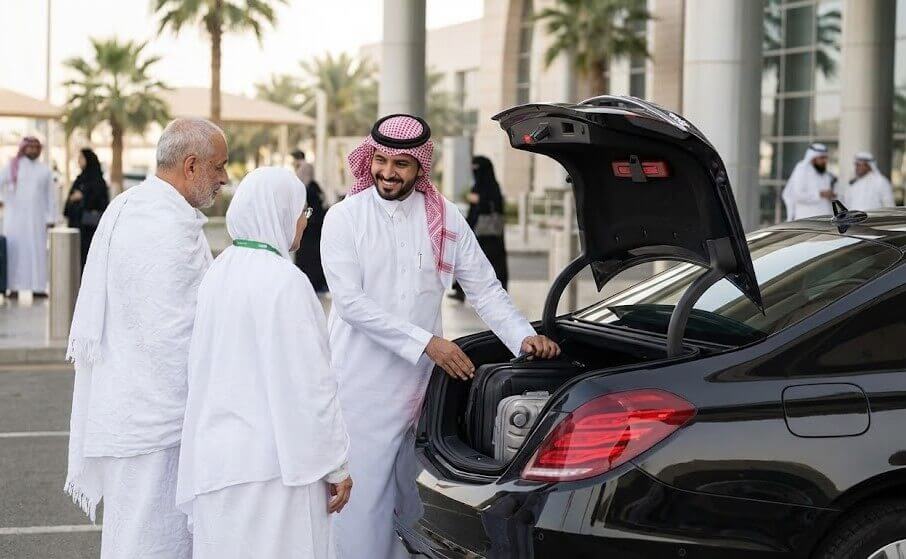
Taxi pricing on this route isn’t random. Six factors consistently shape the final price:
Vehicle type and capacity. A sedan is priced for up to three passengers with standard luggage. Larger vehicles cost more not because of distance, but because of fuel consumption, maintenance, and the space they reserve for your group and bags.
Time of travel. Late-night and early-morning trips are usually cheaper and faster due to lighter traffic. Rush hour, Friday Jumu’ah prayer time, and the hours around Isha prayer during Ramadan see higher demand and sometimes surge pricing on app-based rides.
Season and pilgrim volume. Umrah season (particularly Rajab, Sha’ban, and Ramadan) and the Hajj period bring millions of additional travelers through JED. Fixed-rate private operators tend to hold their pricing steadier than airport taxi ranks or surge-based apps during these windows.
Pickup point. A pickup directly from the airport terminal (with meet-and-greet service) is typically priced slightly differently than a pickup from a Jeddah hotel or the city center, since airport pickups involve terminal access, parking, and coordination with arrivals.
Number of passengers and luggage. Large families or groups with multiple suitcases usually need a van or SUV rather than a sedan, which shifts the fare bracket upward regardless of distance.
Negotiation versus fixed pricing. Unmetered taxis at the arrivals hall often quote a starting price that can be negotiated down, particularly for solo or lightly-loaded travelers. Pre-booked services skip this entirely by confirming the fare before you land.
Airport Taxi Stand vs. Ride-Hailing Apps vs. Pre-Booked Private Taxi
Travelers arriving at JED generally choose between three options. Each has real trade-offs worth understanding before you land, particularly if you’re arriving tired, with family, or during peak pilgrim season.
Airport taxi stand. These are licensed, regulated taxis available 24/7 directly outside arrivals. Fares generally start around 250–350 SAR for the Makkah route and are negotiable before departure. The convenience is real, but negotiating a fare while jet-lagged, carrying luggage, and unfamiliar with local pricing puts most first-time travelers at a disadvantage.
Ride-hailing apps (Uber, Careem). Both operate from JED with transparent in-app pricing and driver tracking, which many travelers find reassuring. However, fares fluctuate with surge pricing, and during Umrah season or bad weather, a quoted 200 SAR ride can climb well past 350 SAR by the time a driver accepts. Vehicle type and driver familiarity with pilgrim needs also aren’t guaranteed.
Pre-booked private taxi. Booking in advance with a dedicated Umrah transport provider locks in a fixed rate before you fly, regardless of surge conditions, traffic, or how busy the airport is that day. It also typically includes meet-and-greet service inside the terminal, flight tracking so the driver adjusts for delays, and a driver experienced with pilgrim routes, Ihram considerations, and prayer-time stops. For families, elderly travelers, or anyone arriving for the first time, this removes the single most stressful part of arrival: negotiating transport while exhausted from a long-haul flight.
Alternative: The Haramain High-Speed Train
For budget-conscious or independent travelers comfortable navigating public transit, the Haramain High-Speed Railway connects a dedicated station at Jeddah Airport directly to Makkah Station. Economy tickets run roughly 100–150 SAR, with the train covering the distance in under an hour at speeds up to 300 km/h.
The trade-off is practical rather than financial: the Makkah train station sits on the city’s outskirts, meaning you’ll still need a taxi for the final leg to your hotel or the Haram. The train also requires navigating ticketing, security screening, and station transfers with your luggage – manageable for a light-traveling solo pilgrim, but often more hassle than it’s worth for families or groups carrying Umrah luggage, prayer mats, and Zamzam water containers on the return leg.
What a Fair, Transparent Fare Should Include
A trustworthy Jeddah Airport to Makkah taxi quote should be all-inclusive, with no surprises at drop-off. Look for operators who clearly state upfront that the fare covers:
- Meet-and-greet pickup at the arrivals terminal
- Standard luggage handling (2 bags per passenger is typical)
- Highway tolls along Route 40
- Direct drop-off at your hotel or the nearest permitted Haram access point
- A reasonable waiting allowance (commonly 10–15 minutes) if your flight is delayed
Extra charges, when they apply, should be disclosed before the ride – not added afterward. Legitimate reasons for an adjusted fare include multiple stops along the way, waiting time beyond the agreed allowance, excess luggage requiring a larger vehicle, or a last-minute vehicle upgrade requested by the passenger. Any operator unwilling to state their pricing structure clearly before you book is a signal to look elsewhere.
How to Book a Jeddah Airport to Makkah Taxi with Al Maqam Transport
Al Maqam Transport has served international Umrah and Hajj pilgrims across Saudi Arabia for over 15 years, with a fleet of 2024–2025 model sedans, SUVs, vans, and VIP vehicles operating out of Jeddah, Makkah, and Madinah. Booking a transfer takes a few simple steps:
- Share your flight details. Send your arrival flight number, date, and passenger count via WhatsApp, and the team tracks your flight in real time – so your driver adjusts automatically for early or delayed arrivals.
- Choose your vehicle. Select based on group size and comfort preference: sedan for solo travelers or couples, SUV or van for families, or a VIP chauffeur vehicle for executive comfort.
- Confirm your fixed fare. Pricing is agreed before you fly, with no surge charges and no last-minute renegotiation at the terminal.
- Meet your driver at arrivals. A licensed, English-speaking driver waits inside the terminal with a name sign, assists with luggage, and drives you directly to your Makkah hotel or the Haram gate nearest your accommodation.
Every driver is licensed, background-checked, and experienced with pilgrim needs – understanding Ihram etiquette, prayer-time timing, and the patience required when traveling with families, elderly parents, or first-time pilgrims still adjusting to the journey.
Choosing the Right Vehicle for Your Trip
Solo travelers and couples are best served by a sedan such as a Toyota Camry – economical, comfortable for the 90-minute drive, and sufficient for standard carry-on and checked luggage.
Small families (4–5 people) typically need an SUV like a GMC Yukon, which offers extra trunk space for car seats, strollers, and additional Umrah luggage without cramming passengers.
Larger families or groups (6–10 people) are better suited to a van such as the Hyundai Staria or Toyota Hiace, both of which keep the group together in one vehicle rather than splitting across multiple taxis – a meaningful convenience when traveling with elderly parents or young children.
Executive and VIP travelers who prioritize comfort, privacy, and a premium in-car experience can book a dedicated chauffeur vehicle, often used for business travelers extending their trip with Ziyarat tours or multi-city transfers.
Large Umrah or Hajj groups traveling together, such as tour groups or extended families of fifteen or more, are typically better served by a Coaster bus booked as a single group transfer rather than multiple smaller vehicles.
Best Time to Travel and Seasonal Considerations
Traffic and taxi fares on this route shift noticeably with the Islamic calendar. Ramadan, particularly the final ten nights, brings a sharp increase in pilgrim arrivals at JED alongside heavier road traffic around Makkah’s city center. Hajj season (Dhul Hijjah) sees the highest volume of the year, with temporary road closures and checkpoint delays near the Haram common in the days immediately before and after the pilgrimage rites at Mina, Arafat, and Muzdalifah. Rajab and Sha’ban, the traditional Umrah season, are busy but generally more predictable than Ramadan or Hajj.
Outside these peak windows – particularly during the summer months when temperatures are highest – traffic is lighter and fares tend to sit at the lower end of the standard range. Travelers with flexible dates who want the most predictable pricing and travel time often choose to fly outside Ramadan and Dhul Hijjah for this reason.
Regardless of season, booking your transfer in advance rather than arranging it after landing removes most of the pricing volatility tied to seasonal demand.
Travel Tips for Pilgrims Heading to Makkah
If you’re entering Ihram before your flight or at a designated Miqat point, let your driver know in advance – an experienced Umrah transport provider will factor this into route planning and timing, particularly if you need a stop at a Miqat such as Juhfah or Qarn al-Manazil depending on your entry point.
Keep prayer times in mind when scheduling your pickup. Drivers familiar with pilgrim routes typically plan around Salah times so the journey doesn’t conflict with Dhuhr, Asr, Maghrib, or Isha, and will accommodate a brief roadside stop if needed.
Carry a printed or digital copy of your hotel address in both English and Arabic. While most professional drivers know Makkah’s major hotel zones (particularly the areas surrounding the Clock Tower and Masjid al-Haram) well, having the address ready speeds up drop-off, especially at night.
Confirm your fare and vehicle type before departure day, not at the curb. This is the single most effective way to avoid both overpaying and the stress of last-minute negotiation after a long flight.
Continuing Your Journey: Ziyarat and Onward Travel
Many pilgrims don’t stop at Makkah. After completing Umrah, common next steps include a Makkah to Madinah taxi for Ziyarat at Masjid an-Nabawi, the Rawdah, and Jannat al-Baqi, followed by a Madinah to Makkah taxi on the return leg, or a dedicated Makkah Ziyarat tour covering historical sites such as the Cave of Hira, Mount Uhud, and Jabal al-Nour.
Travelers extending their trip beyond the holy cities often add a Taif Ziyarat taxi for the cooler mountain climate, or a multi-day tour to AlUla for its UNESCO-listed archaeological sites. Booking all your transfers with a single trusted operator – rather than arranging each leg separately – generally means more consistent pricing, familiar vehicle standards, and one point of contact for your entire Saudi Arabia itinerary.
Safety, Licensing, and What to Verify Before You Book
Saudi Arabia’s transportation authorities require commercial taxi and transfer operators to hold valid licensing, and drivers serving pilgrim routes should carry proper documentation for both the vehicle and their operating permit. Before booking, it’s reasonable to ask:
- Is the driver licensed for commercial passenger transport?
- Is the vehicle insured and roadworthy for a 90-minute highway journey?
- Does the company provide a fixed quote in writing (via WhatsApp or email) before the trip?
- Is 24/7 support available if your flight is delayed or your plans change?
A legitimate operator will answer all four without hesitation. Vague answers, refusal to confirm pricing in advance, or pressure to pay a large deposit before any details are confirmed are reasonable red flags.
FAQs
How much is a taxi from Jeddah Airport to Makkah?
A private taxi costs roughly 130–450 SAR depending on vehicle type: 130–250 SAR for a sedan, 250–350 SAR for an SUV, and 300–450 SAR for a van seating 6–10 passengers.
How far is Jeddah Airport from Makkah?
The distance is approximately 85–95 km, traveled primarily via Highway 40, with a typical drive time of 60 to 90 minutes.
How long does the drive from Jeddah Airport to Makkah take?
Under normal traffic, the trip takes 1 to 1.5 hours. During Ramadan, Hajj season, or Friday afternoons, it can take up to 2 hours due to congestion near the Haram.
Is it cheaper to book a taxi in advance or take one from the airport stand?
Pre-booking usually offers a more predictable, fixed fare with no surge pricing, while airport stand taxis require on-the-spot negotiation and can be quoted higher for first-time or foreign travelers.
Do Uber and Careem operate at Jeddah Airport?
Yes, both apps operate from JED to Makkah, but fares fluctuate with surge pricing and can exceed pre-booked private rates during peak demand periods.
Is the Haramain Train cheaper than a taxi?
Ticket prices run about 60–140 SAR, generally cheaper than a private taxi, but the Makkah station is outside the city center, so an additional short taxi ride is usually needed to reach your hotel or the Haram.
What vehicle should I book for a family of five with luggage?
An SUV such as a GMC Yukon comfortably fits five passengers with standard luggage; larger families or groups of six or more typically need a van like the Hyundai Staria or Toyota Hiace.
Are there hidden charges in Jeddah to Makkah taxi fares?
Reputable operators disclose the full fare upfront, including tolls and luggage handling. Extra charges typically only apply for additional stops, extended waiting time, or last-minute vehicle changes, and should be communicated before the ride.
Can I book a taxi directly from the airport arrivals hall for Umrah?
Yes, licensed taxis are available 24/7 at the arrivals terminal, though pre-booking is recommended for guaranteed pricing, vehicle type, and a driver waiting with a name sign.
Does the taxi fare change during Hajj or Ramadan?
Yes, fares can rise 20–40% during peak pilgrim seasons due to higher demand and increased traffic near Makkah’s holy sites. Fixed-rate pre-booked services tend to hold pricing steadier than on-demand options.
Where exactly does the taxi drop me off in Makkah?
Most transfers drop passengers directly at their hotel entrance. If your hotel sits within a restricted access zone near the Haram during busy periods, drivers drop off at the nearest permitted gate.
Do drivers understand Umrah and Ihram requirements?
Experienced Umrah transport drivers are familiar with Ihram etiquette, Miqat stops, and prayer-time scheduling, and can accommodate related requests when informed in advance.
Is it safe to travel with young children or elderly parents by taxi from Jeddah Airport?
Yes, provided you book a properly sized, licensed vehicle. Families are generally advised to choose an SUV or van rather than a sedan for extra space and comfort over the 90-minute drive.
Can I book a one-way trip, or do I need to arrange a return separately?
Both options are available. Many pilgrims book only the arrival transfer initially and arrange the departure transfer separately once their return flight is confirmed, though booking both in advance is generally simpler.
What’s the best time of day to travel from Jeddah Airport to Makkah?
Early morning and late-night departures typically see the lightest traffic and fastest travel times, while Friday afternoons and the hours around Maghrib during Ramadan tend to be the slowest.

Zeeshan is a professional driver and tour guide who has been living and driving in Saudi Arabia for the past 5 years. With deep knowledge of the roads, landmarks, and Ziyarat locations across Makkah, Madinah, Jeddah, and Taif, he helps pilgrims and travelers enjoy safe, smooth, and well-organized journeys. His experience in Umrah transport, city tours, and airport transfers makes him a trusted expert for visitors exploring Saudi Arabia.