


By the Al Maqam Transport team
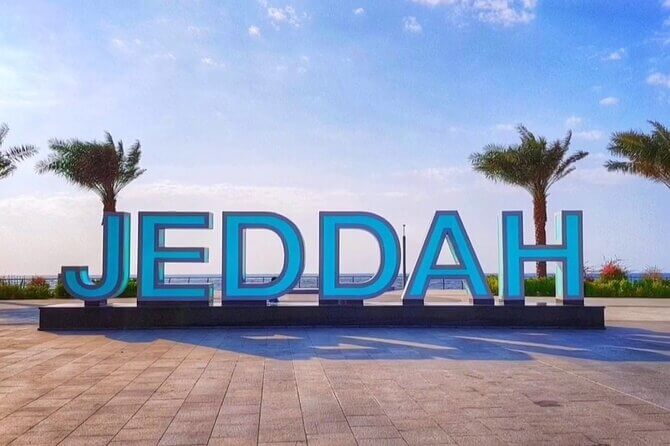
Jeddah is a Red Sea port city in Makkah Province, about 80 to 95 kilometres from Makkah depending on the route and where you finish. It is where most international Umrah and Hajj pilgrims land, and it is also a destination in its own right, with a UNESCO-listed old town, a long waterfront and some of the best food in the Kingdom. This guide explains how the city is laid out, which area suits which kind of trip, what to see, and how to move around without losing half your day in traffic.
Jeddah is a spread-out coastal city, not a compact one. The historic district (Al-Balad) sits in the south, the Corniche and most hotels run along the coast to the north of it, and King Abdulaziz International Airport (JED) lies further north again. Almost every trip involves a car, so choose your base by what you plan to do, not just by price.
How Jeddah Is Laid Out
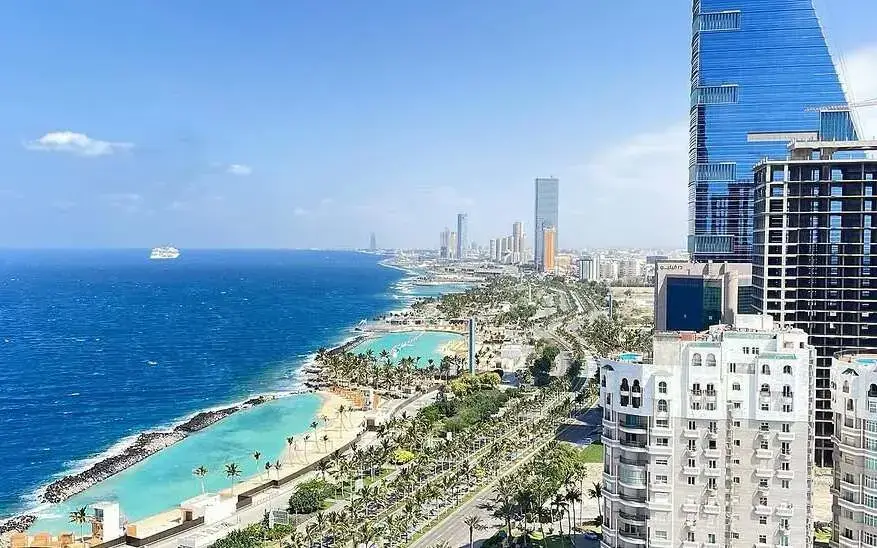
The easiest way to understand Jeddah is to picture a long strip along the sea. Everything is organised around the coastline and a few major north–south roads.
In the south is Al-Balad, the old walled city and the oldest part of Jeddah. It has served pilgrims and traders since the seventh century, and its coral-stone houses, wooden balconies and narrow lanes are still standing. North of it lies what locals often call New Jeddah, the districts built in the modern era: Al Hamra, Al Shati, Al Zahra, Al Rawdah, Al Faisaliyyah and Al Salamah, among others. These are wide, grid-like areas with malls, hotels, embassies’ staff housing and most of the restaurants visitors know by name.
The Corniche is the waterfront spine that ties much of this together. Beyond the airport, towards King Abdullah Economic City, you find newer developments and beachfront resorts. To the north of the city centre, Obhur is the area for private beaches, marinas and seaside stays.
The practical point is distance. Al-Balad to the northern Corniche is a real drive, and the airport is further still. Jeddah does not have a metro, so plan journeys by road and allow extra time at rush hour and on Friday afternoons.
Which Area Should You Stay In?
Choosing the right district matters more in Jeddah than in most cities because of the distances involved. Here is how the main areas compare.
Al-Balad (Historic Jeddah)
Stay here if you want atmosphere and history. You will be a short walk from Nassif House, Souk Al-Alawi and Al-Shafi Mosque, and the area comes alive in the evening. The trade-off is that traditional guesthouses are limited, streets are narrow, and cars cannot always reach your door, so you may need to be dropped at the edge of the district and walk the last stretch with your luggage.
Al Hamra and the Corniche
This is the classic choice for first-time visitors. Large hotels, sea views, the waterfront promenade and easy access to restaurants make it comfortable for families and groups. It is also a convenient central point for reaching both Al-Balad and the northern districts.
Al Shati and Al Zahra
Al Shati is one of the city’s most established beachfront addresses and is popular with long-stay guests, business travellers and diplomats. Al Zahra sits just inland of the Corniche, and Tahlia Street (Prince Mohammed bin Abdulaziz Road) runs through the area, which makes it one of the more walkable parts of Jeddah. If you like cafés, boutiques and an evening stroll, this is the area.
Al Rawdah and Al Faisaliyyah
These are mid-range, residential-feeling districts with a good spread of hotels, furnished apartments and shopping. They suit travellers who want value, a local feel and quick access to the main roads.
Near King Abdulaziz International Airport
Hotels close to JED make sense for early flights, late arrivals and short layovers. They are less useful if you want to explore, because the sights are a long drive south. Pilgrims on a tight transit schedule often choose this option for a single night.
Obhur and the Northern Coast
Choose Obhur for beach resorts, boating and a slower pace, especially in cooler months. Remember that you are well out of the centre, so budget time and transport for every outing.
A simple rule: history lovers should base themselves near Al-Balad, families and first-timers near the Corniche or Al Hamra, shoppers and café-goers around Tahlia Street, and transit passengers near the airport.
What to See in Jeddah
Historic Jeddah (Al-Balad)
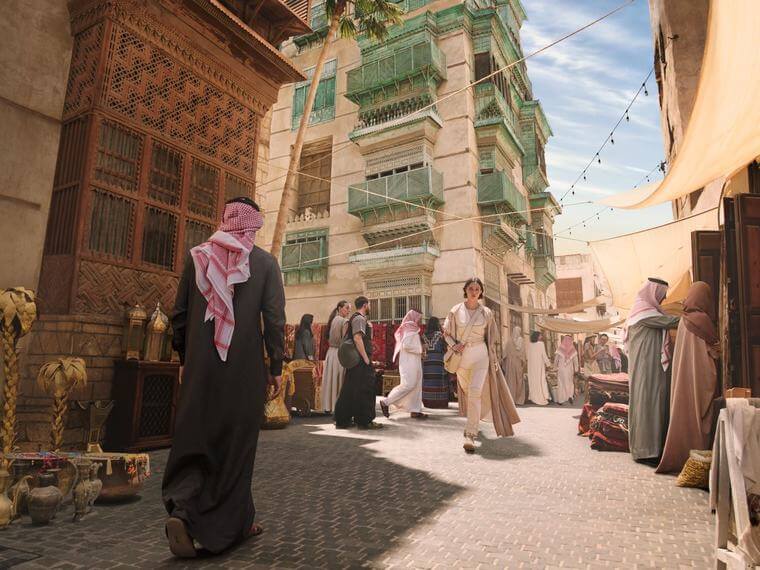
Al-Balad was inscribed as a UNESCO World Heritage Site in 2014. Its multi-storey houses were built from coral stone taken from the Red Sea and finished with carved wooden rawashin (balconies) that caught the sea breeze before air conditioning existed.
The main stops are Nassif House, a late nineteenth-century merchant’s home that is open to visitors, Souk Al-Alawi for spices, textiles and everyday goods, and Al-Shafi Mosque, one of the oldest in the city. Walk through Bab Sharif, one of the old city gates, to get a feel for how the town once worked.
Go in the late afternoon or early evening. Midday heat is hard on the lanes, and the light is far better for photographs when the sun is low.
Al Rahma Mosque (the Floating Mosque)
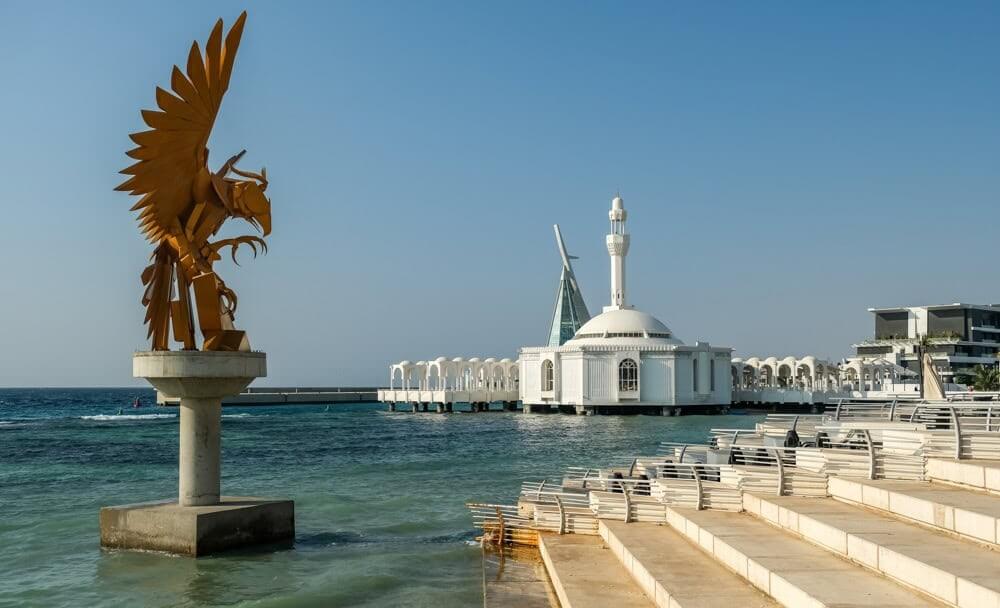
Built on pillars at the edge of the Red Sea, this white mosque with its turquoise-toned detailing appears to hover above the water at high tide. It is a well-loved stop for photographs, especially around sunset. As it is an active place of worship, dress modestly and avoid visiting during prayer times unless you plan to pray.
King Fahd’s Fountain
Launched in 1985, the fountain is one of the tallest in the world and can be seen from large parts of the Corniche. Sources quote different heights, but it rises several hundred metres into the air. It operates daily and is at its best after dark, when it is lit up. For the best view, walk along the waterfront rather than trying to see it from the road.
Jeddah Corniche and Waterfront
The Corniche is Jeddah’s open-air living room. Families walk, cycle and picnic here in the cooler evening hours, and there are playgrounds, cafés, public art and long stretches of sea-facing promenade. The Jeddah Waterfront is a landscaped section that works well with children.
Museums and Culture
Al Tayebat City Museum for International Civilisation is a good indoor stop when the heat is high. Smaller galleries and the Jeddah Art Promenade add contemporary culture to the heritage you see in Al-Balad.
Family Fun and Shopping
Al Shallal Theme Park suits older children and teenagers, while Jeddah’s large malls, including Mall of Arabia, are practical for shopping, dining and escaping the midday heat. The city also hosts the Saudi Arabian Grand Prix at the Jeddah Corniche Circuit, and Jeddah Season brings concerts, markets and food events. Dates change from year to year, so check official calendars before planning around them.
Jeddah for Umrah and Hajj Travellers
For many visitors, Jeddah is simply the entry point. King Abdulaziz International Airport (JED) handles most international arrivals for pilgrims heading to Makkah, and a separate Hajj Terminal operates during the Hajj season. Check with your airline or tour operator which terminal applies to your flight.
A few things are worth knowing before you land.
- Plan your ihram early. If you are travelling for Umrah, confirm with your group leader or airline where and when you should enter ihram, and prepare before you board rather than at the arrival hall.
- Expect time at immigration. Queues are longest when several international flights arrive together, especially at peak Umrah times and in Ramadan. Allow for this when you book onward transport and tell your driver your flight number so they can track delays.
- Pick your transport before you arrive. After a long flight, deciding in the arrivals hall is the most tiring way to do it.
If you have a free day in Jeddah on either side of your pilgrimage, Al-Balad is the most meaningful place to spend it because of its centuries-old link with pilgrims travelling to Makkah.
Getting Around Jeddah
Jeddah is built for cars. Distances are large, summer heat is intense, and public transport options for visitors are limited, so most travellers rely on taxis, ride-hailing apps or private drivers.
Private taxi or chauffeur. The most comfortable option for families, groups, elderly travellers and anyone with heavy luggage. You agree the journey in advance, the driver meets you, and you avoid haggling or waiting. This is also the simplest way to link several stops in one day, for example the Floating Mosque, the Corniche and Al-Balad in a single morning or evening.
Ride-hailing apps. Useful for short, one-way trips within the city. They can be harder to rely on at airport peaks or at night near busy attractions.
Airport taxis. Available at JED, but fares and service levels vary, and drivers may not help with bags or know pilgrim hotels well.
The Haramain train. The high-speed Haramain railway connects Makkah, Jeddah, King Abdullah Economic City and Madinah. Jeddah has two relevant stations, Sulaymaniyah in the city and a station within the airport complex. It is excellent for the Jeddah–Makkah and Jeddah–Madinah legs, but you still need a car for the first and last stretch between the station and your hotel.
Typical vehicle choices. A Toyota Camry suits one to three people with normal luggage. A Hyundai Staria or similar people-carrier suits a family of five to seven. A Toyota Hiace suits larger family groups, and a GMC Yukon is the usual choice for a premium or VIP transfer. A Coaster bus makes sense for large groups. Always tell your operator how many people and how many bags you have, because luggage is what usually decides the vehicle.
Timing your drives
Travel times in Jeddah can swing widely. A trip that takes 30 minutes at mid-morning can take twice as long on a Friday afternoon after Jumu’ah prayers, during the evening rush, or on the Corniche on a weekend night. If you have a flight to catch, leave earlier than the app suggests.
Jeddah to Makkah, Madinah and Taif
Most people reading a Jeddah guide are also planning onward travel. Here is what to expect.
Jeddah to Makkah
The road distance from the airport to the Haram area is roughly 80 to 95 kilometres, depending on the route and your hotel. In normal traffic it takes about an hour to an hour and a quarter. During Ramadan, peak Umrah weeks or Hajj, allow up to two hours. The Haramain train is quicker on paper, taking around 45 minutes from the airport station to Makkah, but remember that Makkah’s Rusaifah station is a few kilometres from the Grand Mosque, so you still need a transfer to your hotel.
For families, elderly pilgrims or anyone with several bags, a private taxi from the airport straight to the hotel door is usually the least stressful option. You do not need to change vehicles, queue at stations or carry luggage between platforms.
Jeddah to Madinah
Madinah is roughly 420 kilometres from Jeddah. By road expect around four to five hours, depending on stops and traffic. The Haramain train is much faster, typically around two hours, but a private intercity taxi gives you a door-to-door journey with prayer and rest stops built in. This suits families and groups travelling with children.
Jeddah to Taif
Taif lies in the cooler hills east of Makkah and is a popular day trip or ziyarat extension. The drive from Jeddah takes a little over two hours depending on route and traffic, and includes a climb into the mountains. Many travellers combine it with a Makkah stay.
Ziyarat
If you are in the region for a pilgrimage, ziyarat in Makkah and Madinah is usually arranged separately from Jeddah sightseeing. In Makkah, visitors commonly include Jabal al-Nour (the mountain of Cave Hira), Jabal Thawr, Mina, Arafat and Muzdalifah. In Madinah, common stops are Quba Mosque, Masjid al-Qiblatayn and Mount Uhud, with Masjid an-Nabawi and the Rawdah as the spiritual centre of the visit. A driver who knows the sites can also advise on the best time to avoid crowds.
Best Time to Visit Jeddah
Jeddah is hot and humid for much of the year. The most comfortable period for sightseeing is roughly November to March, when evenings are mild and outdoor spaces such as the Corniche and Al-Balad are pleasant to walk.
Summer brings strong heat and humidity. If you travel then, schedule outdoor visits for early morning or after sunset and keep water with you.
For pilgrims, the calendar matters as much as the weather. Umrah is busiest during Ramadan and in the school holidays, and Hajj season brings the heaviest restrictions and traffic of the year. Ramadan 2027 is expected to begin in early to mid February, depending on moon sighting. Book flights, hotels and transport early for these dates. Evenings in Ramadan are lively, but travel around iftar and after Taraweeh prayers can be slow.
Practical Tips and Etiquette
- Dress modestly. Shoulders and knees should be covered in public, and women visiting mosques should wear an abaya or modest clothing and a headscarf where required. Pack light, breathable fabrics.
- Respect prayer times. Some shops close briefly during prayer, and services can be slower. Plan around them rather than against them.
- Carry water and sun protection. Even short outdoor visits feel long in the heat.
- Cash and cards. Cards are widely accepted in malls and restaurants, but small purchases in the souks may still be easier with cash.
- Photography. Be respectful around mosques and people, and ask before photographing individuals, particularly women and families.
- Keep your documents handy. Passport, visa, hotel booking and flight details should be easy to reach when you arrive.
- Share your plan. Give your driver your flight number, hotel name and WhatsApp contact before you travel, so pickups run smoothly even if your flight is delayed.
- Travelling with children or older relatives. Plan fewer stops per day, include rest breaks, and ask for a child seat or a vehicle with easy step-in access when you book.
Booking a Private Taxi in Jeddah
Al Maqam Transport provides private taxi services across Jeddah, Makkah, Madinah and Taif, including Jeddah airport transfers, hotel transfers, Umrah and Hajj transportation, ziyarat tours, intercity journeys and luxury chauffeur service.
When you book any private transfer, whoever you choose, a few details make the difference between a smooth journey and a stressful one:
- Give your flight number so the driver can monitor arrival times.
- State exactly how many passengers and bags you have.
- Say whether you need child seats, wheelchair access or extra stops.
- Confirm the pickup point, meeting arrangements and total fare before you travel.
- Keep a contact number for the driver on hand.
You can request a quote or book directly on the Al Maqam Transport website.
FAQs
What is Jeddah known for?
Jeddah is known as the gateway to Makkah, as a historic Red Sea port, and for Al-Balad, its UNESCO-listed old town. It is also famous for its Corniche, King Fahd’s Fountain, the Floating Mosque and a lively food and arts scene.
How far is Jeddah from Makkah?
The road distance is roughly 80 to 95 kilometres depending on the starting point and route. The journey usually takes about an hour in normal traffic, and up to two hours during Ramadan, Hajj or other peak periods.
Which area of Jeddah is best for tourists?
First-time visitors usually find the Corniche and Al Hamra area the most convenient, because it is central, close to the waterfront and has plenty of hotels and restaurants. Visitors focused on history may prefer to stay near Al-Balad.
Where should I stay in Jeddah as a pilgrim?
If you are only transiting, a hotel near King Abdulaziz International Airport is practical. If you plan to explore before or after Makkah, the Corniche area gives you easier access to sights and restaurants.
Is Jeddah worth visiting if I am only here for Umrah?
Yes, if you have a spare half day. Al-Balad, the Floating Mosque and the Corniche can all be seen in a few hours and give meaningful context to the city’s long role as a pilgrim port.
How do I get from Jeddah airport to Makkah?
The main options are a private taxi, the SAPTCO bus, the Haramain train from the airport station, or an airport taxi. Private taxis go door to door, while the train and bus still need a final transfer to your hotel.
Is the Haramain train better than a taxi?
It is quicker on the rail section, but it is not always quicker overall. You must reach the station, buy a ticket, travel on the timetable and then take another vehicle from Makkah’s Rusaifah station. A private taxi is often easier for families, elderly passengers and groups with luggage.
How long does it take to get from Jeddah to Madinah?
By road, about four to five hours. The Haramain train takes roughly two hours between the main stations, though you still need local transport at each end.
Can I see Jeddah in one day?
Yes, the highlights are doable in one day. Start in Al-Balad in the afternoon, continue to the Floating Mosque at sunset and finish at King Fahd’s Fountain and the Corniche in the evening.
What is the best time of year to visit Jeddah?
November to March is the most comfortable period for sightseeing. Summer is hot and humid, so plan outdoor activities for early morning or evening.
What vehicle should I book for a family?
A family of up to three with ordinary luggage fits a sedan such as a Toyota Camry. Larger families of five to seven are usually better in a people-carrier like a Hyundai Staria, and bigger groups suit a Toyota Hiace or Coaster bus.
Can I book a driver for the whole day in Jeddah?
Yes. A private driver can take you between several sights in a single trip, wait while you visit, and stay flexible if plans change. Tell the operator your planned stops and timings when you book.
Is Jeddah safe for families and solo travellers?
Jeddah is a large, busy, modern city, and visitors generally travel freely in popular areas. As anywhere, use licensed transport, keep valuables secure and follow local guidance and official travel advisories.
Do I need to arrange transport before I land in Jeddah?
It is strongly recommended, particularly for pilgrims, families and anyone arriving at night or in peak season. Pre-booking removes the uncertainty of arrivals and gives you a confirmed driver, vehicle and fare.

Zeeshan is a professional driver and tour guide who has been living and driving in Saudi Arabia for the past 5 years. With deep knowledge of the roads, landmarks, and Ziyarat locations across Makkah, Madinah, Jeddah, and Taif, he helps pilgrims and travelers enjoy safe, smooth, and well-organized journeys. His experience in Umrah transport, city tours, and airport transfers makes him a trusted expert for visitors exploring Saudi Arabia.