



Standing at the low stone enclosure at the foot of Mount Uhud, most visitors go quiet. This is the resting place of Hamzah ibn Abdul Muttalib – the Prophet Muhammad’s (PBUH) paternal uncle, foster brother, and one of the most courageous figures in early Islamic history. For pilgrims performing Ziyarat in Madinah, reaching this tomb is often described as one of the most emotional stops of the entire journey.
This guide explains who Hamzah ibn Abdul Muttalib was, how he was martyred at the Battle of Uhud, the history of his tomb, exactly where it is located today, how to visit respectfully, and how to arrange a private Ziyarat taxi from your hotel in Madinah.
Who Was Hamzah ibn Abdul Muttalib?
Hamzah ibn Abdul Muttalib was born in Makkah around 568 CE, roughly two years before the Prophet Muhammad (PBUH). He was the son of Abdul Muttalib and Hala bint Wuhayb, which made him the Prophet’s full paternal uncle. The two were also foster brothers, having been nursed by the same woman in infancy – a bond that made their relationship especially close throughout their lives.
Hamzah embraced Islam in its early, difficult years in Makkah, at a time when accepting the new faith carried real personal risk. As a respected warrior and hunter within the Quraysh, his conversion gave the small Muslim community a powerful protector. He fought at the Battle of Badr in 624 CE and distinguished himself as a fierce and fearless combatant, earning the trust of the Prophet (PBUH) as both a relative and a military commander.
Titles and Honors
Islamic tradition records several honorific titles for Hamzah, each reflecting a different aspect of his character:
- Asadullah (Lion of Allah) – recognizing his bravery in battle, a title the Prophet (PBUH) himself used.
- Asad ar-Rasul (Lion of the Messenger) – acknowledging his role as the Prophet’s fiercest defender.
- Sayyid al-Shuhada (Chief of Martyrs) – the highest honorific given to any martyr in Islamic history, based on a hadith in which the Prophet (PBUH) described Hamzah as the chief of martyrs.
The Battle of Uhud and Hamzah’s Martyrdom
The Battle of Uhud took place in March 625 CE (3 AH), on the plain beneath Mount Uhud, a few kilometers north of Madinah. The battle began favorably for the Muslim forces, but a tactical error – a group of archers leaving their post on the hillside – allowed the Quraysh cavalry to turn the momentum of the fight.
Hamzah fought at the front lines, reportedly wielding two swords. He was tracked by Wahshi ibn Harb, an Abyssinian slave who had been promised his freedom by Hind bint Utbah if he killed Hamzah – in retaliation for Hamzah having killed her father, Utbah ibn Rabi’ah, at Badr. Wahshi struck Hamzah with a javelin, and he was martyred on the battlefield at around 56–59 years of age (accounts of his exact age vary).
The Prophet (PBUH) was reported to have grieved deeply at the loss of his uncle, and it is narrated that he performed the funeral prayer over the martyrs of Uhud, praying specifically over Hamzah’s body each time. Hamzah was buried on the battlefield in the same grave as his nephew, Abdullah ibn Jahsh, who was also martyred that day.
History of the Tomb
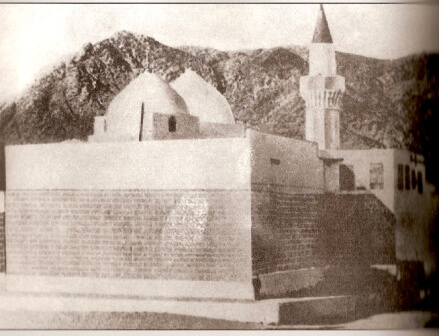
The site where Hamzah and Abdullah ibn Jahsh were buried became a place of visitation from the earliest generations of Muslims. A structure marking the grave was first built during the reign of al-Nasir li-Din Allah, and the site was later renovated during the Ottoman era, most likely in the mid-nineteenth century. A mosque named Masjid Sayyid al-Shuhada was also constructed adjacent to the grave.
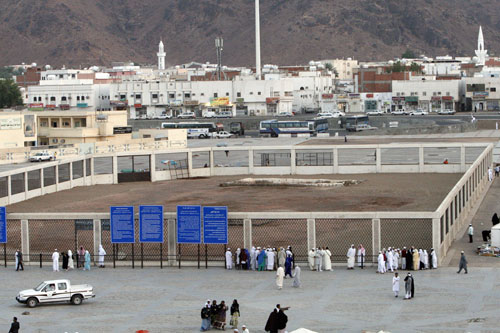
In 1926, as part of a broader campaign of demolitions across the Hejaz, the domed mausoleum covering the grave was removed. The site today consists of two connected areas: the Uhud Martyrs‘ enclave (Shuhada Uhud Cemetery), where the seventy martyrs of the battle are buried, and the simple, unmarked resting place of Hamzah ibn Abdul Muttalib and Abdullah ibn Jahsh within it. There is no dome, shrine, or elaborate structure today – only a modest, low stone enclosure, consistent with the simplicity many pilgrims find meaningful.
Where Is the Tomb of Hamzah ibn Abdul Muttalib Located?
The tomb sits within the Shuhada Uhud Cemetery, at the base of Mount Uhud, approximately 5 kilometers north of Masjid an-Nabawi in Madinah. The cemetery holds the graves of the seventy companions martyred in the Battle of Uhud, with Hamzah’s grave as its most visited point.
The site is easily reached from central Madinah by road, and it is one of the standard stops on almost every Madinah Ziyarat tour, typically grouped together with:
- Masjid Qiblatain (the Mosque of the Two Qiblas)
- Quba Mosque, the first mosque built in Islam
- Jannat al-Baqi, the historic cemetery near Masjid an-Nabawi
- The Uhud battlefield itself, including the site where the archers were positioned
Visiting Etiquette and Practical Tips
Visiting the graves of the martyrs is an act of remembrance, not a ritual of worship. A few points of etiquette are worth keeping in mind:
- Offer the standard Islamic greeting for visiting graves, and make du’a (supplication) for the martyrs rather than directing prayer or requests to them.
- Dress modestly, in keeping with the site’s significance.
- Keep voices low and avoid treating the visit as a photo stop; many pilgrims prefer to spend a few quiet minutes in reflection.
- The site can be busy during Ramadan, Hajj season, and Friday afternoons – early morning or late afternoon visits tend to be calmer.
- There is limited shade in parts of the open battlefield area, so carrying water is advisable, particularly in warmer months.
- The site is generally accessible, though the ground is uneven in places; travelers with mobility needs may want to arrange extra time and assistance.
How to Reach the Tomb of Hamzah from Your Hotel
Most pilgrims visit the tomb of Hamzah as part of a guided Madinah Ziyarat tour rather than traveling independently, since the surrounding sites are spread across a wider area and a knowledgeable driver can time the visit around prayer schedules.
Al Maqam Transport operates private Ziyarat taxis in Madinah that include Mount Uhud and the tomb of Hamzah ibn Abdul Muttalib as a core stop, alongside Quba Mosque, Masjid Qiblatain, and Jannat al-Baqi. Rides are private – not shared minibuses – with a professional, Arabic/English/Urdu-speaking driver who is familiar with the historical background of each site.
Typical options include:
- Half-day Madinah Ziyarat tour – covering Uhud, Quba, Qiblatain, and Jannat al-Baqi in a single private vehicle, with flexible stops for prayer.
- Hotel-to-Uhud direct transfer – for travelers who want to visit the tomb specifically and return to their hotel.
- Combined airport-to-hotel-to-Ziyarat packages – useful for groups arriving with limited time in Madinah.
Vehicles range from a Toyota Camry for individuals and couples, to a Hyundai Staria or GMC Yukon for families, up to a Toyota Hiace or Coaster Bus for larger groups. All rides can be booked directly on WhatsApp, with a fixed price confirmed before pickup – no surge pricing during Ramadan or peak pilgrimage season.
FAQs
1. Who was Hamzah ibn Abdul Muttalib?
He was the Prophet Muhammad’s (PBUH) paternal uncle and foster brother, a companion known for his bravery, who was martyred at the Battle of Uhud in 625 CE and given the title Sayyid al-Shuhada (Chief of Martyrs).
2. Where is the tomb of Hamzah ibn Abdul Muttalib located?
It is located in the Shuhada Uhud Cemetery at the base of Mount Uhud, about 5 kilometers north of Masjid an-Nabawi in Madinah.
3. How did Hamzah ibn Abdul Muttalib die?
He was martyred during the Battle of Uhud, struck by a javelin thrown by Wahshi ibn Harb, who had been promised his freedom for killing Hamzah in retaliation for an earlier battle.
4. Is there a dome or shrine over the grave today?
No. The original mausoleum was demolished in 1926. The grave today is a simple, low stone enclosure within the martyrs’ cemetery, without a dome or elaborate structure.
5. Who is buried alongside Hamzah?
His nephew, Abdullah ibn Jahsh, who was also martyred in the Battle of Uhud, is buried in the same grave.
6. Can women visit the tomb of Hamzah?
Access at Islamic gravesites in Saudi Arabia can vary by site and time; it’s best to check current arrangements locally or ask your tour driver, who will know the current visiting setup.
7. What else can I visit near the tomb of Hamzah?
The Uhud battlefield, Masjid Qiblatain, Quba Mosque, and Jannat al-Baqi are commonly combined with a visit to the tomb of Hamzah on a single Madinah Ziyarat tour.
8. How far is Uhud from Masjid an-Nabawi?
Approximately 5 kilometers, roughly a 10–15 minute drive depending on traffic.
9. Is there an entrance fee to visit the tomb?
No, visiting the site is free. If you book a guided or private Ziyarat tour, you pay only for the transport and guidance service, not for entry to the site itself.
10. What is the best time to visit?
Early morning or late afternoon tends to be quieter and cooler than midday, especially outside of winter. Fridays, Ramadan, and Hajj season are typically the busiest periods.
11. Do I need to book a Ziyarat taxi in advance?
It’s recommended, particularly during Ramadan and Hajj season, when demand for private transport is highest. Booking a day ahead via WhatsApp is usually enough outside peak season.
12. Can I combine a visit to Hamzah’s tomb with an airport transfer?
Yes. Many pilgrims arrange for their Madinah Ziyarat tour to take place on the day of arrival or departure, combining it with an airport-to-hotel or hotel-to-airport transfer.

Zeeshan is a professional driver and tour guide who has been living and driving in Saudi Arabia for the past 5 years. With deep knowledge of the roads, landmarks, and Ziyarat locations across Makkah, Madinah, Jeddah, and Taif, he helps pilgrims and travelers enjoy safe, smooth, and well-organized journeys. His experience in Umrah transport, city tours, and airport transfers makes him a trusted expert for visitors exploring Saudi Arabia.