


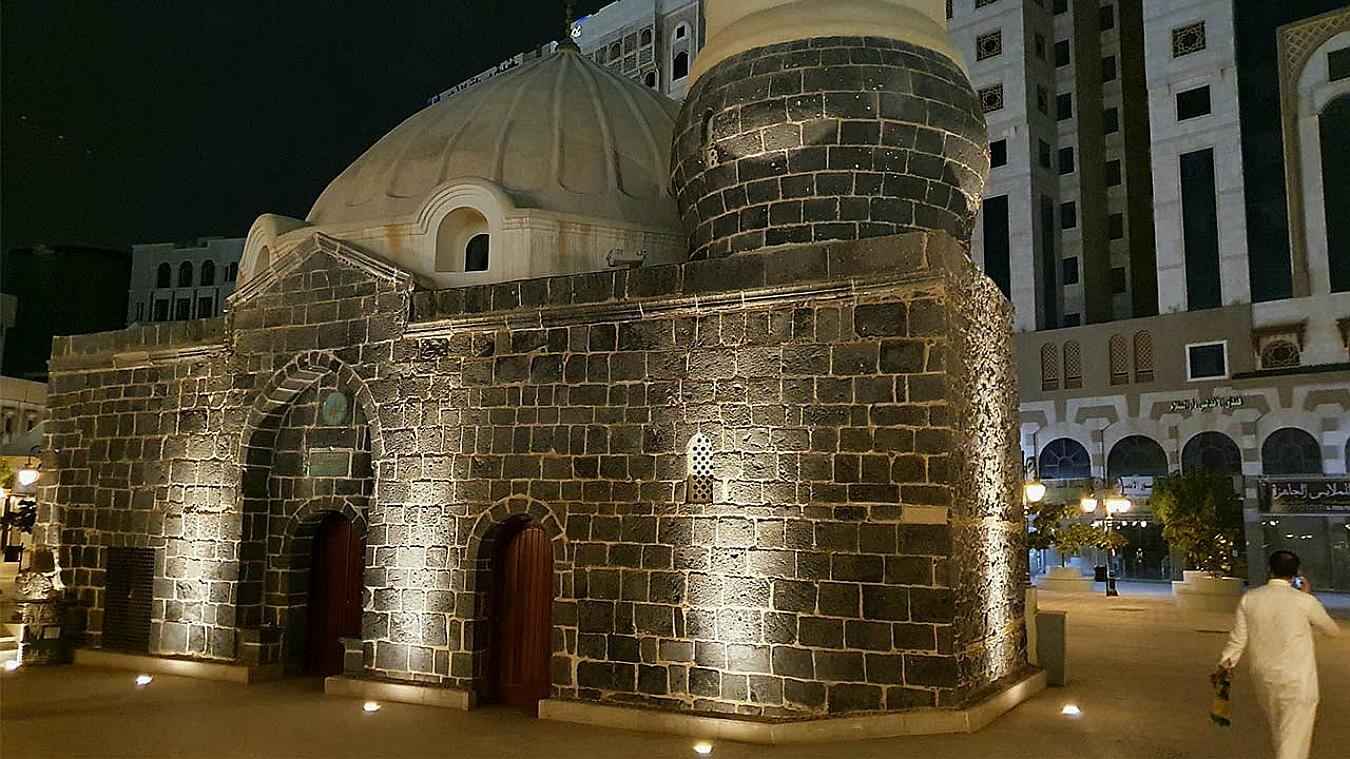
Just a short walk from the southwestern corner of the Prophet’s Mosque stands a small, single-domed building that many visitors pass without realizing its significance: Masjid Abu Bakr As-Siddiq. Named after Abu Bakr, the first Caliph of Islam and closest companion of Prophet Muhammad ﷺ, this modest mosque marks a site tied directly to the earliest traditions of Eid prayer in Madinah.
This guide covers everything you need to know before visiting – its history, architecture, exact location, how it differs from the nearby Al-Ghamamah Mosque, and the easiest way to reach it as part of your wider Ziyarat itinerary in Madinah.
What Is Abu Bakr Siddiq Mosque?
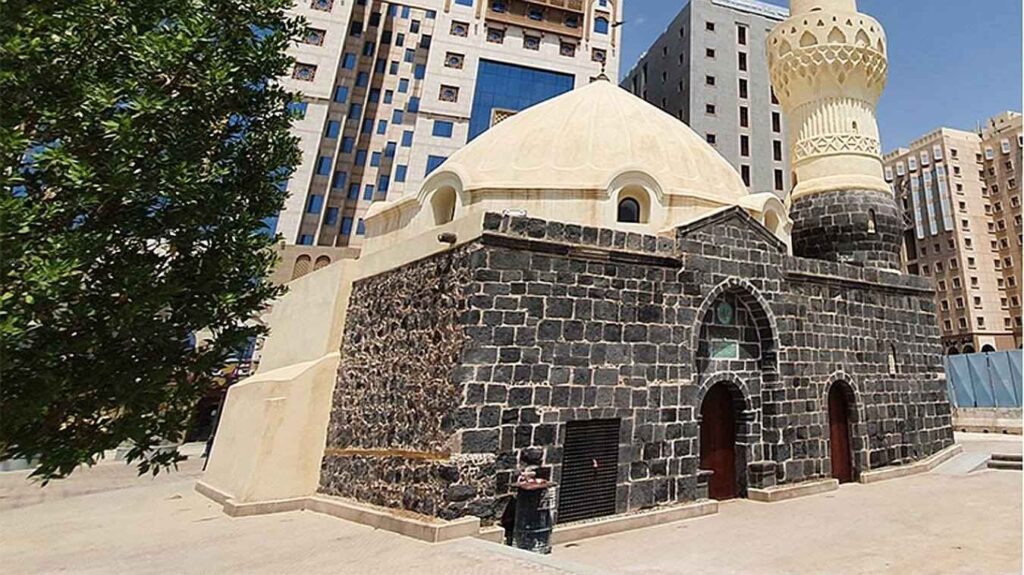
Abu Bakr Siddiq Mosque (Masjid Abu Bakr As-Siddiq) is a historic mosque located in the Al-Manakhah area, roughly 145–455 meters from the courtyard of Masjid an-Nabawi, depending on which boundary point is measured. It is one of several small mosques built on or near the open ground once known as Al-Musalla, where Prophet Muhammad ﷺ is reported to have led Eid al-Fitr and Eid al-Adha prayers, as well as prayers for rain, at different points across the site.
According to Islamic historical tradition, after the Prophet’s passing, Caliph Abu Bakr continued this practice by offering Eid prayers at the same open ground during his own caliphate. Because of that continuity, the location – and eventually the mosque built upon it – came to be attributed to him and carry his name.
It’s important for travelers to note this is a distinct, small commemorative mosque in Madinah, Saudi Arabia, unrelated to larger mosques of similar name found elsewhere in the world, such as the Saidina Abu Bakar As-Siddiq Mosque in Kuala Lumpur, Malaysia. If you’re searching for the Madinah site connected to the Prophet’s companion and the earliest caliphate, this is it.
The History Behind the Name
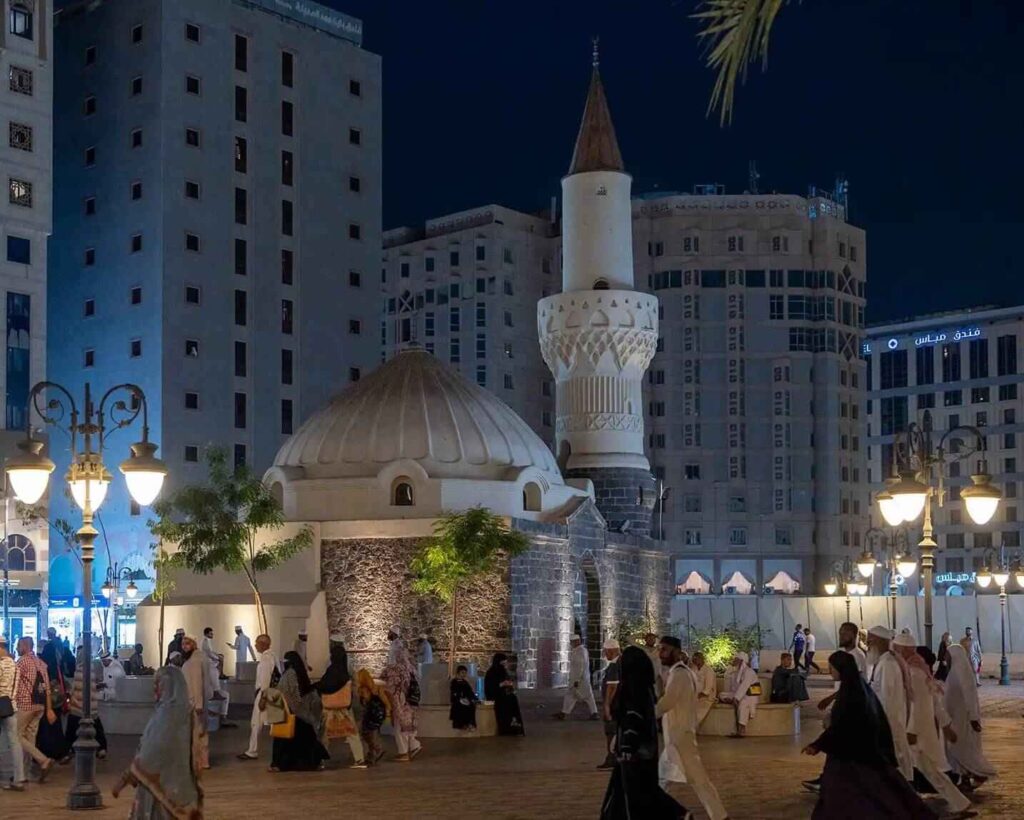
The story of Abu Bakr Siddiq Mosque is really the story of a tradition passed from one leader to the next. Al-Manakhah, where the mosque now stands, functioned as a large open prayer ground – a “Souq al-Madinah” – during the earliest years of Islam. The Prophet ﷺ prayed at several spots across this open space over the years, and mosques were later constructed to commemorate each one.
The first known construction on this specific site dates to the governorship of Umar bin Abdulaziz, between roughly 705 and 711 CE (86–93 AH), when he served as governor of Madinah under the Umayyad Caliphate. As part of his broader effort to preserve and formally mark sites associated with the Prophet’s ﷺ life, he had a mosque built here.
Centuries later, the structure was substantially rebuilt by the Ottoman Sultan Mahmud II in 1838 CE (1254 AH), giving the mosque the black-basalt, Ottoman-style character it retains today. It has since undergone several restoration phases during the Saudi era – including repairs under King Fahd, King Abdullah, and, more recently, King Salman’s ongoing program for the care of Madinah’s historic mosques, with a notable restoration completed around 2009 in cooperation with local heritage and development organizations.
Architecture and Design
Despite its historical weight, Abu Bakr Siddiq Mosque is physically small – one of the more intimate sites you’ll encounter in Madinah’s Ziyarat circuit.
- Footprint: A near-square structure, roughly nine meters per side, with a total area of approximately 78–280 square meters depending on which boundary (interior prayer hall versus full courtyard) is measured.
- Dome: A single, ornately ribbed dome rises about 12 meters above the prayer hall.
- Minaret: One minaret, around 15 meters tall, built in Ottoman style with a muezzin’s balcony – closely resembling the Bab as-Salam minaret at Masjid an-Nabawi.
- Materials: Carved black basalt stone on the exterior, with whitewashed interior walls.
- Courtyard: A rectangular courtyard roughly 13 by 6 meters adjoins the prayer hall.
- Capacity: The mosque accommodates a modest congregation, making it a quiet, less crowded stop compared to the grand scale of Masjid an-Nabawi.
The overall effect is a building that feels closer in spirit to a small Ottoman-era neighborhood mosque than a monumental pilgrimage site – which is precisely what gives it its charm for visitors seeking a quieter, reflective moment during their trip.
Abu Bakr Mosque vs. Al-Ghamamah Mosque: Don’t Get Them Confused
One of the most common points of confusion for first-time visitors is telling Abu Bakr Siddiq Mosque apart from its close neighbor, Al-Ghamamah Mosque, which sits only about 50 meters away.
A simple rule of thumb:
- Al-Ghamamah Mosque has several medium-sized domes and a larger courtyard.
- Abu Bakr Siddiq Mosque has just one large dome and a single minaret.
Both mosques sit within the same historic Al-Manakhah cluster and are commonly visited together, along with other nearby prayer-ground mosques associated with early Islamic history, since they’re all within a few minutes’ walk of one another and of the Prophet’s Mosque itself.
Exact Location and How to Get There
Abu Bakr Siddiq Mosque sits south of the Al-Manakhah neighborhood, near Al-Hasan Bin Ali Street, on the southwestern flank of Masjid an-Nabawi. Most visitors reach it on foot from the Zamzam Water Collection Gate area near Gate 310, on the southwest corner of the Prophet’s Mosque courtyard – a walk of just a few minutes for most pilgrims staying in Madinah’s central hotel district.
Because it sits so close to Masjid an-Nabawi, the mosque is easily combined with:
- A visit to Al-Ghamamah Mosque (50 meters away)
- Rawdah and Jannat al-Baqi visits within the same outing
- A broader walking tour of the Al-Manakhah historic mosque cluster
If you’re staying at a hotel further from the central Haram area, or you’re arriving straight from Prince Mohammad Bin Abdulaziz International Airport (MED) or on an intercity route from Makkah or Jeddah, it makes sense to plan this stop as part of a coordinated Ziyarat route rather than trying to walk the whole distance from an outer hotel zone, especially in high heat or during Ramadan and Hajj season crowding.
When to Visit: Practical Timing Tips
- Between prayer times tends to be quieter and more comfortable for taking in the architecture without feeling rushed.
- Early morning or late evening avoids the midday heat, particularly relevant for pilgrims visiting between April and October.
- During Ramadan and peak Umrah season, foot traffic around the entire Al-Manakhah and Masjid an-Nabawi perimeter increases significantly, so allow extra time if you’re combining several nearby mosques in one outing.
- During Hajj season, transportation and pedestrian routes near the central Haram area can be heavily congested; pilgrims on organized Hajj transport schedules should coordinate Ziyarat stops with their group leader or private driver in advance.
The mosque functions as an active place of worship, so visits are generally welcome outside of restricted prayer preparation times, but as with all historic mosques in Madinah, dress modestly and be mindful of ongoing prayers or maintenance work.
Planning Your Ziyarat: How Al Maqam Transport Can Help
Most pilgrims don’t visit Abu Bakr Siddiq Mosque in isolation – it’s one stop in a wider circuit of Madinah’s historic sites that typically includes Quba Mosque, Qiblatain Mosque, Jannat al-Baqi, and Mount Uhud. Coordinating all of this on foot, especially with family members, elderly relatives, or young children, is where a private Ziyarat taxi in Madinah becomes genuinely useful rather than just a convenience.
Al Maqam Transport arranges Madinah Ziyarat routes with:
- Licensed, experienced local drivers familiar with prayer-time traffic patterns around the Al-Manakhah and central Haram districts
- Family-friendly vehicles, from a Toyota Camry for smaller groups to a Hyundai Staria or Toyota Hiace for families and small groups, and a GMC Yukon or Coaster bus for larger groups
- Flexible stop planning, so you can pause at Abu Bakr Siddiq Mosque, Al-Ghamamah Mosque, and other nearby sites without renegotiating each leg of the trip
- Airport-to-Ziyarat coordination, including pickup from Prince Mohammad Bin Abdulaziz Airport (MED) with flight tracking, so your Madinah historic-sites tour can begin as soon as you land
- Hotel pickup and drop-off, removing the need to walk long distances in Madinah’s heat between hotel zones and the historic mosque cluster
Whether you’re visiting independently, as part of an Umrah group, or coordinating a Hajj itinerary, a private driver who already knows the layout of Madinah’s historic quarter can turn a scattered list of mosque names into a smooth, well-paced half-day tour.
FAQs
1. Why is Abu Bakr Siddiq Mosque in Madinah important?
It marks a site where Prophet Muhammad ﷺ is reported to have led Eid prayers, a tradition continued by Caliph Abu Bakr after him, which is how the mosque came to carry his name.
2. How far is Abu Bakr Siddiq Mosque from Masjid an-Nabawi?
It sits roughly 145 to 455 meters from the Prophet’s Mosque courtyard, depending on the measurement point, making it an easy walk of just a few minutes from the southwest gate area.
3. Is Abu Bakr Siddiq Mosque the same as Al-Ghamamah Mosque?
No. They’re separate mosques about 50 meters apart. Al-Ghamamah has several medium-sized domes, while Abu Bakr Siddiq Mosque has a single large dome and one minaret.
4. Who built Abu Bakr Siddiq Mosque?
It was first built during the governorship of Umar bin Abdulaziz in Madinah, between roughly 705 and 711 CE, and later substantially rebuilt in Ottoman style by Sultan Mahmud II in 1838 CE.
5. Can non-Muslim tourists visit Abu Bakr Siddiq Mosque?
Access to Madinah’s central historic mosque district follows the same general access rules that apply across the city; check current local guidance before your trip, as access policies can change.
6. What is the best time to visit Abu Bakr Siddiq Mosque?
Early morning or evening, outside of the busiest prayer-time windows, generally offers a quieter and more comfortable visit, especially during hot months.
7. Is Abu Bakr Siddiq Mosque open every day?
As an active place of worship, it generally follows standard mosque access patterns tied to prayer times; visiting outside restricted prayer preparation periods is usually straightforward.
8. How do I get from my hotel in Madinah to Abu Bakr Siddiq Mosque?
Most central hotels are within walking distance, but for families, elderly travelers, or anyone combining several Ziyarat stops, a private Madinah Ziyarat taxi is a more comfortable option.
9. Can I combine Abu Bakr Siddiq Mosque with other Ziyarat sites in one trip?
Yes. It’s commonly visited alongside Al-Ghamamah Mosque, Jannat al-Baqi, Quba Mosque, and Qiblatain Mosque as part of a broader Madinah historic-sites tour.
10. Is Abu Bakr Siddiq Mosque suitable for elderly visitors or those with mobility needs?
The mosque itself is small and generally accessible on foot from nearby drop-off points, though the surrounding pedestrian area can involve some walking; arranging private transport with door-area drop-off helps reduce the distance covered.
11. What should I wear when visiting?
Modest dress is expected, consistent with visiting any active mosque in Madinah.
12. How does Al Maqam Transport help with Ziyarat visits in Madinah?
Al Maqam Transport provides private Ziyarat taxis with licensed local drivers, family-sized and larger group vehicles, and flexible multi-stop routes covering Abu Bakr Siddiq Mosque and Madinah’s other historic sites.
13. Do I need to book a Ziyarat taxi in advance during Umrah or Hajj season?
Yes, booking ahead is recommended during Ramadan, peak Umrah months, and Hajj season, when demand for private transport around Madinah’s central Haram district is significantly higher.
14. What’s the closest airport to Abu Bakr Siddiq Mosque?
Prince Mohammad Bin Abdulaziz International Airport (MED) in Madinah is the nearest airport, with private airport transfer options available directly to central Madinah hotels near the historic mosque district.
15. Is there parking or drop-off access near Abu Bakr Siddiq Mosque?
Given its location within the pedestrian-heavy zone around Masjid an-Nabawi, most visitors are dropped off nearby and walk the final stretch; a private driver familiar with the area can identify the most practical drop-off point based on current traffic conditions.
Final Thoughts
Abu Bakr Siddiq Mosque is easy to overlook on a map, but it rewards the visitors who make the short walk to see it – a quiet, historically layered site sitting almost in the shadow of Masjid an-Nabawi itself. Whether you’re planning a focused Ziyarat morning or folding it into a longer Madinah itinerary, a little route planning – and the right local transport – makes the experience far smoother.
If you’d like help mapping out your Madinah Ziyarat route, including stops at Abu Bakr Siddiq Mosque, Al-Ghamamah Mosque, Quba Mosque, and Jannat al-Baqi, Al Maqam Transport’s private drivers can build a route around your schedule, group size, and mobility needs.

Zeeshan is a professional driver and tour guide who has been living and driving in Saudi Arabia for the past 5 years. With deep knowledge of the roads, landmarks, and Ziyarat locations across Makkah, Madinah, Jeddah, and Taif, he helps pilgrims and travelers enjoy safe, smooth, and well-organized journeys. His experience in Umrah transport, city tours, and airport transfers makes him a trusted expert for visitors exploring Saudi Arabia.