


Riaz ul Jannah, also known as Rawdah Sharifah, is one of the most spiritually revered areas inside Masjid al-Nabawi in Madinah. Every year, millions of Muslims aspire to pray in this blessed space described by the Prophet ﷺ as a garden from the gardens of Paradise.
This guide explains its meaning, history, virtues, exact location, and the updated process for booking your visit through the Nusuk system-so you can prepare properly and maximize your spiritual experience.
What is Riaz ul Jannah? Meaning and Hadith
The word “Rawdah” (روضة) literally means a garden or meadow. Riaz ul Jannah translates to “Gardens of Paradise.”
The Prophet ﷺ said:
“Between my house and my minbar is one of the gardens of Paradise, and my minbar is upon my Hawd (cistern).”
This authentic narration establishes the spiritual distinction of this area. Scholars have explained this statement in two ways:
- Some interpret it spiritually – that worship performed there leads to Paradise.
- Others say it has a literal connection to Jannah in the Hereafter.
Regardless of interpretation, the virtue of the Rawdah has been unanimously acknowledged by generations of scholars.
Location and Physical Boundaries Inside Masjid al-Nabawi
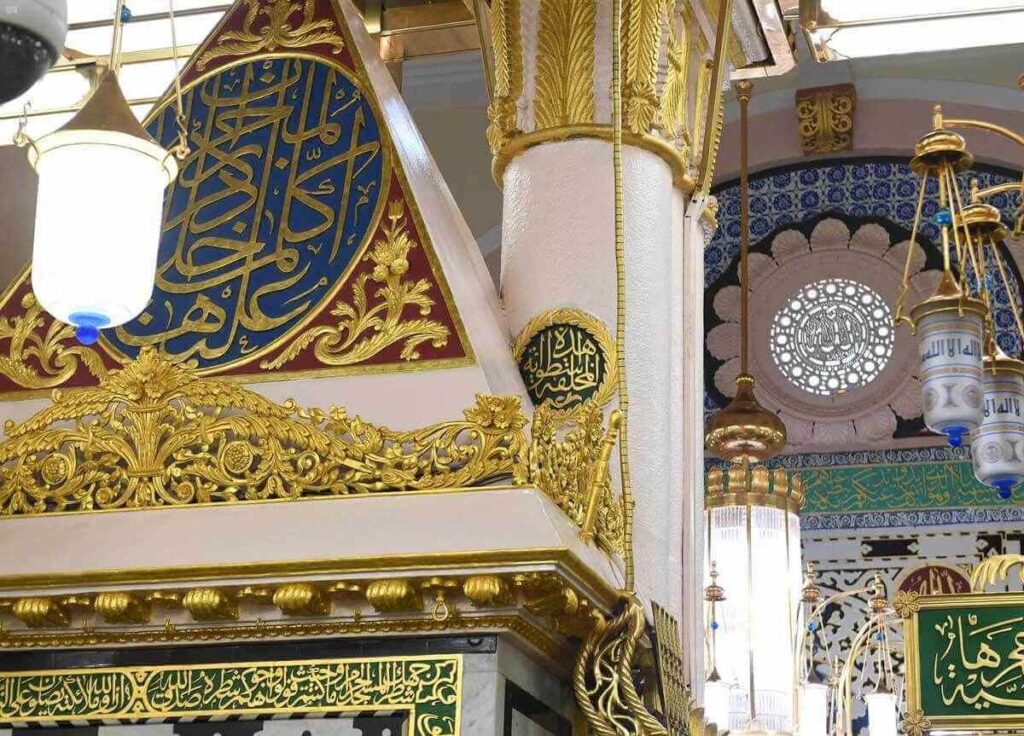
Riyad ul Jannah lies between:
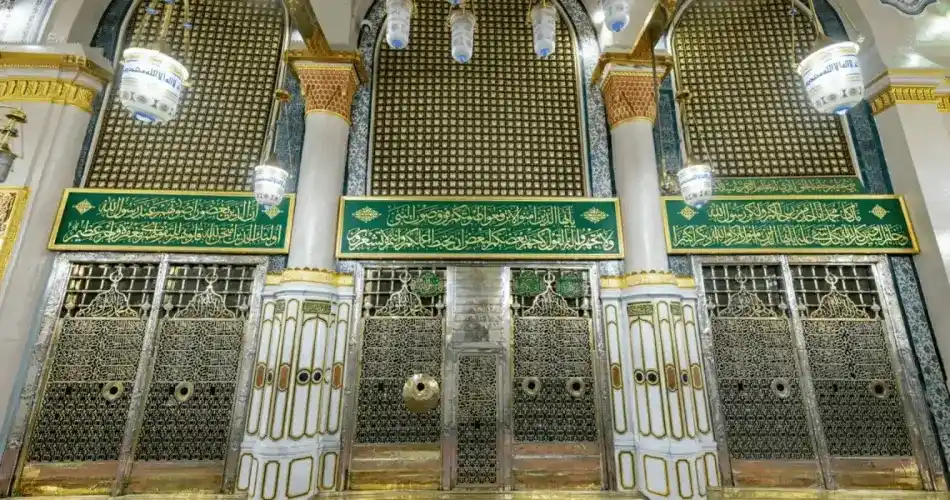
- The Sacred Chamber (where the Prophet ﷺ is buried)
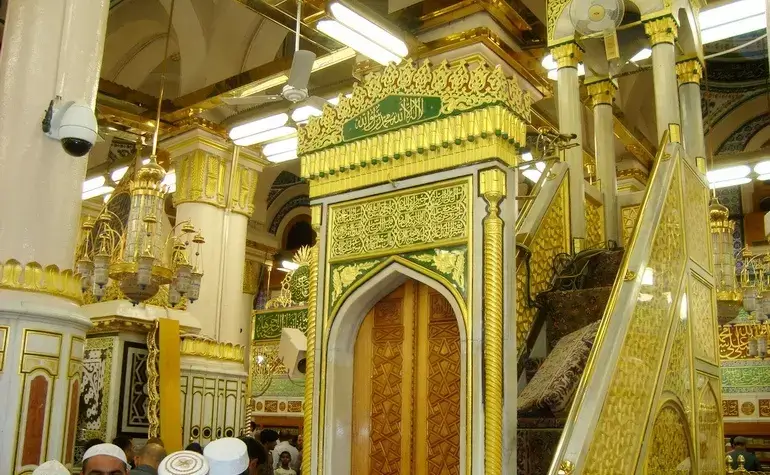
- The Minbar (pulpit) from which he delivered sermons
Its approximate dimensions today are about 22 meters long and 15 meters wide. Although Masjid al-Nabawi has expanded significantly over the centuries, the Rawdah’s boundaries remain symbolically preserved.
Visitors can easily identify the area by its green carpet, which contrasts historically with the surrounding red carpet sections (though much of the mosque now features green).
The Rawdah is positioned directly adjacent to the Sacred Chamber where the Prophet ﷺ, Abu Bakr (RA), and Umar ibn al-Khattab (RA) are buried.
Historical Development of the Rawdah Area
When the Prophet ﷺ migrated to Madinah in 622 CE, the original mosque was simple-constructed with palm trunks and a roof of palm branches. His house was attached to the mosque, forming what is now part of the Sacred Chamber.
After his passing in 632 CE, he was buried in the room of Aisha (RA). Later, Abu Bakr (RA) and Umar (RA) were buried there as well.
Over centuries, various Islamic rulers renovated and expanded the mosque. During the Ottoman period, the Rawdah was distinctly marked and beautified. Today, under Saudi administration, it remains carefully preserved and highly regulated due to massive visitor numbers.
Notable Structures Within Riyad ul Jannah
Mihrab Nabawi
The Mihrab marks the location from where the Prophet ﷺ led prayers. Though now decorative and commemorative, it represents the original prayer position during his lifetime.
Minbar Nabawi
The current Minbar was installed during the Mamluk period, replacing earlier versions. The Prophet’s original pulpit was made from date-palm wood. The Minbar remains a symbol of leadership and guidance.
Mukabariyya (Muazzin Platform)
Located near the Rawdah area, this platform recalls the position where Bilal (RA) used to call the Adhan before the era of loudspeakers.
The Notable Pillars (Ustuwanat)
Several historic pillars inside the Rawdah mark significant events, including:
- Pillar of Repentance
- Pillar of Aisha
- Pillar of Delegations
- Pillar of Guards
These columns indicate the original palm-trunk supports of the earliest mosque structure.
Spiritual Virtues of Praying in Rawdah
Prayer in Masjid al-Nabawi carries multiplied reward. While prayer in the Prophet’s Mosque is worth 1,000 prayers elsewhere (except Masjid al-Haram), worship within the Rawdah holds additional virtue due to the explicit Hadith reference.
Pilgrims typically:
- Pray two rak‘ahs (Tahiyyat al-Masjid or voluntary prayer)
- Make heartfelt du‘a
- Send salutations upon the Prophet ﷺ
Because time inside is limited, spiritual preparation beforehand is essential.
How to Book Rawdah Permit (Nusuk App 2026 Guide)
Access to Riaz ul Jannah is strictly regulated.
Step 1: Download Nusuk App
Register using passport and visa details.
Step 2: Be Physically in Madinah
Location services must show you are present in Madinah.
Step 3: Select Rawdah Appointment
Choose gender-specific slot (men and women have separate timings).
Step 4: Receive Digital QR Permit
Security will scan this before entry.
Visiting Rules (Subject to Change)
- Usually limited frequency (often once annually or per defined period)
- Stay inside is typically 10–20 minutes
- Separate time windows for men and women
- Arrive early to avoid missing your slot
Always verify updated rules inside the app before your visit.
What to Do Inside Riaz ul Jannah
When entering:
- Maintain calm and patience
- Avoid pushing or arguing
- Focus on worship rather than photos
- Pray briefly and sincerely
- Move out respectfully once guided
The experience is intense due to crowd density, so spiritual focus and good manners are essential.
Practical Travel Tips for Visitors to Madinah
Planning your Rawdah visit requires logistical preparation:
- Stay near Masjid al-Nabawi to avoid delay.
- Arrive at least 30–45 minutes before your slot.
- Keep your phone charged.
If you are performing Umrah or planning Madinah ziyarat, arranging reliable transport makes your journey smoother. Our private Umrah and Madinah taxi services provide:
- Airport transfers (Jeddah–Madinah–Makkah)
- Hotel to Masjid al-Nabawi transport
- Ziyarat tours including Quba Mosque and Jannatul Baqi
- Comfortable city-to-city transfers
Having organized transport ensures you reach your Rawdah slot on time without stress.
Conclusion
Riaz ul Jannah is not merely a physical space-it represents a living connection to the Prophet ﷺ and the earliest days of Islam. From its simple origins in 622 CE to its present-day structured visitation system, it remains one of the most spiritually sought-after locations in the Muslim world.
Understanding its meaning, history, and visiting process allows you to approach it with knowledge, patience, and reverence. Plan ahead, prepare spiritually, and focus on sincere worship during your limited time inside this blessed garden.
FAQs
1. What does Riaz ul Jannah mean?
It means “Gardens of Paradise,” referring to the area between the Prophet’s house and pulpit.
2. Is Rawdah physically part of Paradise?
Scholars differ-some interpret it spiritually, others literally in the Hereafter.
3. How big is Riaz ul Jannah?
Approximately 22 meters by 15 meters.
4. Do I need a permit to enter?
Yes, booking through the Nusuk App is mandatory.
5. How long can I stay inside?
Usually 10–20 minutes depending on crowd management.
6. Can men and women enter together?
No, entry times are separate.
7. What should I pray inside Rawdah?
Two rak‘ahs of voluntary prayer and personal supplications.

Zeeshan is a professional driver and tour guide who has been living and driving in Saudi Arabia for the past 5 years. With deep knowledge of the roads, landmarks, and Ziyarat locations across Makkah, Madinah, Jeddah, and Taif, he helps pilgrims and travelers enjoy safe, smooth, and well-organized journeys. His experience in Umrah transport, city tours, and airport transfers makes him a trusted expert for visitors exploring Saudi Arabia.