


After arriving in Quba and staying there for several days, the Prophet ﷺ set out toward the city of Madinah on a Friday. As the time for Jumu‘ah approached, he reached the valley of Wadi Ranuna, in the area associated with the tribe of Banu Salim bin ‘Awf.
At their request, the Prophet ﷺ dismounted from his camel al-Qaswa and led approximately one hundred companions in the first congregational Friday prayer. This event formally established the institution of Jumu‘ah, including the khutbah and communal obligation, as a cornerstone of Islamic practice.
Following the prayer and sermon, the Prophet ﷺ continued his journey toward Madinah, where Masjid an-Nabawi would later be established. Masjid al-Jummah therefore stands as a living marker of the Hijrah’s final stage and the formation of the Madinan Muslim society.
Location of Masjid Jumuah & Its Place on the Hijrah Route
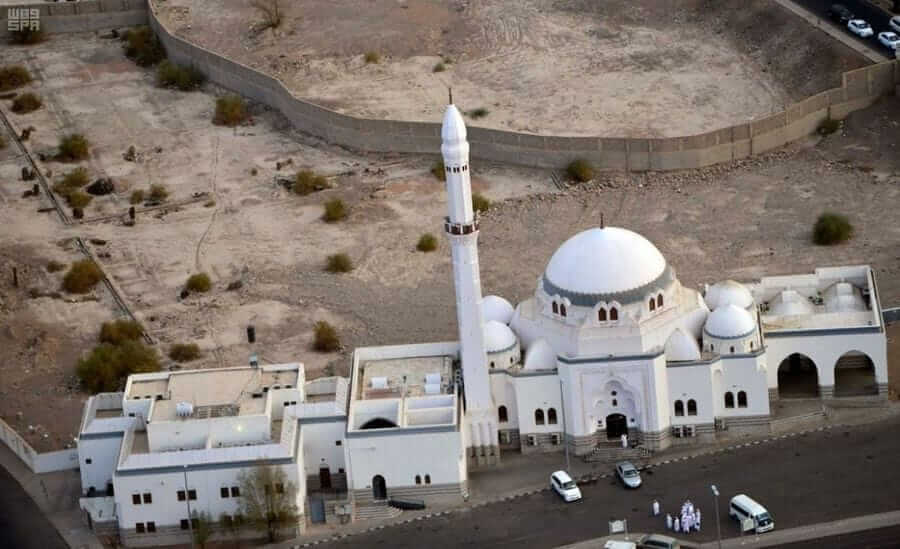
Masjid al-Jummah is located on the southern boundary of Madinah, along the historic route taken by the Prophet ﷺ from Quba to the city center.
Distance from Major Mosques
It lies approximately 2.5 kilometers from Masjid an-Nabawi and about 900 meters north of Masjid Quba. Because of this positioning, it is naturally included in many traditional ziyārat routes, especially those following the Sunnah path of the Hijrah.
Many pilgrims choose to walk part of this route, particularly along the well-developed pedestrian path connecting Quba and the surrounding mosques, while others prefer short taxi rides due to weather or time constraints.
Names and Identity of Masjid al-Jummah
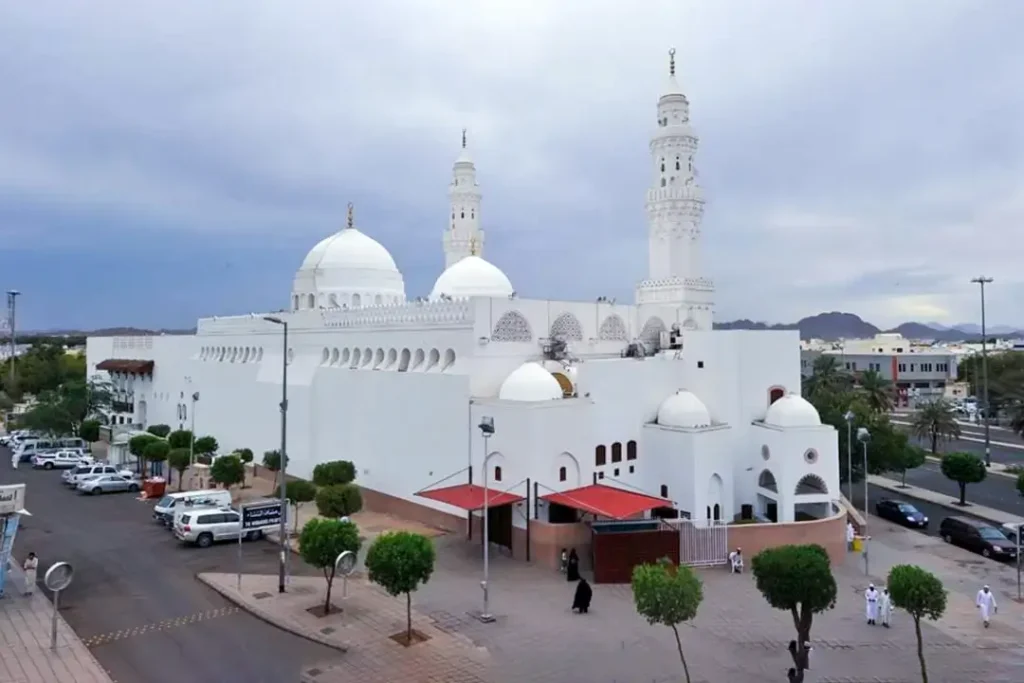
Over time, the mosque has been known by several names, all referring to the same sacred site. These include Masjid Bani Salim, Masjid al-Wadi, and Masjid Aatikah. Each name reflects either the local tribe associated with the event or the geographical setting of Wadi Ranuna.
Despite these variations, “Masjid al-Jummah” remains the most widely recognized name today, directly linked to its defining historical role.
Architecture, Capacity, and Facilities
The mosque has been rebuilt and renovated multiple times throughout history. The current structure, developed during the late 20th century, is modest yet well-maintained, preserving the solemn character of the site.
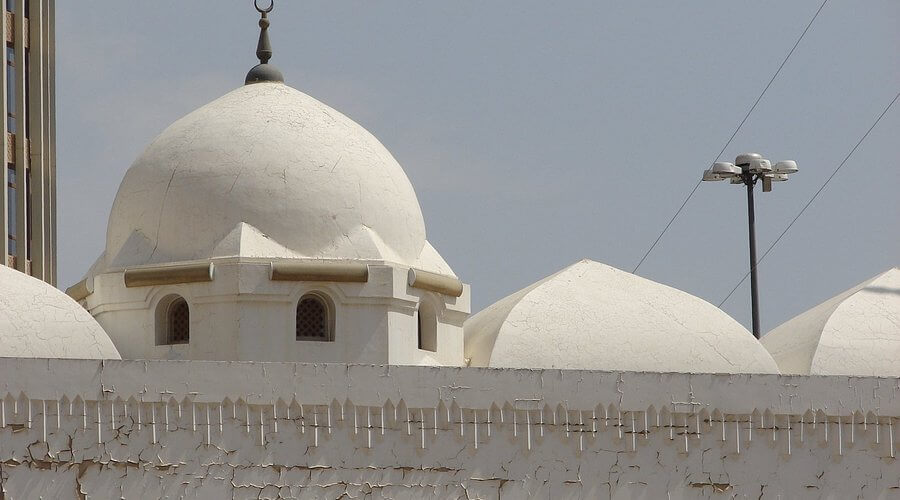
Masjid al-Jummah can accommodate around 650 worshippers. Architecturally, it features a central dome, smaller side domes, and a single minaret. Inside, the prayer hall is simple, encouraging quiet reflection rather than grandeur.
Facilities include separate prayer areas for men and women, ablution areas, washrooms, and basic amenities. A small library and Quran memorization space have also been part of the mosque’s functions, supporting its role as both a place of worship and learning.
Visiting Masjid al-Jummah Today
Masjid al-Jummah is generally open daily and is best visited between Fajr and ‘Isha prayers. Unlike Masjid an-Nabawi, it remains relatively peaceful outside of Fridays, making it ideal for personal du‘a and contemplation.
Best Time to Visit and Jumu‘ah Tips
On Fridays, the mosque attracts large crowds due to its limited size and historical importance. Those wishing to pray Jumu‘ah inside the mosque are advised to arrive well in advance, as space fills quickly. Women’s sections, in particular, reach capacity early.
Many visitors prefer to pray Jumu‘ah at Masjid an-Nabawi and visit Masjid al-Jummah on another day to avoid congestion and allow more time for reflection.
Recommended Ziyarat Route (Quba → Jumma Masjid → Masjid an-Nabawi)
A highly recommended ziyārat sequence begins at Masjid Quba, where praying two rak‘ahs carries the reward of an Umrah. From there, pilgrims travel or walk north to Masjid al-Jummah, reflecting on the first Friday prayer. The journey then continues toward Masjid an-Nabawi, symbolically completing the Prophet’s ﷺ arrival into Madinah.
This route not only follows geography but also mirrors the spiritual progression of the Hijrah.
Getting to Masjid al-Jummah in Madinah
Masjid al-Jummah is easily accessible by road, and local drivers are familiar with it by name. For pilgrims performing Umrah or visiting Madinah for a limited time, private taxi services offer the most efficient and comfortable option, especially when combining multiple ziyārat locations in one trip.
For visitors seeking reliable and respectful transport, Al Maqam Transport provides Umrah taxis and Madinah ziyārat services, including routes covering Masjid Quba, Masjid al-Jummah, and Masjid an-Nabawi. Their services are particularly helpful for families, elderly pilgrims, and groups who prefer a smooth, well-planned ziyārat experience without logistical stress.
Spiritual Reflection and What to Do Inside
Upon entering Masjid al-Jummah, visitors typically pray tahiyyat al-masjid, followed by any voluntary prayers. Many choose to reflect on the meaning of the first Jumu‘ah, recite salawat upon the Prophet ﷺ, and make du‘a for steadfastness, unity, and acceptance.
Reading or recalling the events of the Hijrah while sitting in this mosque allows worshippers to connect deeply with the formative moments of the Muslim Ummah.
Why Masjid al-Jummah Is a Must-Visit Ziyarat Site
Masjid al-Jummah is not just a historical stop; it represents the beginning of communal Islamic life in Madinah. Its significance lies in meaning rather than size, reminding visitors that some of Islam’s greatest milestones occurred in simple settings, guided by sincerity and obedience to Allah.
For anyone visiting Madinah, especially during Umrah or extended ziyārat, this mosque offers a rare opportunity to stand at the very place where the rhythm of Friday worship first began.
Conclusion
Masjid al-Jummah stands as a powerful reminder of the early days of Islam, marking the moment when the first Jumu‘ah prayer united the believers after the Hijrah. Located between Masjid Quba and Masjid an-Nabawi, it forms a vital link in Madinah’s sacred landscape.
Visiting this mosque deepens one’s understanding of Islamic history, strengthens spiritual connection, and completes the Hijrah narrative for modern pilgrims. With thoughtful planning and reliable transport services such as Al Maqam Transport, visitors can include Masjid al-Jummah seamlessly in their Madinah ziyārat, ensuring a journey that is both meaningful and memorable.

Zeeshan is a professional driver and tour guide who has been living and driving in Saudi Arabia for the past 5 years. With deep knowledge of the roads, landmarks, and Ziyarat locations across Makkah, Madinah, Jeddah, and Taif, he helps pilgrims and travelers enjoy safe, smooth, and well-organized journeys. His experience in Umrah transport, city tours, and airport transfers makes him a trusted expert for visitors exploring Saudi Arabia.