


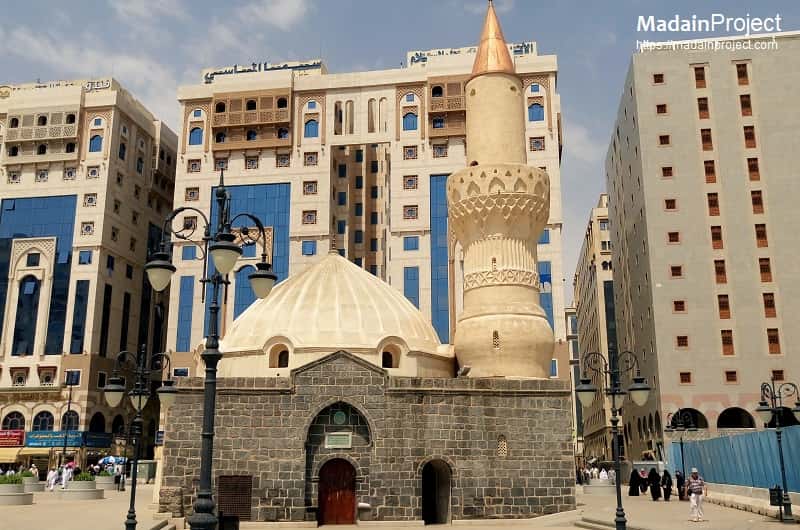
Masjid Abu Bakr As-Siddiq is one of the most historically meaningful mosques in Madinah, standing quietly southwest of Al-Masjid an-Nabawi in the Al-Manakhah district. Though modest in size, its spiritual and historical weight is immense, as it marks a location where Prophet Muhammad ﷺ performed Eid prayers and where his closest companion, Abu Bakr As-Siddiq (RA), continued this sacred tradition after the Prophet’s passing.
This mosque is not merely a physical structure; it represents continuity of Prophetic practice, leadership after revelation, and the lived example of Islam’s earliest community.
Historical Significance of Masjid Abu Bakr As-Siddiq
Prophetic Connection and Eid Prayer Tradition
During the Madinan period, the Prophet Muhammad ﷺ intentionally performed Eid prayers in an open area west of his mosque to allow the entire community—men, women, children, and the elderly—to gather together. This open prayer ground was part of Al-Manakhah, an area that served as a marketplace, caravan rest zone, and communal space.
Masjid Abu Bakr As-Siddiq stands on one of these historic prayer grounds, making it directly connected to Prophetic worship practices, not merely symbolic remembrance.
Abu Bakr As-Siddiq (RA) and the Rashidun Legacy
After the Prophet ﷺ passed away, Abu Bakr (RA), the first Caliph of Islam, preserved this exact tradition by continuing to lead Eid prayers at the same location. His commitment to maintaining the Sunnah during a fragile moment in Islamic history is one of the reasons the mosque bears his name.
Abu Bakr As-Siddiq (573–634 CE), known as As-Siddiq (The Truthful), was:
- The Prophet’s closest companion
- The first adult male to accept Islam
- The companion of the Hijrah
- The leader who preserved unity, compiled the Qur’an, and defended Islam after the Prophet ﷺ
The mosque serves as a physical reminder of the Rashidun Caliphate and leadership rooted in humility, truthfulness, and adherence to Prophetic guidance.
Construction History and Architectural Development
Umayyad Foundations
The first permanent structure was built during the Umayyad period, under the governorship of Umar ibn Abd al-Aziz (early 8th century CE). This era saw the transformation of open prayer grounds into preserved mosques to protect their historical significance.
Ottoman Renovation and Saudi Preservation
In 1838 CE, during the reign of Ottoman Sultan Mahmud II, the mosque underwent renovation, adopting classical Ottoman architectural elements. In the modern Saudi era, careful preservation has ensured that the mosque retains its historic character while remaining accessible to today’s pilgrims.
Architectural Features of Masjid Abu Bakr As-Siddiq
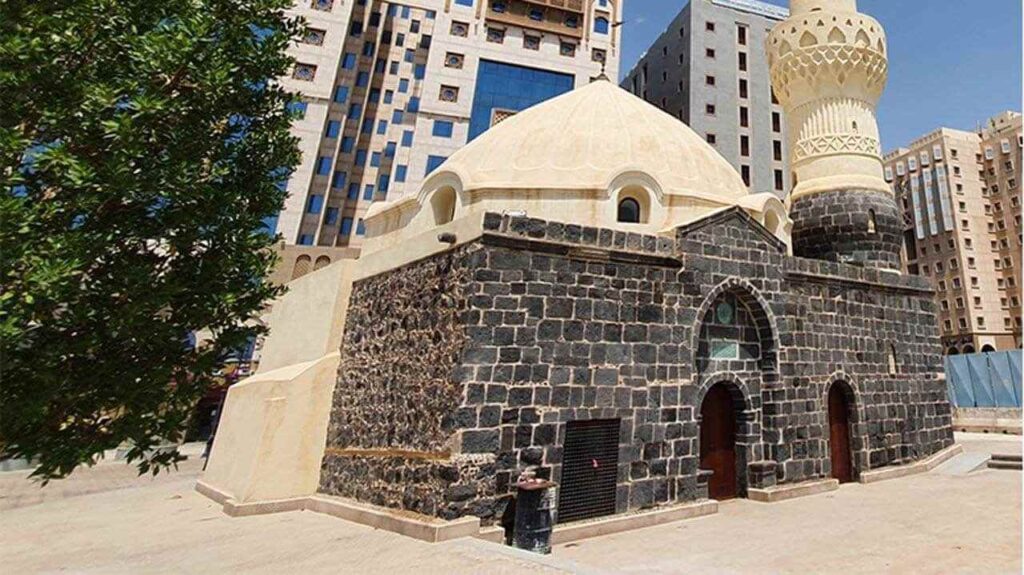
The mosque reflects Ottoman-Hejazi architecture, harmonizing simplicity with spiritual elegance.
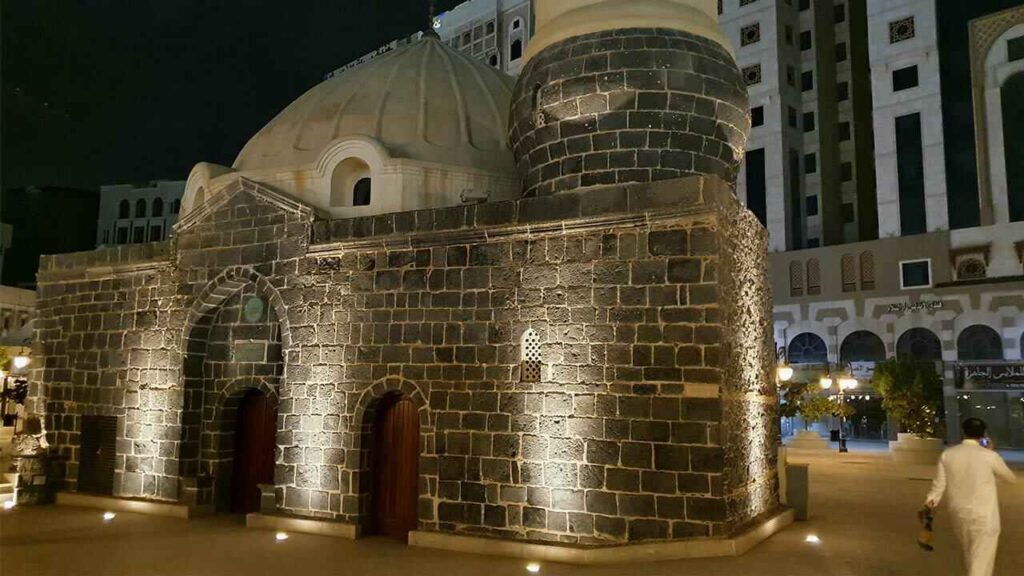
It is built using local black basalt stone, a volcanic rock common in Madinah, chosen for durability and climate resilience. Inside, white walls create a serene atmosphere conducive to worship.
A single ribbed Ottoman-style dome crowns the prayer hall, while a slender minaret—resembling those of early Madinan mosques—stands as a visual marker in the Al-Manakhah skyline. The mosque’s proportions closely mirror nearby Masjid al-Ghamamah, creating architectural symmetry that reinforces the historical unity of the area.
Location and Accessibility in Madinah
Masjid Abu Bakr As-Siddiq is ideally located for pilgrims:
- Approximately 150 meters from the courtyards of Masjid an-Nabawi
- Near Gate 6, southwest of the Prophet’s Mosque
- Less than 5 minutes on foot
It lies within a cluster of historic mosques, including Masjid al-Ghamamah and Masjid Umar ibn al-Khattab, making it perfect for a short ziyārat walking route.
Spiritual Importance for Pilgrims and Visitors
Praying at Masjid Abu Bakr As-Siddiq allows visitors to connect directly with:
- A site sanctified by the Prophet ﷺ
- The lived Sunnah of Eid prayer
- The legacy of the first Caliph
While not obligatory for Hajj or Umrah, visiting this mosque is highly recommended (mustahabb) and spiritually enriching. Many pilgrims describe it as a quieter, more reflective experience compared to larger mosques.
Visiting Guidelines and Best Times
The mosque typically opens around daily prayer times, unlike Masjid an-Nabawi which operates 24 hours.
Early morning after Fajr or late afternoon after Asr are ideal, especially during warmer months. Modest dress, respectful behavior, and maintaining silence are essential, as this remains an active place of worship.
Nearby Religious and Historical Sites
From Masjid Abu Bakr As-Siddiq, visitors can easily walk to:
- Masjid al-Ghamamah – site of rain and Eid prayers
- Masjid an-Nabawi – one of Islam’s three holiest mosques
- Al-Manakhah Square – historic marketplace of Madinah
This concentration of sites offers deep insight into early Islamic urban life.
Transport, Umrah Ziyarat & Taxi Services in Madinah
For pilgrims performing Umrah, Ziyarat, or historical tours, reliable transportation enhances the experience. Many visitors choose private Umrah taxi services or guided ziyarat transport to comfortably visit multiple sacred sites across Madinah.
Professional local taxi services make it easy to travel between:
- Masjid an-Nabawi
- Masjid Quba
- Masjid al-Qiblatayn
- Mount Uhud
- Al-Manakhah historic mosques
Using a trusted Umrah and ziyarat taxi service ensures timely prayer attendance, comfort for families and elderly pilgrims, and knowledgeable local navigation—especially valuable during peak seasons.
Preservation of Madinah’s Islamic Heritage
Masjid Abu Bakr As-Siddiq is part of Saudi Arabia’s broader effort to preserve Madinah’s historic mosques. Restoration focuses on structural safety, architectural authenticity, and educational awareness—ensuring these sacred landmarks remain alive for future generations.
Conclusion
Masjid Abu Bakr As-Siddiq is a powerful reminder that Islamic history lives not only in grand monuments but also in quiet places where sincerity, leadership, and devotion once shaped the Ummah. Standing within its basalt walls connects visitors to the footsteps of Prophet Muhammad ﷺ and the unwavering faith of Abu Bakr As-Siddiq (RA).
For anyone visiting Madinah—whether for Hajj, Umrah, or ziyarat—this mosque offers an intimate encounter with Islam’s earliest legacy. A visit here deepens understanding, strengthens faith, and transforms historical knowledge into lived spiritual experience.

Zeeshan is a professional driver and tour guide who has been living and driving in Saudi Arabia for the past 5 years. With deep knowledge of the roads, landmarks, and Ziyarat locations across Makkah, Madinah, Jeddah, and Taif, he helps pilgrims and travelers enjoy safe, smooth, and well-organized journeys. His experience in Umrah transport, city tours, and airport transfers makes him a trusted expert for visitors exploring Saudi Arabia.