


Why Is The Kaaba Important In Islam?
The Kaaba is the most sacred site in Islam and the spiritual heart of the Muslim world. Located at the center of Masjid al-Haram in Mecca, Saudi Arabia, it is not merely a historic structure but the central axis around which Islamic worship, identity, and unity revolve. For over two billion Muslims, the Kaaba represents monotheism, obedience to Allah, and a living connection to the legacy of the prophets.
What Is the Kaaba in Islam?
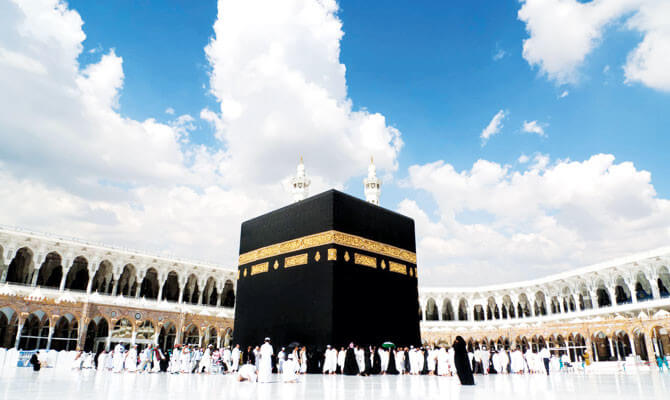
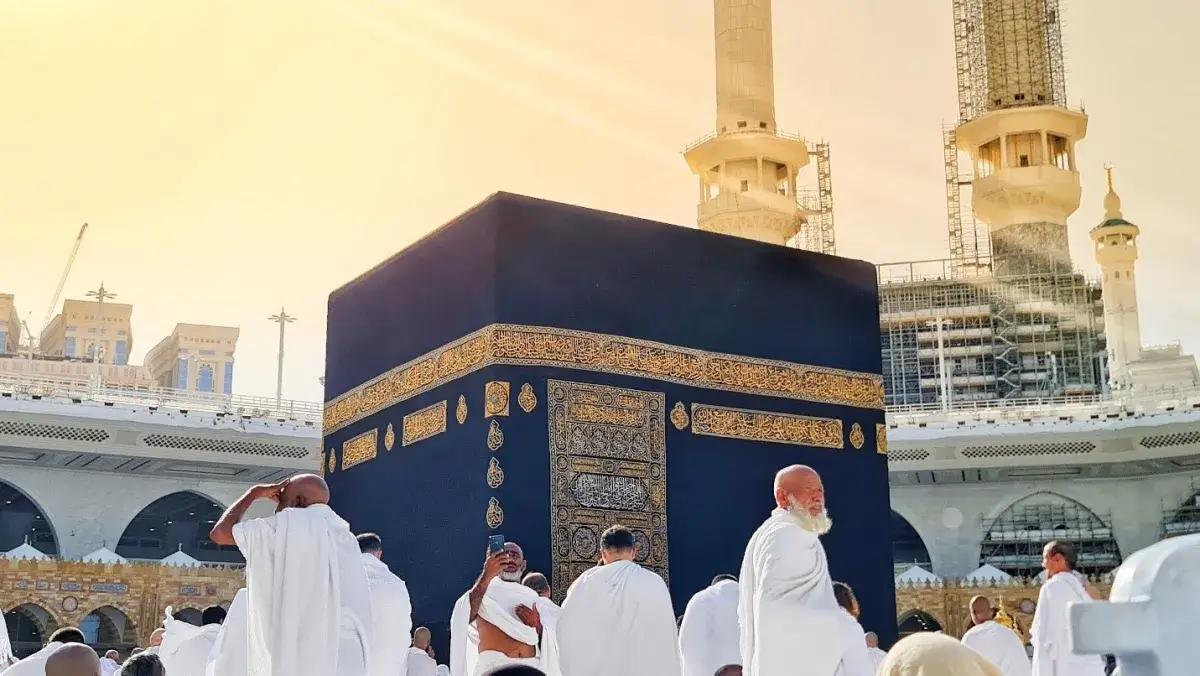
The Kaaba is a cube-shaped structure built of stone, standing at the center of the Grand Mosque in Mecca. Muslims refer to it as Bayt Allah, meaning the House of Allah. This title does not imply that Allah resides within it, as Islamic belief affirms that God is beyond physical space. Instead, the Kaaba is honored as the most sacred place designated for worship on Earth.
Its simple form, covered by the black cloth known as the Kiswah, reflects humility and devotion, emphasizing that spiritual value in Islam is rooted in faith and righteousness rather than material grandeur.
The Kaaba as the Direction of Prayer (Qibla)
One of the primary reasons the Kaaba is important is that it serves as the Qibla, the direction Muslims face during the five daily prayers. No matter where a Muslim is located—whether in Asia, Africa, Europe, or the Americas—they orient themselves toward the Kaaba during Salah.
This shared direction creates a powerful sense of global unity, aligning the entire Muslim Ummah toward one spiritual center and reinforcing the concept that all believers stand equal before Allah.
The First House of Worship for Monotheism
According to the Quran, the Kaaba was the first house of worship established for humanity. Islamic tradition holds that it was originally built for the worship of the One God and later rebuilt by Prophet Ibrahim (Abraham) and his son Prophet Ismail (Ishmael) under divine command.
This act symbolized the restoration of pure monotheism, making the Kaaba a timeless reminder of submission to Allah and rejection of idol worship.
The Kaaba and Hajj & Umrah Pilgrimage
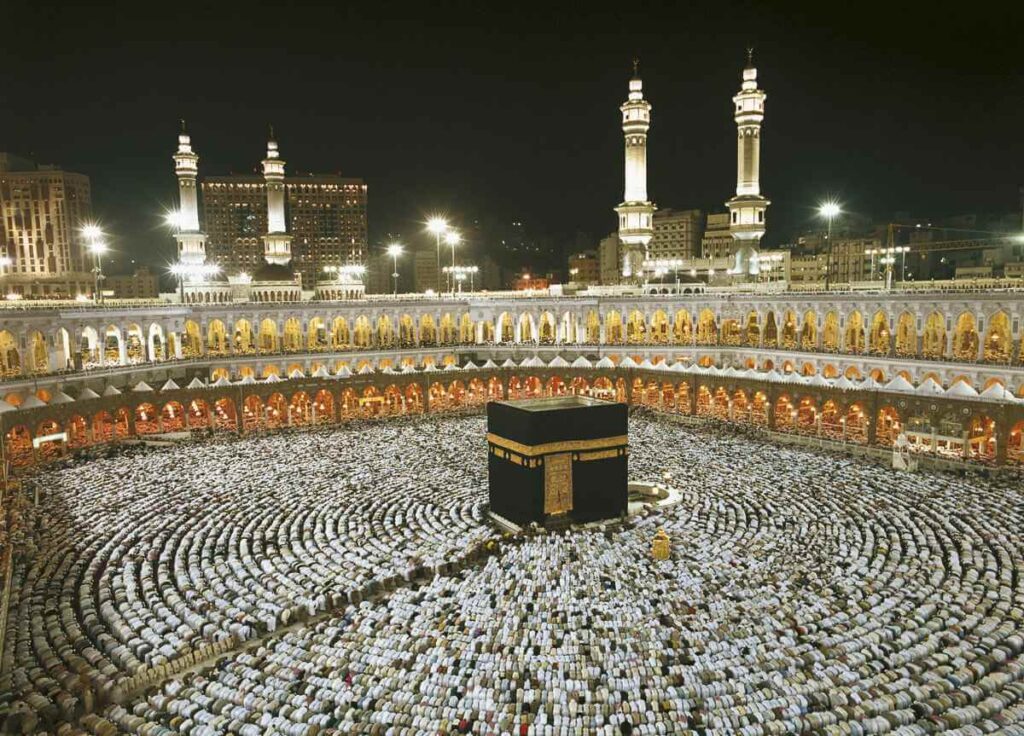
The Kaaba is the focal point of Hajj, one of the Five Pillars of Islam, and Umrah, the lesser pilgrimage that can be performed at any time of the year. During these pilgrimages, millions of Muslims gather in Mecca to perform sacred rituals centered on the Kaaba.
The most prominent ritual is Tawaf, in which pilgrims walk around the Kaaba seven times in a counterclockwise direction. This act symbolizes that a believer’s life revolves entirely around obedience to Allah, just as the heavens move in divine order.
The Black Stone (Hajar al-Aswad)
Embedded in the eastern corner of the Kaaba is the Black Stone, known as Hajar al-Aswad. Islamic tradition states that it was sent from Paradise and placed during the construction by Prophet Ibrahim.
Pilgrims attempt to touch or kiss the stone during Tawaf, following the practice of Prophet Muhammad ﷺ. While deeply respected, the stone is not worshipped; its significance lies in its prophetic connection, not in any inherent power.
The Kaaba as a Symbol of Unity and Equality
During Hajj and Umrah, pilgrims wear simple white garments called Ihram, eliminating distinctions of wealth, nationality, and status. Standing before the Kaaba, all pilgrims perform the same rituals, reinforcing the Islamic principle that true honor comes through piety (taqwa) alone.
The Kaaba thus represents equality, brotherhood, and the collective identity of the Muslim Ummah.
Historical Role of the Kaaba in Islam
Before Islam, the Kaaba had been surrounded by idols during the pre-Islamic era. In 630 CE, after the peaceful conquest of Mecca, Prophet Muhammad ﷺ cleansed the Kaaba of all idols and rededicated it exclusively to the worship of Allah.
This event marked a decisive moment in Islamic history, restoring the Kaaba to its original purpose as the center of monotheistic worship.
What Is Inside the Kaaba?
The interior of the Kaaba is simple and unadorned, reflecting humility. Historical accounts describe a small space containing three pillars, lamps, and minimal decoration with Quranic inscriptions. Entry is highly restricted and usually reserved for custodians and select officials, emphasizing that the sanctity of the Kaaba lies in its purpose, not access.
The Kaaba Today and Its Ongoing Significance
Today, the Kaaba remains the spiritual compass for Muslims worldwide. It is surrounded by Masjid al-Haram, the largest mosque on Earth, along with other sacred landmarks such as Zamzam Well, Safa and Marwa, and nearby historical sites in Mecca.
For modern Muslims, the Kaaba continues to embody faith, continuity, and a living connection to the prophets.
Visiting the Kaaba for Umrah and Hajj
Millions of pilgrims travel to Mecca each year to perform Umrah and Hajj. Beyond spiritual preparation, reliable transportation within Saudi Arabia plays a crucial role in ensuring a smooth pilgrimage experience.
For pilgrims seeking comfortable and reliable Umrah taxi services, professional transport providers like Al Maqam Transport offer safe travel between Jeddah Airport, Mecca, Madinah, and other holy sites, allowing pilgrims to focus fully on worship without logistical stress.
Conclusion
The importance of the Kaaba in Islam goes far beyond its physical structure. It is the first house of worship, the direction of prayer, the heart of Hajj and Umrah, and a timeless symbol of unity, equality, and monotheism. For Muslims, the Kaaba represents devotion to Allah, continuity of prophetic faith, and the shared spiritual center of the global Ummah.
FAQs
Why do Muslims face the Kaaba when they pray?
Muslims face the Kaaba because it is the Qibla, the divinely ordained direction of prayer that unites believers worldwide.
Who built the Kaaba according to Islam?
Islamic tradition states that Prophet Ibrahim and Prophet Ismail rebuilt the Kaaba under Allah’s command.
Why do Muslims circle the Kaaba during Tawaf?
Tawaf symbolizes that a believer’s life revolves around obedience to Allah, reflecting spiritual submission and unity.
Is the Kaaba worshipped in Islam?
No. Muslims worship Allah alone. The Kaaba is a sacred symbol and direction of worship, not an object of worship itself.
Can anyone go inside the Kaaba?
Access is highly restricted and usually limited to custodians and selected officials.

Zeeshan is a professional driver and tour guide who has been living and driving in Saudi Arabia for the past 5 years. With deep knowledge of the roads, landmarks, and Ziyarat locations across Makkah, Madinah, Jeddah, and Taif, he helps pilgrims and travelers enjoy safe, smooth, and well-organized journeys. His experience in Umrah transport, city tours, and airport transfers makes him a trusted expert for visitors exploring Saudi Arabia.