


Wadi Uranah (وادي عرنة) is one of the most important valleys in the Makkah region, deeply connected to the rites of Hajj and the final public message of the Prophet Muhammad ﷺ. Its importance is not symbolic alone; it carries precise religious rulings that directly affect the validity of Hajj. For pilgrims, students of Islamic history, and visitors exploring the sacred geography of Makkah, understanding Wadi Uranah is essential.
Where Is Wadi Uranah Located?
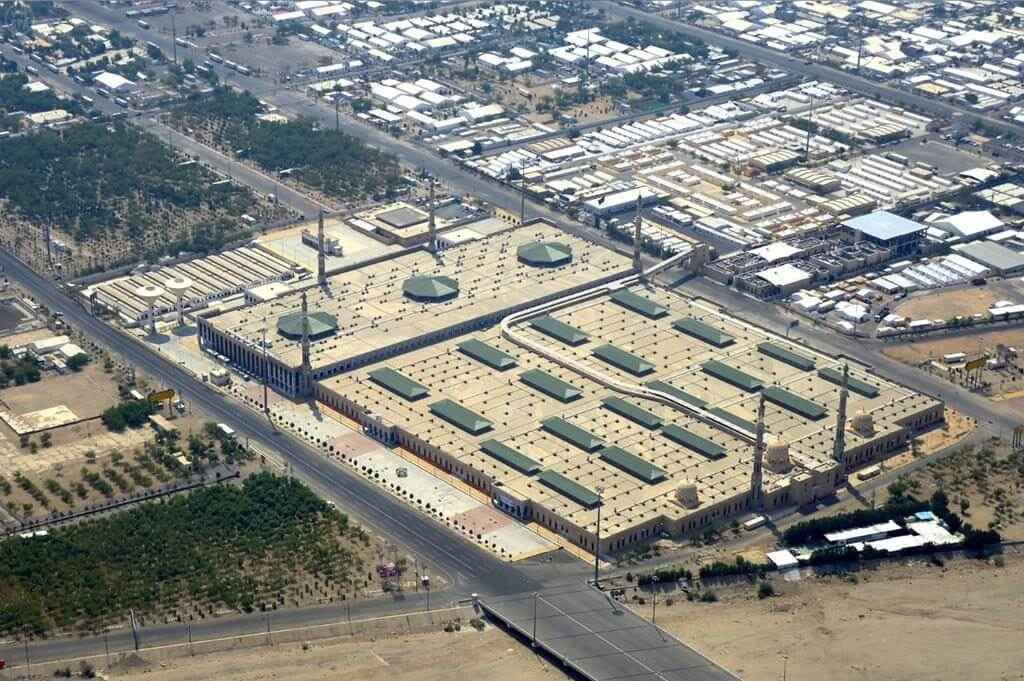
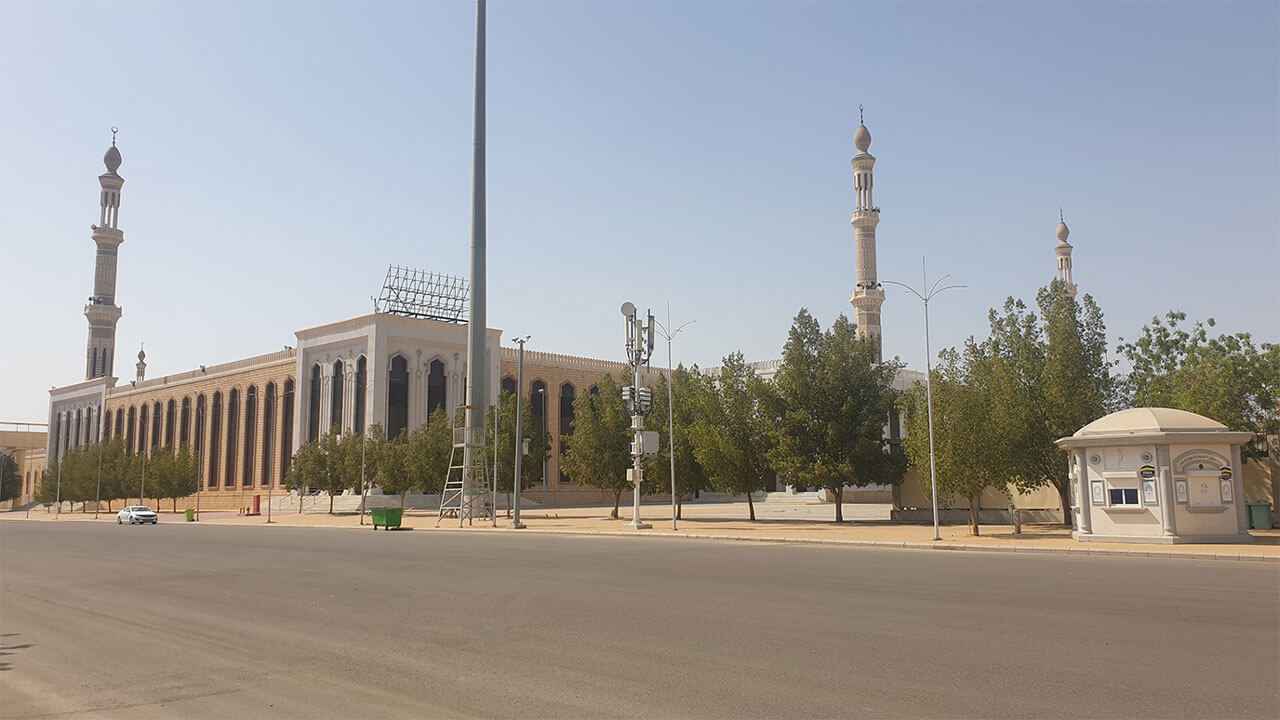
Wadi Uranah lies on the western edge of the Plain of Arafat, forming a natural boundary between Arafat and the outer areas of Makkah. From a religious perspective, it is located outside the Haram boundary and falls within al-Hil, the zone where certain rulings differ from those inside the sanctuary. The valley stretches in front of Masjid Namirah, with the mosque itself uniquely positioned across two distinct ritual zones.
Masjid Namirah is built so that its front section opens directly into Wadi Uranah, while its rear extends into the Plains of Arafat. This architectural reality is not incidental; it reflects the exact location where the Prophet ﷺ delivered his sermon before proceeding into Arafat for the essential rite of wuquf.
Religious and Historical Significance of Wadi Uranah
The lasting prominence of Wadi Uranah comes primarily from its role during the Farewell Hajj in 10 AH. On the Day of Arafat, the Prophet Muhammad ﷺ stayed in a tent at Namirah. After the sun passed its zenith, he rode his camel, al-Qaswa, into the interior of Wadi Uranah, where a vast gathering of companions assembled.
Seated on his camel at the bottom of the valley, the Prophet ﷺ delivered the Farewell Sermon, a foundational address that emphasized the sanctity of life, property, and honor, abolished usury, affirmed equality among believers, and declared the completion of the religion. This sermon represents one of the most comprehensive ethical and legal summaries in Islamic tradition.
After delivering the khutbah and combining the Dhuhr and Asr prayers, the Prophet ﷺ did not remain in the valley. He proceeded deliberately into the Plains of Arafat, where he stood in supplication until sunset, fulfilling the central pillar of Hajj.
Beyond the Farewell Hajj, Wadi Uranah also appears in early Islamic history as the location of the expedition of Abdullah ibn Unais in 4 AH, highlighting that the valley was a known geographic reference point even before the final pilgrimage.
Wadi Uranah and the Fiqh of Hajj
From a jurisprudential standpoint, Wadi Uranah carries one of the clearest boundary rulings in Hajj. The Prophet ﷺ explicitly stated that all of Arafat is a valid place of standing except the middle of Uranah. This instruction, transmitted through authentic narrations, establishes that wuquf performed within the valley itself is not valid.
The wisdom behind this ruling lies in Wadi Uranah’s function as a dividing line rather than part of Arafat. While the sermon was delivered there, the obligation of wuquf belongs exclusively to Arafat proper. For this reason, scholars consistently advise pilgrims to ensure their standing occurs well within the marked boundaries of Arafat, especially after listening to the sermon.
Inside Masjid Namirah today, the distinction is carefully marked with signs, floor indicators, and color-coded boundaries. The front portion of the mosque corresponds to Wadi Uranah and lies outside Arafat, while the rear sections are within the valid zone. Pilgrims who remain unaware of this distinction risk invalidating the core rite of their Hajj if they stay in the valley until sunset.
Geographic and Environmental Features
Wadi Uranah is also a significant natural feature within Makkah’s wider wadi system. Alongside Wadi Fatimah and Wadi Malkan, it forms one of the main drainage basins of the region. The valley is an ephemeral watercourse, flowing only after heavy rainfall, yet historically it played a role in sustaining nearby settlements.
One of the most remarkable features associated with the valley is the passage of Ayn Zubaida, the historic water canal commissioned during the Abbasid era to supply Makkah with fresh water. Traces of this sophisticated hydraulic system still pass through Wadi Uranah, underscoring its importance beyond ritual geography.
In recent years, increased rainfall has contributed to seasonal vegetation growth in parts of the valley, and it has become a temporary habitat for migratory birds, reflecting how sacred landscapes also function as living ecosystems.
Visiting Wadi Uranah Outside Hajj
Outside the Hajj season, Wadi Uranah can be visited as part of a structured ziyarah focused on the historical sites of Makkah. While Masjid Namirah is generally closed throughout the year and opens specifically for Hajj, visitors can view the exterior of the mosque and the surrounding valley to better understand its location and significance.
Educational visits to Wadi Uranah are particularly valuable for Umrah pilgrims who wish to deepen their understanding of Hajj rites in preparation for a future pilgrimage. Standing at the boundary and observing how the valley separates from Arafat offers clarity that books alone often cannot provide.
Transportation and Travel Tips for Pilgrims
Reaching Wadi Uranah from Masjid al-Haram takes approximately twenty minutes by road under normal conditions. During Hajj, access is managed through official transport systems such as pilgrim buses and the Mashaer Al-Muqaddassah Metro. Outside peak days, private transport remains the most practical option.
For Umrah visitors and families seeking a comfortable and reliable journey, arranging a dedicated taxi allows for flexible timing, direct routes, and the ability to combine Wadi Uranah with Arafat, Jabal al-Rahmah, and other nearby ziyarat locations in one trip. Professional Umrah taxi services familiar with pilgrimage routes help visitors avoid boundary confusion and travel with peace of mind, especially when navigating historically sensitive sites.
Conclusion
Wadi Uranah is not merely a valley near Arafat; it is a precise geographical boundary with profound religious consequences. It is the place where the Prophet Muhammad ﷺ delivered his final public message, yet also the place where wuquf is explicitly invalid. Understanding this balance between history and law is essential for every pilgrim.

Zeeshan is a professional driver and tour guide who has been living and driving in Saudi Arabia for the past 5 years. With deep knowledge of the roads, landmarks, and Ziyarat locations across Makkah, Madinah, Jeddah, and Taif, he helps pilgrims and travelers enjoy safe, smooth, and well-organized journeys. His experience in Umrah transport, city tours, and airport transfers makes him a trusted expert for visitors exploring Saudi Arabia.