


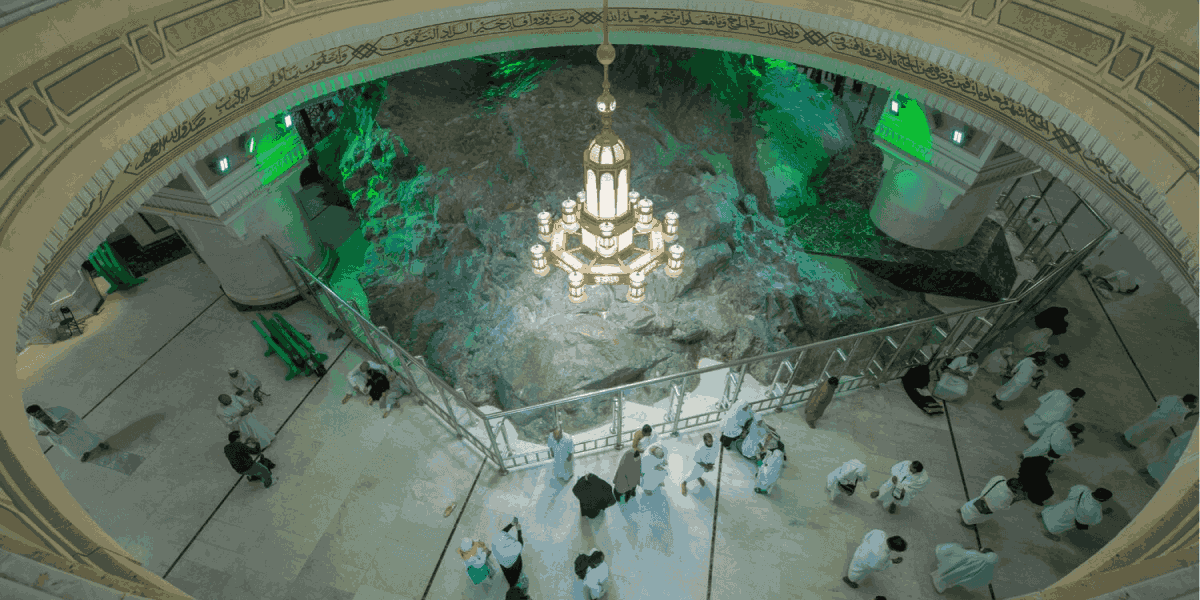
Safa and Marwa are two historically and spiritually significant hills located within Al-Masjid al-Haram in Makkah. They are inseparably linked to the core rites of Hajj and Umrah, where pilgrims perform Sa’i, walking back and forth between them seven times. In Islamic theology, Safa and Marwa are not merely physical landmarks but divinely honored locations explicitly described in the Quran as “among the symbols of Allah.”
What Are Safa and Marwa?
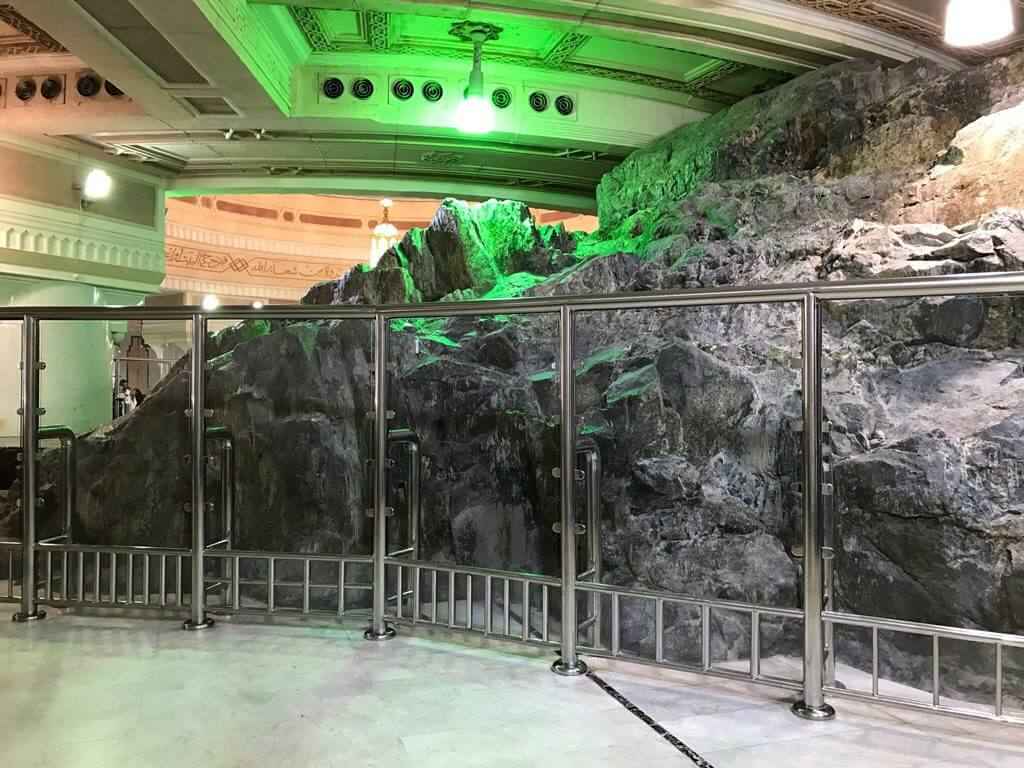
Safa is a small hill connected to Mount Abu Qubais, while Marwa is linked to Mount Qaiqan. Historically, both hills stood outside the boundaries of the Grand Mosque. With the expansion of Masjid al-Haram in the mid-20th century, they were incorporated into the mosque complex. Today, pilgrims walk between them through a covered passage known as the Mas‘aa, which is fully air-conditioned and designed to accommodate millions of worshippers.
The distance between Safa and Marwa is approximately 450 meters, and completing seven laps covers about 3.15 kilometers.
Quranic Status of Safa and Marwa
Allah explicitly mentions Safa and Marwa in Surah Al-Baqarah (2:158), affirming their sacred status and legitimizing the ritual performed between them. The verse resolved early concerns among Muslims who hesitated to perform Sa’i due to its pre-Islamic associations. The revelation clarified that Sa’i is not a remnant of paganism but a divinely ordained act of worship.
By designating Safa and Marwa as Sha‘a’ir Allah (Symbols of Allah), the Quran places them within the framework of sacred rites that strengthen faith, remembrance, and obedience.
Recommended: Niyyah in Islam
The Story of Hajar and the Origin of Sa’i
The ritual of Sa’i commemorates one of the most profound narratives in Islamic history—the struggle of Hajar, the wife of Prophet Ibrahim and mother of Prophet Ismail. Following a divine command, Ibrahim left Hajar and her infant son in the barren valley of Makkah with minimal provisions.
When the water ran out and Ismail became severely dehydrated, Hajar ran desperately between Safa and Marwa searching for help or water. She climbed each hill to scan the horizon, repeating this journey seven times in unwavering trust in Allah. Her perseverance was rewarded when Angel Jibril caused water to spring forth near Ismail’s feet, forming the Zamzam Well.
This moment not only saved Ismail’s life but marked the beginning of human settlement in Makkah, laying the foundation for the future House of Allah.
What Is Sa’i?
Sa’i linguistically means striving or walking with purpose. In Islamic practice, it refers to walking seven times between Safa and Marwa in a specific sequence, beginning at Safa and ending at Marwa. Sa’i is an essential pillar (rukn) of both Hajj and Umrah and cannot be omitted.
The number seven reflects completion, persistence, and obedience—mirroring Hajar’s actions without alteration or symbolic abstraction.
Recommended: What Is Mustahabb?
How Sa’i Is Performed Between Safa and Marwa
Starting from Safa
Pilgrims begin Sa’i at Safa, face the Kaaba, and engage in supplication. This starting point is obligatory; any lap begun from Marwa is invalid.
Walking and Running Between the Hills
As pilgrims proceed toward Marwa, they pass through a marked section identified by green lights. This area represents the valley where Hajar ran, and it is recommended for men to increase their pace here, while women continue walking normally.
There is no fixed supplication prescribed during the walk, allowing pilgrims to engage in personal du‘a, dhikr, or reflection.
Completing Seven Laps at Marwa
One lap is counted from Safa to Marwa. The return journey counts as the second lap. The Sa’i concludes after the seventh lap ends at Marwa.
Distance, Structure, and Modern Mas‘aa
The Mas‘aa today spans multiple floors, including dedicated paths for wheelchairs and elderly pilgrims. Despite modern development, the full distance between Safa and Marwa must be covered for Sa’i to be valid, regardless of the level used.
Religious and Spiritual Significance
Sa’i represents the balance between human effort and divine reliance. Unlike Tawaf, which centers on stillness and glorification, Sa’i embodies movement, struggle, patience, and hope. It teaches that sincere effort, combined with trust in Allah, invites divine mercy—just as it did for Hajar.
Recommended: Miqat Guide
Jurisprudential Rulings of Sa’i (Fiqh Overview)
Sa’i must be performed:
- After Tawaf
- Within the boundaries of the Mas‘aa
- For seven complete laps
- Beginning at Safa and ending at Marwa
Ritual purity is recommended but not mandatory, making Sa’i accessible even to those unable to perform Tawaf due to menstruation or other valid reasons.
Sa’i During Hajj vs Umrah
For Umrah, Sa’i is performed once after Tawaf.
For Hajj, the ruling varies depending on the type:
- Tamattu‘: Sa’i is performed twice
- Qiran and Ifrad: Sa’i may be performed once, either after arrival or later
Recommended: Maqam Ibrahim
FAQs
Why is Safa and Marwa performed seven times?
Because Hajar ran between the hills seven times, and Islamic rituals preserve actions exactly as divinely approved.
How long does Sa’i take?
On average, 45–90 minutes depending on crowd levels and walking pace.
Is Sa’i mentioned in the Quran?
Yes, explicitly in Surah Al-Baqarah (2:158).
Can Sa’i be done on upper levels?
Yes, as long as the full distance is covered within the Mas‘aa.

Zeeshan is a professional driver and tour guide who has been living and driving in Saudi Arabia for the past 5 years. With deep knowledge of the roads, landmarks, and Ziyarat locations across Makkah, Madinah, Jeddah, and Taif, he helps pilgrims and travelers enjoy safe, smooth, and well-organized journeys. His experience in Umrah transport, city tours, and airport transfers makes him a trusted expert for visitors exploring Saudi Arabia.