


Miqat is one of the foundational concepts in the rites of Hajj and Umrah. It represents the sacred boundary that marks a pilgrim’s transition from ordinary life into a state of worship and devotion. Understanding Miqat correctly is essential, as crossing it without fulfilling its requirements directly affects the validity of the pilgrimage.
In Islamic law, Miqat is not merely a geographical checkpoint. It is a divinely prescribed limit that ensures pilgrims approach the Sacred House of Allah with preparation, humility, and intention.
What Is Miqat in Islam?
The word Miqat (ميقات) literally means a fixed place or appointed time. In the context of Hajj and Umrah, it refers to specific locations surrounding Makkah where pilgrims are required to enter the state of Ihram before proceeding further.
Islamically, Miqat is the boundary after which it becomes impermissible for a person intending Hajj or Umrah to travel without Ihram. This ruling applies regardless of whether one reaches Makkah by land, sea, or air. The Miqat ensures that every pilgrim consciously prepares for the sacred rites with intention (Niyyah) and physical symbolism through Ihram.
Why Miqat Is Mandatory for Hajj and Umrah
Miqat is mandatory because it establishes discipline, equality, and spiritual readiness among pilgrims. Entering Ihram before crossing the Miqat signifies submission to Allah’s command and respect for the sanctity of Makkah.
If a pilgrim deliberately or mistakenly crosses the Miqat without entering Ihram while intending Hajj or Umrah, Islamic law requires Damm, which is an animal sacrifice, as expiation. This ruling emphasizes the seriousness of Miqat and its role in preserving the sanctity of pilgrimage.
Recommended: What Is Talbiyyah?
The Five Official Miqats (Mawaqit)
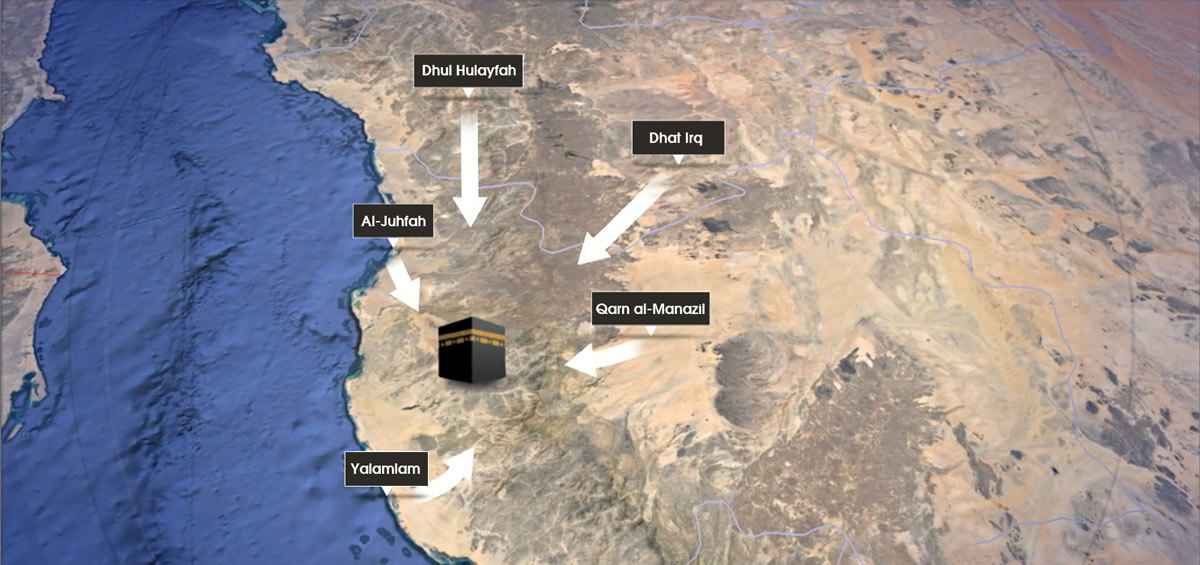
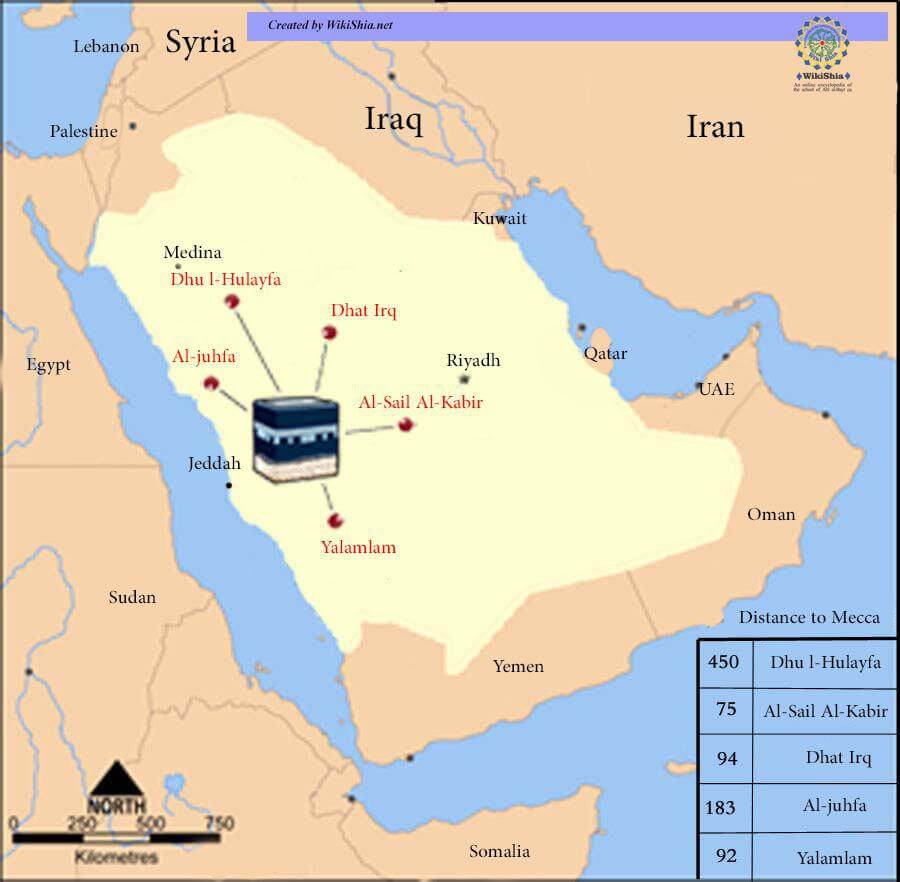
The Prophet Muhammad ﷺ personally designated four Miqats, while the fifth was established during the caliphate of Umar ibn al-Khattab (RA) to accommodate changing travel routes. These Miqats correspond to the major directions from which pilgrims approach Makkah.
Dhul Hulayfah (Abyar Ali)
Dhul Hulayfah is the Miqat for pilgrims coming from Madinah and the northern regions. It is located approximately 18 kilometers from Masjid al-Nabawi and over 400 kilometers north of Makkah. This Miqat is marked by Masjid al-Shajarah and is the furthest Miqat from Makkah.
Al-Juhfah (Rabigh)
Al-Juhfah serves pilgrims coming from the northwest, including regions such as Egypt, Syria, Europe, North America, and parts of Africa. Due to historical changes, many pilgrims now enter Ihram at Rabigh, which lies close to the original Miqat location.
Qarn al-Manazil (As-Sayl al-Kabir)
Located east of Makkah near Ta’if, Qarn al-Manazil is the Miqat for pilgrims from Najd and modern regions such as the UAE, Oman, Pakistan, and Southeast Asia. It is among the most frequently crossed Miqats today due to air travel routes.
Yalamlam (As-Sa’diyah)
Yalamlam is the Miqat for pilgrims approaching from the south, including Yemen and parts of Africa such as South Africa and Nigeria. It lies approximately 100 kilometers south of Makkah.
Dhat Irq
Dhat Irq was designated during the time of Umar ibn al-Khattab (RA) for pilgrims traveling from Iraq, Iran, and northeastern regions. It ensured ease for travelers whose routes did not pass through Qarn al-Manazil.
Recommended: Masjid-e-Nabawi Madinah
Miqat for People Living Inside the Boundaries
Pilgrims who live within the Miqat boundaries but outside the Haram fall under different rulings. Such areas are known as Al-Hil.
Residents of Makkah itself enter Ihram for Hajj from Makkah, while for Umrah they must exit the Haram boundary and re-enter Ihram, commonly from Masjid Aisha.
Those living in Al-Hil, such as Jeddah, may enter Ihram from their residence if they intend Umrah or Hajj before crossing into the Haram.
Al-Hil and the Haram Boundary Explained
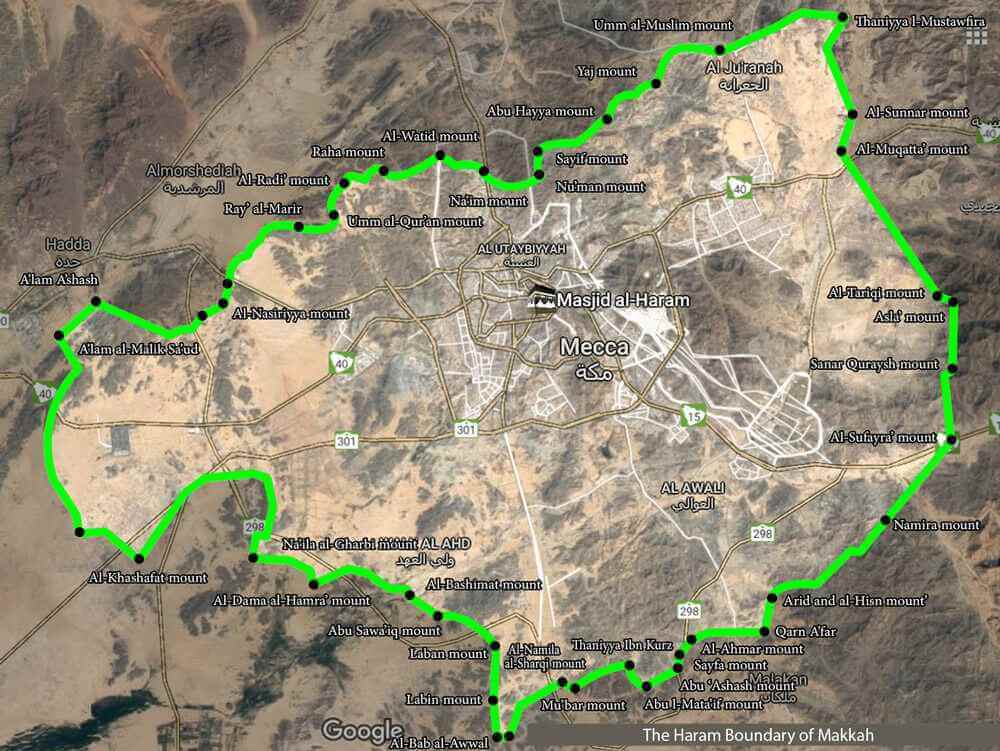
Al-Hil refers to the area between the Miqat boundaries and the Haram of Makkah. The Haram is the most sacred zone, within which hunting, cutting trees, and acts violating sanctity are prohibited.
The Haram boundary is marked by known locations such as Masjid Aisha (Taneem), Ji’ranah, Hudaibiyah, and Arafat. Anyone intending Umrah must be in Ihram before entering this sacred zone.
Recommended: Masjid Al-Haram
Miqat Rules for Modern Travel
Miqat for Air Travelers
Pilgrims traveling by air must enter Ihram before crossing the Miqat in the air. Since physical stopping is impossible, pilgrims are advised to wear Ihram at the departure airport or during a stopover. Airlines often announce the approaching Miqat, at which point the intention should be made.
Miqat When Traveling from Madinah
Those traveling by road from Madinah typically stop at Dhul Hulayfah. Train travelers may wear Ihram before departure and make the intention once the Miqat announcement is made during the journey.
Miqat for Jeddah Travelers
Jeddah is not a Miqat for most pilgrims. Only residents of Jeddah or individuals who arrived there for non-pilgrimage purposes may enter Ihram from the city. Pilgrims intending Umrah or Hajj upon arrival must either enter Ihram before landing or travel to the appropriate Miqat.
Masjid Aisha (Taneem) – Is It a Miqat?
Masjid Aisha, located in Taneem, is not a general Miqat. It serves as a point outside the Haram for residents of Makkah who wish to perform Umrah. Pilgrims already inside Makkah must exit the Haram boundary to re-enter Ihram, and Masjid Aisha is the nearest and most convenient location for this purpose.
Common Mistakes Related to Miqat
Many pilgrims mistakenly assume Jeddah is a Miqat, delay Ihram until after crossing the boundary, or misunderstand the difference between Miqat and Haram. These errors can lead to expiation requirements and unnecessary complications during the pilgrimage.
Summary – Understanding Miqat Correctly
Miqat represents the sacred threshold of intention, humility, and obedience in Hajj and Umrah. By respecting its boundaries and rulings, pilgrims ensure their worship aligns with the Sunnah and Islamic law. A correct understanding of Miqat safeguards the validity of pilgrimage and enhances spiritual preparation before entering the sacred precincts of Makkah.
FAQs
What are the five points of Miqat?
The five Miqats are Dhul Hulayfah, Al-Juhfah, Qarn al-Manazil, Yalamlam, and Dhat Irq.
Where is Miqat for Umrah?
Miqat depends on the pilgrim’s direction of travel. Each region has a designated Miqat that must be observed before entering Ihram.
What is a Miqat in Islam?
Miqat is the fixed boundary where pilgrims must enter Ihram before performing Hajj or Umrah.
Is Masjid Aisha a Miqat point?
Masjid Aisha is not a general Miqat. It is used by residents of Makkah to assume Ihram for Umrah.

Zeeshan is a professional driver and tour guide who has been living and driving in Saudi Arabia for the past 5 years. With deep knowledge of the roads, landmarks, and Ziyarat locations across Makkah, Madinah, Jeddah, and Taif, he helps pilgrims and travelers enjoy safe, smooth, and well-organized journeys. His experience in Umrah transport, city tours, and airport transfers makes him a trusted expert for visitors exploring Saudi Arabia.