


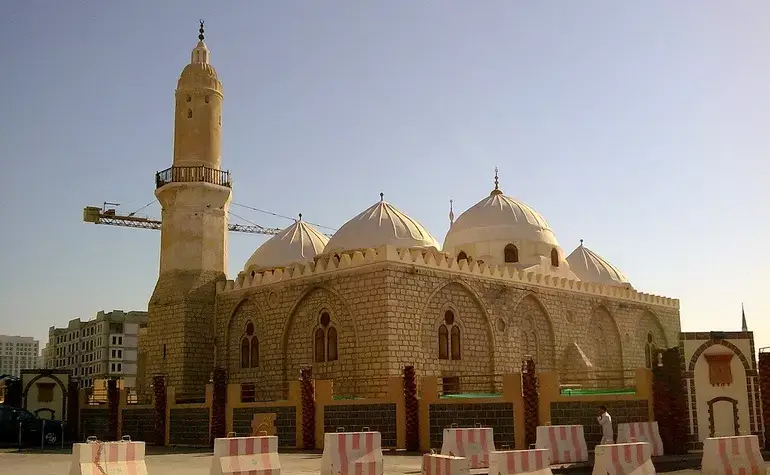
Masjid Ghamama, also known as Masjid al-Ghamamah or the Mosque of Clouds, is one of the most spiritually significant historic mosques in Madinah, Saudi Arabia. Although modest in size, its importance is deeply rooted in pivotal moments from the life of the Prophet Muhammad ﷺ. For pilgrims and visitors exploring the sacred landscape of Madinah, Masjid Ghamama represents a powerful connection to prophetic worship, supplication, and mercy.
Where Is Masjid Ghamama Located?
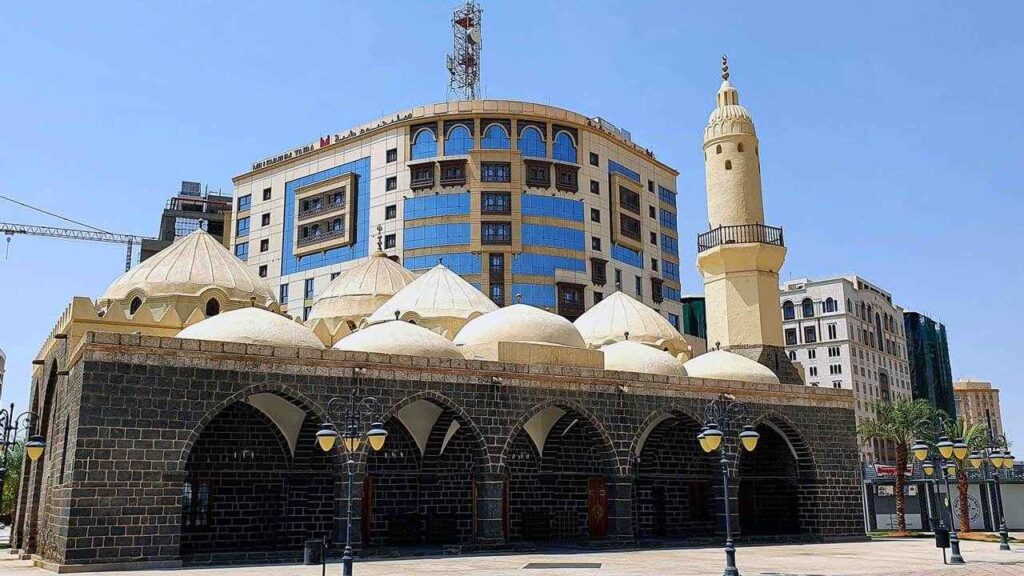
Masjid Ghamama is located approximately 300 to 500 meters southwest of Al-Masjid an-Nabawi, near the As-Salam gate and the western edge of the Prophet’s Mosque complex. Its proximity allows most visitors to reach it easily on foot within 5 to 10 minutes. The mosque sits within the Al Haram district of Madinah, surrounded by open pedestrian areas that create a calm and reflective environment away from the main crowds.
Historical and Religious Significance of Masjid Ghamama
The significance of Masjid Ghamama is not derived from its size or daily congregation, but from the extraordinary events associated with this location during the lifetime of the Prophet ﷺ.
Eid Prayers Led by the Prophet ﷺ
Historical narrations indicate that the Prophet Muhammad ﷺ performed Eid prayers at this site during the final years of his life. Because of this, the mosque is also known as Masjid Eid. These prayers marked communal worship outside the mosque structure, reflecting the prophetic tradition of conducting Eid salah in open areas close to Madinah.
Salat al-Istisqa and the Meaning of “Ghamama”
The name “Ghamama” literally means “cloud” in Arabic. It refers to a well-known event when the people of Madinah suffered from severe drought. The Prophet ﷺ performed Salat al-Istisqa, the special prayer for rain, at this location. According to authentic narrations, clouds immediately gathered and rain fell, relieving the city. This moment of divine response is the core reason the mosque carries its distinctive name and enduring spiritual symbolism.
Funeral Prayer of Najashi (Salat al-Janaza al-Gha’ib)
According to several historical reports, the Prophet ﷺ performed the funeral prayer in absentia for Najashi, the Christian King of Abyssinia (Aksum), near this area. Najashi had protected early Muslims who migrated to his land and later accepted Islam. When he passed away, the Prophet ﷺ led his janaza prayer without the physical presence of the body, an event unique in prophetic history.
Construction History and Renovations
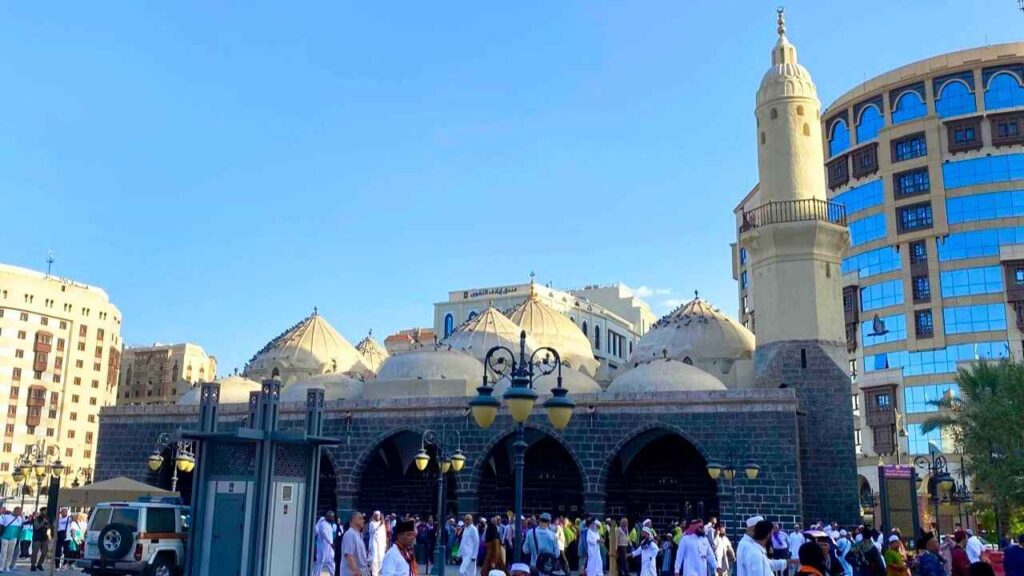
The first built structure of Masjid Ghamama dates back to the Umayyad period during the reign of Caliph Umar ibn Abdul Aziz, between 86 AH and 93 AH (704–712 CE). Over the centuries, the mosque underwent several restorations, including renovations under Mamluk rulers in the 14th century, Ottoman sultans such as Sultan Abd-ul-Mejid I in 1859, and Sultan Abdul Hamid II. In the modern era, the Saudi government has preserved and restored the mosque while maintaining its historical identity and improving accessibility.
Architecture and Design Features
Masjid Ghamama reflects a restrained Ottoman architectural style blended with early Islamic simplicity. The structure is rectangular and built primarily from stone. It features multiple domes, with the largest dome positioned above the mihrab. The interior is marked by white plastered walls, arches, stone columns, and a calm, uncluttered prayer space. Unlike many later mosques, Masjid Ghamama does not feature a tall minaret, which helps preserve its historical authenticity.
Current Status and Prayer Information
Due to its close proximity to Masjid an-Nabawi, Masjid Ghamama does not consistently host the five daily congregational prayers. At different periods, it has been opened or restricted for prayer to avoid overlap with the Prophet’s Mosque. An internal sound system is used to prevent interference with nearby prayer calls. Most visitors come for ziyarat, reflection, and voluntary prayer rather than regular jama‘ah salah.
Visiting Masjid Ghamama – Practical Guidance
Masjid Ghamama is generally accessible throughout the day, with visiting hours often aligning with daylight and prayer times. Entry is free for all visitors. Modest dress is required, shoes must be removed before entering, and visitors are expected to maintain silence and respect, especially during prayer times. Early mornings and late afternoons are ideal for a peaceful visit.
Masjid Ghamama in the Context of Madinah Ziyarat
Masjid Ghamama is commonly included in Madinah ziyarat routes alongside Masjid Quba, Masjid al-Qiblatain, Jannat al-Baqi, and Mount Uhud. Visiting this mosque adds depth to a pilgrim’s understanding of the Prophet’s ﷺ public worship, community leadership, and reliance on supplication during hardship.
Transportation and Access for Pilgrims
While Masjid Ghamama is walkable from Masjid an-Nabawi, many pilgrims prefer organized transport, especially when visiting multiple ziyarat locations in one day. Reliable Umrah and Madinah taxi services make these journeys comfortable and time-efficient, particularly for families, elderly pilgrims, and groups. Using a professional local transport service for airport transfers, hotel pickups, and ziyarat tours allows visitors to focus on worship without logistical stress.
Related: Masjid al-Qiblatain
FAQs
What is the meaning of Al-Ghamama?
Al-Ghamama means “cloud,” referring to the clouds that appeared when the Prophet ﷺ prayed for rain at this site.
Is Masjid Ghamama one of the oldest mosques in Madinah?
Yes, it is among the oldest historic mosques, with its original construction dating back to the early 8th century.
Is Masjid Ghamama used for daily prayers?
It is primarily visited for ziyarat and voluntary prayer due to its proximity to Masjid an-Nabawi.
Which mosque has two Qiblas?
Masjid al-Qiblatain is the mosque known for having two Qiblas, not Masjid Ghamama.
Conclusion
Masjid Ghamama stands as a quiet yet powerful witness to moments of prophetic leadership, mercy, and divine response. From Eid prayers and the prayer for rain to the unique funeral prayer for Najashi, this mosque holds a distinct place in Islamic history. Visiting Masjid Ghamama enriches the spiritual journey of anyone exploring Madinah, offering reflection beyond crowds and architecture. When combined with well-planned ziyarat routes and reliable Umrah and taxi services, the visit becomes not only meaningful but also smooth and memorable, allowing pilgrims to connect deeply with the legacy of the Prophet Muhammad ﷺ.

Zeeshan is a professional driver and tour guide who has been living and driving in Saudi Arabia for the past 5 years. With deep knowledge of the roads, landmarks, and Ziyarat locations across Makkah, Madinah, Jeddah, and Taif, he helps pilgrims and travelers enjoy safe, smooth, and well-organized journeys. His experience in Umrah transport, city tours, and airport transfers makes him a trusted expert for visitors exploring Saudi Arabia.