


Masjid Ali ibn Abi Talib is one of Madinah’s most historically rich and spiritually meaningful mosques, deeply connected to the Prophetic era and the legacy of the Rightly Guided Caliphs. Named after Ali ibn Abi Talib (رضي الله عنه), the cousin and son-in-law of Prophet Muhammad ﷺ, the mosque stands as a living reminder of the simplicity of early Islamic worship and the companions’ devotion to preserving the Sunnah.
What often causes confusion among visitors is that the name Masjid Ali ibn Abi Talib refers to two distinct ziyarat locations in Madinah, each associated with different moments of Islamic history. Understanding this distinction allows visitors to plan their ziyarat with clarity and deeper appreciation.
Understanding Masjid Ali ibn Abi Talib – Two Historic Locations
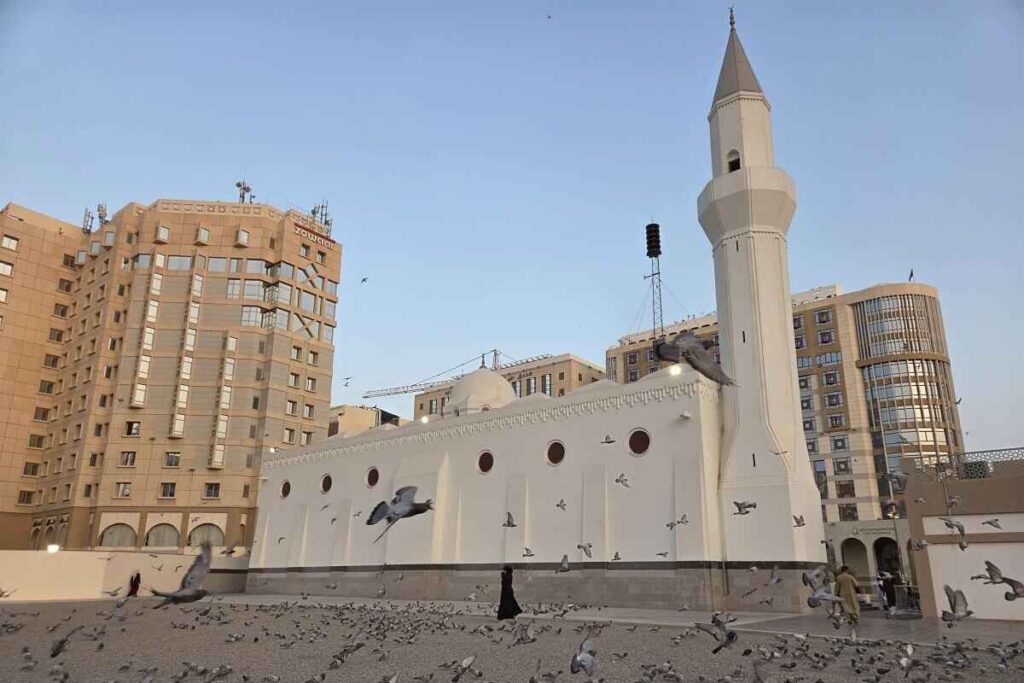
The first and most visited Masjid Ali ibn Abi Talib is located in the Al-Manakhah area, close to Masjid an-Nabawi. This mosque stands on one of the Prophet’s ﷺ open-air prayer grounds used for Eid and rain-invoking prayers.
The second Masjid Ali ibn Abi Talib is found within the Seven Mosques (Sab‘ah Masajid) complex near Mount Sal‘ (Sela), associated with the Battle of the Trench (Ghazwat al-Khandaq). While smaller and less frequently visited, it carries historical associations with Ali ibn Abi Talib’s role during that critical defensive battle.
Masjid Ali ibn Abi Talib in Al-Manakhah (Near Masjid an-Nabawi)
Location and Surroundings
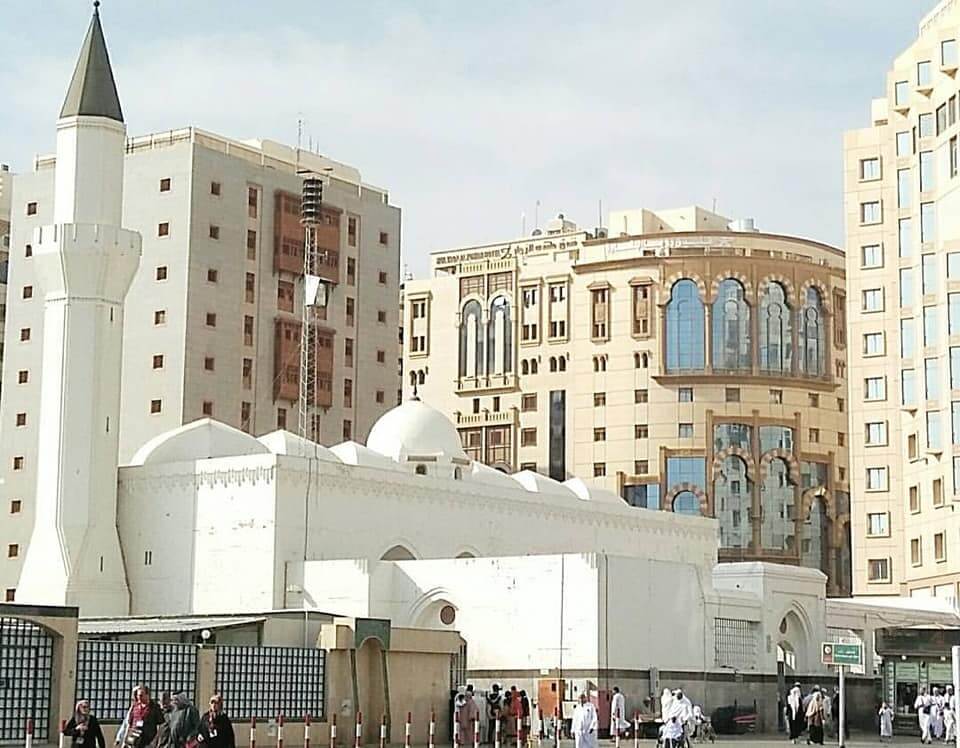
The main Masjid Ali ibn Abi Talib is situated on As-Salam Road in the Al-Manakhah district, approximately 290 meters west of Masjid an-Nabawi. It lies just north of Masjid al-Ghamamah and very close to Masjid Abu Bakr As-Siddiq, forming a cluster of mosques built upon known Prophetic prayer grounds. This proximity reflects the historical importance of Al-Manakhah as a central area for communal worship during the Prophet’s ﷺ time.
Historical Significance from the Prophetic Era
This mosque stands on land known as Al-Musalla, where Prophet Muhammad ﷺ led Muslims in Eid prayers and Salat al-Istisqa (prayers for rain). These prayers were performed outdoors, emphasizing humility, equality, and reliance upon Allah.
During the caliphate period, Ali ibn Abi Talib (رضي الله عنه) led Eid al-Adha prayers at this very spot in 35 AH, during the reign of Uthman ibn Affan (رضي الله عنه). In recognition of this continuity with the Prophetic Sunnah, the site became known by Ali’s name, and a mosque was later established to preserve its identity and religious memory.
Construction, Restoration, and Preservation History
Historical sources indicate that the mosque was first formally built during the Umayyad period when Umar ibn Abdul Aziz governed Madinah (87–93 AH). His efforts focused on identifying authentic Prophetic prayer sites before they faded from public knowledge.
The mosque underwent several reconstructions, notably in 881 AH under Zain ad-Din al-Mansouri, the Emir of Madinah. In modern times, the mosque was rebuilt and expanded during the reign of King Fahd bin Abdulaziz in 1411 AH, followed by restorations under King Abdullah and continued preservation under King Salman, as part of Saudi Arabia’s Historical Islamic Sites Development Project. These efforts ensured the mosque retained both its spiritual function and historical authenticity.
Architectural Features
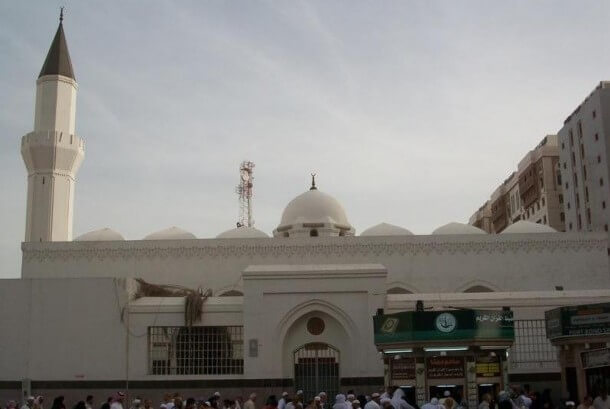
Masjid Ali ibn Abi Talib follows the architectural style common to Al-Manakhah’s historic mosques. It is rectangular, measuring approximately 31 meters by 22 meters, with a single main prayer hall covered by seven domes, the tallest positioned above the mihrab. A small open courtyard extends from the northern side, while the minaret stands on the eastern edge, visually anchoring the mosque within the neighborhood.
Masjid Ali ibn Abi Talib in the Seven Mosques (Khandaq Area)
The second Masjid Ali ibn Abi Talib is located on the slopes of Mount Sal‘, within the Seven Mosques area northwest of central Madinah. This site is associated with later historical reports describing where Ali (رضي الله عنه) stood guard and prayed during the Battle of the Trench.
While not directly established as a Prophetic prayer ground like the Al-Manakhah mosque, it represents Ali’s courage and leadership during one of Islam’s most critical defensive moments. Visitors often include it as part of a broader visit to Masjid al-Fath and surrounding Khandaq landmarks, focusing on reflection rather than ritualized acts.
Visiting Masjid Ali ibn Abi Talib Today
The Al-Manakhah mosque is generally open throughout the day, though temporary closures may occur during renovation periods. The site offers wheelchair-accessible entrances, pathways, and facilities, making it accessible for elderly and disabled visitors.
When visiting, it is recommended to pray two rak‘ahs of nafl if the mosque is open, with the intention of honoring places where the Prophet ﷺ prayed, without assigning any special or fixed supplications. Maintaining correct Islamic etiquette is essential, avoiding practices such as seeking blessings from walls or treating the mosque as a shrine.
How to Reach Masjid Ali ibn Abi Talib
From Masjid an-Nabawi, the Al-Manakhah Masjid Ali is easily reached on foot within a few minutes. For the Seven Mosques location, visitors typically rely on organized ziyarat transport.
For pilgrims performing Umrah or Madinah ziyarat, arranging reliable local transportation saves time and ensures comfort, especially when visiting multiple historic sites in one day. Professional Umrah and Madinah taxi services allow pilgrims to move efficiently between Masjid an-Nabawi, Al-Manakhah mosques, the Seven Mosques area, Quba, and other key landmarks without logistical stress.
Nearby Islamic Landmarks
Masjid Ali ibn Abi Talib is ideally visited alongside Masjid Abu Bakr As-Siddiq, Masjid al-Ghamamah, and Masjid an-Nabawi itself, creating a coherent ziyarat route focused on the Prophet’s ﷺ public worship life. This contextual proximity strengthens the visitor’s understanding of Madinah as a living city shaped by Prophetic guidance.
Including Masjid Ali ibn Abi Talib in Your Madinah & Umrah Ziyarat
Whether you are visiting Madinah as part of Umrah or independently, Masjid Ali ibn Abi Talib fits naturally into a spiritually meaningful itinerary. Using a trusted Umrah and local taxi service allows pilgrims, families, and elderly visitors to complete ziyarat routes comfortably, especially when combining central Madinah sites with outlying locations like the Seven Mosques.
Conclusion
Masjid Ali ibn Abi Talib is not merely a historical structure; it is a preserved chapter of Islamic worship, leadership, and continuity. From the Prophet’s ﷺ open-air Eid prayers to Ali ibn Abi Talib’s role in maintaining that Sunnah, the mosque reflects the companions’ dedication to preserving authentic Islamic practice. Visiting this mosque with knowledge, respect, and correct intention allows pilgrims to connect deeply with Madinah’s spiritual heritage while honoring the legacy of one of Islam’s greatest figures.

Zeeshan is a professional driver and tour guide who has been living and driving in Saudi Arabia for the past 5 years. With deep knowledge of the roads, landmarks, and Ziyarat locations across Makkah, Madinah, Jeddah, and Taif, he helps pilgrims and travelers enjoy safe, smooth, and well-organized journeys. His experience in Umrah transport, city tours, and airport transfers makes him a trusted expert for visitors exploring Saudi Arabia.