


The Key of the Kaaba is far more than a physical object. In Islamic belief and history, it represents amanah a divine trust-handed down uninterrupted for over 1,400 years. Closely tied to the Bani Shaiba (Al-Shaibi) family, the key symbolizes continuity, legitimacy, and the Prophet Muhammad’s ﷺ explicit command that the guardianship of the Kaaba must remain with a specific lineage until the Day of Judgment.
For pilgrims, researchers, and readers seeking authoritative knowledge, this guide explains what the Kaaba key is, who holds it today, how it is used, and why it matters, while correcting common misconceptions and filling gaps often found in competing articles.
What Is the Key of the Kaaba?
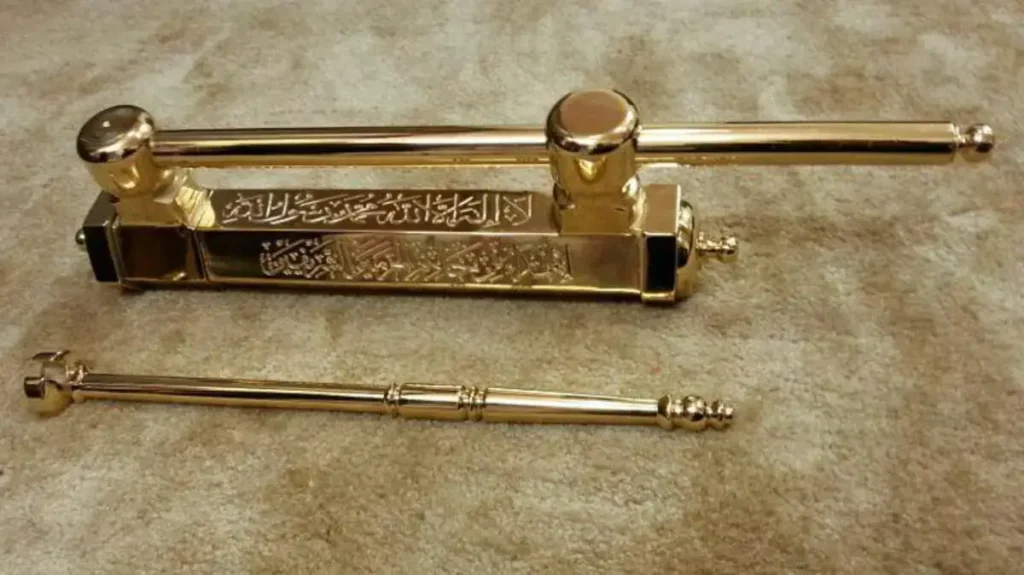
The Key of the Kaaba is the official key used to open the door of the Kaaba, Islam’s holiest structure located inside Masjid al-Haram in Makkah. Symbolically, it represents stewardship rather than ownership. Access to the Kaaba is strictly regulated, and the key is never treated as a public or political asset it is a religious trust safeguarded by lineage and authority.
In Islamic jurisprudence and tradition, the key is inseparable from the concept of Sadanah al-Kaaba (Custodianship of the Kaaba), a role that includes responsibility for opening, closing, cleaning, perfuming, and overseeing the sanctity of the structure.
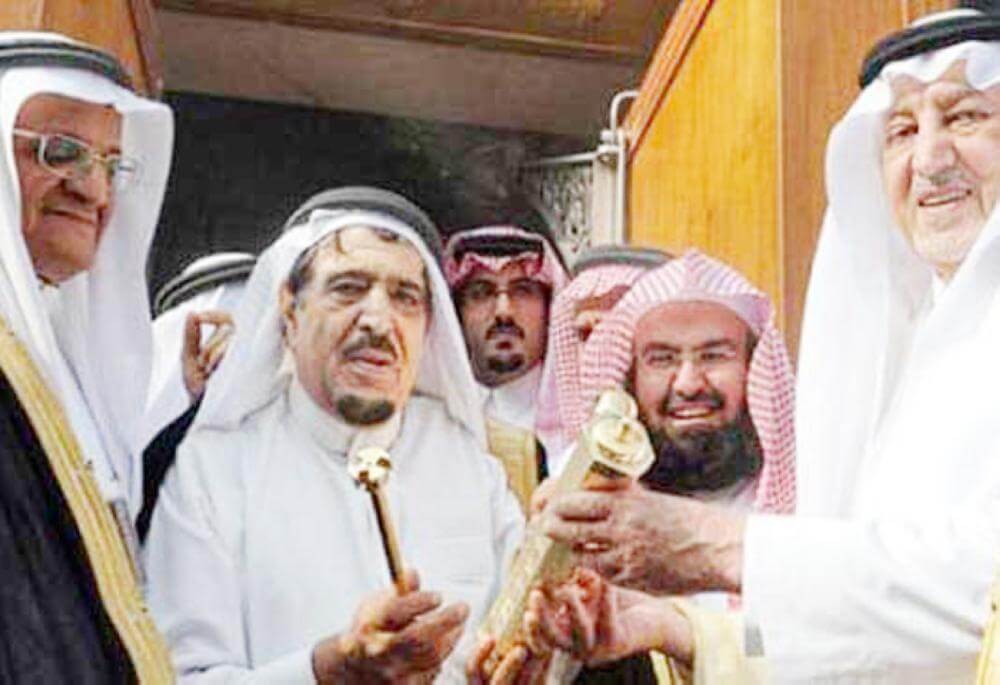
The Keepers of the Kaaba Key: Bani Shaiba Lineage
Prophetic Declaration and Historical Continuity
The custodianship of the Kaaba predates Islam, tracing back to Qusayy ibn Kilab, the fourth grandfather of Prophet Muhammad ﷺ. Over generations, this responsibility passed through his descendants until it reached Uthman ibn Talha of the Bani Shaiba clan.
During the Conquest of Makkah (8 AH / 630 CE), a defining moment occurred. After entering and cleansing the Kaaba of idols, the Prophet ﷺ returned the key to Uthman ibn Talha and declared:
إِنَّ ٱللَّهَ يَأْمُرُكُمْ أَن تُؤَدُّوا۟ ٱلْأَمَـٰنَـٰتِ إِلَىٰٓ أَهْلِهَا ❁
“Take this key as an everlasting trust; none shall take it from you except a tyrant.”
This statement established an irrevocable religious mandate. Since that day, the key has remained with Uthman ibn Talha’s descendants without interruption-an unmatched example of hereditary trust in world history.
Who Is the Current Custodian (Sadin) of the Kaaba?
As of June 2024, the senior custodian (Sadin) of the Kaaba is:
Sheikh Abdul Wahab bin Zain Al-Abidin Al-Shaibi
He became the 78th Sadin of the Islamic era (and the 110th since Qusayy ibn Kilab) following the passing of his brother, Dr. Saleh bin Zain Al-Abidin Al-Shaibi, on June 22, 2024.
The Sadin is traditionally the eldest eligible male of the Bani Shaiba family and serves in close coordination with Saudi authorities, particularly the Governor of Makkah.
Duties of the Kaaba Keykeeper (Sadanah al-Kaaba)
The role of the keykeeper is comprehensive and ceremonial, extending far beyond holding the key itself. Responsibilities include:
- Opening and closing the Kaaba during authorized occasions
- Supervising the washing of the Kaaba using Zamzam water and rose or oud oils
- Overseeing the changing of the Kiswah (the black covering)
- Perfuming and maintaining the interior
- Welcoming official guests and dignitaries
- Ensuring the key and lock are preserved with integrity and security
These duties reflect trust, discretion, and religious accountability, similar in principle to fiduciary responsibilities in modern financial or banking governance—where stewardship, compliance, and continuity are paramount.
Physical Design and Composition of the Kaaba Key
Materials and Craftsmanship
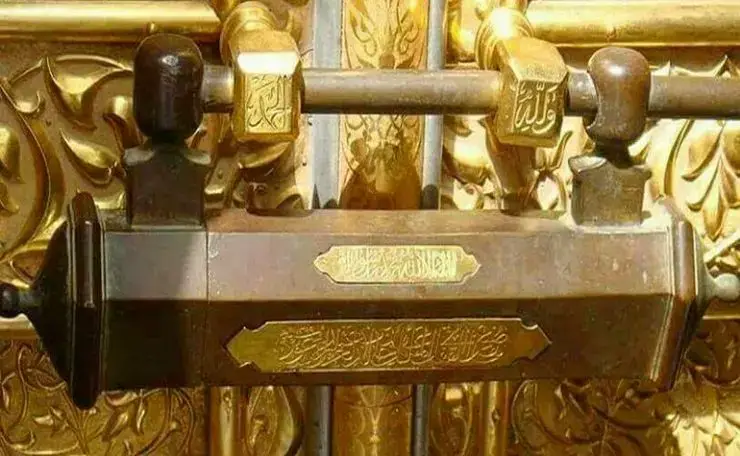
The modern Kaaba key measures approximately 35–40 cm in length and is made from nickel-plated metal, often finished with 18-carat gold plating. Over the centuries, keys have been replaced due to wear or leadership transitions, but each replacement follows strict ceremonial and religious protocols.
Inscriptions and Symbolism
Many keys are engraved with Quranic verses, most notably:
Surah An-Nisa (4:58)
“Indeed, Allah commands you to render trusts to whom they are due.”
This verse reinforces the spiritual meaning of the key as a trust rather than an object of privilege.
The Key Pouch
The key is stored in a green silk pouch embroidered with gold thread, renewed annually in the same factory that produces the Kiswah of the Kaaba, ensuring continuity in craftsmanship and symbolism.
When and How Is the Kaaba Opened?
The Kaaba is not open to the general public. It is typically opened twice a year under official supervision:
After the Hajj season (commonly in Muharram)
Before Ramadan (often in Sha‘ban)
During the ceremony, the Sadin uses the key to open the door in the presence of senior Saudi officials, scholars, and select dignitaries. The interior is then washed with Zamzam water mixed with rosewater and perfumed oils.
Historical Evolution of the Kaaba Key
Throughout Islamic history, various caliphates-including the Umayyads, Abbasids, Mamluks, and Ottomans-commissioned keys and locks reflecting their era’s artistry.
Today, over 50 historical Kaaba keys are preserved in the Topkapi Palace Museum in Istanbul, making it the largest known collection of Kaaba keys in the world. These artifacts serve as physical documentation of Islamic governance, craftsmanship, and continuity.
What Pilgrims Can and Cannot Do
Pilgrims often ask whether they can see or touch the Kaaba key. The answer is clear:
The key is not accessible to pilgrims
No request to handle or view it is permitted
Access is strictly limited to the Bani Shaiba family and authorized officials
For spiritual closeness, pilgrims are encouraged to focus on acts of worship such as Tawaf, supplication near the Multazam, and prayer behind Maqam Ibrahim, while maintaining safety and respect.
Common Misconceptions (Including “What Does NASA Say About the Kaaba?”)
There is no verified scientific or NASA statement declaring the Kaaba as the “center of the Earth” or making supernatural claims about it. Such narratives are modern myths with no authoritative sources. Islamic reverence for the Kaaba is rooted in revelation and worship, not astrophysical claims.
Trust, Governance, and a Modern Analogy
Just as regulated banks in the UAE-such as Emirates NBD, FAB, and ADCB-operate under strict custodial and compliance frameworks to protect entrusted assets, the Kaaba key is safeguarded through clear authority, lineage, and accountability. This parallel helps modern readers understand why the key is never politicized, commercialized, or publicly accessible.
Conclusion: Why the Key of the Kaaba Matters
The Key of the Kaaba stands as a living symbol of trust, continuity, and prophetic instruction. Passed down through the Bani Shaiba family for over fourteen centuries, it embodies Islamic principles of stewardship and responsibility. Understanding its history deepens respect for the Kaaba itself and corrects many widespread misunderstandings.
For readers exploring related topics, contextual internal links can naturally extend learning-such as guides on Masjid al-Haram landmarks, Maqam Ibrahim, or the Kiswah of the Kaaba-strengthening both knowledge and topical authority.

Zeeshan is a professional driver and tour guide who has been living and driving in Saudi Arabia for the past 5 years. With deep knowledge of the roads, landmarks, and Ziyarat locations across Makkah, Madinah, Jeddah, and Taif, he helps pilgrims and travelers enjoy safe, smooth, and well-organized journeys. His experience in Umrah transport, city tours, and airport transfers makes him a trusted expert for visitors exploring Saudi Arabia.