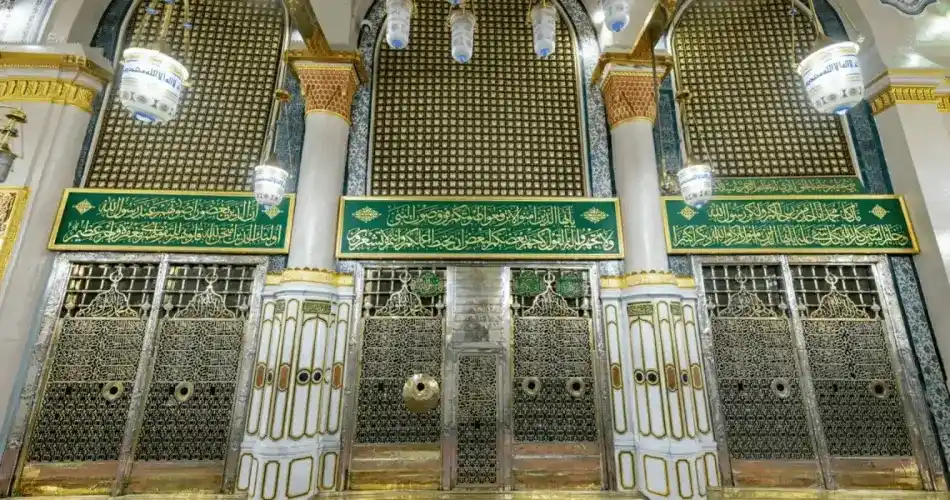



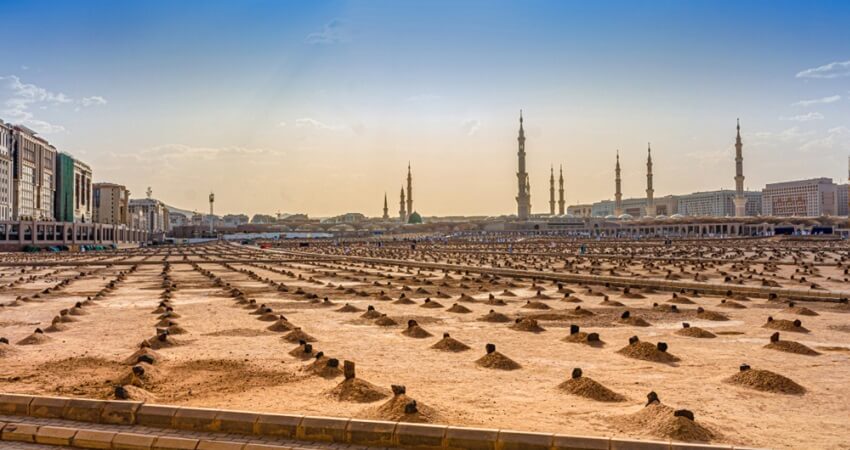
Jannat al-Baqi, also known as Baqi al-Gharqad, is the oldest and most sacred Islamic cemetery in Madinah. Located immediately to the southeast of Masjid al-Nabawi, it holds unparalleled spiritual value as the final resting place of thousands of companions of Prophet Muhammad ﷺ, members of his family, and early Muslims. For visitors to Madinah, Jannat al-Baqi is not merely a cemetery but a profound reminder of Islamic history, humility, and the temporary nature of worldly life.
What Is Jannat al-Baqi and Why It Matters in Islam
Jannat al-Baqi was established in 1 AH (622 CE) shortly after the Prophet Muhammad ﷺ migrated from Makkah to Madinah. The Prophet himself designated this land as the cemetery for Muslims and frequently visited it to pray for the deceased. Because of this direct connection with the Prophet ﷺ, Islamic scholars regard Jannat al-Baqi as one of the two holiest cemeteries in Islam, alongside Jannat al-Mu’alla in Makkah.
The name Baqi al-Gharqad refers to the boxthorn trees that once covered the area before it was cleared for burials.
Historical Background of Jannat al-Baqi
Establishment During the Prophet’s Time
When the Prophet ﷺ arrived in Madinah, the land of al-Baqi lay just outside the developing residential area. After the death of As’ad ibn Zurarah, one of the Ansar, the Prophet ﷺ selected this location as the public burial ground for Muslims. He personally attended funerals here and taught supplications for the people of the graves, embedding Jannat al-Baqi into Islamic religious practice.
Early Burials and Expansion of the Cemetery
Among the earliest burials was Uthman ibn Maz’un, the first Muhajir companion to be buried there. Later, the Prophet’s ﷺ daughters Ruqayyah, Zaynab, and Umm Kulthum, as well as his infant son Ibrahim, were laid to rest in Jannat al-Baqi. Over time, as Madinah expanded, the cemetery also grew, eventually incorporating nearby burial grounds during the Umayyad period.
Who Is Buried in Jannat al-Baqi
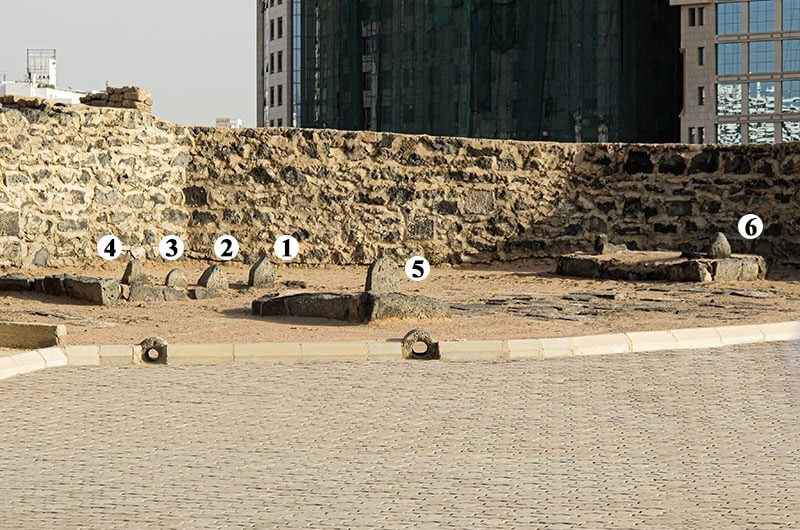
Jannat al-Baqi contains the graves of some of the most revered personalities in Islamic history, making it a focal point of religious reflection for Muslims worldwide.
Ahl al-Bayt (Family of the Prophet)
Several members of the Prophet Muhammad’s ﷺ family are buried here, including Fatima bint Muhammad (according to strong historical opinions), Hasan ibn Ali, and Ibrahim ibn Muhammad. Their presence elevates the spiritual importance of the cemetery for all schools of Islamic thought.
Ummahat al-Mu’minin (Wives of the Prophet)
Most of the wives of the Prophet ﷺ, known as the Mothers of the Believers, are buried in Jannat al-Baqi. This includes Aisha, Hafsa, Umm Salama, Safiyya bint Huyayy, and others, making the site deeply connected to the personal life of the Prophet ﷺ.
Companions and Major Islamic Figures
Jannat al-Baqi is believed to contain the graves of thousands of Sahaba, including the third caliph Uthman ibn Affan. For Shia Muslims, the cemetery is especially significant as it holds the graves of four Imams: Hasan ibn Ali, Ali ibn Husayn (Zayn al-Abidin), Muhammad al-Baqir, and Ja’far al-Sadiq.
Demolition of Graves and Current Appearance
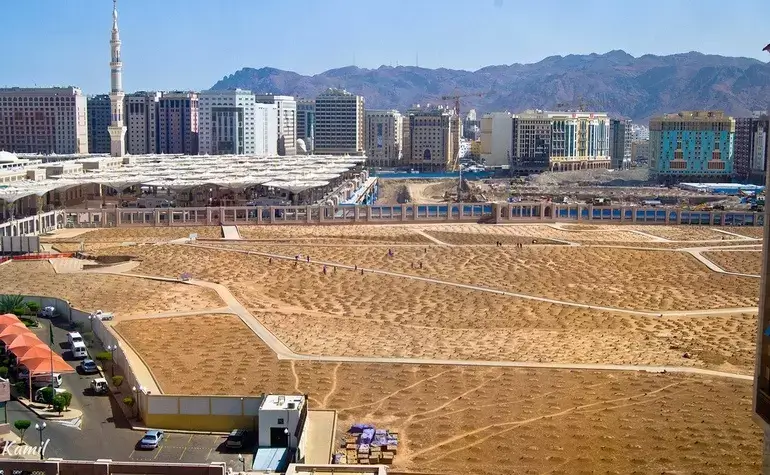
Historically, many graves in Jannat al-Baqi were marked by domes and structures built over centuries. However, these were demolished in 1806 and again in 1926 under the Wahhabi interpretation of Islamic law, which discourages building monuments over graves. Today, Jannat al-Baqi appears as a vast, simple burial ground with unmarked graves, emphasizing equality in death and Islamic humility.
Location of Jannat al-Baqi in Madinah
Jannat al-Baqi is located directly adjacent to the southeastern boundary of Masjid al-Nabawi. The area between the mosque and the cemetery is now a white marble plaza, making it easily accessible for pilgrims staying near the Haram.
Visiting Jannat al-Baqi – Rules, Timings, and Etiquette
Opening Times
The cemetery is generally opened twice daily for men, usually after Fajr and Asr prayers, for short periods that may vary depending on crowd conditions and seasons.
Entry Restrictions and Dress Code
Entry into Jannat al-Baqi is restricted to men only. Women are not permitted to enter but may view the cemetery from the outside. Visitors should dress modestly, maintain silence, and follow security instructions at all times.
What to Recite at Jannat al-Baqi
The Prophet ﷺ taught a specific supplication for visiting graves, beginning with sending peace upon the inhabitants of the cemetery and asking Allah for forgiveness for both the deceased and the living. Loud recitation, photography, or lingering is discouraged.
Spiritual Lessons from Jannat al-Baqi
A visit to Jannat al-Baqi is a powerful reminder of the temporary nature of life, the equality of all humans in death, and the legacy of the earliest Muslims who sacrificed everything for Islam. Standing there connects visitors directly to the formative generations of Islamic history.
Transportation and Ziyarat Planning in Madinah
For pilgrims performing Umrah or visiting Madinah, proper transportation plays a crucial role in planning ziyarat efficiently. Reliable local taxi services can help visitors travel comfortably between hotels, Masjid al-Nabawi, and other important ziyarat locations. Our Umrah taxi and Madinah transport services are designed to support pilgrims with punctual, respectful, and convenient travel, allowing you to focus fully on worship and reflection without logistical stress.
Conclusion
Jannat al-Baqi is far more than a historical cemetery; it is a living chapter of Islamic history resting beside the Prophet’s Mosque. From the graves of the Ahl al-Bayt and Sahaba to its simple, unmarked landscape, it teaches humility, remembrance, and faith. For every visitor to Madinah, understanding and respectfully visiting Jannat al-Baqi deepens the spiritual journey and strengthens the connection to the roots of Islam.

Zeeshan is a professional driver and tour guide who has been living and driving in Saudi Arabia for the past 5 years. With deep knowledge of the roads, landmarks, and Ziyarat locations across Makkah, Madinah, Jeddah, and Taif, he helps pilgrims and travelers enjoy safe, smooth, and well-organized journeys. His experience in Umrah transport, city tours, and airport transfers makes him a trusted expert for visitors exploring Saudi Arabia.