


The Haram boundary represents one of the most sacred spatial concepts in Islam. It defines the divinely protected perimeter surrounding Makkah and Madinah, within which special religious laws apply. These boundaries are not symbolic alone; they are physically marked, historically preserved, and religiously enforced to safeguard the sanctity of Allah’s most honored places.
Understanding the Haram boundary is essential for anyone performing Umrah, Hajj, or even visiting the holy cities, as it directly affects worship, Ihram requirements, and lawful conduct.
What Is the Haram Boundary in Islam?
In Islamic terminology, Haram (حرم) refers to a sanctified area where Allah has declared certain actions impermissible that are otherwise lawful outside it. The Haram boundary is the outer limit of this sacred zone. Once a person crosses into it, they enter a state of heightened spiritual responsibility.
Within the Haram, the land, animals, plants, and even human conduct are under divine protection. This sacredness applies continuously and is not limited to pilgrimage seasons.
Who Established the Haram Boundaries?
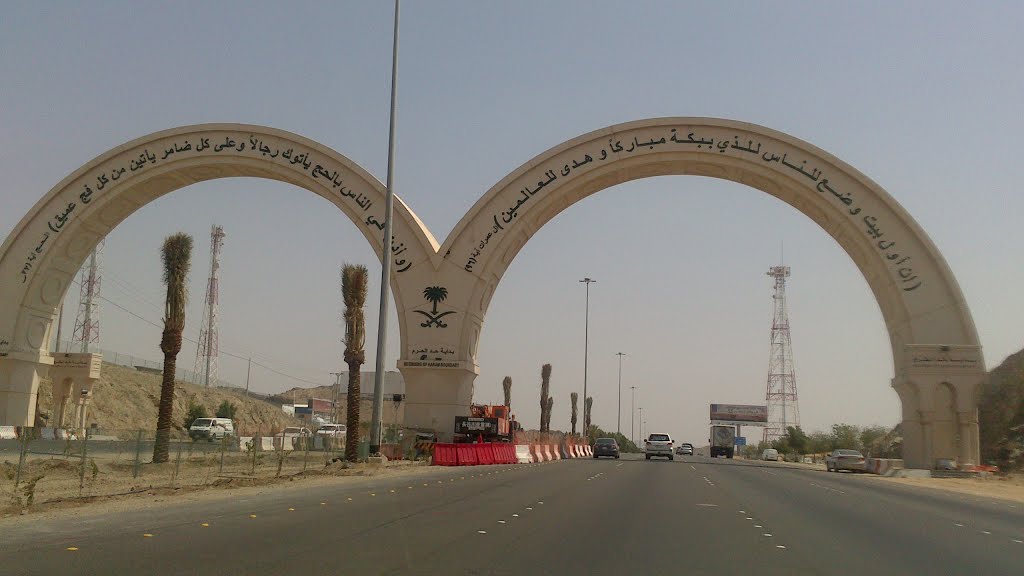
According to authentic Islamic tradition, the original boundaries of the Haram were established by Prophet Ibrahim (عليه السلام) under the guidance of Angel Jibreel (عليه السلام). These limits were later reaffirmed by Prophet Muhammad ﷺ, who sent companions to restore and clearly mark them.
During the caliphate of Umar ibn al-Khattab (رضي الله عنه), the boundaries were renewed and physically reinforced. Since then, the locations have remained unchanged, demonstrating the continuity and preservation of Islamic sacred geography.
The Haram Boundary of Makkah (Hudud al-Haram)
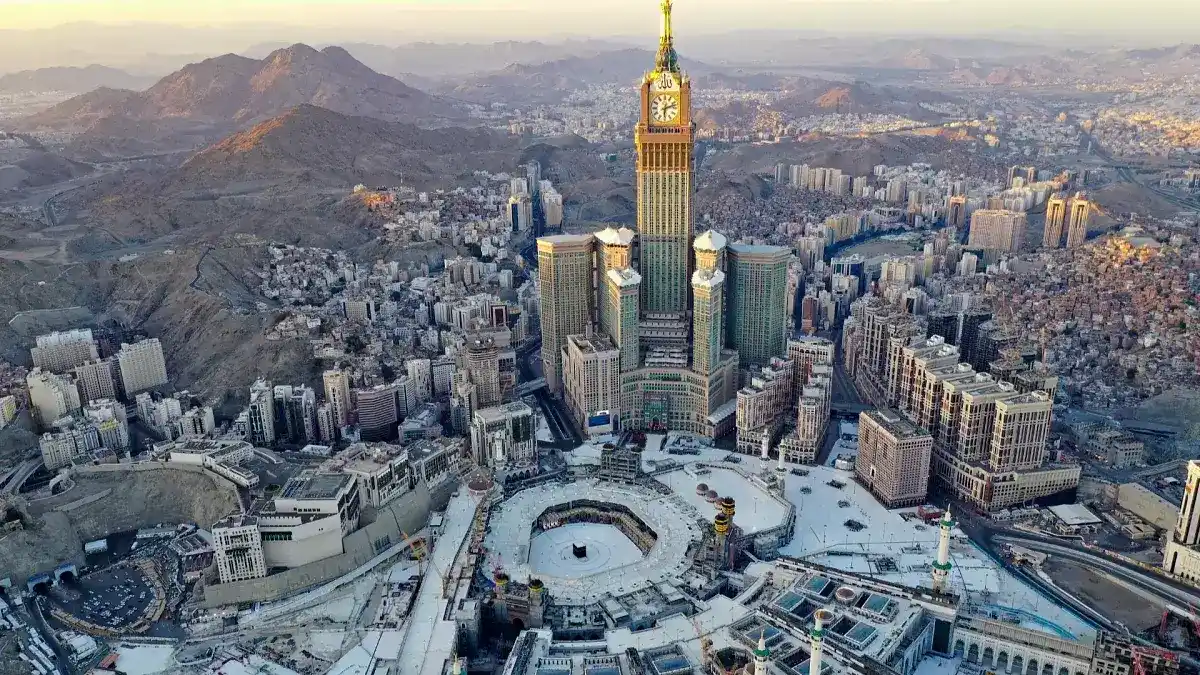
The Makkah Haram covers an area of approximately 550 square kilometers, encircling Masjid al-Haram and the Kaaba. Today, official markers and road signs labeled “Hudud al-Haram” clearly indicate these limits on all major routes leading into the city.
Key Boundary Points Around Makkah
The Haram boundary is defined by specific locations in every direction. The most recognized points include:
- North – Masjid Aisha (At-Taneem): The closest boundary to Masjid al-Haram, approximately 7–8 km away. This is the most commonly used location for pilgrims intending a second Umrah.
- Northeast – Masjid al-Ji’ranah: Located around 14–16 km from the Kaaba, historically significant as a place where the Prophet ﷺ entered Ihram.
- West – Al-Shumaysi (Hudaibiyah): On the Jeddah road, approximately 18–22 km away, associated with the Treaty of Hudaybiyyah.
- South – Adaat Laban (Idhatul Laban): Around 11–12 km toward Yemen.
- Southeast – Wadi Uranah: Near Arafat, approximately 15–20 km away. Importantly, Arafat itself lies outside the Haram.
- East – Wadi Nakhla: Roughly 11 km on the route toward Iraq.
These points collectively form the sacred enclosure of Makkah.
Spiritual Significance and Sacred Rules Inside the Haram
Allah has granted the Haram a unique spiritual status. Worship performed anywhere within its boundaries carries multiplied reward, not limited to Masjid al-Haram alone.
At the same time, specific prohibitions apply inside the Haram. It is forbidden to hunt wild animals, cut or damage trees and plants, carry weapons for aggression, or engage in violence. Violations may require Damm or Sadaqah as expiation, depending on the act.
The Haram is a sanctuary of Amaan (safety), extending protection even to animals and vegetation, emphasizing Islam’s holistic concept of sacredness.
Haram Boundary vs Miqat – Common Confusion Explained
A frequent misunderstanding among pilgrims is equating the Haram boundary with the Miqat. They are not the same.
The Miqat refers to designated stations located outside the Haram, where pilgrims must enter the state of Ihram before proceeding toward Makkah. The Haram boundary, on the other hand, marks the sacred zone itself.
For pilgrims already inside Makkah who wish to perform an additional Umrah, Ihram must be assumed outside the Haram, most commonly at Masjid Aisha (Taneem) due to its proximity and ease of access.
The Haram Boundary of Madinah
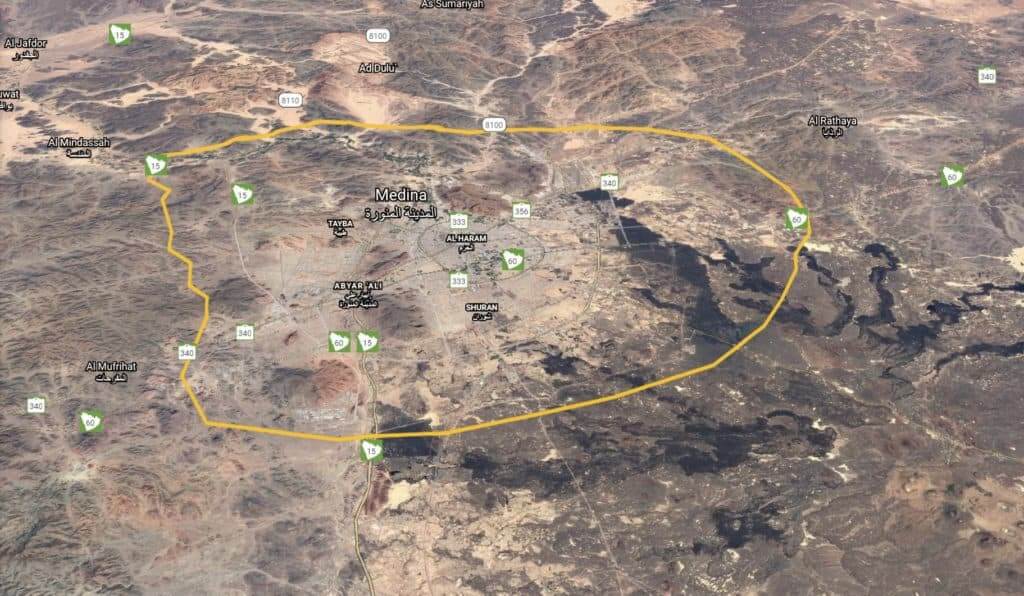
Madinah also holds a protected sanctuary, established by Prophet Muhammad ﷺ. The Haram of Madinah extends between Jabal Ayr in the south and Jabal Thawr in the north.
Within this boundary, similar protections apply to wildlife and vegetation, reinforcing the city’s sacred character. Scholarly opinions differ slightly regarding certain rulings, but the consensus affirms Madinah as a divinely honored sanctuary.
Ihram Rules for Residents and Visitors (Al-Hil Area)
People residing in or traveling through Al-Hil (the area between Miqat and Haram) must enter Ihram before crossing into the Haram if they intend Umrah or Hajj. This applies equally to visitors staying in Makkah hotels and locals performing Umrah.
Understanding these rules prevents common mistakes that may invalidate rites or require expiation.
Travel Convenience for Pilgrims Visiting Haram Boundaries
Visiting Haram boundary points such as Masjid Aisha, Ji’ranah, or Hudaibiyah often requires reliable transportation, especially for elderly pilgrims and families. Many Umrah travelers prefer private, knowledgeable drivers who understand pilgrimage routes and religious requirements.
For pilgrims seeking Umrah taxi services, Haram boundary transfers, or city-to-city travel between Makkah, Madinah, Jeddah, and Ziyarat locations, professional transport services help ensure comfort, punctuality, and peace of mind—allowing pilgrims to focus fully on worship rather than logistics.
FAQs
What are the boundaries of the Haram area?
They are fixed locations surrounding Makkah and Madinah, marked by specific geographic points established since the time of Prophet Ibrahim (AS) and Prophet Muhammad ﷺ.
Is Masjid Aisha a Miqat?
No. Masjid Aisha is a Haram boundary point, not a Miqat. It is used by those inside Makkah to assume Ihram for another Umrah.
Who set the boundaries of the Haram?
The boundaries were originally set by Prophet Ibrahim (AS) under divine guidance and later reaffirmed by Prophet Muhammad ﷺ.
Which Miqat is closest to Masjid al-Haram?
For residents of Makkah, the nearest point to enter Ihram for Umrah is Masjid Aisha, though technically it is a Haram boundary, not a Miqat.
Final Thought
The Haram boundary is not merely a line on a map—it is a sacred trust preserved for centuries. Understanding its limits, rulings, and spiritual weight ensures that every step taken toward the Kaaba or the Prophet’s Mosque is aligned with divine guidance, reverence, and proper worship.
For pilgrims planning Umrah or Ziyarat journeys, combining correct religious knowledge with well-organized travel arrangements creates a smoother, more spiritually focused experience.

Zeeshan is a professional driver and tour guide who has been living and driving in Saudi Arabia for the past 5 years. With deep knowledge of the roads, landmarks, and Ziyarat locations across Makkah, Madinah, Jeddah, and Taif, he helps pilgrims and travelers enjoy safe, smooth, and well-organized journeys. His experience in Umrah transport, city tours, and airport transfers makes him a trusted expert for visitors exploring Saudi Arabia.