


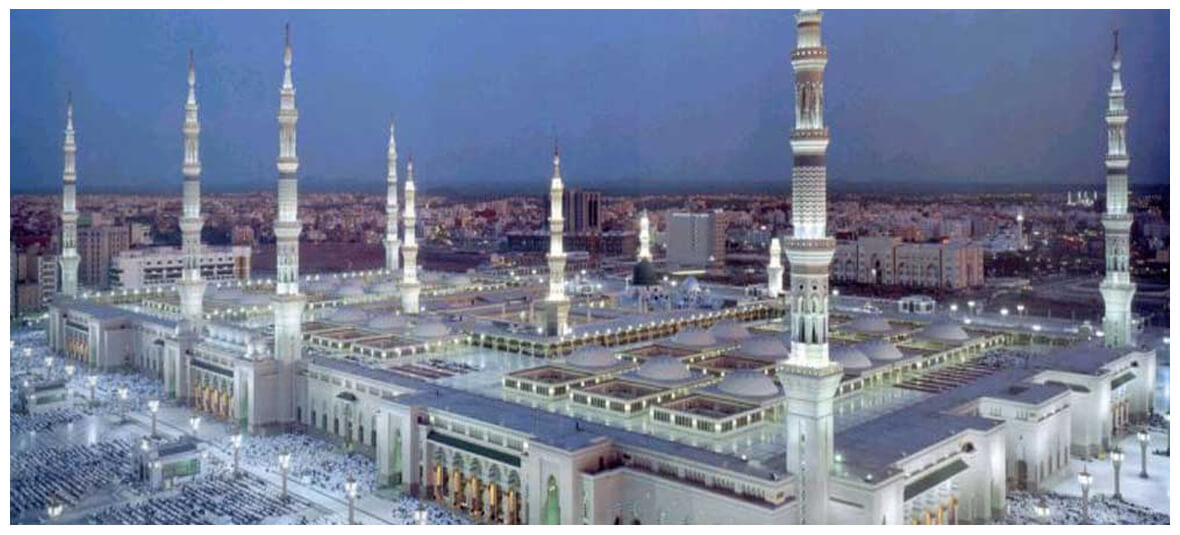
Masjid Al Nabawi, located in the heart of Madinah, Saudi Arabia, is the second holiest mosque in Islam, after Masjid Al Haram in Makkah. More than a monumental structure, it is a living center of Islamic faith, history, scholarship, and devotion. Founded by Prophet Muhammad ﷺ in 622 CE, the mosque stands as one of the most spiritually significant places on Earth, drawing millions of visitors each year during Hajj, Umrah, and independent Ziyarah journeys.
What makes Masjid Al Nabawi truly unique is not only its sacred status, but the way its spiritual legacy, architectural evolution, and historical role intertwine into one continuous narrative spanning over fourteen centuries.
Foundation and Early History of Masjid Al Nabawi
The origins of Masjid Al Nabawi date back to the Hijrah (migration) of Prophet Muhammad ﷺ from Makkah to Madinah. Upon arrival, the Prophet allowed his camel, Al-Qaswa, to move freely until it knelt on a piece of land owned by two orphan boys from Banu Najjar. Despite their wish to donate the land, the Prophet ﷺ ensured it was purchased fairly, establishing a foundational Islamic principle of justice.
The original mosque was built with mud bricks, palm trunks, and an open courtyard, and construction took approximately eight months. Prophet Muhammad ﷺ personally participated in the building process alongside his companions, reinforcing the mosque’s role as a community-centered institution, not merely a place of prayer.
From the beginning, Masjid Al Nabawi served multiple purposes: a place of worship, education, consultation, social welfare, and governance.
Spiritual Importance and Religious Virtues
Masjid Al Nabawi holds unmatched spiritual status within Islam. Authentic narrations report that one prayer offered in Masjid Al Nabawi is rewarded more than one thousand prayers in any other mosque, except Masjid Al Haram.
At the heart of this virtue lies Ar-Rawdah ash-Sharifah, the area between the Prophet’s ﷺ house and his original pulpit. Described by the Prophet ﷺ as “a garden from the gardens of Paradise”, the Rawdah is one of the most sought-after spaces for supplication and prayer. Today, it is recognized by its distinctive green carpets, symbolizing its spiritual distinction within the mosque.
Masjid Al Nabawi is also one of the three mosques for which travel is specifically encouraged in Islam, alongside Masjid Al Haram and Masjid Al Aqsa.
The Prophet’s Chamber and the Green Dome
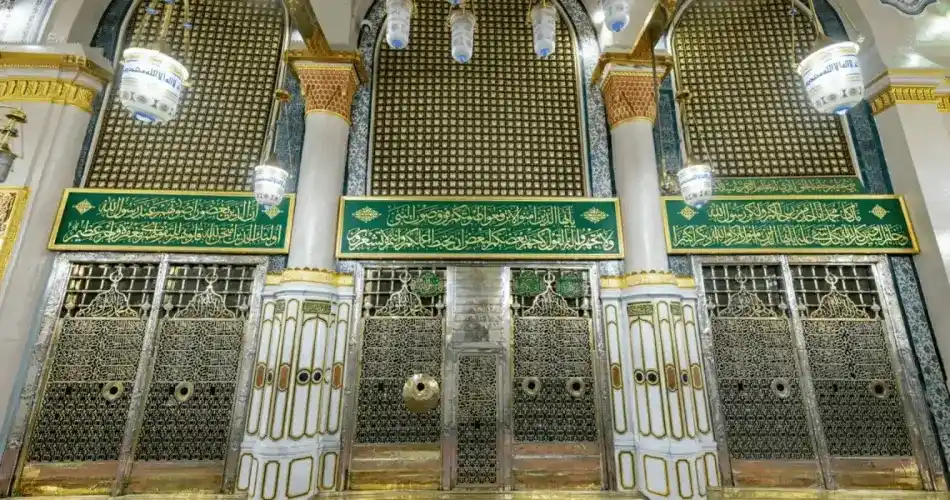
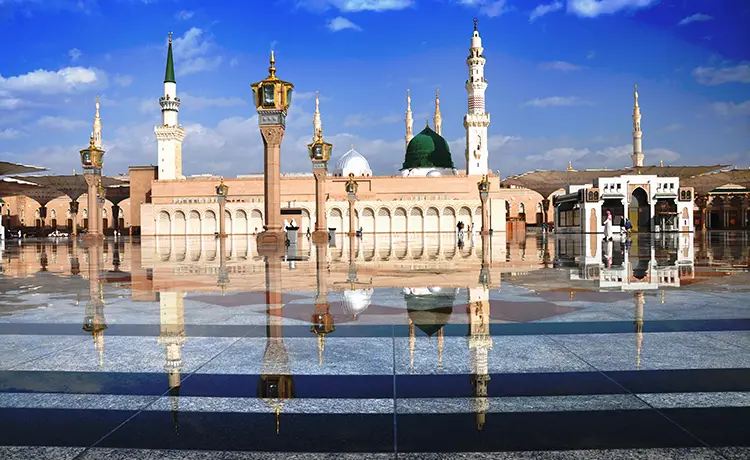
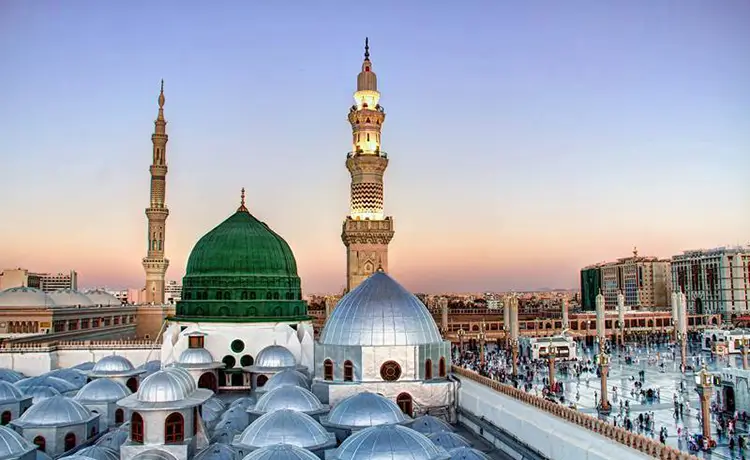
One of the most iconic features of Masjid Al Nabawi is the Green Dome, which marks the location of the Prophet’s ﷺ resting place. Beneath it lie the graves of Prophet Muhammad ﷺ, Abu Bakr As-Siddiq (RA), and Umar ibn Al-Khattab (RA).
The dome itself was not part of the original mosque. It was introduced centuries later and underwent several transformations in color and material before being painted green in 1837 CE during the Ottoman era. Over time, the Green Dome became a global symbol of Madinah and a visual representation of the Prophet’s ﷺ presence in the hearts of Muslims.
Architectural Growth and Expansions Through History
From a modest structure measuring roughly 30 × 35 meters, Masjid Al Nabawi has undergone major expansions under successive Islamic dynasties, including the Umayyads, Abbasids, Mamluks, Ottomans, and modern Saudi leadership.
Today, the mosque spans hundreds of thousands of square meters and can accommodate over one million worshippers, including its vast courtyards. Despite its immense scale, the mosque maintains architectural harmony, blending classical Islamic design with advanced engineering.
Unique Architectural and Technological Features
Masjid Al Nabawi is renowned for its seamless fusion of spirituality and innovation. The mosque’s courtyards are shaded by 250 massive retractable umbrellas, designed to protect worshippers from heat while allowing airflow.
Inside, 27 sliding domes open and close automatically, providing natural ventilation and temperature regulation. The mosque was also the first place in the Arabian Peninsula to be illuminated with electric lights in 1909, highlighting its historical role as a pioneer of modernization.
Multiple mihrabs, towering minarets, intricate marble work, and advanced sound systems further enhance both functionality and spiritual ambiance.
Recommended: Masjid Al Nabawi Map
Rare and Lesser-Known Facts About Masjid Al Nabawi
Masjid Al Nabawi was the center of early Islamic governance and education, hosting delegations, legal matters, and social welfare initiatives. The first adhan was called here by Bilal ibn Rabah (RA), whose voice continues to echo symbolically through Islamic history.
The mosque contains several historical mihrabs, including those associated with the Prophet ﷺ and later caliphs, reflecting its layered architectural heritage. It also houses areas once adjacent to Jannat Al-Baqi, the sacred cemetery of many companions.
Visiting Masjid Al Nabawi Today (Ziyarah Guide)
Visiting Masjid Al Nabawi is a deeply spiritual experience, often paired with Umrah journeys. Pilgrims come to offer salutations upon the Prophet ﷺ, pray in the Rawdah, and reconnect with Islamic history.
For visitors, smooth transportation between Makkah, Madinah, airports, and hotels is essential. Reliable Umrah and taxi services play a vital role in ensuring comfort, punctuality, and peace of mind-especially for families and elderly pilgrims. Many visitors choose professional Umrah taxi services to travel conveniently between holy cities and perform Ziyarah without logistical stress.
Masjid Al Nabawi Compared to Masjid Al Haram
While Masjid Al Haram holds the highest rank in Islam and surrounds the Kaaba, Masjid Al Nabawi carries unparalleled emotional and prophetic significance as the mosque established by Prophet Muhammad ﷺ. Both are central to Islamic worship, yet each fulfills a distinct spiritual role within the pilgrimage journey.
Conclusion
Masjid Al Nabawi is not merely a historical mosque; it is a living embodiment of Islamic faith, leadership, compassion, and continuity. From its humble beginnings to its majestic present form, every element of the Prophet’s Mosque reflects devotion, unity, and reverence. Understanding the facts about Masjid Al Nabawi deepens one’s appreciation of Islam’s spiritual heritage and enriches every visit to Madinah.
FAQs
Why is Masjid Al Nabawi so important in Islam?
Because it was founded by Prophet Muhammad ﷺ, contains his resting place, and offers immense spiritual rewards for prayer.
What is Rawdah ash-Sharifah?
It is the sacred area between the Prophet’s ﷺ house and pulpit, described as a garden from Paradise.
Who is buried under the Green Dome?
Prophet Muhammad ﷺ, Abu Bakr (RA), and Umar (RA).
Can non-Hajj visitors visit Masjid Al Nabawi?
Yes, visiting Masjid Al Nabawi is recommended for all Muslims at any time of the year.
How do pilgrims usually travel to Masjid Al Nabawi?
Most pilgrims use Umrah packages or trusted taxi services for travel between Makkah, Madinah, and airports.

Zeeshan is a professional driver and tour guide who has been living and driving in Saudi Arabia for the past 5 years. With deep knowledge of the roads, landmarks, and Ziyarat locations across Makkah, Madinah, Jeddah, and Taif, he helps pilgrims and travelers enjoy safe, smooth, and well-organized journeys. His experience in Umrah transport, city tours, and airport transfers makes him a trusted expert for visitors exploring Saudi Arabia.