


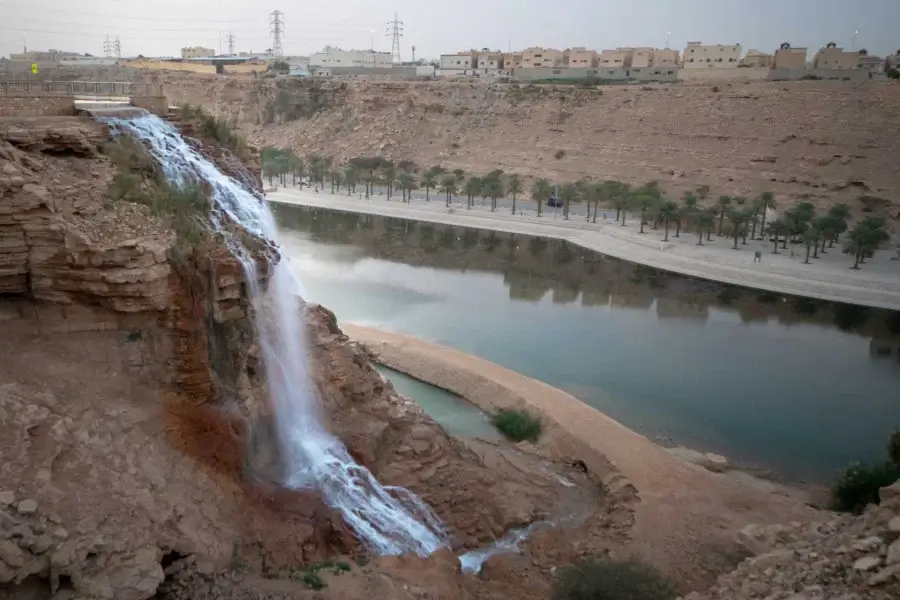
Wadi Hanifah is the natural valley that shaped Riyadh long before the city became the capital of Saudi Arabia. Today it’s a landscaped green corridor of palm groves, walking trails, and quiet water channels running through the western side of the city – and it sits right beside Diriyah, the UNESCO World Heritage birthplace of the Saudi state. For travelers building a Saudi Arabia itinerary that includes Riyadh, Makkah, and Madinah, Wadi Hanifah is one of the easiest, most rewarding half-day stops on the map.
This guide covers everything you need to plan a visit: what Wadi Hanifah actually is, where it’s located, the best sections to explore, how to get there, when to go, and how it fits into a wider pilgrimage or tourism trip across Saudi Arabia.
What Is Wadi Hanifah?
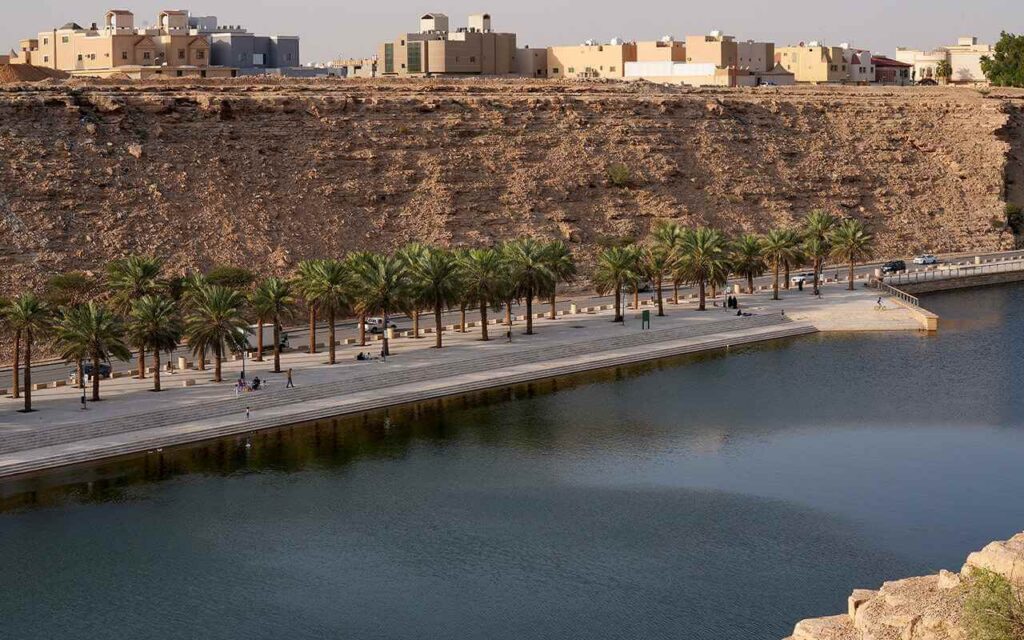
Wadi Hanifah (also spelled Wadi Hanifa) is a seasonal valley – a “wadi,” meaning a dry riverbed that fills with water during rainfall – that runs through the heart of the Najd Plateau in central Saudi Arabia. It stretches roughly 120 to 160 kilometers, including its many tributaries, cutting through Riyadh from the northwest near Al Uyaynah down to the southeast toward Al Kharj.
What makes Wadi Hanifah historically significant is that the earliest capitals of the Saudi state were built along its banks. Diriyah, the capital of the first Saudi state, and later Riyadh itself, both grew from settlements along this valley. Since the mid-1980s, the High Commission for the Development of Riyadh has led a long-running rehabilitation project that transformed sections of the valley into landscaped parks, walking paths, and a functioning water-treatment system, turning what was once a neglected drainage channel into one of the largest open green spaces in the Kingdom.
For a traveler, this means Wadi Hanifah isn’t just a nature spot – it’s a place where Riyadh’s history and its modern urban planning meet in one walk.
Where Wadi Hanifah Is Located
Wadi Hanifah runs along the western edge of Riyadh, passing through several well-known districts:
- Diriyah – near the northern stretch of the valley, home to the UNESCO-listed At-Turaif district
- Diplomatic Quarter – along the central section, known for manicured trails and embassies
- Al Ha’ir – further south, closer to the valley’s more rural stretches
Because the valley is so long, “visiting Wadi Hanifah” usually means picking one section rather than covering the whole thing. Most visitors head to either the Wadi Hanifah Dam Park or the area near Diriyah and At-Turaif, since these sections have the best infrastructure, shade, and nearby attractions.
Top Things to See and Do
Wadi Hanifah Dam Park
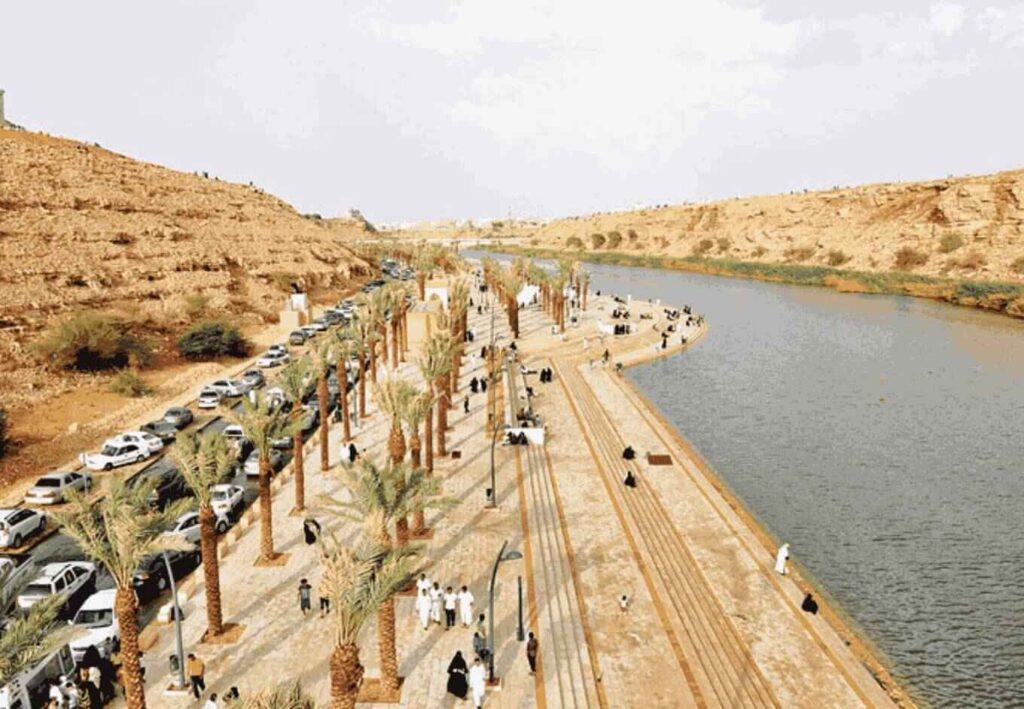
This is the most visited section, located below the Sultana intersection. It has a straight water canal lined with tamarisk, acacia, and vachellia trees, paved paths on both banks, and picnic areas. It’s popular with families on weekends and is one of the most peaceful spots in Riyadh to walk, jog, or simply sit by the water.
At-Turaif Historic District (Diriyah)
Right beside Wadi Hanifah’s northern stretch sits At-Turaif, the former seat of government of the first Saudi state, dating back to the 18th century. Its mud-brick Najdi architecture, including the old treasury and guest palace buildings, is a UNESCO World Heritage Site and one of the best-preserved examples of traditional Najdi construction in the country.
Al-Bujairi District
On the eastern bank opposite At-Turaif, Al-Bujairi was historically the educational and cultural quarter of Diriyah. Today it’s been restored with palm-lined walkways, restaurants, and viewpoints looking across the valley toward At-Turaif – a good spot to combine a meal with the scenery.
Walking and Cycling Trails
Long stretches of Wadi Hanifah have dedicated pedestrian and cycling paths. Locals use these year-round for exercise, and visitors often combine a walk with photography, since the contrast of green palm groves against the desert landscape is distinctive.
Picnic Areas and Green Spaces
Several open parks are distributed along the valley’s banks, planted with tens of thousands of desert trees and palms. These areas are set up for family gatherings, with shaded seating and open lawns.
Stargazing and Evening Visits
Because Wadi Hanifah sits outside Riyadh’s densest urban core, the skies here are noticeably darker than downtown. Evening visits – particularly around the Diriyah section – are popular for cooler temperatures and clearer views of the night sky.
Best Time to Visit Wadi Hanifah
The most comfortable months to visit are October through April, when daytime temperatures are mild enough for extended outdoor walking. Summer (June to September) gets extremely hot during the day, so if you’re visiting between May and September, plan your trip for early morning or after sunset instead.
Weekdays are noticeably quieter than weekends, when the park fills up with local families. If you want a calmer experience, aim for a weekday morning.
How to Get to Wadi Hanifah
From King Khalid International Airport (RUH): Wadi Hanifah is roughly a 30–40 minute drive from the airport, depending on which section you’re visiting and traffic conditions. Licensed airport taxis and ride-hailing apps both operate from the terminals.
From central Riyadh: Most central districts, such as Olaya or Al Murabba, are also around a 30–40 minute drive to the valley, since Wadi Hanifah runs along the western edge of the city.
Getting around once you’re there: The valley stretches for kilometers, so if you plan to see more than one section – for example, the Dam Park and then At-Turaif – you’ll need a car or taxi to move between them rather than walking the whole distance.
Practical Tips for Visiting
- Bring water and sun protection – shade is available in parts of the park, but midday sun in Riyadh is intense for most of the year.
- Wear comfortable walking shoes – the paved trails are long, and gravel sections exist near the more natural stretches.
- Insect repellent is worth packing, especially near the water channels in warmer months.
- Combine your visit with Diriyah – since At-Turaif and Al-Bujairi sit directly on the valley, most travelers treat Wadi Hanifah and Diriyah as one half-day outing rather than two separate trips.
- Photography is welcome in the public park areas, but be respectful around residential districts bordering the valley, such as the Diplomatic Quarter.
- Most park areas are free to enter, though guided tours of Diriyah’s historic sites may carry a separate ticket price.
A Simple Half-Day Wadi Hanifah Itinerary
- Morning (9:00–11:00 AM): Start at the Wadi Hanifah Dam Park for a walk along the canal and photos among the tree-lined paths.
- Late morning (11:00 AM–1:00 PM): Move to At-Turaif District in Diriyah to explore the restored mud-brick palaces and learn the history of the first Saudi state.
- Afternoon (1:00–2:30 PM): Cross to Al-Bujairi for lunch with a view back across the valley toward At-Turaif.
- Optional evening return: If your schedule allows, come back after sunset for cooler air and quieter surroundings.
Connecting Wadi Hanifah to Your Wider Saudi Arabia Journey
Many travelers who visit Wadi Hanifah and Diriyah are combining Riyadh sightseeing with a pilgrimage or extended trip that also includes Makkah, Madinah, or Jeddah. If your itinerary continues on to the holy cities, that’s where Al Maqam Transport comes in.
Al Maqam Transport specializes in private taxi and chauffeur services across the Umrah and Hajj route – including Jeddah Airport transfers, Makkah and Madinah city taxis, intercity travel between the two holy cities, and Ziyarat tours to nearby historical sites. If your trip involves flying into Jeddah after a Riyadh stopover, or you need a reliable private transfer for the Makkah–Madinah leg of your journey, a licensed private driver removes the guesswork of navigating unfamiliar routes, especially during peak Umrah season or Ramadan when demand for transport is high.
Planning a route that includes Riyadh’s historic valley and the holy cities is one of the more rewarding ways to see both the origins of the Saudi state and its spiritual heart in a single trip.
FAQs
1. What is Wadi Hanifah known for?
Wadi Hanifah is known as Riyadh’s largest natural green valley – a rehabilitated wadi with walking trails, water channels, and parks that also borders the UNESCO-listed Diriyah historic district.
2. Is Wadi Hanifah free to visit?
Most sections of the public park, including the Dam Park, are free to enter. Some guided tours or ticketed attractions within Diriyah may charge separately.
3. How long is Wadi Hanifah?
The valley and its tributaries stretch roughly 120 to 160 kilometers through central Saudi Arabia, though the developed park sections visitors typically explore cover a much smaller stretch near Riyadh and Diriyah.
4. How far is Wadi Hanifah from King Khalid International Airport?
It’s approximately a 30–40 minute drive by taxi or private car, depending on traffic and the exact section you’re visiting.
5. What is the best time of year to visit Wadi Hanifah?
October through April offers the most comfortable temperatures. If visiting in summer, go early morning or in the evening to avoid the midday heat.
6. Can you walk through all of Wadi Hanifah in one visit?
No – the valley is too long to cover on foot in a single visit. Most travelers pick one or two sections, such as the Dam Park and the Diriyah/At-Turaif area, and drive between them.
7. Is Wadi Hanifah suitable for families?
Yes. The main park sections have shaded seating, open lawns, and paved paths, making them popular for family picnics and weekend outings.
8. What’s the difference between Wadi Hanifah and Diriyah?
Wadi Hanifah is the natural valley itself. Diriyah is the historic city – including the UNESCO-listed At-Turaif district – that sits directly along the valley’s northern banks. Most visitors see both together.
9. Can I combine a Wadi Hanifah visit with an Umrah trip?
Yes. Travelers commonly add a Riyadh stopover before or after their Umrah journey to Makkah and Madinah, since domestic flights connect Riyadh with Jeddah and Madinah in under two hours.
10. Is there wildlife or vegetation to see at Wadi Hanifah?
The valley is planted with tens of thousands of desert trees and date palms, along with tamarisk and acacia species, and its water channels support birdlife, making it popular for casual birdwatching and photography.
11. Do I need a car to visit, or can I take a taxi?
A private taxi or ride-hailing service is the most practical option, since public transport doesn’t run directly to most park entrances and the valley’s sections are spread out.
12. Is Wadi Hanifah open at night?
Yes, several sections stay accessible into the evening, and night visits are popular in warmer months for cooler temperatures and stargazing.
13. What should I bring for a Wadi Hanifah visit?
Comfortable walking shoes, water, sun protection, and insect repellent are recommended, especially for a full half-day visit that includes walking and picnicking.
14. Are there restaurants near Wadi Hanifah?
Yes, particularly around the Al-Bujairi district in Diriyah, which has a range of dining options overlooking the valley and At-Turaif.
15. How does Wadi Hanifah connect to Riyadh’s history?
The valley’s fertile banks are where the earliest Saudi settlements, including Diriyah, took root – making it the geographic starting point of the Saudi state before Riyadh grew into the modern capital.

Zeeshan is a professional driver and tour guide who has been living and driving in Saudi Arabia for the past 5 years. With deep knowledge of the roads, landmarks, and Ziyarat locations across Makkah, Madinah, Jeddah, and Taif, he helps pilgrims and travelers enjoy safe, smooth, and well-organized journeys. His experience in Umrah transport, city tours, and airport transfers makes him a trusted expert for visitors exploring Saudi Arabia.