


Masjid an-Nabawi – the Prophet’s Mosque ﷺ – is the second holiest site in Islam, and every pilgrim who visits Madinah eventually asks the same question: which gate should I use? With 42 gates (bab) spread across the mosque’s vast complex, knowing the right entrance can save you time, help you reach the Rawdah faster, and make your Ziyarat far more organized and spiritually focused.
This guide walks through the complete history of the gates of Masjid Nabawi, lists every gate by name, number, and location, explains the dedicated women’s entrances, and gives you practical tips for parking and access – everything you need before your visit.
Planning your trip to Madinah? Al Maqam Transport offers private, air-conditioned Madinah Ziyarat Taxi services with drivers who know every gate, parking zone, and access point around Masjid Nabawi – so you can focus on ibadah, not logistics.
A Brief History of the Gates of Masjid Nabawi
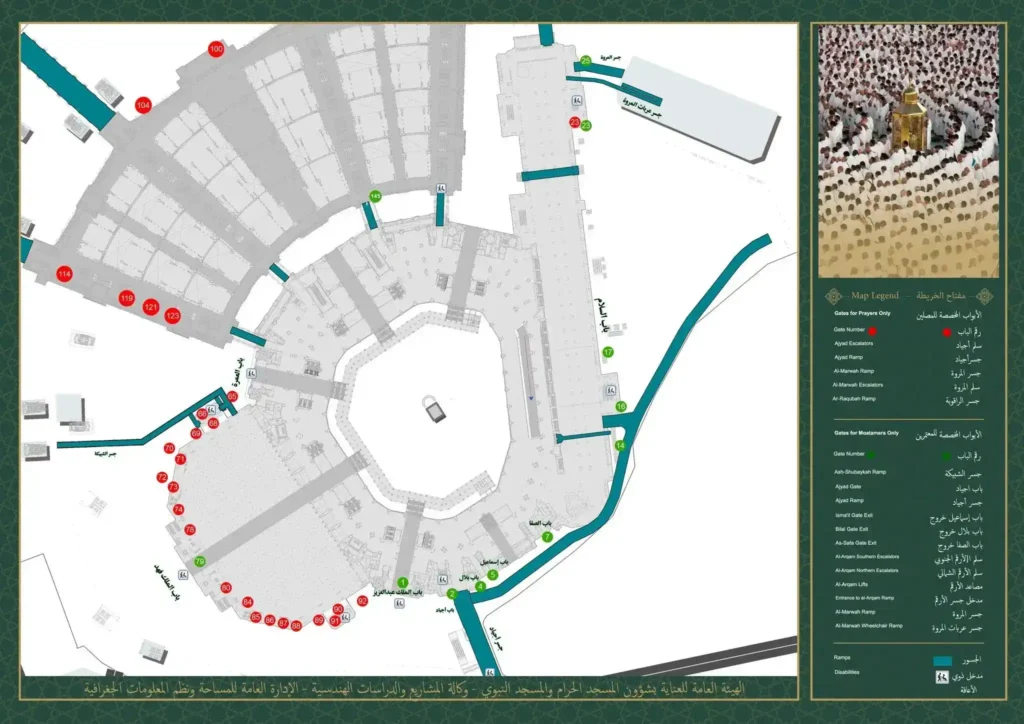
When Prophet Muhammad ﷺ and his companions arrived in Madinah in 622 CE (1 Hijri), the original mosque was a simple structure with just three gates:
- Bab ar-Rahmah (Gate of Mercy) – on the western wall, installed by the Prophet ﷺ himself
- Bab Uthman, also called Bab Jibril in later periods – used by the Prophet ﷺ to enter the mosque
- Bab Atikah, later known as Bab an-Nabi – named after its location near the house of Atikah bint Abdullah bin Yazeed
During the expansion carried out by the second caliph, Umar ibn al-Khattab (RA), around 18 Hijri (640 CE), the number of gates grew, and Bab as-Salam was established as one of the mosque’s primary entrances. Centuries later, Ottoman Sultan Abdul Majeed added further gates during his renovation. The most significant transformation, however, came with the Saudi expansions – first under King Saud, then the major expansion under King Fahad bin Abdulaziz – which brought the total number of gates to 42, each one numbered, signposted in Arabic and English, and connected to underground parking zones.
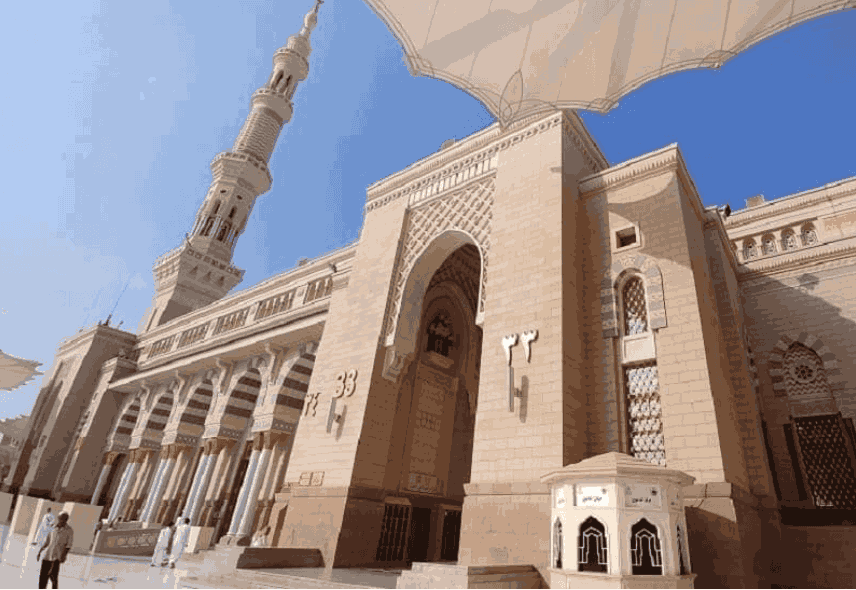
The craftsmanship of these doors is remarkable: each panel is built from roughly 1,600 pieces of teak wood joined with brass frames, and the brasswork is plated in 23-carat gold before polishing. Some door panels weigh as much as 2,500 kilograms, yet are balanced so precisely that they open with minimal effort.
Complete List of the 42 Gates of Masjid Nabawi
Below is a breakdown of the most significant gates, organized by their historical, spiritual, and practical importance.
Gate 1 – Bab as-Salam (Gate of Peace)
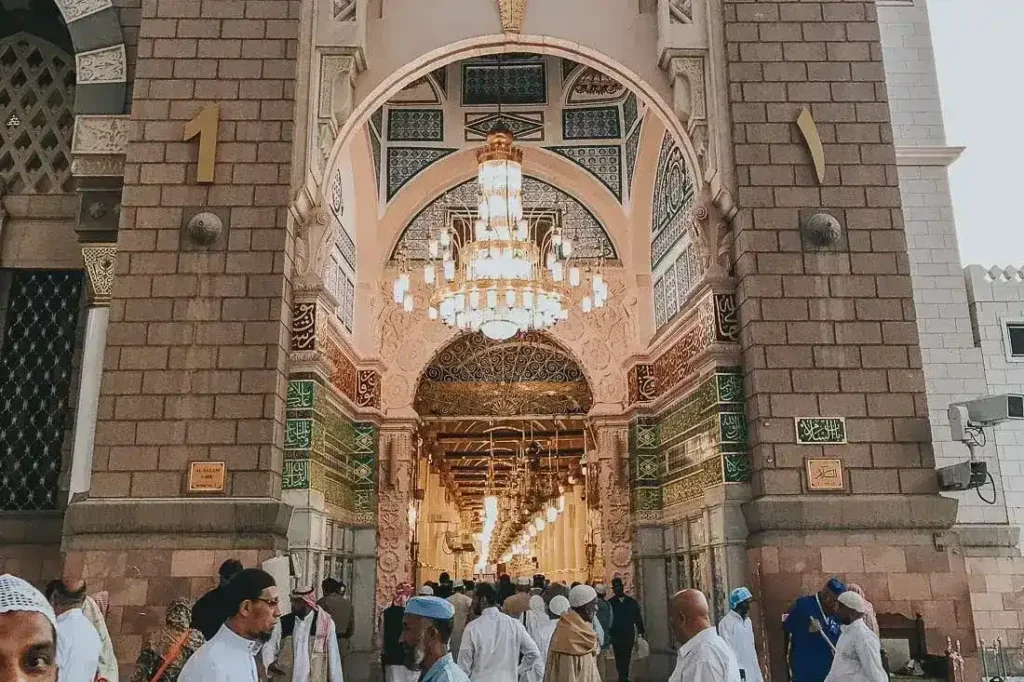
Located on the western wall in the north-western corner of the Ottoman prayer hall, Bab as-Salam is the most decorated gate of the mosque and the traditional entry point for men wishing to greet the Prophet ﷺ at the Rawdah. Built by Caliph Umar ibn al-Khattab (RA) in 18 Hijri, it has been relocated several times during expansions but remains one of the busiest and most spiritually significant gates. Nearest underground parking: 2A & 2B.
Gate 2 – Bab Abu Bakr Siddique
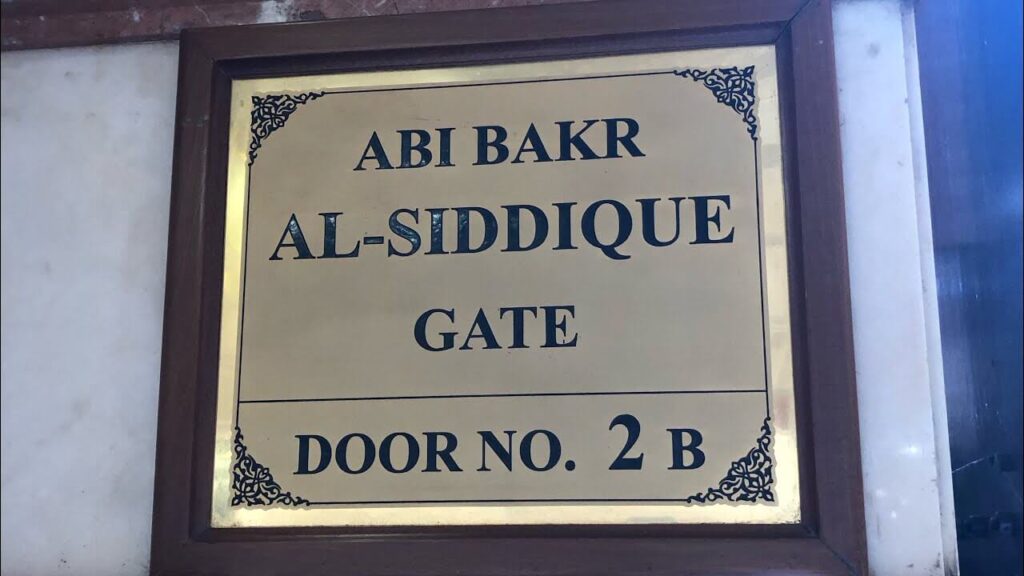
Named after the Prophet’s ﷺ closest companion and the first caliph of Islam, this smaller gate – originally called “Khukha Abu Bakr” – sits just north of Bab as-Salam. Nearest parking: 2A & 2B.
Gate 3 – Bab ar-Rahmah (Gate of Mercy)
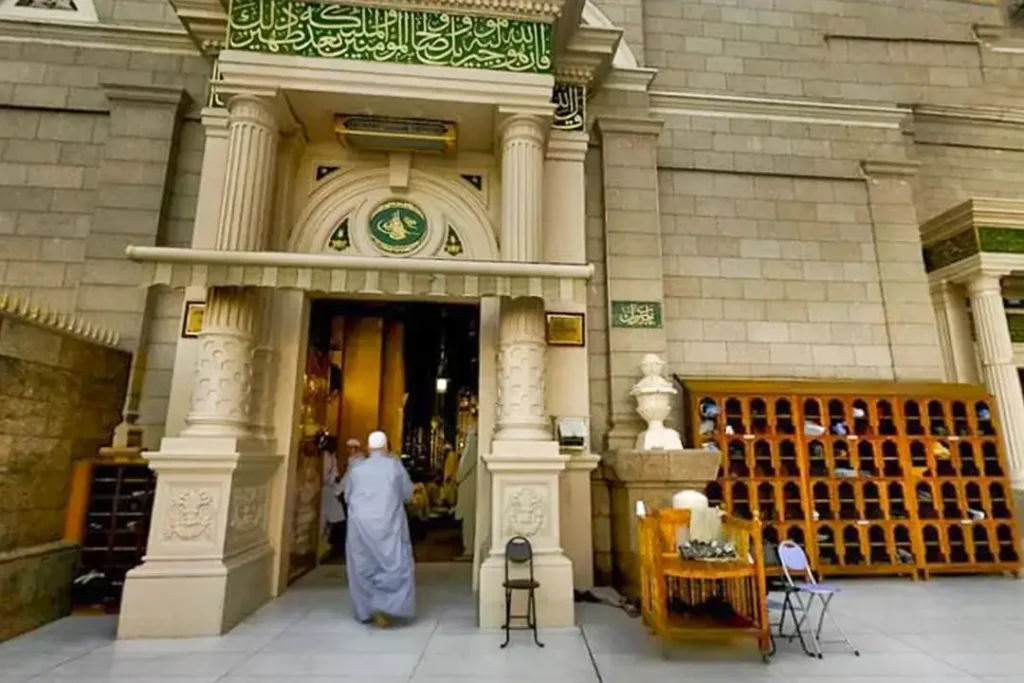
One of the oldest gates in the mosque, originally installed during the Prophet’s ﷺ lifetime. Also historically known as Bab Atikah, referencing its position near the house of Atikah bint Abdullah bin Yazeed.
Gate 4 – Bab al-Hijrah
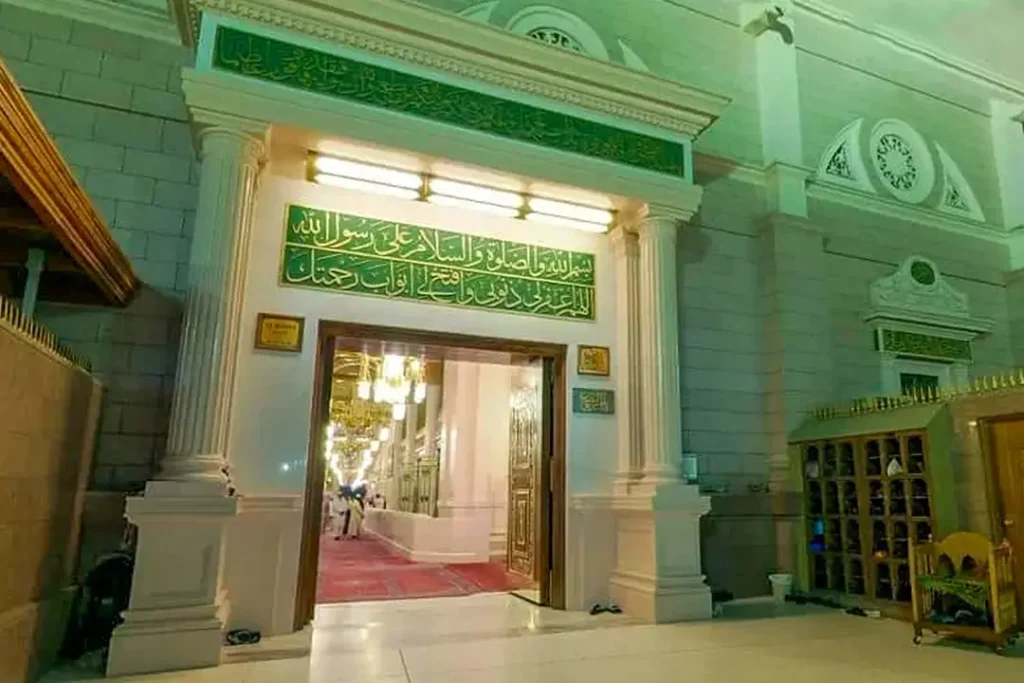
Commemorating the Prophet’s ﷺ migration (Hijrah) from Makkah to Madinah, this double-arched gate sits on the southern side. Visitors entering here pass the well-known Hijri Clock, which chimes at sunset – a helpful marker for time-conscious pilgrims.
Gate 5 – Bab Quba
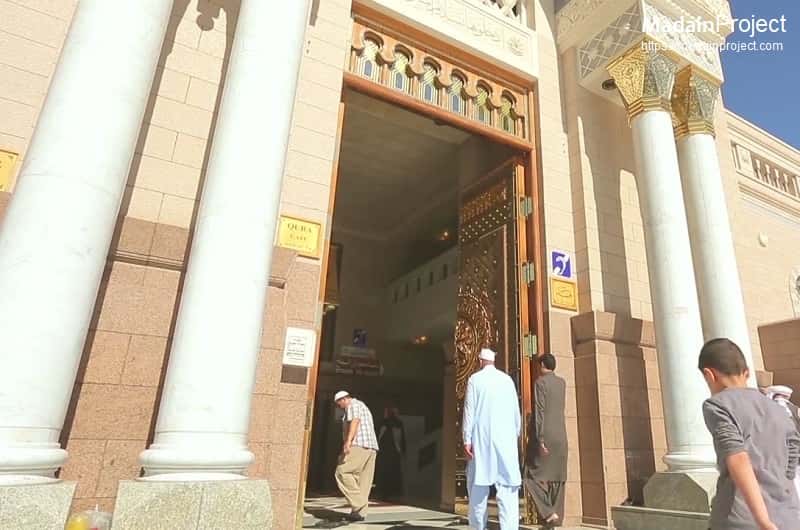
Named after the village of Quba, roughly 5 km south of the mosque and home to the first mosque built in Islam. This triple-arched gate sits on the southern wall within the King Fahad expansion block. Nearest parking: 3A & 3B.
Gates 6 – Rooftop Access Gate
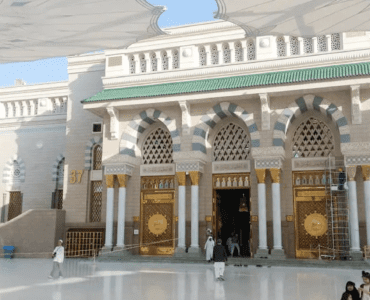
A distinctive entrance offering escalator access to the rooftop prayer area of Masjid Nabawi – useful during peak crowd hours or when ground-floor space is limited. Nearest parking: 4A, 4B, 5A, 5B.
Gates 7, 8, 9 – Bab Malik as-Saud
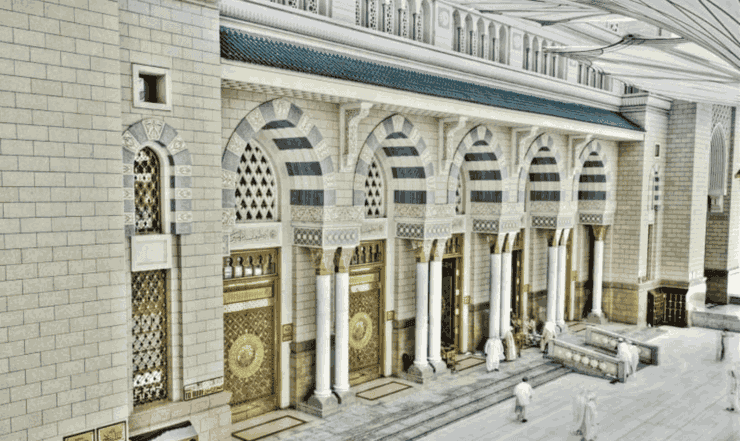
Named after King Saud bin Abdulaziz, who commissioned the first Saudi expansion of the mosque. This gate complex has seven portals (two large, five small) and one of the six tallest minarets in the mosque, located on its southern flank. Nearest parking: 6A & 6B.
Gate 10 – Bab Imam Bukhari
Positioned on the western flank between Bab Malik as-Saud and Bab al-Majeedi, this gate is named after the renowned hadith scholar Imam al-Bukhari and provides access to the mosque’s library (Maktabah Masjid Nabawi).
Gate 11 – Bab al-Aqeeq
Named after Wadi al-Aqeeq, a valley along Madinah’s western boundary once home to several of the Prophet’s ﷺ companions. Nearest parking: 7A & 7B.
Gates 12, 13, 14 – Bab al-Majeedi
Located on the north-western flank, named after Ottoman Sultan Abdul Majeed. Built during the first Saudi expansion and later incorporated into the second expansion under King Fahad.
Gate 15 – Bab Uhud
One of the largest gates of Masjid Nabawi, located on the northern wall, named after the historic Battle of Uhud.
Gates for Bab Jibril
Named after Angel Jibril (Gabriel), who is believed to have frequently used this entrance during the era of revelation. Located on the northern side near King Abdul Majeed Road, its relatively modest size reflects the mosque’s earlier structural layout.
Bab al-Baqi (Gate 41)
Situated on the eastern side, Bab al-Baqi faces the historic Jannat al-Baqi cemetery – the resting place of many of the Prophet’s ﷺ family members and companions. This is the preferred gate for pilgrims planning a Ziyarat to the cemetery after prayer.
Bab Uthman ibn Affan & Bab an-Nisa (Women’s Gates)
Located on the northern and eastern sides respectively, these gates give direct access to women-only prayer halls and are staffed to guide female worshippers safely.
Bab al-Umrah
Positioned for convenient access to parking and transportation points, this gate is especially useful for pilgrims arriving specifically for Umrah rituals.
Bab Malik Abdul Aziz
Named after King Abdul Aziz, founder of modern Saudi Arabia. One of the largest gates, featuring five small and two large portals plus a minaret on its southern side, offering direct access to Madinah’s southern commercial district – practical for pilgrims arriving from southern highways.
(Note: The remaining numbered gates – including Bab Imam Muslim, Bab Abu Dhar al-Ghifari, Bab Ali ibn Abi Talib, and others – follow similar naming conventions honoring caliphs, companions, and scholars. Signage in Arabic and English at each entrance clearly displays the gate number and name.)
Men’s Gates vs Women’s Gates: Full Breakdown
Masjid Nabawi designates specific gates for men and women to ensure comfort, privacy, and organized crowd flow.
Men’s Gates (30 total): Gate numbers 1, 2, 3, 4, 5, 6, 7, 8, 9, 10, 11, 15, 16, 17, 18, 19, 20, 21, 22, 31, 32, 33, 34, 35, 36, 37, 38, 39, 40, and 41.
Women’s Gates (11 total): Gate numbers 12, 13, 14, 23, 24, 25, 26, 27, 28, 29, and 30 – including the well-known Bab Uthman ibn Affan and Bab an-Nisa, both located on the northern and eastern sides. These gates lead directly into women-only prayer halls, with dedicated staff present to assist.
Which Gate Should You Use? Quick Reference
| Purpose | Recommended Gate |
|---|---|
| Visiting the Rawdah / Prophet’s ﷺ resting place | Bab as-Salam (Gate 1) or Bab Jibril |
| Visiting Jannat al-Baqi cemetery | Bab al-Baqi (Gate 41) |
| Women worshippers | Bab Uthman ibn Affan / Bab an-Nisa |
| Less crowded prayer space | Northern gates (Bab Malik Fahd area) |
| Rooftop access | Gate 6 (escalator access) |
| Arriving specifically for Umrah | Bab al-Umrah |
| Arriving from southern highways | Bab Malik Abdul Aziz |
Practical Tips for Visiting Masjid Nabawi’s Gates
- Check the map before you go. Each gate connects to a specific underground parking zone (e.g., 2A/2B, 3A/3B, 6A/6B), so knowing your entry gate helps you plan parking or drop-off in advance.
- Visit during off-peak hours. Early mornings and late evenings are quieter, especially around busy gates like Bab as-Salam.
- Follow signage or ask mosque staff. Every gate is clearly marked in Arabic and English, and staff are always available to help pilgrims – particularly women locating their designated entrances.
- Prepare for security checks. Standard security screening applies at all gates; keep prohibited items out of your bag to avoid delays.
- Coordinate transport in advance. During Ramadan, Hajj season, and Islamic holidays, traffic and pedestrian zones around the mosque become extremely busy. Booking a private Madinah Ziyarat Taxi in advance ensures your driver knows exactly which gate is closest to your hotel and prayer priorities, avoiding unnecessary walking or confusion.
Plan Your Madinah Ziyarat with Al Maqam Transport
Understanding the gates of Masjid Nabawi is only part of planning a smooth, respectful visit. Getting to and from the mosque comfortably – especially with family, elderly members, or during peak pilgrimage season – matters just as much.
Al Maqam Transport provides private, air-conditioned Madinah Ziyarat Taxi services with experienced, Madinah-based drivers who know the mosque’s gate numbers, nearby parking zones, and the fastest routes from your hotel. Our services include:
- Door-to-door hotel pickup and drop-off near Masjid Nabawi’s central gates
- Private Ziyarat tours covering Masjid Nabawi, Quba, Uhud, and Jannat al-Baqi
- Makkah to Madinah and Madinah to Makkah private taxi transfers
- Jeddah Airport to Madinah transfers with meet & greet
- Fixed, transparent pricing with instant WhatsApp booking
Whether you’re visiting for the first time or returning for another blessed Ziyarat, Al Maqam Transport ensures you reach the right gate, at the right time, with dignity and ease.
FAQs
How many gates does Masjid Nabawi have?
Masjid Nabawi has a total of 42 gates providing access to the main mosque building, in addition to gates within the outer perimeter walls surrounding the plazas.
Which gate is closest to the Rawdah?
Bab as-Salam (Gate 1) and Bab Jibril are the closest and most commonly used gates for pilgrims heading to the Rawdah and the Prophet’s ﷺ resting place.
Which gate should women use to enter Masjid Nabawi?
Women should use the designated ladies’ gates, primarily Bab Uthman ibn Affan and Bab an-Nisa, both leading directly to women-only prayer halls.
Is there parking near each gate?
Yes. Each gate is linked to a nearby underground parking zone (labeled A/B sections), making it easier to plan drop-off or self-parking based on your entry point.
What is the best gate for visiting Jannat al-Baqi?
Bab al-Baqi (Gate 41), located on the eastern side, provides the most direct access to the historic Jannat al-Baqi cemetery.
Do I need to book transport to reach Masjid Nabawi?
While the mosque is centrally located and walkable from many hotels, booking a private Madinah Ziyarat Taxi is recommended for families, elderly pilgrims, or those visiting multiple Ziyarat sites in one trip.

Zeeshan is a professional driver and tour guide who has been living and driving in Saudi Arabia for the past 5 years. With deep knowledge of the roads, landmarks, and Ziyarat locations across Makkah, Madinah, Jeddah, and Taif, he helps pilgrims and travelers enjoy safe, smooth, and well-organized journeys. His experience in Umrah transport, city tours, and airport transfers makes him a trusted expert for visitors exploring Saudi Arabia.