


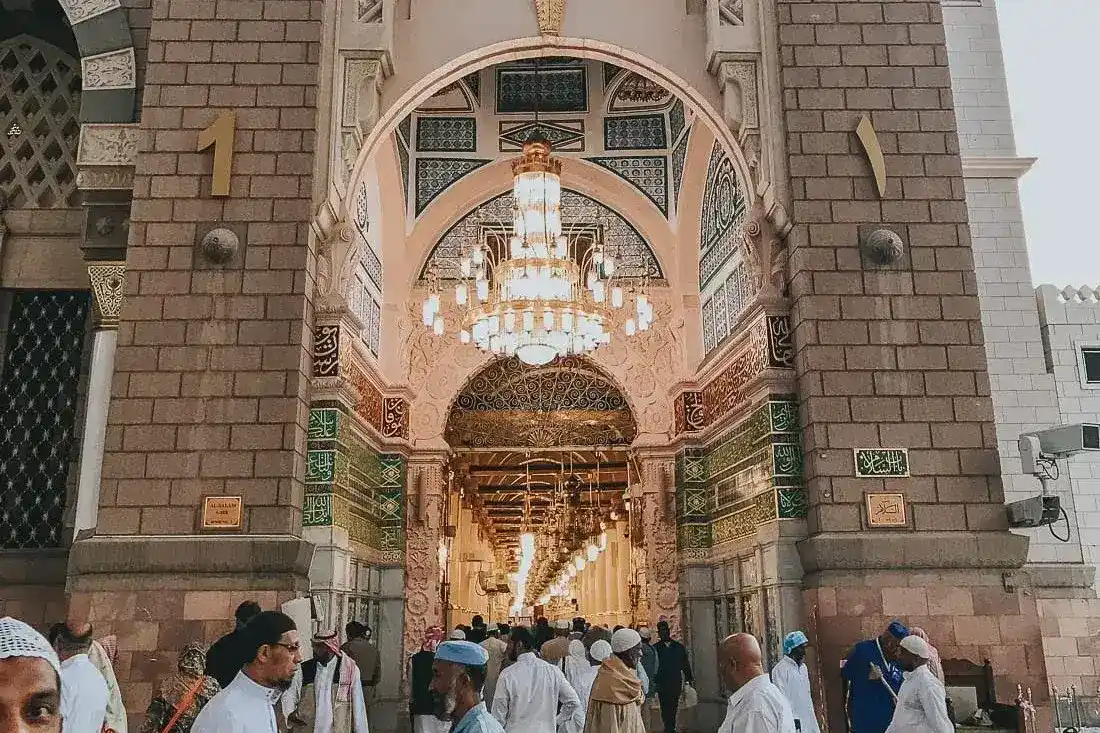
Al Salam Gate, also known as Bab as-Salam (Gate of Peace), is one of the most historic and spiritually significant entrances of Al-Masjid an-Nabawi in Madinah. Designated as Gate No. 1 in the current layout, it is traditionally associated with visitors performing Ziyārah and offering salutations to the Prophet Muhammad ﷺ.
For centuries, pilgrims have entered through this gate on their way to the Rawdah and the blessed chamber of the Prophet ﷺ.
What Is Al Salam Gate and Where Is It Located?
Al Salam Gate is situated on the western side of the Prophet’s Mosque. It provides direct access to the Ottoman prayer hall-the oldest preserved section of the mosque and aligns historically with the route leading toward Rawdah ash-Sharifah.
Walking through this entrance traditionally guides visitors toward Rawdah ash-Sharifah, the area described in hadith as a garden from the gardens of Paradise. From there, pilgrims proceed to offer salam near the resting place of the Prophet ﷺ and his companions.
The usual exit after completing Ziyārah is through Bab al-Baqi, located on the eastern side of the mosque.
Historical Background of Bab as-Salam
The origins of Al Salam Gate trace back to approximately 18 AH (640 CE), during the caliphate of Umar ibn al-Khattab. At that time, it formed part of the western wall of the expanding mosque.
As the mosque underwent successive enlargements, the gate was shifted westward while maintaining alignment with its original position. During the Mamluk and Ottoman eras, major architectural additions were made. The Ottoman Sultan Sultan Abdul Majid I installed the current wooden door panels in 1271 AH (1855 CE), and the structure was further refined during later Ottoman and Saudi expansions.
In the modern era, the first Saudi expansion under King Abdulaziz and King Saud formalized its numbering as Gate No. 1, reinforcing its importance as a principal entry point.
Architectural Features of Al Salam Gate
Al Salam Gate is one of the tallest and most visually prominent gates of the mosque.
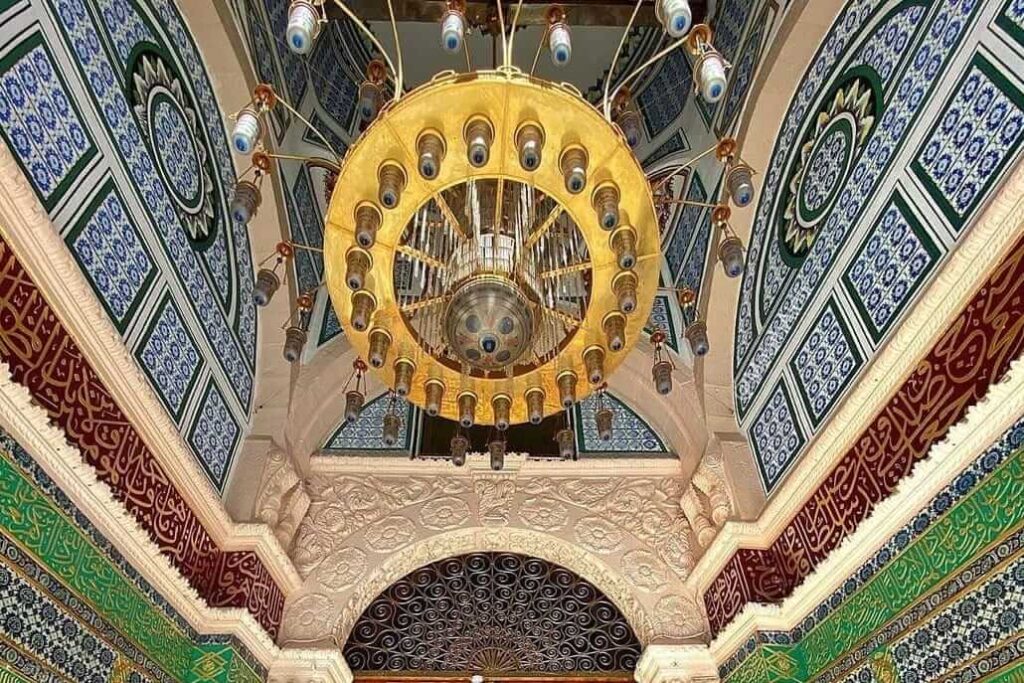
The façade features a dominant central arch framed by cascading arches, marble cladding, and intricate geometric patterns. Inside, the ceiling retains a domed structure, and Quranic verses adorn the interior walls in elegant Arabic calligraphy.
The heavy wooden doors, dating to the mid-19th century Ottoman period, are decorated with bronze studs and gilded details.
Above the gate stands the Bab as-Salam minaret, originally constructed in the 14th century during the Mamluk era and later renovated by Ottoman rulers. It remains the oldest and shortest minaret of the Prophet’s Mosque, preserving distinctive Ottoman design elements.
Behind the gate, the iconic Green Dome rises above the Prophet’s chamber, marking one of the most recognized landmarks in Madinah.
Spiritual Significance and the Ziyārah Route
Al Salam Gate is symbolically associated with entering in peace and offering peace. Historically, pilgrims performing Ziyārah would enter through this gate with the intention of sending salutations upon the Prophet ﷺ.
After entering, visitors proceed toward Rawdah, pray two rak‘āt (if space permits), and then move respectfully toward the chamber of the Prophet ﷺ and his companions Abu Bakr (RA) and Umar (RA).
The spiritual focus here is humility, quiet reflection, and sincere du‘ā-not sightseeing or photography.
How to Visit Rawdah Through Al Salam Gate (Step-by-Step)
Access to Rawdah is regulated and requires prior booking through the official Nusuk app.
First, secure a confirmed time slot in the app. Without this permit, entry to the Rawdah area is not allowed. Arrive early and proceed to the western side of the mosque near Gate 1. Security personnel will verify your QR code before directing you to designated waiting areas.
Upon entry, step in with your right foot and recite the du‘ā for entering the mosque. If the flow allows, perform Tahiyyat al-Masjid. Follow the crowd management system calmly and maintain a low voice throughout.
During peak seasons such as Ramadan or Hajj, expect significant congestion and strictly follow the guidance of mosque officials.
Guide for Women Pilgrims
Women typically access Rawdah through designated entrances at specific times allocated by mosque authorities. Commonly assigned gates include those near Bab Uthman bin Affan (Gate 25), depending on current crowd arrangements.
Women are generally not routed through Al Salam Gate for Rawdah access. Checking updated guidance in the Nusuk app before arrival is essential.
Best Time to Visit Al Salam Gate
The area around Bab as-Salam experiences heavy foot traffic year-round. Early morning after Fajr and late evening after Isha are often comparatively calmer.
During Ramadan and Hajj, movement intensifies dramatically, and entry procedures may change. Planning ahead and aligning your transport with your Rawdah slot ensures a smoother experience.
How to Reach Al Salam Gate
From Prince Mohammad bin Abdulaziz International Airport, the mosque is approximately 20–25 minutes by car, depending on traffic.
If driving, the underground parking areas beneath the western courtyards (often labeled 2A and 2B) provide relatively close access to Gate 1. From there, you walk across Sahat Bab al-Salam, the shaded plaza featuring the mosque’s iconic retractable umbrellas.
For pilgrims arriving from Makkah, Jeddah, or other cities, pre-arranging a reliable private taxi ensures timely arrival-especially when you have a fixed Rawdah appointment. Our Umrah and city-to-city taxi service offers comfortable transfers between Madinah airport, hotels, and the Prophet’s Mosque, as well as routes like Makkah–Madinah and Madinah–Jeddah, helping you focus on your worship without transport stress.
Facilities Around Bab as-Salam Plaza
Sahat Bab al-Salam is an open courtyard space on the southern and western side of the mosque. Large shaded umbrellas provide comfort during hot weather. Nearby you will find ablution facilities, security checkpoints, and organized pedestrian pathways guiding visitors toward designated entrances.
Conclusion
Al Salam Gate is more than an architectural feature-it represents a centuries-old tradition of entering the Prophet’s Mosque with peace and reverence. From its origins during the era of Umar ibn al-Khattab to Ottoman craftsmanship and modern Saudi expansions, Bab as-Salam remains deeply connected to the spiritual journey of Ziyārah.
By planning your Rawdah visit through the Nusuk app, arriving at the correct time, and arranging reliable transportation, you can ensure your visit to Al Salam Gate is organized, peaceful, and spiritually meaningful.
FAQs
What is Al Salam Gate in Madinah?
Al Salam Gate (Bab as-Salam) is Gate No. 1 of Masjid an-Nabawi and a historic entrance traditionally used by pilgrims performing Ziyārah.
Do I need a permit to enter through Al Salam Gate?
You may enter the mosque freely, but access to Rawdah requires a confirmed booking via the Nusuk app.
Can women use Al Salam Gate to visit Rawdah?
Women are usually assigned different gates and specific time slots for Rawdah visits.
What is the best time to visit Al Salam Gate?
Early morning after Fajr or late evening after Isha is generally less crowded, though peak seasons remain busy.
How far is Al Salam Gate from Madinah Airport?
Approximately 20–25 minutes by car from Prince Mohammad bin Abdulaziz International Airport, depending on traffic.

Zeeshan is a professional driver and tour guide who has been living and driving in Saudi Arabia for the past 5 years. With deep knowledge of the roads, landmarks, and Ziyarat locations across Makkah, Madinah, Jeddah, and Taif, he helps pilgrims and travelers enjoy safe, smooth, and well-organized journeys. His experience in Umrah transport, city tours, and airport transfers makes him a trusted expert for visitors exploring Saudi Arabia.