


The Rawdah Mubarak in Madinah is one of the most spiritually honored places in Islam. Located inside Masjid an-Nabawi in Madinah, it is described by the Prophet ﷺ as a garden from the gardens of Paradise (Riyad al-Jannah). For millions of Muslims visiting Saudi Arabia for Hajj or Umrah, praying in the Rawdah is a deeply cherished moment of their spiritual journey.
This guide explains its history, virtues, burial chamber, 2026 entry rules, and how to plan your visit properly.
What Is Rawdah Mubarak (Riyad al-Jannah)?
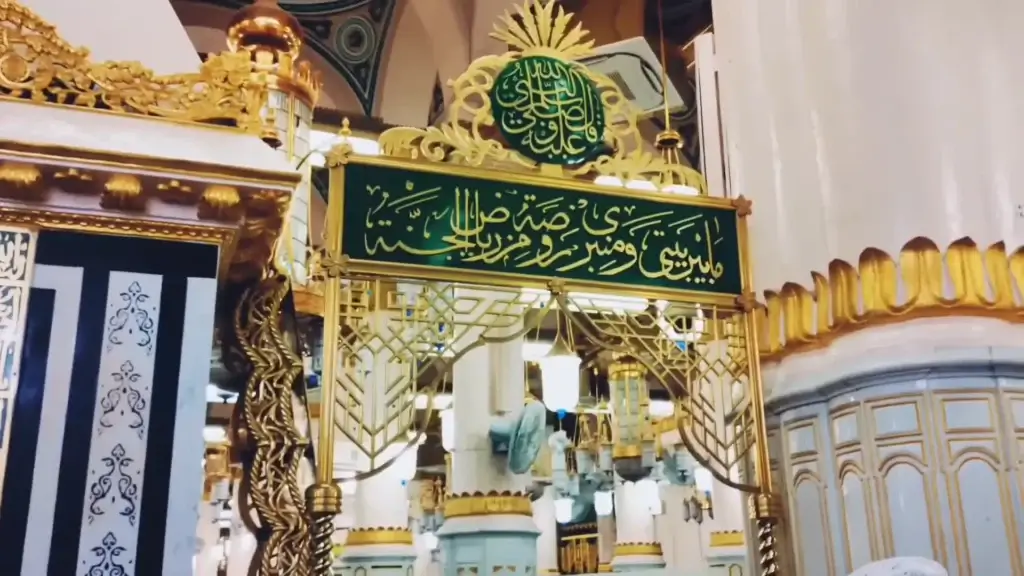
Rawdah Mubarak refers to the blessed area between the house of the Prophet ﷺ and his pulpit (minbar). The Messenger of Allah ﷺ said:
“The area between my house and my pulpit is one of the gardens of Paradise.” (Bukhari)
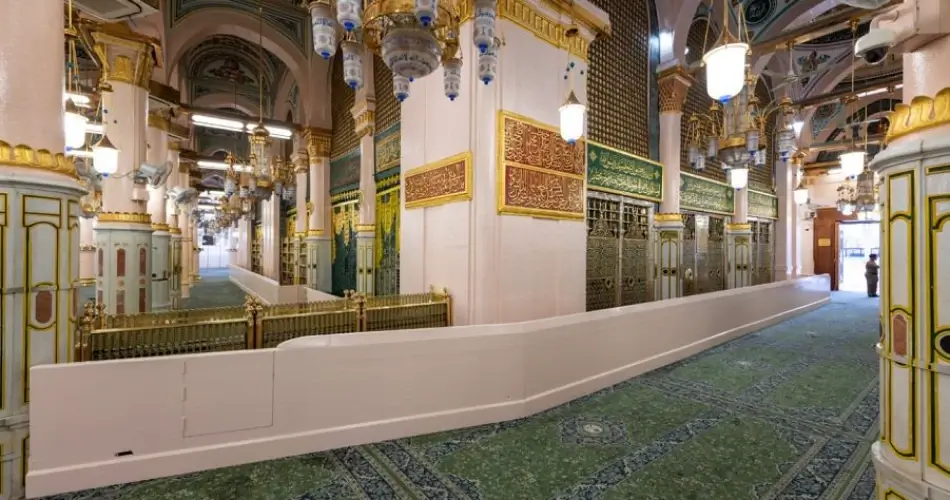
Today, this area is easily recognized by its distinctive green carpet, which differentiates it from the rest of the mosque.
It lies adjacent to the Sacred Chamber (Hujrah Sharifah), which contains the graves of the Prophet ﷺ and his two closest companions.
The Sacred Chamber and Who Is Buried There
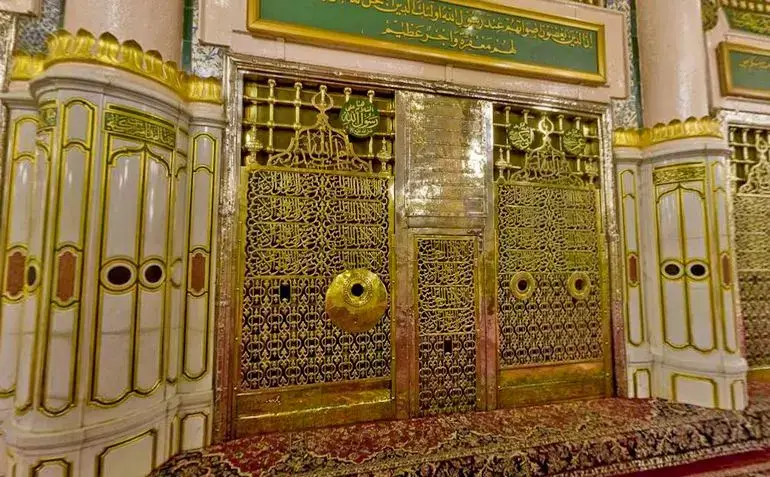
The golden grille you see inside the mosque marks the front of the Sacred Chamber. Behind it rest three of the greatest personalities in Islamic history.
Prophet Muhammad ﷺ
Muhammad passed away in 11 AH (632/633 CE) in the room of his wife Aisha bint Abi Bakr. According to authentic narrations, prophets are buried where they pass away. Therefore, he was buried beneath the spot where he died.
The companions performed his funeral prayer individually without a single imam leading.
Abu Bakr al-Siddiq (RA)
Abu Bakr al-Siddiq, the first Caliph of Islam, requested to be buried beside the Prophet ﷺ. He passed away in 13 AH at the age of 63 and was laid to rest next to his beloved companion.
Umar ibn al-Khattab (RA)
Umar ibn al-Khattab was fatally wounded while leading Fajr prayer. Before his death, he sought permission from Aisha (RA) to be buried alongside the Prophet ﷺ and Abu Bakr (RA). He passed away in 24 AH and was buried in the Sacred Chamber.
The Space Reserved for Prophet Isa (AS)
Islamic narrations mention that there remains space for a fourth grave, believed by many scholars to be reserved for Isa ibn Maryam after his return before the Day of Judgment.
Historical Protection and Architecture
In 91 AH, during the governorship of Umar ibn Abd al-Aziz, protective five-cornered walls were built around the chamber to prevent entry.
Later, additional structural reinforcements were added by Muslim rulers to safeguard the resting place from any disturbance.
Architecturally, the Rawdah area measures approximately 26.5 meters east to west and 15 meters north to south, covering nearly 397 square meters. It is surrounded by white marble columns adorned with gold detailing.
Three viewing holes in the golden grille align with the faces of:
- Prophet Muhammad ﷺ (left)
- Abu Bakr (RA) (middle)
- Umar (RA) (right)
Spiritual Importance of Rawdah Madinah
A Garden from Paradise
The Rawdah is spiritually elevated because of the Prophet’s explicit designation of it as part of Paradise.
Scholars explain this virtue in several ways:
- Worship there carries multiplied spiritual reward.
- It resembles Paradise in tranquility and blessing.
- It may physically be transferred to Paradise on the Day of Judgment.
Reward of Prayer in Rawdah
Prayer in Masjid an-Nabawi equals one thousand prayers elsewhere (except Masjid al-Haram). The Rawdah carries additional distinction due to its specific mention.
The Prophet ﷺ also emphasized sending blessings (Salawat) upon him, stating that he hears the salam of those who greet him at his grave.
Rawdah Madinah 2026 Visiting Rules (Nusuk Permit Guide)
Due to high demand, entry is strictly regulated.
How to Book Through Nusuk App
You must book via the Nusuk:
- Register using passport and visa details.
- Select “Praying in the Noble Rawdah.”
- Choose available (green) time slot.
- Generate and screenshot your QR permit.
Generally, visitors are allowed one Rawdah permit every 365 days, though limited instant access may appear when physically near the mosque.
Entry Gates and Timings
Timings vary seasonally but generally:
Men: Early morning (around 2 AM to Fajr) and late morning until Isha.
Women: After Fajr until mid-morning and after Isha until around 2 AM.
Men often enter via Bab al-Salam (Gate 1), while women commonly assemble near Gate 25 (Bab Uthman ibn Affan). Always follow your Nusuk permit instructions.
Step-by-Step Visit Inside Rawdah
Once inside:
- Pray two rak‘ah nafl (if space allows).
- Make sincere dua for forgiveness and guidance.
- Avoid photography.
- Remain calm and avoid pushing.
- Move respectfully toward the golden grille to send salam.
Sacred Pillars Inside Rawdah
Several historic pillars mark important events:
- Pillar of Aisha (Ustuwanah Aisha)
- Pillar of Repentance (linked to Abu Lubabah)
- Pillar of Delegations
- Pillar of Ali
- Weeping Pillar (Hannana)
Each pillar carries historical significance tied to the early Madinan period.
Best Time to Visit & Practical Tips
Crowds peak after Maghrib and during Umrah seasons (Ramadan, school holidays). Early morning slots are generally calmer.
Maintain humility, dress modestly, and avoid lengthy stays so others can benefit.
If you are planning Umrah or Ziyarat in Madinah, arranging reliable transportation between your hotel, Masjid an-Nabawi, Quba Mosque, and other sacred sites ensures a stress-free visit. For comfortable and punctual Umrah and Madinah taxi services across Saudi cities, you can pre-book your transport with Al Maqam Transport to avoid last-minute delays and focus fully on your worship.
Conclusion
The Rawdah Mubarak in Madinah is not just a physical location inside Masjid an-Nabawi; it is a spiritually elevated space deeply connected to the life, passing, and legacy of the Prophet Muhammad ﷺ. Understanding its history, virtues, burial chamber, and visiting regulations allows pilgrims to approach it with proper preparation and reverence.
A well-planned visit-spiritually and logistically-transforms your Rawdah experience into one of the most memorable moments of your Umrah or Hajj journey.
FAQs
1. Is Rawdah the same as the Prophet’s grave?
No. Rawdah refers to the area between the Prophet’s house and pulpit. The grave lies within the Sacred Chamber adjacent to Rawdah.
2. Do I need a permit to enter Rawdah in 2026?
Yes, booking through the Nusuk app is required for both men and women.
3. How many times can I visit Rawdah?
Typically once every 365 days per visitor, subject to current regulations.
4. What should I pray in Rawdah?
Two rak‘ah of voluntary prayer and sincere personal dua. There is no fixed required surah.
5. Can women visit Rawdah?
Yes. Women have designated time slots and entry gates.

Zeeshan is a professional driver and tour guide who has been living and driving in Saudi Arabia for the past 5 years. With deep knowledge of the roads, landmarks, and Ziyarat locations across Makkah, Madinah, Jeddah, and Taif, he helps pilgrims and travelers enjoy safe, smooth, and well-organized journeys. His experience in Umrah transport, city tours, and airport transfers makes him a trusted expert for visitors exploring Saudi Arabia.