


In the name of Allah, the Most Merciful, the Most Compassionate.
Hajj Tamattu is the most widely performed type of Hajj, especially among international pilgrims arriving in Saudi Arabia for the sacred journey. It combines Umrah and Hajj in one trip, with a break in between that allows pilgrims to exit the state of Ihram before beginning the major rites of Hajj.
For many travelers coming to Makkah from abroad, this structure makes Hajj more manageable physically and spiritually, while remaining fully valid according to Islamic law.
What Is Hajj Tamattu?
The word Tamattu comes from the Arabic root meaning “to enjoy” or “to benefit.” In the context of pilgrimage, it refers to the ease granted to pilgrims who:
- Perform Umrah during the months of Hajj (Shawwal, Dhul-Qa’dah, or the early days of Dhul-Hijjah),
- Exit the state of Ihram completely,
- Then re-enter Ihram on the 8th of Dhul-Hijjah to perform Hajj.
A pilgrim performing this type is known as a Mutamatti.
Because pilgrims are not required to remain in Ihram continuously, Hajj al-Tamattu is considered the most practical option for those traveling from outside Saudi Arabia.
Key Requirements of Hajj al-Tamattu
Hajj Tamattu has specific rulings that distinguish it from Hajj Qiran and Hajj Ifrad.
First, it requires two separate intentions (niyyah):
Second, it involves two separate Tawaf and Sa’i:
- Tawaf and Sa’i for Umrah
- Tawaf al-Ifadah and Sa’i for Hajj
Third, the Hady (animal sacrifice) is mandatory for those performing Tamattu who are financially able. This sacrifice takes place on the 10th of Dhul-Hijjah in Mina.
Finally, the Umrah must be completed during the same Hajj season and before the days of Hajj begin.
Step-by-Step Guide to Hajj Tamattu
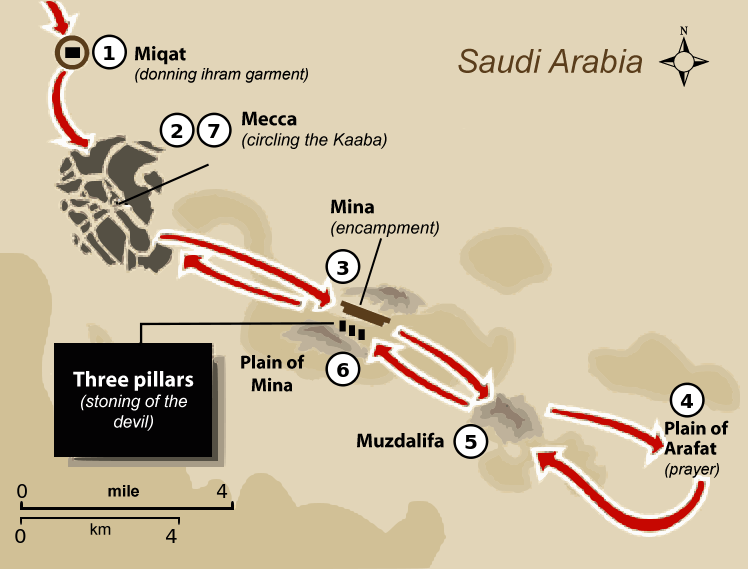
Phase 1 – Performing Umrah
Entering Ihram at the Miqat
Before crossing the Miqat boundary, pilgrims perform ghusl, wear the prescribed Ihram garments, and declare the intention for Umrah by reciting the Talbiyah. From this moment, the prohibitions of Ihram apply.
Tawaf al-Umrah
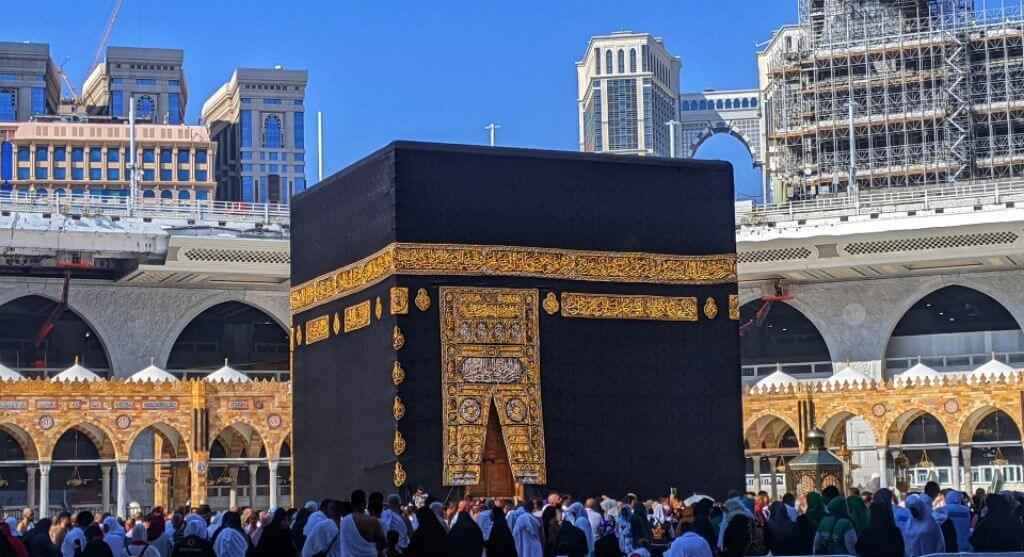
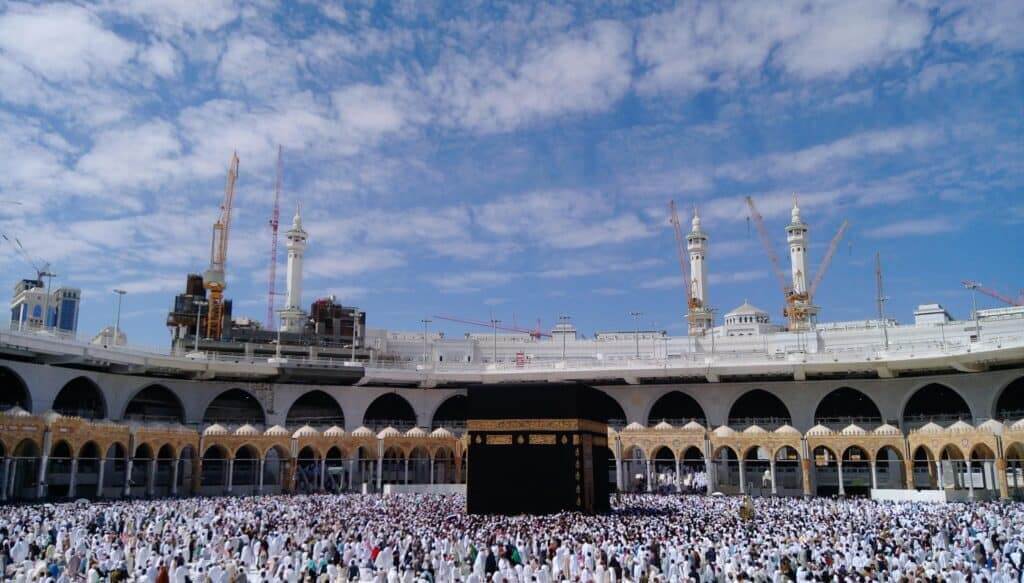
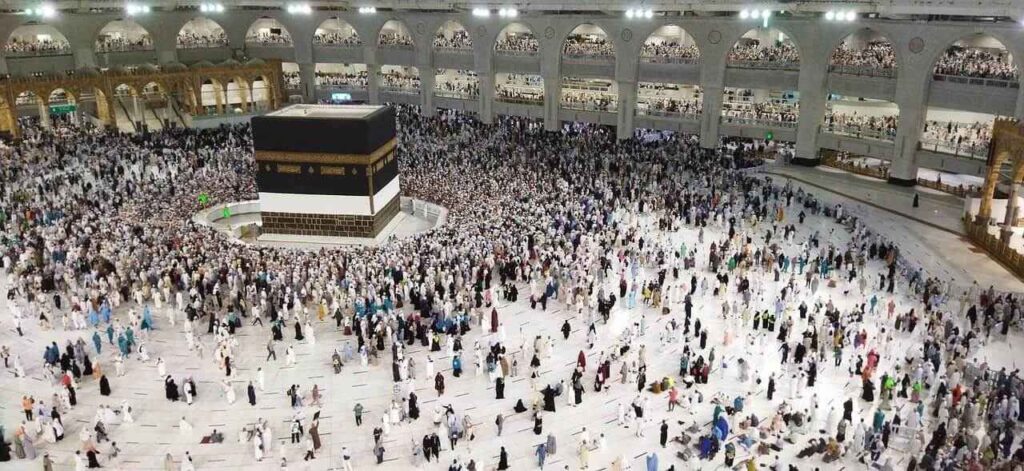
Upon arriving at Masjid al-Haram in Makkah, the pilgrim performs seven circuits around the Kaaba, beginning at the Black Stone. This Tawaf symbolizes unity and submission to Allah.
After completing Tawaf, it is Sunnah to pray two rak’ahs behind Maqam Ibrahim if possible and drink Zamzam water.
Sa’i Between Safa and Marwah
The pilgrim walks seven times between Safa and Marwah, commemorating the struggle of Hajar (peace be upon her) in search of water for her son Ismail.
Halq or Taqsir and Exit from Ihram
Men either shave (Halq) or trim (Taqsir) their hair, while women trim a small portion. After this, Umrah is complete and the pilgrim exits Ihram fully. Normal clothing and daily activities resume.
The Break Before Hajj
From the completion of Umrah until the 8th of Dhul-Hijjah, pilgrims remain in Makkah without Ihram restrictions. This period allows for rest, additional worship, and spiritual preparation for the days ahead.
Many pilgrims use this time to perform voluntary Tawaf, attend prayers at Masjid al-Haram, and prepare logistically for the journey to Mina.
Reliable transport planning during this time is essential, especially for families and elderly pilgrims. Arranging professional Umrah and Hajj taxi services in Makkah ensures smooth travel between hotels, the Haram, and departure points for Mina and Arafat. Trusted local services such as Al Maqam Transport provide organized, comfortable transfers for pilgrims across Makkah, Mina, Muzdalifah, and Madinah.
Phase 2 – The Days of Hajj (8th–13th Dhul-Hijjah)
8th Dhul-Hijjah – Mina (Yawm at-Tarwiyah)
Pilgrims enter Ihram again from their residence in Makkah with the intention of Hajj. They travel to Mina, where they pray Dhuhr, Asr, Maghrib, Isha, and Fajr, shortening the four-unit prayers.
They spend the night in Mina in preparation for the Day of Arafah.
9th Dhul-Hijjah – The Day of Arafah and Muzdalifah
After sunrise, pilgrims proceed to the plain of Arafat. The standing (Wuquf) at Arafat is the central pillar of Hajj. Pilgrims remain in supplication, repentance, and remembrance until sunset.
After Maghrib, they travel to Muzdalifah, where Maghrib and Isha are combined. Pilgrims spend the night there and collect pebbles for the stoning ritual.
10th Dhul-Hijjah – Eid al-Adha (Yawm an-Nahr)
Pilgrims return to Mina and stone Jamrat al-Aqaba with seven pebbles.
They then perform the Hady sacrifice, followed by shaving or trimming the hair. At this stage, most Ihram restrictions are lifted.
Afterward, pilgrims go to Makkah to perform Tawaf al-Ifadah, one of the pillars of Hajj, followed by Sa’i. After this Tawaf and Sa’i, all restrictions are lifted completely.
They return to Mina to stay overnight.
11th–12th (and optionally 13th) Dhul-Hijjah – Days of Tashreeq
Each day after Dhuhr, pilgrims stone the three Jamarat: the small, middle, and large pillars, throwing seven pebbles at each.
Most pilgrims depart Mina on the 12th before sunset. Those who remain until the 13th perform an additional day of stoning.
Tawaf al-Wada (Farewell Tawaf)
Before leaving Makkah, non-resident pilgrims perform the Farewell Tawaf as their final act in the Haram.
This completes Hajj al-Tamattu: a full Umrah and a complete Hajj in one blessed journey.
Hajj Tamattu vs Qiran vs Ifrad
Hajj Tamattu allows a break between Umrah and Hajj.
Hajj Qiran combines both without exiting Ihram.
Hajj Ifrad involves performing only Hajj without Umrah.
Tamattu remains the most accessible option for international pilgrims due to its flexibility and structured progression.
Conclusion
Hajj Tamattu offers a spiritually balanced and structured way to fulfill one of the Five Pillars of Islam. By performing Umrah first and then Hajj, pilgrims experience both devotion and practical ease. The two intentions, two Tawaf, required sacrifice, and clearly defined sequence of rituals distinguish it from other forms of Hajj.
With proper preparation, correct understanding of the rites, and reliable transport arrangements within Saudi Arabia, the journey becomes more organized and spiritually focused. Planning your Umrah and Hajj transfers with dependable services such as Al Maqam Transport ensures timely and comfortable travel between Makkah, Mina, Arafat, Muzdalifah, and Madinah—allowing you to concentrate fully on worship.
May Allah accept the Hajj of all pilgrims and grant them a Hajj Mabroor.
FAQs
When should I wear Ihram for Hajj Tamattu?
Ihram for Umrah is worn at the Miqat before entering Makkah. For Hajj, a new Ihram is worn on the 8th of Dhul-Hijjah from your place of stay in Makkah.
Is the sacrifice mandatory in Hajj Tamattu?
Yes, the Hady sacrifice is required for pilgrims performing Tamattu who are financially capable.
How many Tawaf are required in Hajj Tamattu?
Three Tawaf are typically performed: one for Umrah, Tawaf al-Ifadah for Hajj, and Tawaf al-Wada before departure.
Who is called a Mutamatti?
A pilgrim who performs Hajj Tamattu is known as a Mutamatti.
Can residents of Makkah perform Hajj Tamattu?
It is valid, though some schools of thought consider it less preferred for residents compared to travelers.

Zeeshan is a professional driver and tour guide who has been living and driving in Saudi Arabia for the past 5 years. With deep knowledge of the roads, landmarks, and Ziyarat locations across Makkah, Madinah, Jeddah, and Taif, he helps pilgrims and travelers enjoy safe, smooth, and well-organized journeys. His experience in Umrah transport, city tours, and airport transfers makes him a trusted expert for visitors exploring Saudi Arabia.