


Madinah city, officially known as Al-Madinah Al-Munawwarah (The Enlightened City), is the second holiest city in Islam after Makkah. Located in the Hejaz region of western Saudi Arabia, Madinah is not only a sacred destination for millions of Muslims but also a city deeply rooted in Islamic history, scholarship, and spiritual devotion.
For every Umrah or Hajj pilgrim, visiting Madinah is a journey of the heart. It is the city that welcomed Prophet Muhammad ﷺ after the Hijrah (migration) from Makkah and became the center of the first Islamic state. Today, Madinah combines spiritual serenity, historical depth, and modern infrastructure, making it one of the most unique cities in the Muslim world.
What Is Madinah City? History and Islamic Significance
From Yathrib to Al-Madinah Al-Munawwarah
Before Islam, Madinah was known as Yathrib, an oasis city inhabited by Arab tribes and several Jewish communities. Its fertile land and strategic trade location made it an important settlement in Arabia.
In 622 CE, the Prophet Muhammad ﷺ migrated from Makkah to Yathrib in an event known as the Hijrah. This migration marks the beginning of the Islamic calendar. After his arrival, the city became known as Madinat an-Nabi (City of the Prophet), later called Al-Madinah Al-Munawwarah, meaning “The Radiant City.”
Hijrah and the Foundation of the Islamic State
Madinah city was the place where the Prophet ﷺ established the first Muslim community based on brotherhood, justice, and faith. The Muhajirun (migrants from Makkah) were paired with the Ansar (helpers of Madinah), forming a model society rooted in unity.
Many important events in Islamic history occurred here, including the battles of Badr, Uhud, and the Trench. Madinah was also where much of the Qur’an was revealed and where Islamic law and governance were implemented.
Virtues of Madinah in Hadith
Numerous authentic hadith mention the virtues of Madinah. The Prophet ﷺ expressed deep love for the city and prayed for its blessings. It is narrated that faith returns to Madinah just as a snake returns to its hole, and that Dajjal (the Antichrist) will not be able to enter Makkah or Madinah.
These narrations elevate Madinah beyond a historical city-it is a protected and blessed sanctuary in Islamic belief.
Al-Masjid an-Nabawi – The Heart of Madinah
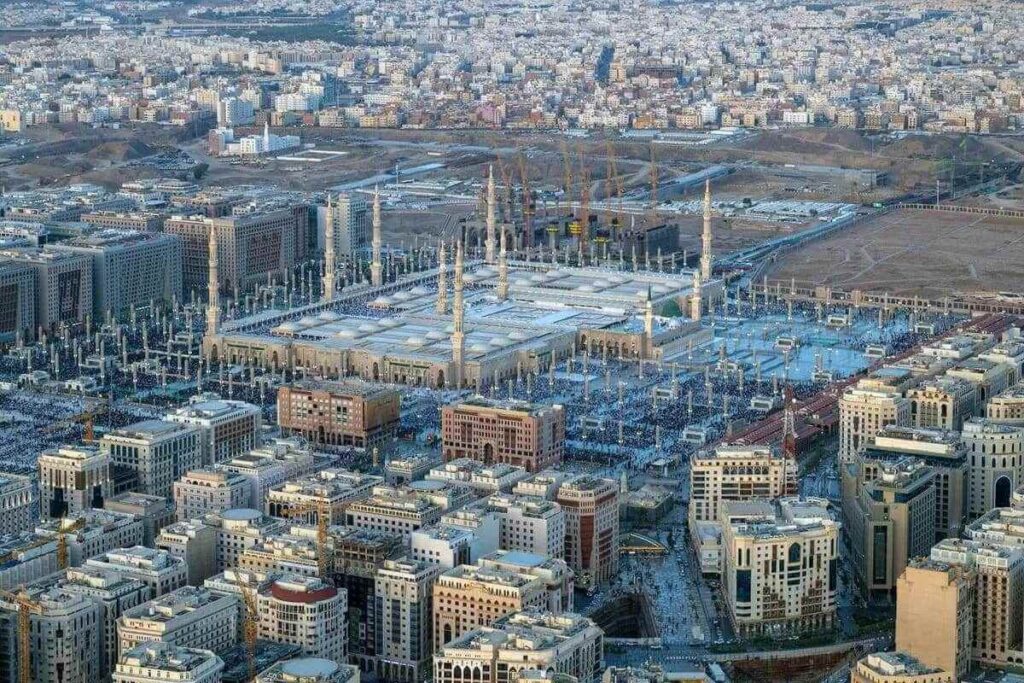
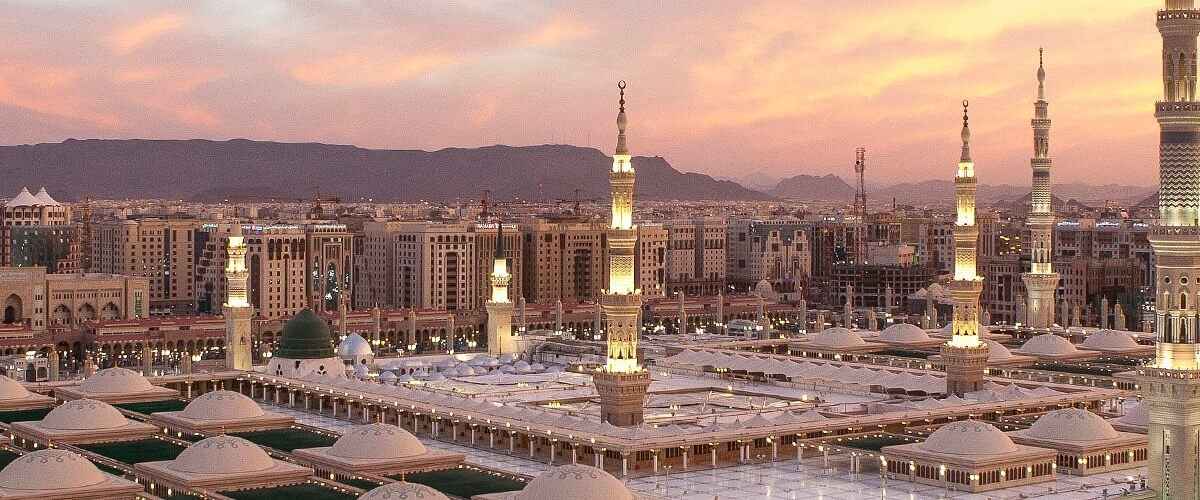
At the center of Madinah city stands Al-Masjid an-Nabawi, the Prophet’s Mosque, one of the largest and most revered mosques in the world.
The Green Dome and the Blessed Chamber
Beneath the iconic Green Dome lies the chamber where Prophet Muhammad ﷺ is buried, alongside Abu Bakr (RA) and Umar ibn al-Khattab (RA). This area is among the most emotionally powerful places for visitors.
The mosque has undergone multiple expansions throughout Islamic history and now accommodates hundreds of thousands of worshippers.
Rawdah ash-Sharifah and Visiting Etiquette
The Rawdah, located between the Prophet’s pulpit and his home, is described in hadith as a garden from the gardens of Paradise. Due to high demand, visitors are usually required to book a time slot through official applications such as Nusuk.
Visitors are encouraged to maintain calmness, respect, and sincerity during their visit.
Jannat al-Baqi
Adjacent to the mosque is Jannat al-Baqi, the historic cemetery where many companions of the Prophet ﷺ and members of his family are buried. Visiting Baqi reminds believers of the hereafter and the legacy of the early Muslims.
Recommended: Masjid Al Nabawi Map
Major Ziyarat Places in Madinah
Beyond the Prophet’s Mosque, Madinah city offers several important historical and religious landmarks.
Masjid Quba
Masjid Quba is the first mosque built in Islam. The Prophet ﷺ personally participated in its construction. Praying two rak‘ahs in Quba carries the reward of an Umrah according to authentic hadith.
Masjid al-Qiblatayn
This mosque is historically significant because it is where the command was revealed to change the Qiblah from Jerusalem (Bayt al-Maqdis) to the Kaaba in Makkah.
Mount Uhud and the Martyrs’ Cemetery
Located north of the city, Mount Uhud is the site of the Battle of Uhud (625 CE). Visitors often reflect on the sacrifices made by the companions, including Hamza ibn Abdul Muttalib (RA), who is buried nearby.
The Seven Mosques & Battle of the Trench Area
The area associated with the Battle of the Trench (Khandaq) includes several small historic mosques collectively known as the Seven Mosques. This site highlights the strategic defense of Madinah during a critical moment in Islamic history.
Recommended: Facts About Masjid Al Nabawi
Madinah City Today – Culture, Markets & Development
Madinah is not only a city of history but also a modern urban center with nearly 1.5 million residents.
Date Markets and Ajwa Dates
Madinah is famous for its dates, especially Ajwa dates, which hold religious significance in hadith literature. The Central Dates Market offers a wide variety of premium dates and local products.
Museums and Heritage
Museums such as Dar Al Madinah Museum showcase models, artifacts, and narratives related to the Prophet’s life and the city’s development.
Modern Shopping and Dining
Shopping malls like Al Noor Mall and Rashid Mega Mall provide international brands and family entertainment. Dining options range from traditional Arabian dishes like mandi and madhbi to international cuisine.
How to Reach and Travel Around Madinah City
Madinah Airport
Prince Mohammad bin Abdulaziz International Airport connects Madinah with major global destinations. From the airport, pilgrims can reach the Haram area in around 20–30 minutes by car, depending on traffic.
Haramain High-Speed Railway
The Haramain High-Speed Railway links Madinah with Makkah and Jeddah at speeds up to 300 km/h, making intercity travel fast and comfortable.
Getting Around the City
The central area around Al-Masjid an-Nabawi is walkable, but for Ziyarat sites such as Quba, Uhud, and Qiblatayn, reliable transport is essential.
For comfortable and stress-free travel, especially for families and elderly pilgrims, booking a private Umrah taxi service is highly recommended. Al Maqam Transport offers airport transfers, Madinah Ziyarat tours, and intercity travel between Madinah, Makkah, and Jeddah with professional drivers familiar with pilgrimage routes. Pre-booked taxi services ensure punctuality, fixed pricing, and a smooth spiritual journey.
Best Time to Visit Madinah
The most comfortable months are from November to March, when temperatures are mild. Summers can exceed 40°C, requiring careful planning and hydration.
Ramadan and Hajj seasons bring spiritual intensity but also heavy crowds, so advance hotel and transport bookings are essential.
Suggested Ziyarat Plan for Umrah Visitors
A balanced visit may include early prayers at Al-Masjid an-Nabawi, scheduled time in the Rawdah, and visits to Quba, Uhud, and Qiblatayn during the morning. Afternoons can be reserved for rest and worship, while evenings are ideal for Baqi visits and exploring the date market.
Organizing your Ziyarat with a dedicated taxi service allows you to complete all major sites comfortably in half or one full day.
Conclusion
Madinah city is more than a destination-it is a living symbol of faith, sacrifice, and divine guidance. From the sacred tranquility of Al-Masjid an-Nabawi to the historic plains of Uhud, every corner of the city reflects the legacy of the Prophet Muhammad ﷺ.
Whether you are visiting for Umrah, Islamic history, or spiritual reflection, proper planning-accommodation near the Haram, scheduled Rawdah visits, and reliable transport such as Al Maqam Transport’s Umrah taxi services-ensures your journey remains focused on worship and ease.
Madinah continues to grow as a smart, organized, and welcoming city while preserving its sacred identity, making it one of the most beloved cities in the world.
FAQs
1. Why is Madinah city important in Islam?
Madinah is the city of the Prophet Muhammad ﷺ, the site of the Hijrah, and home to Al-Masjid an-Nabawi and his blessed grave. It is the second holiest city in Islam.
2. Can non-Muslims visit Madinah?
Non-Muslims may enter the city, but access to the central Haram area and the Prophet’s Mosque is restricted to Muslims.
3. How far is Madinah from Makkah?
Madinah is approximately 340 km north of Makkah and can be reached in about 2–4 hours depending on the mode of transport.
4. What is special about Ajwa dates?
Ajwa dates are native to Madinah and are mentioned in hadith for their blessings and benefits.
5. How can I travel from Madinah Airport to the Prophet’s Mosque?
You can use taxis, private transfers, or pre-booked Umrah transport services such as Al Maqam Transport for a smooth airport-to-hotel journey.
References: History of Madinah Munawwarah – Dr. Muhammad Ilyas Abdul Ghani, Wikipedia, Muhammad – Martin Lings.

Zeeshan is a professional driver and tour guide who has been living and driving in Saudi Arabia for the past 5 years. With deep knowledge of the roads, landmarks, and Ziyarat locations across Makkah, Madinah, Jeddah, and Taif, he helps pilgrims and travelers enjoy safe, smooth, and well-organized journeys. His experience in Umrah transport, city tours, and airport transfers makes him a trusted expert for visitors exploring Saudi Arabia.