


Jabal Arafat, also known as Mount Arafat or Jabal al-Rahmah, stands at the heart of Islamic spirituality and the Hajj pilgrimage. Located on the vast Plain of Arafat around 20 kilometers southeast of Makkah, this sacred site represents the spiritual climax of Hajj and holds deep historical and theological significance for Muslims worldwide.
A well-known prophetic saying summarizes its importance: “Hajj is Arafat.” Without standing at Arafat, the pilgrimage itself is considered invalid, making this location unique among all Hajj rituals.
What Is Jabal Arafat and Where Is It Located?
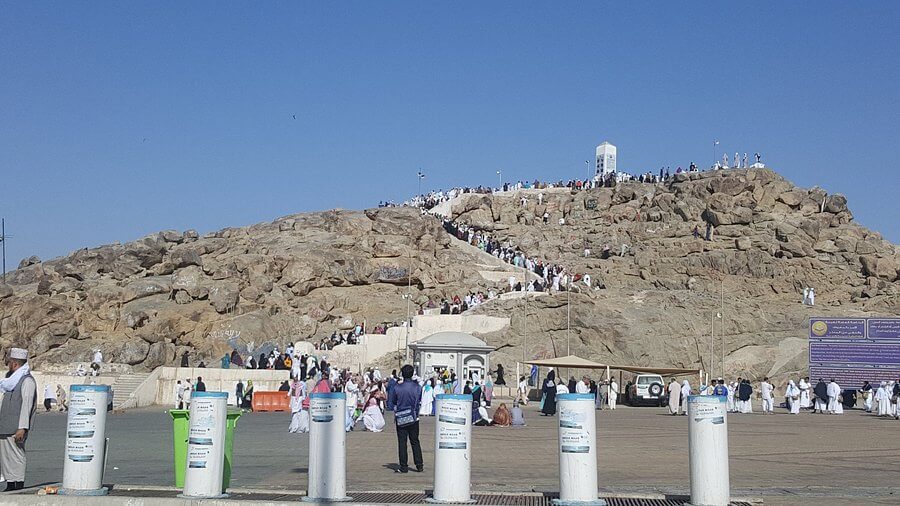
Arafat is a broad open plain rather than a city or enclosed sanctuary. It is the only major Hajj site located outside the Haram boundaries of Makkah, which gives it distinct religious rulings and identity. The land itself is called Arafat (عرفات), while Arafah (عرفة) refers to the specific day on which the main ritual occurs.
At the center of this plain rises a modest granite hill, Jabal al-Rahmah, marked by a white pillar and visible from a distance. Despite its small physical size, its spiritual weight is immense.
Religious and Historical Importance of Mount Arafat
The significance of Jabal Arafat is rooted in both prophetic history and Islamic belief. It was here that Prophet Muhammad ﷺ delivered his Farewell Sermon during his final Hajj, addressing humanity with timeless principles of equality, justice, and faith. These words remain foundational to Islamic ethics.
Islamic tradition also holds that Prophet Adam and Hawa (Eve) reunited at Arafat after being sent to Earth from Jannah, linking the site to themes of forgiveness, recognition, and divine mercy. Linguistically, the name “Arafat” is associated with knowing, recognizing, and understanding, which aligns with its spiritual purpose.
Day of Arafah – The Spiritual Climax of Hajj
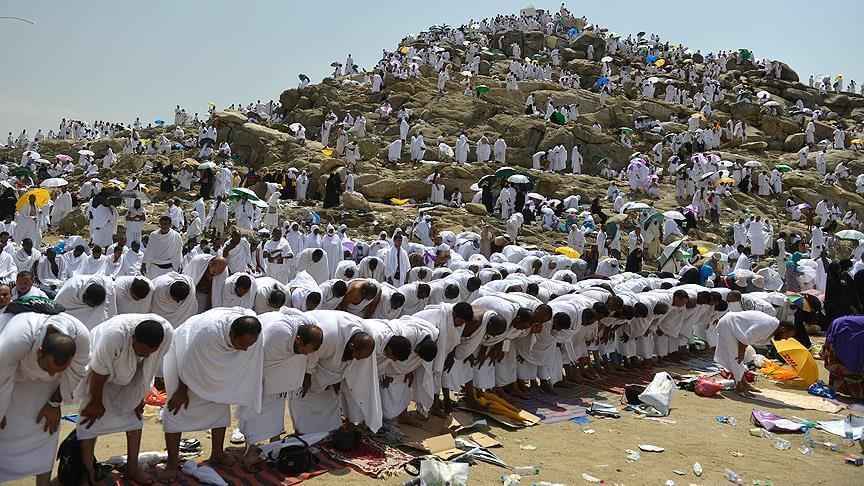
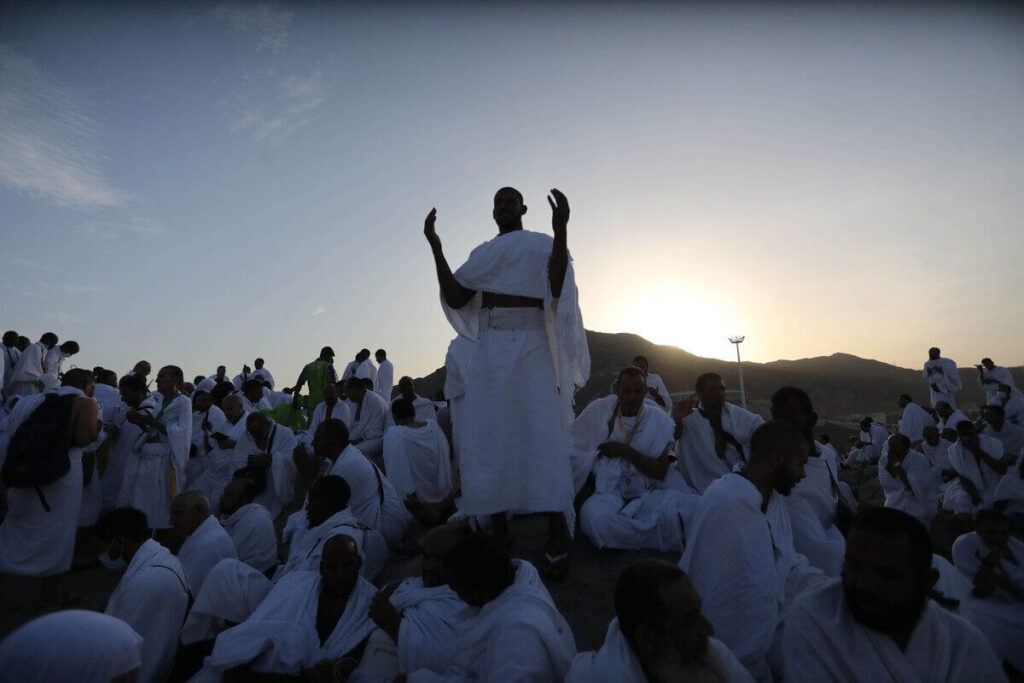
The 9th day of Dhul Hijjah, known as the Day of Arafah, is the most sacred day of the Islamic year for pilgrims. On this day, millions gather at Arafat from after sunrise until sunset, engaging in wuquf, the act of standing in prayer, repentance, and supplication.
This period is believed to be a time when divine mercy descends abundantly. Authentic narrations describe it as the day when more people are freed from the Hellfire than any other, and when sincere supplication is most readily accepted.
For Muslims who are not performing Hajj, fasting on the Day of Arafah is highly recommended and is reported to expiate sins of the previous and coming year, highlighting the day’s universal spiritual value beyond the physical site itself.
Key Landmarks at Arafat
Jabal al-Rahmah, often called the Mountain of Mercy, is where many pilgrims raise their hands in dua, though climbing it is not a ritual requirement. The virtue lies in being anywhere within the boundaries of Arafat, not in the hill itself.
Nearby stands Namira Mosque, an important landmark where the Hajj sermon is delivered and where pilgrims combine Dhuhr and Asr prayers on the Day of Arafah. Clear markers show which parts of the mosque fall inside or outside the Arafat boundary, a detail that matters during Hajj.
The surrounding Plain of Arafat transforms during Hajj into a vast sea of tents and worshippers, symbolizing unity, humility, and equality before Allah.
Visiting Jabal Arafat Outside Hajj
Outside the Hajj season, Arafat remains open to visitors and is commonly included in ziyarah tours from Makkah or even Jeddah. Many Umrah travelers choose to visit Arafat along with Mina and Muzdalifah to better understand the geography and rituals of Hajj.
Early mornings or late afternoons are ideal due to the heat, and visitors are encouraged to dress modestly, carry water, and approach the site with respect, even though it is not within the Haram.
Transportation to Arafat from Makkah
During Hajj, movement to Arafat is strictly regulated through official Hajj campaigns using buses or the Al Mashaaer Al Mugaddassah Metro, which connects Mina, Arafat, and Muzdalifah.
Outside Hajj, reaching Mount Arafat is straightforward. From central Makkah, the journey typically takes 20–30 minutes by road. For Umrah pilgrims, families, and elderly visitors, pre-booked private taxis and Umrah transport services offer a comfortable and reliable option, especially when planning ziyarah trips covering multiple holy sites in one day.
Professional Umrah and local taxi services familiar with Makkah’s sacred routes ensure timely pickups, knowledgeable drivers, and stress-free travel, making them a practical choice for visitors who want to focus on worship rather than navigation.
Important Guidelines During Hajj
Access to Arafat during Hajj requires a valid Hajj permit and adherence to official schedules. Pilgrims must follow their group instructions closely, as movement, timing, and accommodation are centrally managed for safety and organization.
Conclusion
Jabal Arafat is far more than a geographical location; it is the spiritual heart of Hajj and a symbol of mercy, forgiveness, and human equality. Whether experienced during the intense devotion of the Day of Arafah or visited quietly outside Hajj, Mount Arafat leaves a profound impression on every believer. Understanding its meaning, history, and rituals deepens one’s connection to Hajj and to the broader message of Islam itself.
FAQs
Is Jabal Arafat the same as Mount Arafat?
Yes, both names refer to the same hill located within the Plain of Arafat, also called Jabal al-Rahmah.
Can I visit Arafat during Umrah?
Yes, Arafat can be visited at any time outside Hajj and is commonly included in Umrah ziyarah tours.
Is climbing Jabal al-Rahmah required?
No, climbing the hill is not a ritual of Hajj. The obligation is to be present anywhere within Arafat’s boundaries.
Why is fasting on the Day of Arafah important?
For non-pilgrims, fasting on this day is highly recommended and is believed to erase sins of the past and coming year.
How far is Mount Arafat from Makkah?
It is approximately 20 kilometers southeast of Makkah and easily accessible by road outside Hajj season.

Zeeshan is a professional driver and tour guide who has been living and driving in Saudi Arabia for the past 5 years. With deep knowledge of the roads, landmarks, and Ziyarat locations across Makkah, Madinah, Jeddah, and Taif, he helps pilgrims and travelers enjoy safe, smooth, and well-organized journeys. His experience in Umrah transport, city tours, and airport transfers makes him a trusted expert for visitors exploring Saudi Arabia.