


Why Do Muslims Pray Towards Mecca?
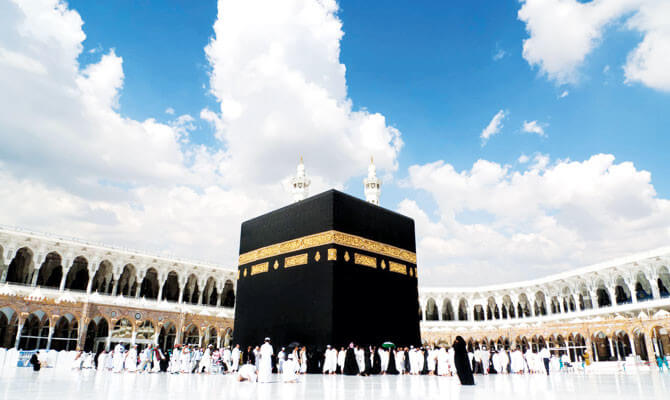
Muslims pray towards Mecca because Allah commanded them to face the Kaaba, located inside Masjid al-Haram, during their daily prayers (Salah). This fixed direction of prayer is known as the Qibla, and it represents obedience to God, continuity of monotheistic worship, and unity among Muslims worldwide.
Facing Mecca is not about worshiping a place or structure. Rather, it is a divinely chosen orientation that organizes prayer, strengthens spiritual focus, and connects every Muslim-regardless of geography-to the same act of worship.
What Is the Qibla in Islam?
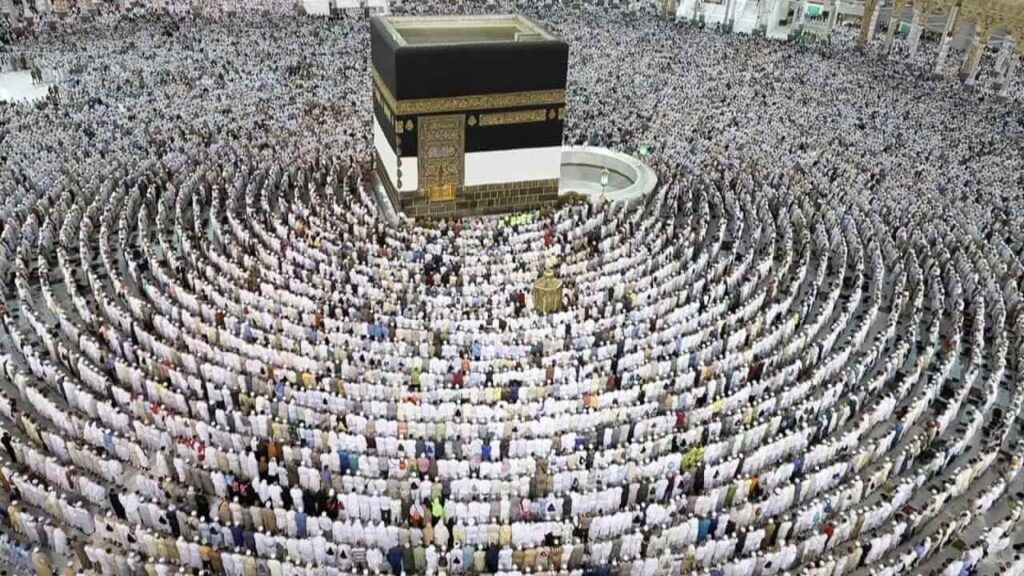
The word Qibla comes from Arabic, meaning direction to face. In Islamic practice, it refers specifically to the direction of the Kaaba in Mecca during prayer. Every mosque in the world is built with the Qibla in mind, and inside mosques, the mihrab marks this direction so worshippers can align correctly.
The Qibla is an essential condition for the validity of Salah, except in rare situations such as fear, illness, or when direction cannot reasonably be determined.
Divine Command in the Quran
The primary reason Muslims pray towards Mecca is because it is a clear command from Allah in the Quran. In Surah Al-Baqarah, Allah instructed the Prophet Muhammad ﷺ and the believers to face al-Masjid al-Haram during prayer:
“So turn your face toward al-Masjid al-Haram. And wherever you [believers] are, turn your faces toward it.” (Quran 2:150)
This command established Mecca as the permanent Qibla for Muslims until the end of time, making it an act of worship rooted in revelation, not human decision.
Historical Change of the Qibla
In the early period of Islam, Muslims initially prayed towards Jerusalem (Masjid al-Aqsa). About sixteen to seventeen months after the Prophet’s migration (Hijrah) to Madinah, Allah revealed the command to change the Qibla to Mecca.
This shift reaffirmed Islam’s direct connection to the legacy of Prophet Ibrahim (Abraham) and established a distinct spiritual identity for the Muslim community, while still honoring previous prophets.
The Kaaba and Its Significance
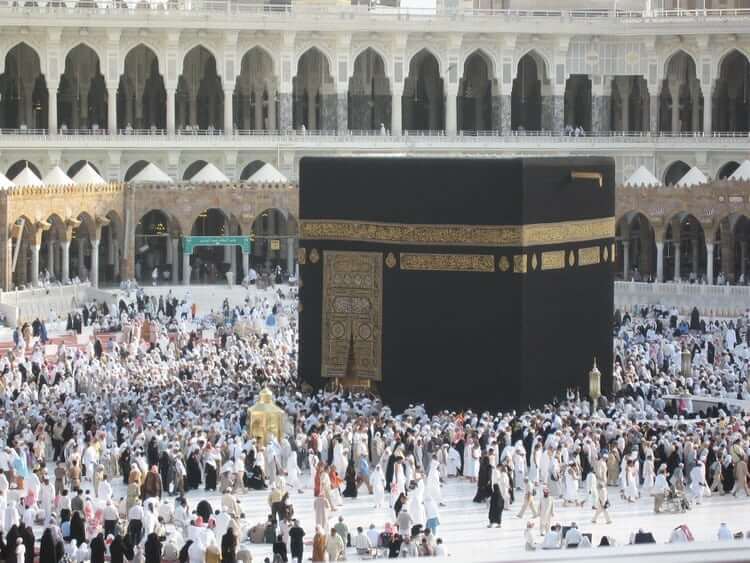
The Kaaba is regarded in Islam as the first house of worship dedicated to the One God. Islamic tradition holds that it was originally established by Prophet Adam and later rebuilt by Prophet Ibrahim (Abraham) and his son Ismail (Ishmael).
The Kaaba represents pure monotheism (Tawhid) and serves as the spiritual center of Islam. Its simple cube shape reinforces that Islam does not rely on images or idols but on devotion to Allah alone.
Unity and Focus in Muslim Worship
Facing one direction during prayer unites more than a billion Muslims into a single act of worship five times a day. Whether someone is praying in Makkah, Madinah, London, or Tokyo, they stand shoulder to shoulder in intention.
This shared orientation reflects:
- The oneness of God
- The equality of believers
- The unity of the global Ummah
It also helps worshippers maintain mental and spiritual focus during Salah.
Do Muslims Worship the Kaaba?
No. Muslims do not worship the Kaaba. They worship Allah alone.
The Kaaba is a symbolic focal point, not an object of devotion. Just as people face a specific direction for organization and discipline, the Qibla provides structure to Islamic worship without replacing the core belief in God’s transcendence.
How Do Muslims Find the Qibla Direction?
Because the Earth is spherical, the Qibla direction changes depending on location. Today, Muslims determine the Qibla using reliable methods such as:
- Mosque mihrabs
- Compasses
- Mobile apps using GPS
- Astronomical calculations
Islamic law allows flexibility. If someone cannot determine the exact direction, they may pray based on their best judgment, and the prayer remains valid.
Mecca, Hajj, and Umrah in Islamic Life
Mecca is not only the Qibla but also the destination of Hajj and Umrah, two of the most important acts of worship in Islam. Every year, millions of Muslims travel to Makkah to pray at the Kaaba, perform Tawaf, and deepen their spiritual connection.
For pilgrims visiting Makkah and Madinah, comfortable and reliable transportation plays a major role in ensuring a peaceful journey. Professional Umrah and intercity taxi services help pilgrims move easily between airports, hotels, Makkah, Madinah, and Ziyarat locations-allowing them to focus on worship rather than logistics. Choosing experienced local transport services significantly improves the overall Umrah experience, especially for families and elderly pilgrims.
Conclusion
Muslims pray towards Mecca because Allah commanded it, the Prophet Muhammad ﷺ practiced it, and the Kaaba represents the heart of monotheistic worship in Islam. The Qibla unites Muslims across continents, reinforces obedience to God, and preserves a spiritual connection to the legacy of Prophet Ibrahim.
Facing the Kaaba is not about place over God, but about discipline, unity, and devotion-turning hearts toward Allah while standing in one global direction.
FAQs
Why was Jerusalem the first Qibla in Islam?
Jerusalem connected Islam to earlier prophets and monotheistic tradition before the Qibla was permanently established in Mecca.
Do Muslims have to face Mecca during all prayers?
Yes, for obligatory prayers, facing the Qibla is required unless a valid excuse exists.
What does the black cloth (Kiswah) on the Kaaba symbolize?
The Kiswah symbolizes honor and reverence, embroidered with Quranic verses, but it holds no object of worship.
How do Muslims pray when traveling?
Islam allows ease during travel. Muslims pray towards the best estimated Qibla and may shorten prayers.
Is Mecca considered the center of the world in Islam?
Spiritually, yes-it is the center of Islamic worship, not a claim of physical geography.

Zeeshan is a professional driver and tour guide who has been living and driving in Saudi Arabia for the past 5 years. With deep knowledge of the roads, landmarks, and Ziyarat locations across Makkah, Madinah, Jeddah, and Taif, he helps pilgrims and travelers enjoy safe, smooth, and well-organized journeys. His experience in Umrah transport, city tours, and airport transfers makes him a trusted expert for visitors exploring Saudi Arabia.