


Turkey holds a unique and unmatched position in the global search for Noah’s Ark, standing at the intersection of Quranic revelation, Biblical tradition, and geological inquiry. For centuries, scholars, theologians, explorers, and travelers have focused on eastern and southeastern Turkey as the most plausible region connected to the final resting place of the Ark built by Prophet Nuh (عليه السلام).
Rather than a single agreed-upon location, the story of Noah’s Ark in Turkey centers on three key sites: Mount Judi, Mount Ararat, and the Durupınar Formation. Each site reflects a different tradition-Islamic, Biblical, and modern exploratory-and together they form a complete contextual map of the Ark narrative.
Why Turkey Is Central to the Noah’s Ark Story?
Ancient flood narratives consistently place the Ark’s landing in a mountainous region north of Mesopotamia. This aligns geographically with modern-day Turkey, particularly areas bordering Iraq, Iran, and Armenia. The Quran, the Bible, early Christian writings, and Assyrian geography all point toward this region, making Turkey the heart of the Ark discourse.
Mount Judi – The Quranic Resting Place of Noah’s Ark
Mount Judi in the Quran and Islamic Tradition
The Quran explicitly names Mount Judi as the place where the Ark came to rest after the Flood:
“And the Ark settled on Mount Judi, and it was said, ‘Away with the wrongdoing people.’”
(Surah Hud 11:44)
This direct reference makes Mount Judi the most authoritative Ark location in Islamic belief, supported by early Islamic historians such as Ibn Kathir and Al-Tabari, as well as Syriac Christian traditions that predate medieval Europe.
Location of Mount Judi in Modern Turkey
Mount Judi, known locally as Cebel Cudi, is located in Şırnak Province, southeastern Turkey, near the borders of Iraq and Syria. Unlike Mount Ararat, Judi is not perpetually snow-covered, which historically made it more suitable for early settlement, agriculture, and preservation narratives.
Historical and Religious Significance
For centuries, local communities have marked stone structures known as “Sefine” (the Ship) on Mount Judi. Annual commemorations were held in the region well into early Islamic history, reinforcing its long-standing identification as the Ark’s resting place.
Mount Ararat – The Biblical “Mountains of Ararat”
Genesis Account and Christian Tradition
The Book of Genesis states that the Ark came to rest on the “mountains of Ararat,” a term referring to the ancient Urartu region, not necessarily a single peak. Over time, this evolved into the identification of Mount Ararat (Ağrı Dağı) as the primary Biblical candidate.
Rising to 5,137 meters, Mount Ararat is Turkey’s highest mountain and a powerful symbol in Christian theology.
Ararat Anomaly and Expedition Claims
Various expeditions have reported wood-like materials and anomalies beneath glaciers, particularly the so-called Ararat Anomaly seen in satellite imagery. However, due to extreme conditions, military restrictions, and lack of peer-reviewed evidence, no claim has been scientifically verified.
The Durupınar Formation – The Most Debated Noah’s Ark Site
Discovery and Physical Characteristics
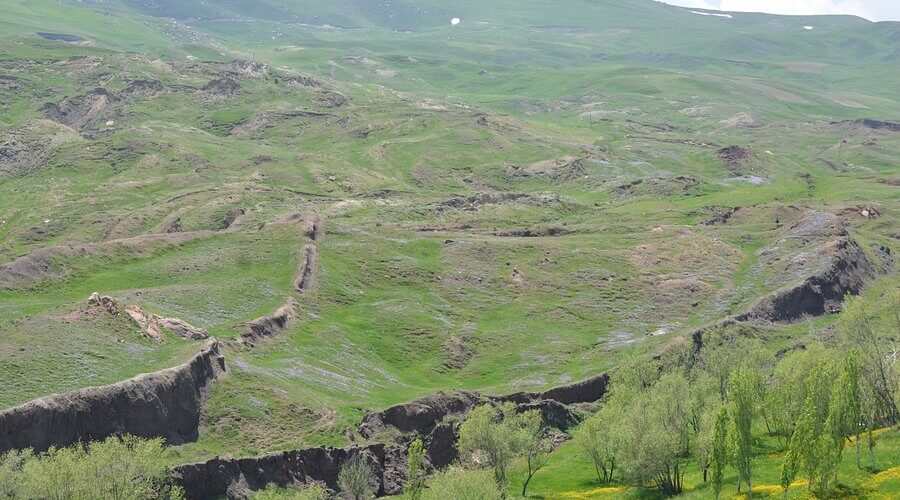
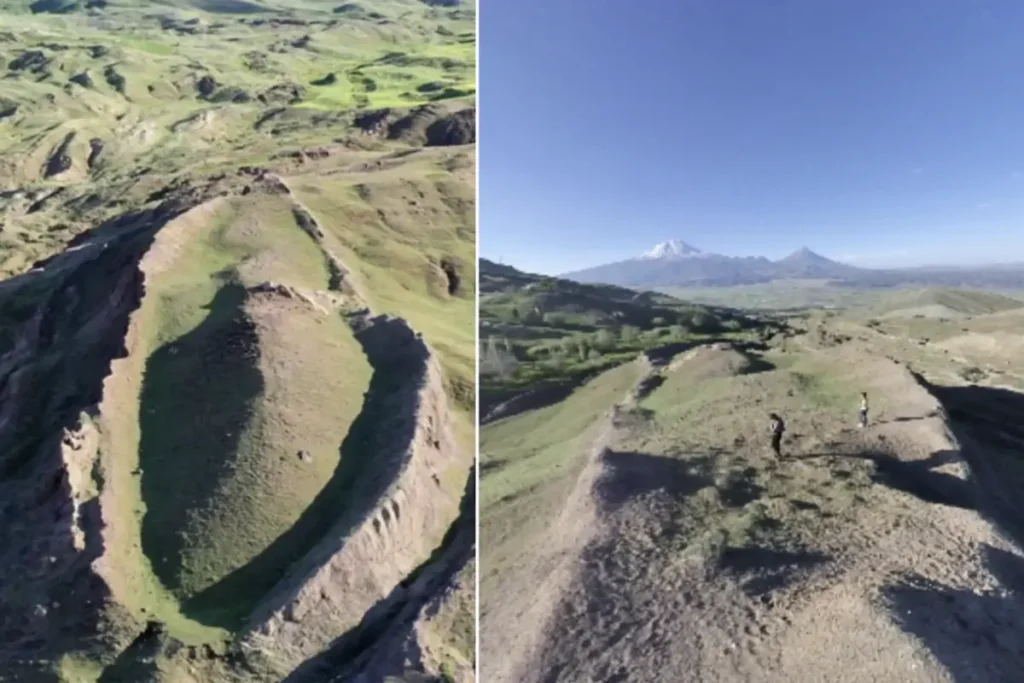
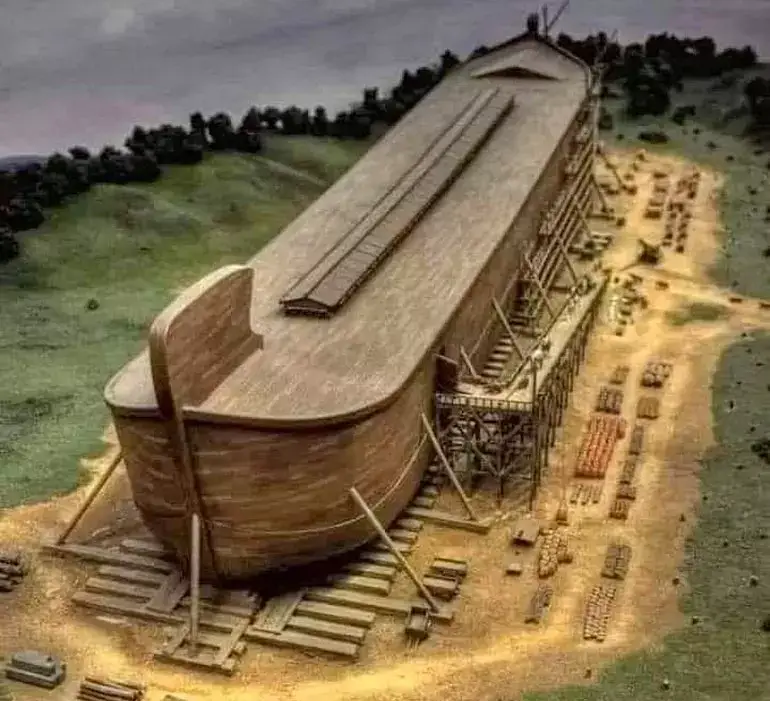
Located near Doğubayazıt in Ağrı Province, the Durupınar Formation is a boat-shaped geological structure measuring approximately 157 meters, closely matching the 300 cubits mentioned in Biblical descriptions.
Its striking symmetry has drawn global attention since its discovery in the mid-20th century.
Radar Scans and Recent Claims (2023–2026)
Recent studies involving ground-penetrating radar (GPR) have claimed the detection of internal linear formations interpreted by some as corridors or compartments. These findings, while intriguing, remain contested within the scientific community.
Geological and Scientific Perspectives
Most geologists classify Durupınar as a natural syncline formation, shaped by mudflows and erosion. Even some creationist organizations caution against definitive claims, emphasizing the need for verifiable archaeological evidence.
Scientific Debate – Faith, Geology, and Archaeology
The Noah’s Ark discussion sits at a rare crossroads of faith and science. While geology explains formations through natural processes, religious traditions emphasize divine events beyond ordinary frameworks. Importantly, the absence of proof does not negate belief, nor does belief replace scientific methodology. This balance is essential to understanding why the Ark narrative endures.
Visiting Noah’s Ark Sites in Eastern Turkey
How to Get There
Travelers usually fly from Istanbul to Ağrı, Iğdır, or Van, then continue by road to Doğubayazıt or Şırnak. Border checkpoints are common, and carrying identification is essential.
What to Expect On-Site
At Noah’s Ark National Park, visitors find a viewing platform, a small interpretation center, and panoramic views toward Mount Ararat. Facilities are modest, and weather conditions can change rapidly.
Best Time to Visit and Safety Tips
Late spring through early autumn offers the clearest conditions. Respect military zones, avoid photographing checkpoints, and consider local guides for smoother access.
Nearby Historical and Cultural Attractions
One of the region’s highlights is the Ishak Pasha Palace, a breathtaking Ottoman-Persian complex overlooking Doğubayazıt. Many visitors combine the Ark sites with this historical landmark, creating a richer cultural journey.
Faith Travel, Pilgrimage & Modern Transport
For travelers interested in faith-based journeys, the story of Prophet Nuh (عليه السلام) often connects spiritually with Islamic pilgrimage experiences. Many international visitors exploring Islamic history in Turkey later continue their journey toward Umrah or Hajj in Saudi Arabia.
For such transitions, reliable transport is essential. Services like Al Maqam Transport provide professional Umrah taxi services, intercity transfers between Makkah, Madinah, Jeddah, and airport pickups-making spiritual travel seamless, comfortable, and trustworthy for pilgrims arriving from abroad.
Conclusion
The search for Noah’s Ark in Turkey is not confined to a single mountain or formation. Mount Judi stands as the Quranically affirmed resting place, Mount Ararat reflects Biblical tradition and symbolic grandeur, and Durupınar represents modern curiosity and debate. Together, they form a layered historical, religious, and geographical narrative that continues to inspire believers and researchers alike.
FAQs
Is Noah’s Ark confirmed to be in Turkey?
Turkey is the most widely supported region across Islamic, Biblical, and historical sources, though no site has been scientifically confirmed.
Why is Mount Judi more important in Islam than Mount Ararat?
The Quran explicitly names Mount Judi as the Ark’s resting place, making it definitive in Islamic theology.
Can tourists visit Mount Judi?
Yes, but access is more limited than Ararat or Durupınar, and local guidance is recommended.
What is the Durupınar Formation?
It is a boat-shaped geological structure that some believe resembles Noah’s Ark, though most scientists classify it as a natural formation.
Can I combine a Turkey faith tour with Umrah travel?
Yes. Many travelers explore Islamic heritage sites in Turkey before continuing to Saudi Arabia using trusted Umrah taxi services.

Zeeshan is a professional driver and tour guide who has been living and driving in Saudi Arabia for the past 5 years. With deep knowledge of the roads, landmarks, and Ziyarat locations across Makkah, Madinah, Jeddah, and Taif, he helps pilgrims and travelers enjoy safe, smooth, and well-organized journeys. His experience in Umrah transport, city tours, and airport transfers makes him a trusted expert for visitors exploring Saudi Arabia.