


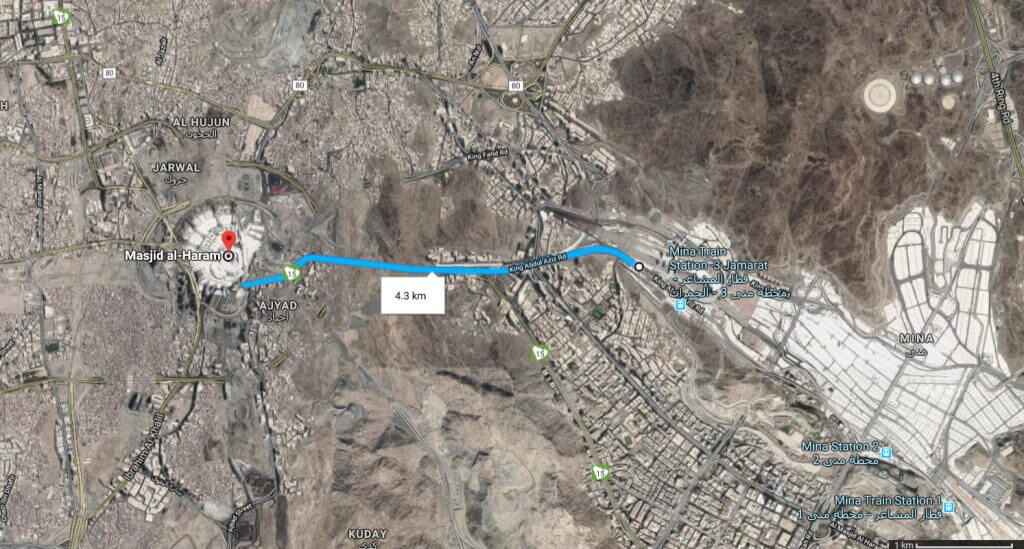
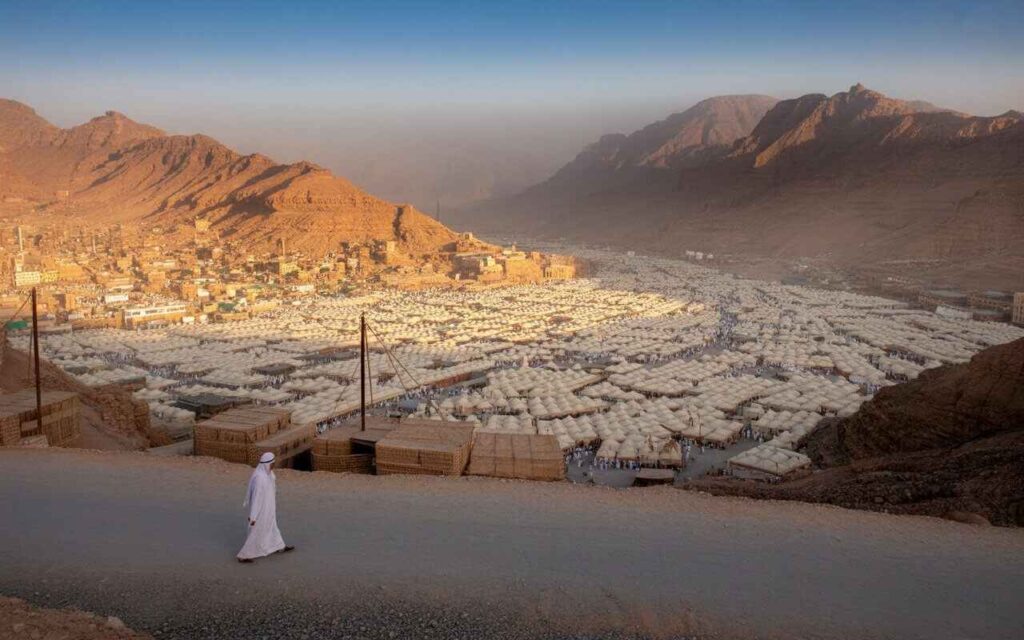
Mina is one of the most spiritually intense and logistically complex locations in Islam. Located approximately 6-8 kilometers east of Masjid al-Haram, this sacred valley becomes the heart of Hajj for several days every year. Known worldwide as the “City of Tents,” Mina hosts up to three million pilgrims, making it the largest temporary settlement on Earth.
Beyond its scale, Mina represents obedience, sacrifice, patience, and remembrance of Allah. Every step taken here connects pilgrims to the legacy of Prophet Ibrahim ﷺ and the foundational moments of Islamic history.
What Is Mina and Where Is It Located?
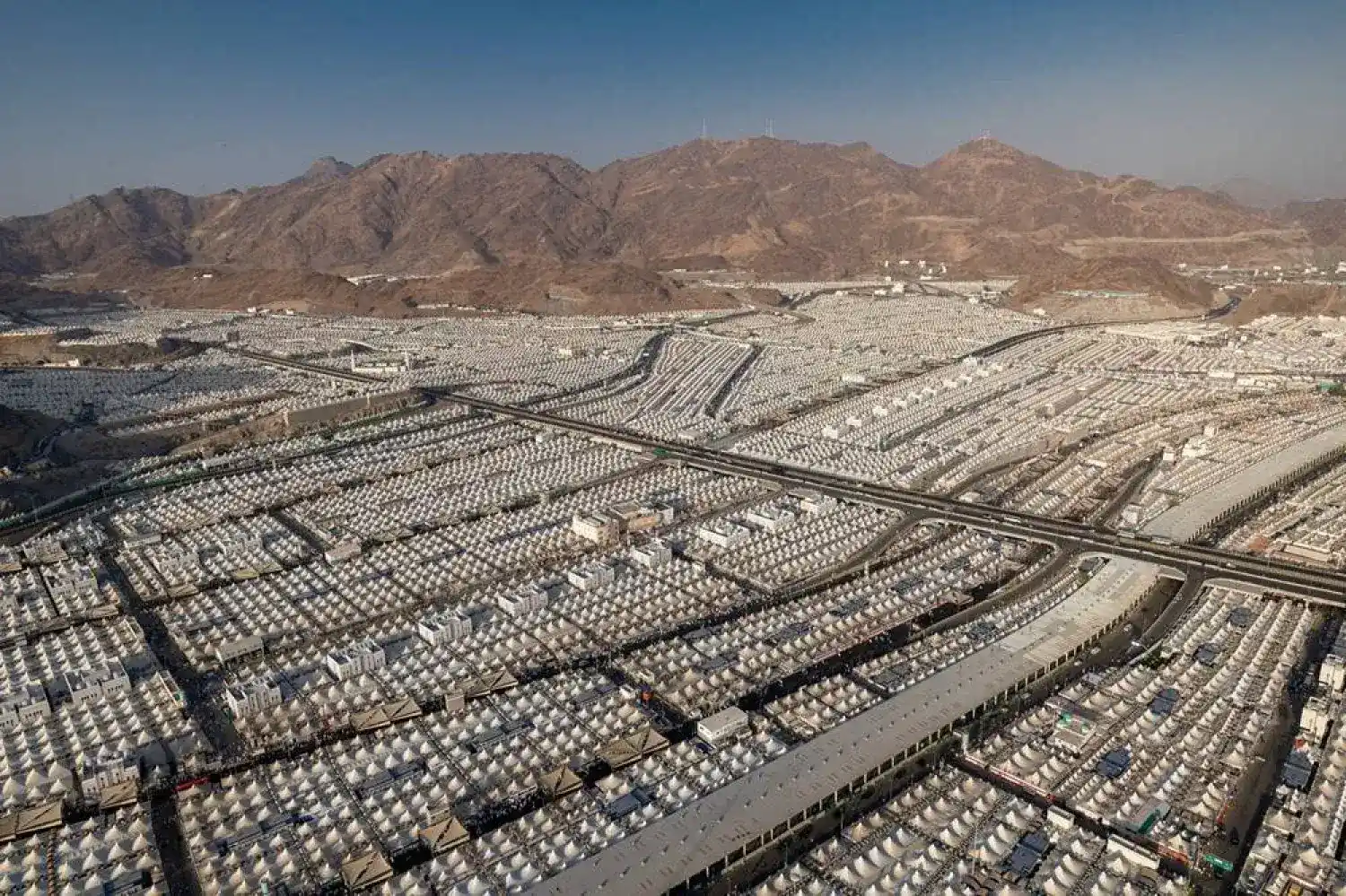
Mina lies between Makkah and Muzdalifah, within the Masha’er district of the Makkah Province. The valley covers roughly 20 square kilometers and sits at an elevation of around 400 meters above sea level. It is bordered by Al-Aziziyah to the west, Muzdalifah to the east, and the Jamarat area at its western edge.
For most of the year, Mina remains largely uninhabited. During Hajj, however, it transforms into a fully functional city with accommodation, transport systems, medical facilities, and security infrastructure.
Religious and Historical Significance of Mina
Mina in the Qur’an and Seerah
Mina is directly referenced in Surah al-Baqarah (2:203), where Allah commands the remembrance of Him during the “numbered days,” referring to the days spent in Mina during Hajj. These verses affirm the permissibility of leaving Mina on the 12th or staying until the 13th of Dhul Hijjah.
Historically, Mina is also the site of the Pledges of Aqabah, where the Ansar pledged allegiance to the Prophet Muhammad ﷺ, marking a turning point that led to the Hijrah and the establishment of Madinah as the center of Islam.
Ibrahim (AS), Sacrifice, and the Origin of Ramy al-Jamarat
Mina is inseparably linked to the trial of Prophet Ibrahim (AS), who was commanded to sacrifice his son Ismail (AS). When Shaytan attempted to dissuade him, Ibrahim (AS) rejected him by throwing stones-an act commemorated today through Ramy al-Jamarat.
The name “Mina” itself is associated with testing, desire, and sacrifice, symbolizing the spiritual purification pilgrims undergo during Hajj.
Mina During Hajj – Key Days and Rituals
8th Dhul Hijjah – Yawm at-Tarwiyah
Pilgrims enter Mina in a state of ihram and spend the day and night in prayer, preparation, and reflection. The five daily prayers are performed here, shortening but not combining them, in accordance with the Sunnah.
10th–13th Dhul Hijjah – Ayyam al-Tashreeq
After standing at Arafat and spending the night in Muzdalifah, pilgrims return to Mina to perform the stoning of the Jamarat, offer sacrifice, shave or shorten the hair, and continue worship. Staying overnight in Mina during these days is an essential obligation of Hajj.
Pilgrims may leave Mina on the 12th (ta‘ajjul) or remain until the 13th (ta’akhkhur), both being valid and rewarded options.
The Jamarat and Stoning Ritual Explained
The three Jamarat-Jamarat al-Sughra, al-Wusta, and al-Kubra (Aqabah)-are stone pillars representing the rejection of evil and temptation. The stoning ritual is performed within the Jamarat Bridge complex, now a multi-level structure designed to handle massive crowds safely.
Each stage of Ramy reinforces discipline, obedience, and submission to Allah’s command.
Mina Tent City – Camps, Facilities, and Capacity
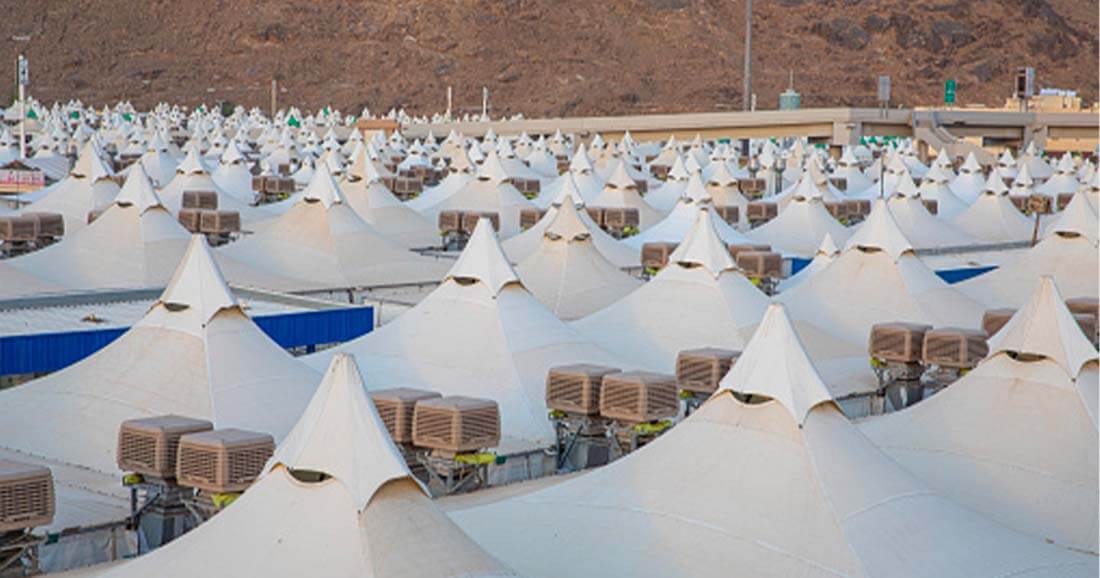
Mina contains over 100,000 permanent, air-conditioned tents, constructed from fire-resistant fiberglass and coated with heat-reflective materials. These tents are grouped by country and Hajj operator, each camp having kitchens, washrooms, and medical access.
Despite modern comforts, space remains limited, reflecting the simplicity and equality central to Hajj. Every pilgrim experiences the same environment, regardless of background or status.
Masjid al-Khayf and Other Landmarks
Masjid al-Khayf, located near Jabal Mina, is one of the most significant mosques in the valley. It is reported that many prophets, including the Prophet Muhammad ﷺ, prayed here during Hajj.
Another notable site is the Cave of al-Mursalat, where Surah al-Mursalat was revealed to the Prophet ﷺ, adding further spiritual depth to Mina’s landscape.
Modern Infrastructure and Crowd Safety
Saudi authorities have continuously upgraded Mina’s infrastructure following past incidents. Today, Mina features:
- Integrated pedestrian pathways
- Advanced surveillance and crowd control
- The Al-Mashaaer Al-Mugaddassah Metro, linking Mina with Arafat and Muzdalifah
- Digitally managed permits through the Nusuk platform
These developments ensure safer, more organized pilgrim movement while preserving the sanctity of the rituals.
Practical Tips for Staying in Mina
Life in Mina requires patience and preparation. Long walking distances, heat, and crowds are part of the experience. Staying hydrated, knowing your camp number, and memorizing key landmarks such as Masjid al-Khayf or Jamarat significantly ease navigation.
Comfortable footwear, light packing, and mental readiness are essential. Mina is as much a spiritual test as it is a physical one.
Visiting Mina Outside Hajj & Travel Services
Outside the Hajj season, Mina remains accessible for visitors and Umrah pilgrims who wish to explore its historical sites. Reaching Mina from Makkah requires reliable transport, especially for families, elderly visitors, or those unfamiliar with local routes.
For smooth and stress-free travel, Al Maqam Transport offers professional Umrah taxi services, Makkah-to-Mina transfers, Ziyarat tours, and intercity travel with experienced drivers who understand pilgrim routes and sacred timings. This ensures comfort, punctuality, and peace of mind throughout your journey.
Conclusion
Mina is not merely a stop during Hajj-it is a living symbol of faith, sacrifice, and unity. From the legacy of Ibrahim (AS) to the collective worship of millions today, Mina continues to shape the spiritual transformation of every pilgrim who enters its valley. Understanding its history, rituals, and practical realities allows pilgrims and visitors to experience Mina with clarity, reverence, and purpose.
FAQs
What is Mina known for in Hajj?
Mina is known for hosting pilgrims during key Hajj days and for the ritual of stoning the Jamarat.
How far is Mina from Masjid al-Haram?
Mina is approximately 6–8 kilometers east of Masjid al-Haram.
How many days do pilgrims stay in Mina?
Pilgrims stay on the 8th and then from the 10th to the 12th or 13th of Dhul Hijjah.
Can Mina be visited outside Hajj?
Yes, Mina can be visited outside Hajj for historical and educational purposes.
What is the best way to travel to Mina from Makkah?
During non-Hajj periods, private taxis and licensed Umrah transport services are the most comfortable option.

Zeeshan is a professional driver and tour guide who has been living and driving in Saudi Arabia for the past 5 years. With deep knowledge of the roads, landmarks, and Ziyarat locations across Makkah, Madinah, Jeddah, and Taif, he helps pilgrims and travelers enjoy safe, smooth, and well-organized journeys. His experience in Umrah transport, city tours, and airport transfers makes him a trusted expert for visitors exploring Saudi Arabia.