


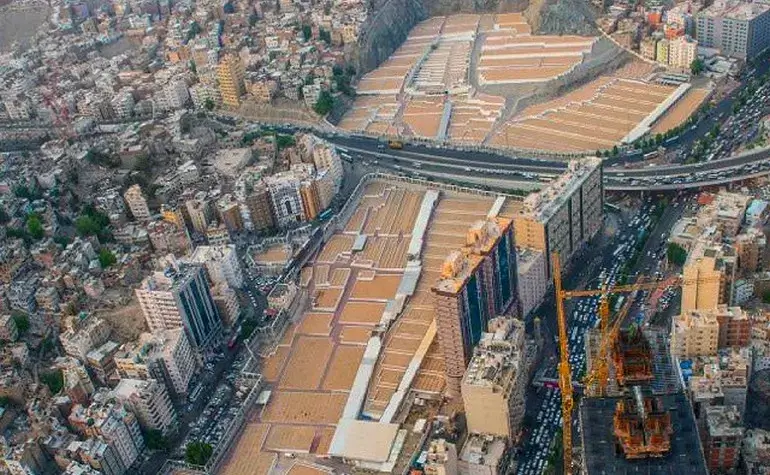
Jannatul Mualla (جنة المعلاة), also known as Jannat al-Mu’alla, Maqbarah al-Mualla, or Al-Hajun Cemetery, is the most important and historic cemetery in Makkah. It is widely regarded as the second most sacred Islamic graveyard after Jannatul Baqi in Madinah. This cemetery holds immense religious, emotional, and historical value, as it is the final resting place of several of Prophet Muhammad ﷺ’s closest family members, companions, and early supporters of Islam.
For pilgrims performing Umrah or Hajj, visiting Jannatul Mualla is a deeply reflective experience, offering a direct connection to the early struggles and sacrifices that shaped Islam in Makkah.
Location and Names of Jannatul Mualla
Jannatul Mualla is located approximately one kilometer north of Masjid al-Haram, near Masjid al-Jinn, at the foot of Mount Al-Hajun. The cemetery lies along Al-Hujoon Street, which today divides it into older and newer sections connected by an underground passage.
Over the centuries, the people of Makkah have referred to it by several names, each reflecting its status and heritage. The name “Jannatul Mualla” means “The Most Exalted Paradise”, while “Maqbarah Quraysh” and “Maqbarah Bani Hashim” highlight the presence of graves belonging to the noble Quraysh tribe and the Prophet’s lineage.
Historical Background of Jannatul Mualla
Pre-Islamic and Early Islamic Period
Jannatul Mualla was already in use as a burial ground before the advent of Islam. Many prominent families of Quraysh buried their dead here, including the ancestors of Prophet Muhammad ﷺ. During the early years of Islam in Makkah, several members of the Prophet’s family were laid to rest in this cemetery, particularly before the Hijrah to Madinah in 622 CE.
Ottoman Era and Architectural Development
During the Ottoman period, Jannatul Mualla featured domed tombs, mausoleums, and marked graves. Historical accounts describe dozens of structures built over the graves of notable figures, including an ornate domed mausoleum over the grave of Sayyidatuna Khadijah (رضي الله عنها). These structures reflected both reverence and the architectural traditions of the time.
Demolition and Modern Era
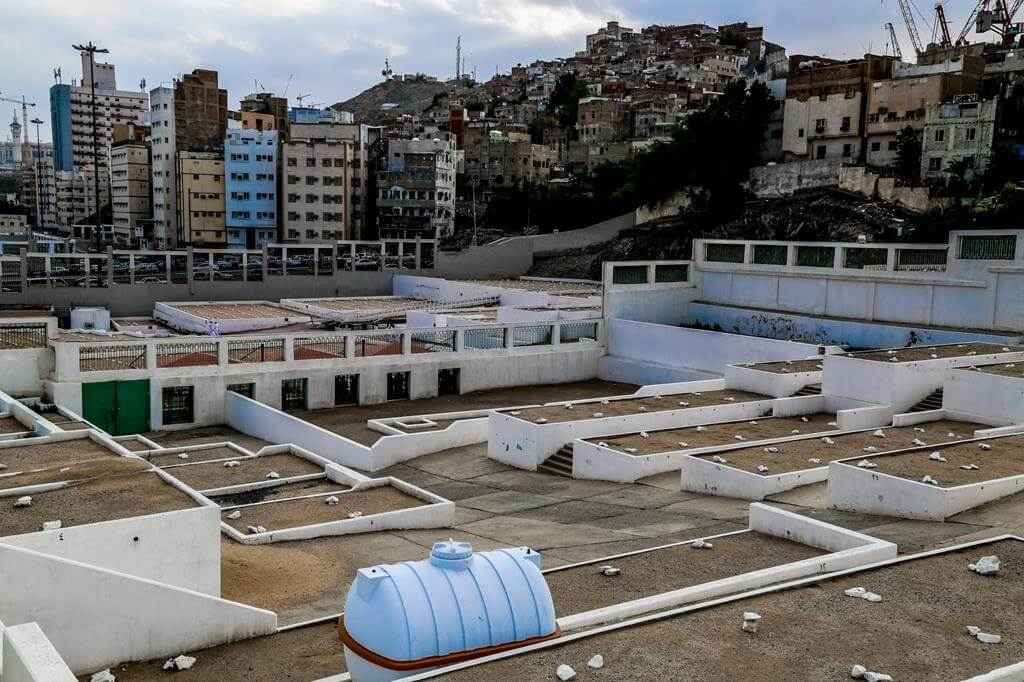
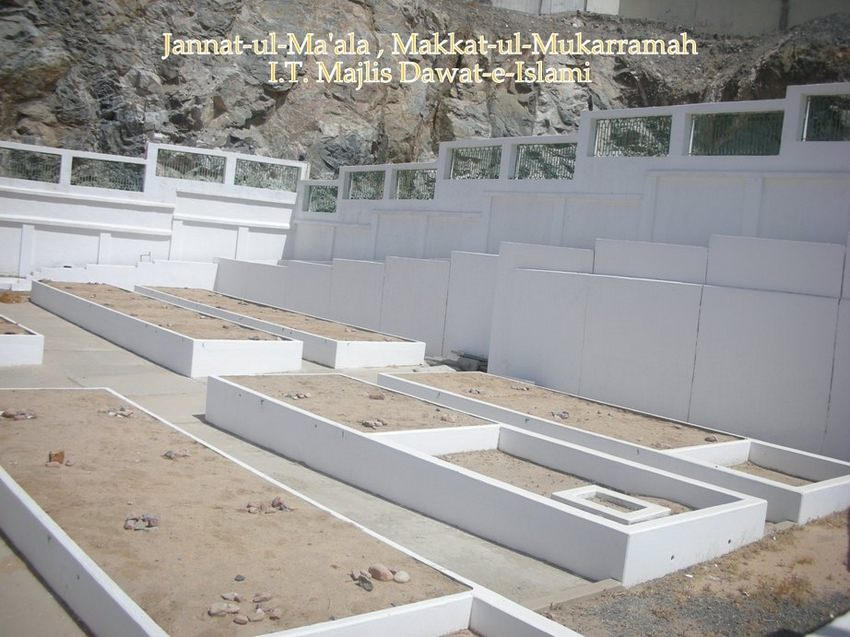
In 1925–1926, following the establishment of Saudi rule in the Hijaz, all tombs and domes in Jannatul Mualla were demolished as part of a broader religious reform. The intention was to prevent practices associated with excessive veneration of graves. Since then, the cemetery has remained simple and unmarked, with graves indicated only by small stones or rock piles.
Religious Significance and Virtues of Jannatul Mualla
Jannatul Mualla is regarded as a blessed cemetery in Islamic tradition. Classical Islamic scholars recorded narrations praising both Jannatul Mualla in Makkah and Jannatul Baqi in Madinah, highlighting their spiritual status. The cemetery is especially revered because it contains the graves of individuals who supported Islam during its most difficult early period.
The valley of Jannatul Mualla is also unique in its alignment, as early historians noted that it directly faces the Kaaba, a distinction not shared by other valleys in Makkah.
Who Is Buried in Jannatul Mualla?
Family Members of Prophet Muhammad ﷺ
The most notable grave in Jannatul Mualla is that of Sayyidatuna Khadijah bint Khuwaylid (رضي الله عنها), the first wife of Prophet Muhammad ﷺ and the first believer in Islam. She supported the Prophet ﷺ emotionally, financially, and spiritually during the earliest days of revelation.
Also buried here are the Prophet’s sons Qasim ibn Muhammad and Abdullah ibn Muhammad, who passed away in early childhood, as well as his grandfather Abdul Muttalib, the respected leader of Quraysh and guardian of the Kaaba. Abu Talib, the Prophet’s uncle and protector during years of persecution, is also buried in this cemetery.
Several of the Prophet’s ancestors, including Qusayy ibn Kilab, Hashim, and Abd Manaf, are also believed to rest here.
Companions, Leaders, and Scholars
Jannatul Mualla also contains the graves of notable companions and historical figures such as Asma bint Abu Bakr, her son Abdullah ibn al-Zubayr, Abd al-Rahman ibn Abu Bakr, and Attab ibn Asid, the first governor of Makkah appointed by the Prophet ﷺ. In addition, many scholars, Tabi‘een, and righteous individuals from later generations are buried within its grounds.
Current Structure and What Visitors See Today
Today, Jannatul Mualla is enclosed by a long white boundary wall. There are no visible names or gravestones, and access to the interior is generally restricted. Most pilgrims offer dua and salutations from outside, paying respect to the entire cemetery rather than specific graves. The simplicity of the site reflects Islamic teachings on humility and equality in death.
How to Visit Jannatul Mualla During Umrah or Hajj
Jannatul Mualla is easily accessible from Masjid al-Haram. Pilgrims can walk from the Haram area, passing landmarks such as Masjid al-Shajarah and Masjid al-Jinn, reaching the cemetery in about 10–15 minutes.
For elderly pilgrims, families, or those traveling in groups, taking a taxi is often more comfortable. Reliable Umrah taxi services in Makkah make it easy to include Jannatul Mualla as part of a broader ziyarat itinerary, along with other sacred sites.
If you are performing Umrah and need trusted local transportation, using a professional Umrah and ziyarat taxi service ensures timely pickups, knowledgeable drivers, and stress-free travel between holy sites in Makkah and Madinah.
Etiquette of Visiting Islamic Graveyards
Visitors should maintain silence, modest dress, and respectful behavior. Supplication for the deceased is encouraged, while actions that resemble worship of graves are avoided in accordance with Islamic teachings. Photography and loud conversation should be minimized to preserve the sanctity of the place.
Conclusion
Jannatul Mualla is not merely a cemetery; it is a living chapter of Islamic history embedded in the heart of Makkah. From the grave of Sayyidatuna Khadijah (رضي الله عنها) to the resting places of the Prophet’s ancestors and companions, this sacred site reflects the sacrifices, patience, and faith that shaped Islam’s earliest years.
For pilgrims visiting Makkah, Jannatul Mualla offers a powerful moment of reflection and remembrance. Whether reached on foot or through a reliable Umrah taxi and ziyarat service, visiting this historic cemetery deepens one’s spiritual connection to the Prophet ﷺ and the foundations of Islam.

Zeeshan is a professional driver and tour guide who has been living and driving in Saudi Arabia for the past 5 years. With deep knowledge of the roads, landmarks, and Ziyarat locations across Makkah, Madinah, Jeddah, and Taif, he helps pilgrims and travelers enjoy safe, smooth, and well-organized journeys. His experience in Umrah transport, city tours, and airport transfers makes him a trusted expert for visitors exploring Saudi Arabia.