


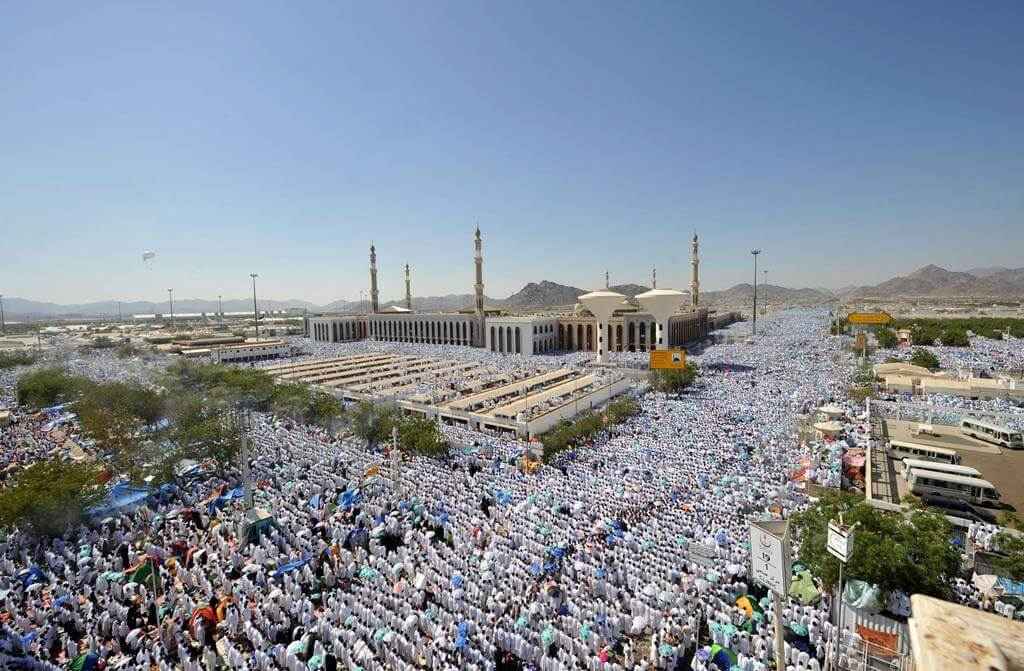
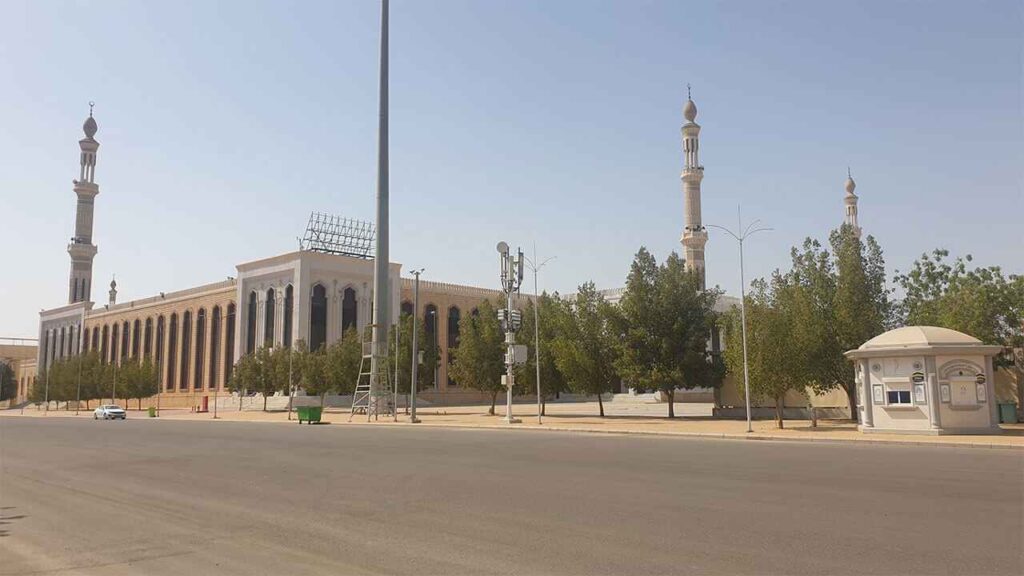
Masjid An Namirah, commonly known as Masjid Namrah or Masjid Nimrah, is one of the most significant mosques associated with the rituals of Hajj. Located on the western edge of the plain of Arafat, near Wadi Uranah, the mosque holds immense historical, religious, and legal importance. It is the place connected to the Farewell Hajj (Hajj al-Wadaʿ) of the Prophet Muhammad ﷺ and the delivery of Khutbat al-Wida, one of the most profound sermons in Islamic history.
What Is Masjid Namrah and Why Is It Important?
Masjid Namrah marks the area where the Prophet Muhammad ﷺ stayed in a tent on the Day of Arafah before delivering his final sermon. After the sun passed its zenith, he moved into Wadi Uranah, addressed the companions, and then led the combined and shortened Dhuhr and Asr prayers. Following this, he proceeded into the plain of Arafat to perform Wuquf, the central pillar of Hajj.
The Farewell Sermon delivered here emphasized foundational Islamic principles such as human equality, the sanctity of life and property, justice, women’s rights, and adherence to the Qur’an and Sunnah. Because of this, Masjid Namrah is not only a physical landmark but also a symbol of Islam’s universal message.
Location of Masjid Namrah and the Arafat Boundary
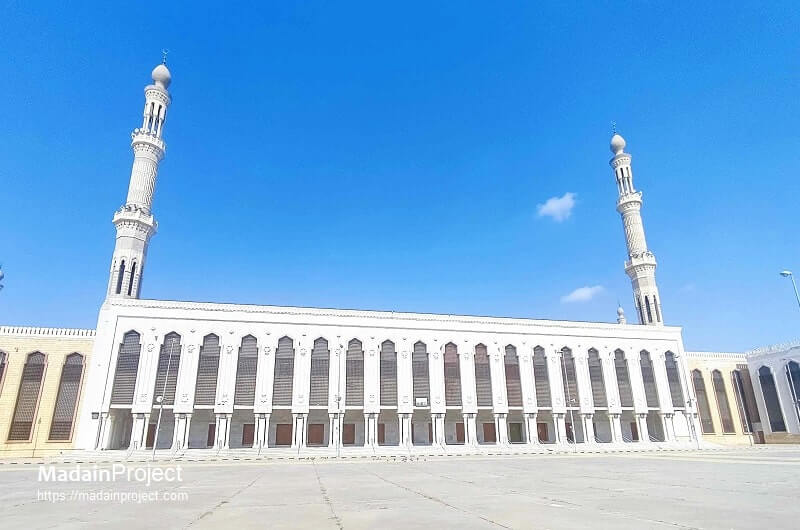
Masjid Namrah is situated approximately 22 kilometers east of Masjid al-Haram. Its unique location creates an important fiqh distinction that every pilgrim must understand.
Wadi Uranah and Its Fiqh Ruling
Wadi Uranah is outside the legal boundary of Arafat. The Prophet ﷺ explicitly stated that Wuquf is valid throughout Arafat except the middle of Uranah. Since Masjid Namrah was built at the edge of this valley, later expansions caused the mosque to extend into two different legal zones.
Which Part of Masjid Namrah Is Inside Arafat?
- The front section of the mosque (towards Makkah) lies in Wadi Uranah and is outside Arafat.
- The rear section of the mosque lies inside the boundary of Arafat, where Wuquf is valid.
Clear signboards inside the mosque mark these boundaries. Remaining only in the front section from midday until sunset does not fulfill the requirement of Wuquf and can invalidate the Hajj.
Wuquf at Arafat and Masjid Namrah Rules
Wuquf on the Day of Arafah, from after zawal (midday) until sunset, is the most essential act of Hajj. Masjid Namrah is often misunderstood as being entirely within Arafat, which is not the case.
Where to Sit to Ensure Valid Wuquf
Pilgrims attending the khutbah inside Masjid Namrah must ensure they are seated in the rear section marked as within Arafat. If they pray in the front section, they must move immediately after the prayer into the rear area or the open plains of Arafat to complete their Wuquf.
Wuquf is valid anywhere inside Arafat, whether inside the mosque, in tents, or in the open plain.
Common Mistakes Pilgrims Must Avoid
A common error is remaining inside the front portion of Masjid Namrah for the entire afternoon. This area does not count as Arafat. Another mistake is leaving Arafat before sunset, which contradicts the Sunnah and scholarly consensus.
What Happens at Masjid Namrah on the Day of Arafah
On the 9th of Dhul-Hijjah, the Imam delivers the Khutbah of Arafah, which is broadcast worldwide. This is followed by Dhuhr and Asr prayers combined and shortened, with two rak‘ahs each and no voluntary prayers between them.
Pilgrims then devote themselves to duʿa, dhikr, and repentance until sunset, which represents the spiritual peak of Hajj.
History and Architectural Development of Masjid Namrah
Masjid Namrah was first constructed in the second Islamic century and underwent major expansions during the Abbasid, Mamluk, Ottoman, and Saudi eras. The most extensive expansion occurred during the Saudi period, transforming it into one of the largest mosques in the Makkah region.
Today, the mosque spans over 110,000 square meters, with additional shaded areas, six 60-meter-high minarets, three domes, and 64 doors. It can accommodate approximately 350,000 worshippers and includes advanced cooling systems and satellite broadcasting facilities for the Hajj sermon.
Visiting Masjid Namrah Outside Hajj
Masjid Namrah is generally closed throughout the year and opens specifically on the Day of Arafah. However, pilgrims and visitors can still view the mosque externally as part of a Makkah ziyarah tour, gaining insight into its location and historical role in Hajj.
Transportation to Masjid Namrah During Hajj and Umrah
Reaching Masjid Namrah during Hajj requires careful planning due to road closures and crowd control. Many pilgrims travel via official Hajj transport systems or the Al-Mashaaer Al-Mugaddassah Metro.
For visitors performing Umrah or ziyarah outside Hajj, arranging private transportation is the most convenient option. Reliable Umrah taxi services provide comfortable transfers from Makkah hotels to Arafat, Mina, Muzdalifah, and other holy sites, ensuring punctual arrival and stress-free travel—especially for families, elderly pilgrims, and groups. Professional drivers familiar with Hajj routes and religious landmarks can make a significant difference in your spiritual journey.
FAQs
What is the significance of Masjid Namrah?
It is associated with the Farewell Sermon and the combined Dhuhr and Asr prayers on the Day of Arafah.
Which part of Masjid Namrah is outside Arafat?
The front section facing Makkah lies in Wadi Uranah and is outside Arafat.
Why is Masjid Namrah open only once a year?
It primarily functions as the site of the Arafah khutbah and prayers during Hajj.
Is Wuquf valid inside Masjid Namrah?
Yes, but only in the rear section that lies within the boundary of Arafat.
Conclusion
Masjid An Namirah is far more than a large mosque near Arafat; it is a cornerstone of Hajj history and ritual precision. Understanding its location, boundary distinctions, and Wuquf rules is essential for every pilgrim seeking a valid and accepted Hajj. By respecting these fiqh principles, planning movements carefully, and using reliable transportation services when needed, pilgrims can focus fully on the spiritual essence of the Day of Arafah – the heart of Hajj and a moment unmatched in reward and mercy.

Zeeshan is a professional driver and tour guide who has been living and driving in Saudi Arabia for the past 5 years. With deep knowledge of the roads, landmarks, and Ziyarat locations across Makkah, Madinah, Jeddah, and Taif, he helps pilgrims and travelers enjoy safe, smooth, and well-organized journeys. His experience in Umrah transport, city tours, and airport transfers makes him a trusted expert for visitors exploring Saudi Arabia.