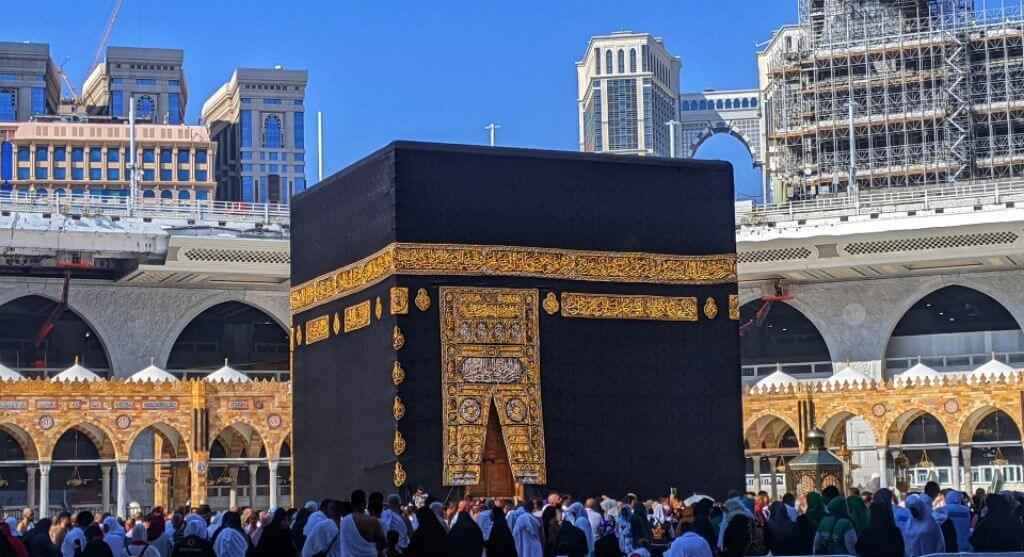



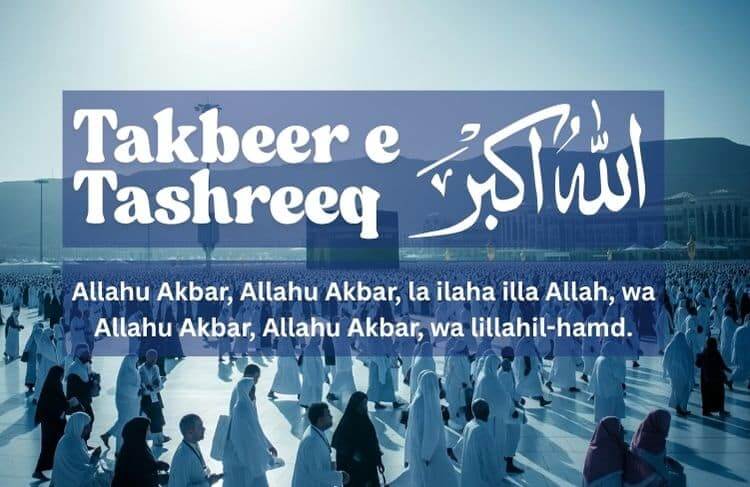
Takbir al-Tashreeq is a sacred form of dhikr prescribed during one of the most spiritually intense periods of the Islamic calendar: the days surrounding Eid al-Adha. It is a verbal proclamation of Allah’s greatness, recited consistently after obligatory prayers to reinforce remembrance, gratitude, and submission during the Days of Tashreeq.
This takbir is not limited to pilgrims performing Hajj; it applies equally to Muslims across the world, whether praying in the Haram, a local masjid, or at home. Its continuity and timing reflect Islam’s emphasis on structured remembrance tied to sacred time.
Meaning and Significance of Takbir al-Tashreeq
Takbir al-Tashreeq commemorates the legacy of Prophet Ibrahim (AS), whose unwavering obedience to Allah defines the spirit of Eid al-Adha. These days are divinely designated for eating, gratitude, and remembrance, making verbal glorification an essential act of worship.
By repeating the takbir after each obligatory prayer, believers affirm tawheed (oneness of Allah), reinforce humility, and maintain spiritual awareness during days that may otherwise be filled with worldly activity.
Exact Words of Takbir al-Tashreeq
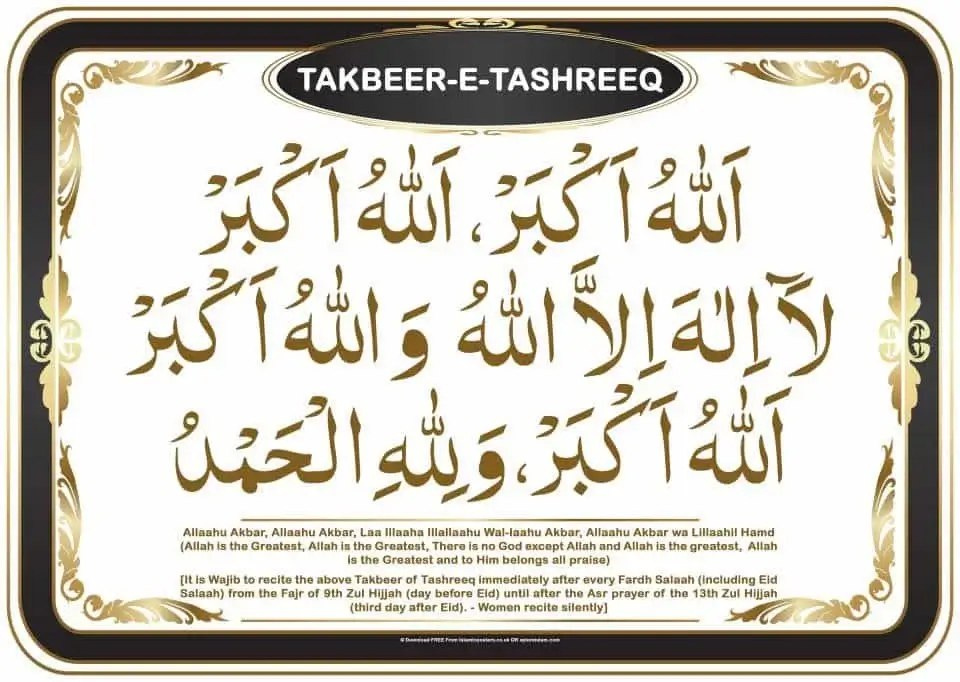
The most widely accepted wording of Takbir al-Tashreeq is:
اللّٰهُ أَكْبَرُ، اللّٰهُ أَكْبَرُ، لَا إِلٰهَ إِلَّا اللّٰهُ، وَاللّٰهُ أَكْبَرُ، اللّٰهُ أَكْبَرُ، وَلِلّٰهِ الْحَمْدُ
English Translation:
Allah is the Greatest, Allah is the Greatest. There is no deity except Allah, and Allah is the Greatest. Allah is the Greatest, and to Allah belongs all praise.
Some scholarly traditions permit beginning with “Allahu Akbar” three times instead of two. Both forms are valid and rooted in authentic scholarly practice.
When Takbir al-Tashreeq Begins and Ends
The Takbir al-Tashreeq follows a fixed and precise timeline every year, regardless of location.
- It begins after the Fajr prayer on the 9th of Dhul Hijjah, known as the Day of Arafah.
- It ends after the Asr prayer on the 13th of Dhul Hijjah, the final Day of Tashreeq.
Within this period, the takbir is recited after 23 obligatory (fard) prayers in total. The consistency of this schedule reinforces discipline and continuity in worship during sacred time.
How to Recite Takbir al-Tashreeq Correctly
Takbir al-Tashreeq is recited immediately after completing each fard prayer, following the tasleem and before engaging in conversation or leaving one’s place of prayer.
The minimum requirement is to recite it once, though repeating it additional times is permissible and virtuous.
Men recite the takbir audibly, without shouting, while women recite it softly to themselves. This distinction preserves modesty while ensuring participation in remembrance.
If a person joins a congregational prayer late, the takbir is recited only after completing the missed rak‘ahs. If a fard prayer during these days is made up later within the same period, many scholars still recommend reciting the takbir after completion.
Rulings and Scholarly Perspectives
In the Hanafi school of thought, Takbir al-Tashreeq is considered wajib for every adult Muslim, male and female, whether praying alone or in congregation. Other schools regard it as a confirmed Sunnah, emphasizing its strong importance without classifying it as obligatory.
Despite juristic differences in legal classification, scholars unanimously agree on its spiritual significance and regular observance during these days.
Difference Between Takbir al-Tashreeq and General Takbir
Takbir al-Tashreeq is a restricted takbir, tied specifically to fard prayers during fixed days.
In contrast, general (mutlaq) takbir is recommended from the beginning of Dhul Hijjah until sunset on the 13th, at any time and in any place. Muslims are encouraged to glorify Allah while walking, traveling, working, or resting, making remembrance a constant companion during these blessed days.
Practical Guidance for Travelers During Dhul Hijjah
Many Muslims travel frequently during Dhul Hijjah, whether for Umrah, Hajj transit, or visiting Makkah and Madinah around Eid al-Adha. Maintaining prayer discipline and remembrance while traveling requires planning and reliable mobility.
Having dependable transportation allows worshippers to reach masajid on time, perform prayers calmly, and observe Takbir al-Tashreeq without stress. For pilgrims and visitors moving between Makkah, Madinah, Jeddah, or other holy sites, professional Umrah and taxi transport services play a practical role in supporting religious commitments during these sacred days.
Reliable drivers, punctual transfers, and comfortable travel help ensure that worship remains the priority, even while on the road.
FAQs
How exactly is Takbir al-Tashreeq pronounced in Arabic?
It is pronounced clearly and calmly, following the traditional Arabic wording, without rushing or exaggeration.
Is Takbir al-Tashreeq wajib or recommended?
According to the Hanafi school, it is wajib. Other schools regard it as a strongly emphasized Sunnah.
Does it apply to women as well?
Yes, it applies equally to men and women, with the only difference being volume of recitation.
Does the Tashreeq period change every year?
The dates shift according to the lunar calendar, but the sequence always remains from 9–13 Dhul Hijjah.
Conclusion
Takbir al-Tashreeq is a structured, powerful act of remembrance that anchors the believer’s heart during the most sacred days of the Islamic year. By observing its correct wording, timing, and rulings, Muslims participate in a collective expression of gratitude and devotion that transcends geography and circumstance.
Whether praying at home, in the masjid, or while traveling for Umrah or Eid, maintaining this takbir ensures that Allah’s remembrance remains central during the Days of Tashreeq. Its simplicity, consistency, and depth reflect the beauty of Islamic worship – where even a short phrase carries immense spiritual weight.

Zeeshan is a professional driver and tour guide who has been living and driving in Saudi Arabia for the past 5 years. With deep knowledge of the roads, landmarks, and Ziyarat locations across Makkah, Madinah, Jeddah, and Taif, he helps pilgrims and travelers enjoy safe, smooth, and well-organized journeys. His experience in Umrah transport, city tours, and airport transfers makes him a trusted expert for visitors exploring Saudi Arabia.