



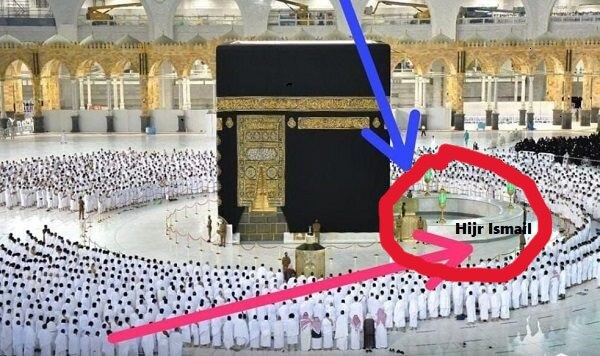
Hijr Ismail, also known as the Hateem, is one of the most spiritually significant areas in Masjid al-Haram. Although it lies outside the present cubic structure of the Kaaba, Islamic scholarship unanimously agrees that Hijr Ismail is an integral part of the Kaaba itself. This unique status gives it exceptional religious merit, making it a focal point for pilgrims performing Umrah and Hajj.
Understanding Hijr Ismail is essential for correct Tawaf, valid worship, and meaningful supplication in Makkah.
What Is Hijr Ismail and Where Is It Located
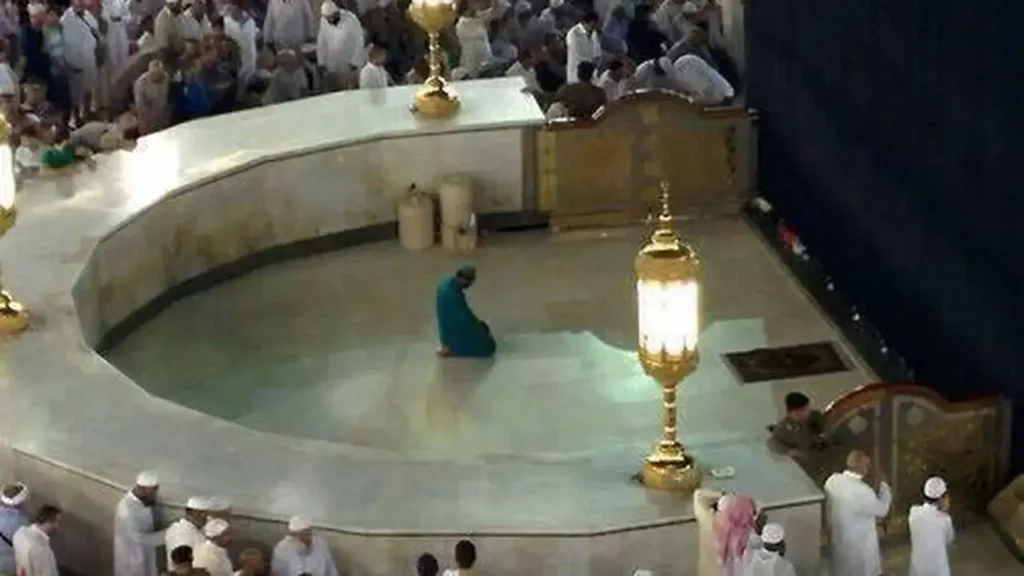
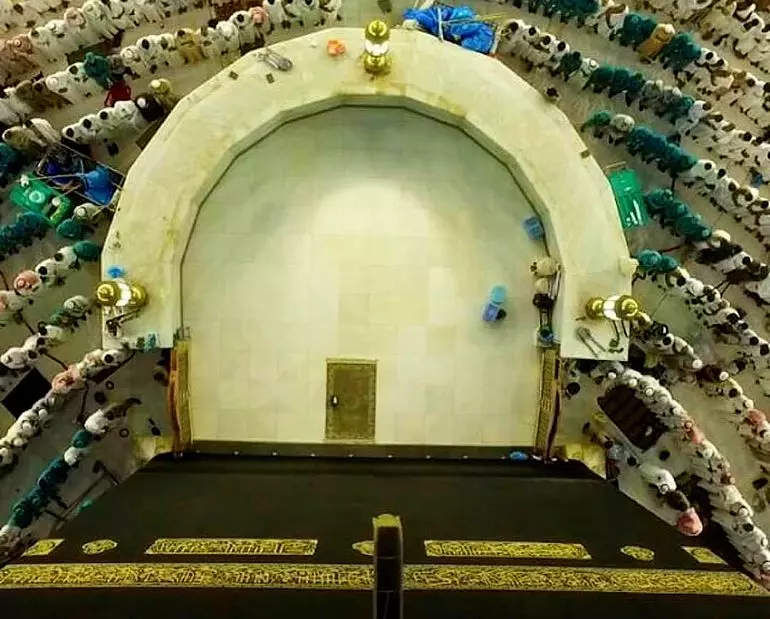
Hijr Ismail is the semi-circular, low marble enclosure attached to the north-western side of the Kaaba, situated between the Shami corner and the Iraqi corner. It lies directly beneath the Mizab al-Rahmah, the golden waterspout of the Kaaba.
The space enclosed between this curved wall and the Kaaba was originally part of the Kaaba’s structure and foundation.
Why Hijr Ismail Is Considered Part of the Kaaba
The Prophet Muhammad ﷺ explicitly clarified the status of Hijr Ismail. When Aisha (رضي الله عنها) wished to pray inside the Kaaba, the Prophet ﷺ guided her into the Hijr and said that praying there is equivalent to praying inside the Kaaba, because it is part of it.
This narration forms the legal and spiritual basis for all rulings related to the Hijr, including Tawaf validity and prayer reward.
Historical Background of Hijr Ismail
Construction by Prophet Ibrahim and Ismail
The origins of Hijr Ismail trace back to Prophet Ibrahim (عليه السلام) and his son Prophet Ismail (عليه السلام). After constructing the Kaaba, Ibrahim is reported to have built a stone enclosure adjacent to it to shelter Ismail and his family, as well as livestock. This enclosure marked part of the original sacred boundary.
Quraysh Reconstruction and Exclusion of the Hijr
Approximately five years before the prophethood of Muhammad ﷺ, the Quraysh rebuilt the Kaaba. They resolved to use only lawfully earned funds, but their resources proved insufficient to rebuild it fully on Ibrahim’s foundations. As a result, they left part of the northern section outside, marking it with a low wall. This excluded portion later became known as Hijr Ismail.
The Prophet Muhammad ﷺ and the Decision Not to Rebuild
After the conquest of Makkah, the Prophet ﷺ expressed his wish to rebuild the Kaaba on its original foundations, including Hijr Ismail inside it. However, he refrained out of mercy and wisdom, fearing confusion among people newly emerged from pre-Islamic customs.
Later Reconstructions and Preservation
The Kaaba and Hijr Ismail underwent several restorations throughout Islamic history, including during the eras of Abdullah ibn al-Zubayr, the Umayyads, Abbasids, Mamluks, Ottomans, and the Saudi era. While materials and finishes changed, the boundary and sacred status of Hijr Ismail remained preserved.
Names of Hijr Ismail and Their Meanings
Hijr Ismail is known by several names, each reflecting its meaning:
- Hijr Ismail refers to its association with Prophet Ismail.
- Al-Hijr means “the stone,” signifying its inseparable connection to the Kaaba.
- Al-Hateem describes the section appearing “separated” from the main structure.
- Al-Jadar was preferred by some companions to avoid pre-Islamic terminology.
Physical Description and Dimensions
Hijr Ismail is enclosed by a curved marble wall approximately 1.2 to 1.3 meters high and about 1.5 meters wide. The interior space between the Kaaba wall and the Hijr measures roughly 8 to 12 meters, allowing entry from both ends.
The marble flooring matches the Mataf area, reflecting continuity with the Kaaba’s sanctity.
Religious Virtue and Rulings of Praying in Hijr Ismail
Praying inside Hijr Ismail carries the same reward as praying inside the Kaaba. Scholars emphasize offering voluntary prayers (nafl) inside the Hijr, while obligatory prayers are preferably performed in congregation outside, following the prophetic practice.
Supplication inside the Hijr, especially beneath the Mizab al-Rahmah, has been praised by early scholars for its spiritual virtue.
Tawaf Rules Related to Hijr Ismail
Because Hijr Ismail is part of the Kaaba, Tawaf must be performed outside it. Entering the Hijr during Tawaf invalidates that circuit, requiring the pilgrim to repeat that round.
This ruling is essential knowledge for anyone performing Umrah or Hajj.
Mizab al-Rahmah and the Virtue of Supplication
The Mizab al-Rahmah drains rainwater from the Kaaba directly into Hijr Ismail. Classical scholars recorded reports highlighting the virtue of standing beneath it for dua, describing it as a place of mercy and acceptance.
Who Is Buried in the Hateem
According to early historians such as Ibn Ishaq and al-Azraqi, Prophet Ismail (عليه السلام) and his mother Hajar are believed to be buried within Hijr Ismail, between the Mizab and the Kaaba wall. While multiple scholarly opinions exist, this belief contributes to the area’s profound reverence.
How to Enter Hijr Ismail and Pray Step by Step
Pilgrims enter calmly when permitted by Haram authorities. Once inside, it is recommended to pray two short rak‘ahs, followed by sincere supplication. Due to limited space and high demand, staying briefly and allowing others access reflects proper Islamic etiquette.
Best Times to Pray and Access Information (Current Practice)
Access to Hijr Ismail is regulated to manage crowds. Entry times may differ for men and women, and waiting queues are often organized near designated gates. Pilgrims should always follow on-site guidance, as procedures can change depending on crowd conditions.
Etiquette and Duas Inside Hijr Ismail
Inside Hijr Ismail, pilgrims should avoid pushing, raise their hands in humility, and focus on personal supplication. If the area is crowded, even brief remembrance and dua are sufficient.
Practical Umrah & Hajj Planning Tips
Reaching Masjid al-Haram comfortably and on time plays a major role in a peaceful worship experience. Many pilgrims prefer pre-booked Umrah taxi services for reliable transfers between Makkah, Madinah, Jeddah, and Makkah hotels, especially during peak hours. Choosing experienced drivers familiar with Haram access routes can help pilgrims focus entirely on worship without logistical stress.
Conclusion
Hijr Ismail is not merely a historical structure beside the Kaaba; it is a living part of the House of Allah, rich in prophetic history, legal significance, and spiritual reward. Understanding its status ensures correct Tawaf, deeper reverence, and more meaningful prayer. For every pilgrim, knowledge of Hijr Ismail transforms a visit to Masjid al-Haram from routine movement into conscious worship rooted in prophetic guidance.

Zeeshan is a professional driver and tour guide who has been living and driving in Saudi Arabia for the past 5 years. With deep knowledge of the roads, landmarks, and Ziyarat locations across Makkah, Madinah, Jeddah, and Taif, he helps pilgrims and travelers enjoy safe, smooth, and well-organized journeys. His experience in Umrah transport, city tours, and airport transfers makes him a trusted expert for visitors exploring Saudi Arabia.