


What Is the Rawdah in Masjid al-Nabawi?
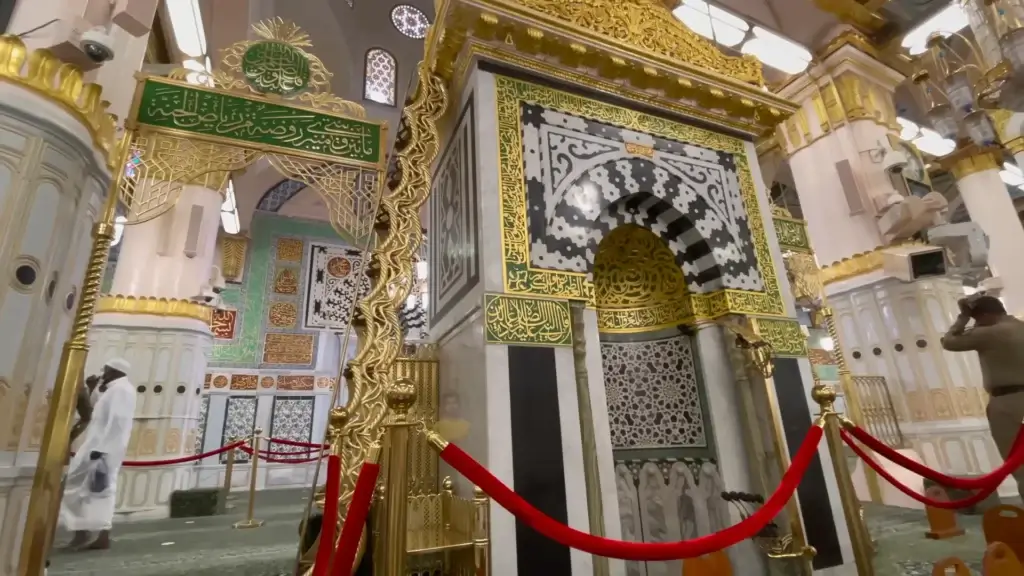
The Rawdah ash-Sharifah, also known as Riyadh ul Jannah, is one of the most sacred places in Islam. It is a specific area inside Masjid al-Nabawi in Madinah, located between the Prophet Muhammad ﷺ’s blessed chamber (his burial place) and his pulpit (minbar).
This area holds unmatched spiritual value and is regarded as one of the most virtuous places on earth for prayer, supplication, remembrance of Allah, and sending salutations upon the Prophet ﷺ.
Why the Rawdah Is Called a Garden from Paradise
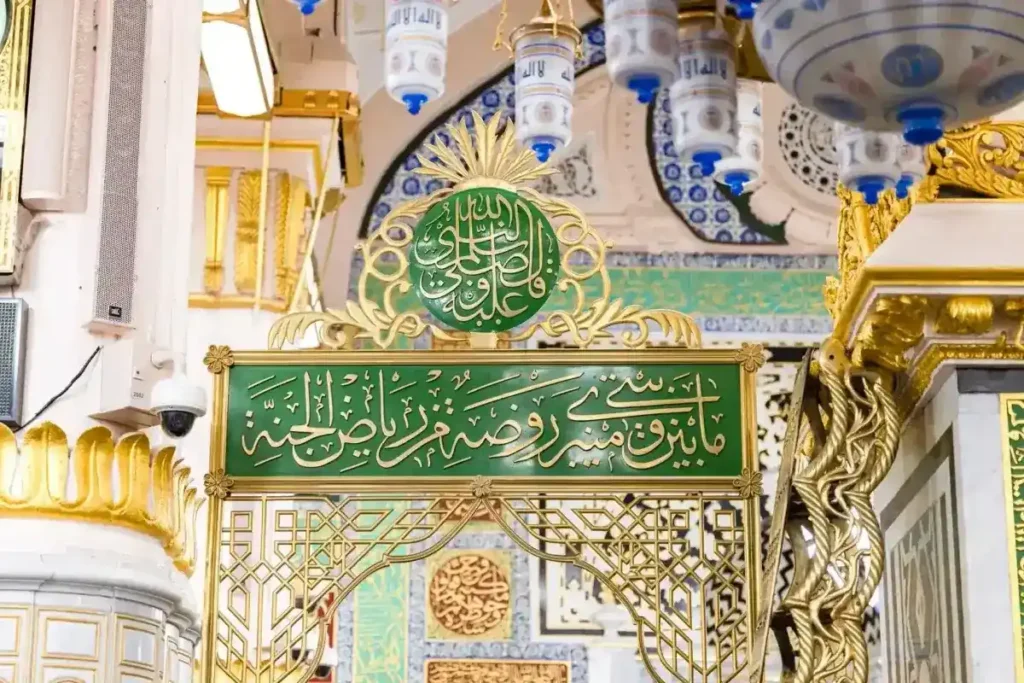
The significance of the Rawdah is established by authentic hadith. The Prophet Muhammad ﷺ said:
“Between my house and my pulpit is a garden from the gardens of Paradise.”
(Sahih al-Bukhari)
Scholars have explained this in different ways. Some hold a literal understanding, stating that this land is truly from Paradise and will return there on the Day of Judgment. Others explain it metaphorically, meaning that worship performed here leads to Paradise due to its immense reward and spiritual tranquility. Both interpretations agree on its exceptional status.
Location, Boundaries, and Dimensions of the Rawdah
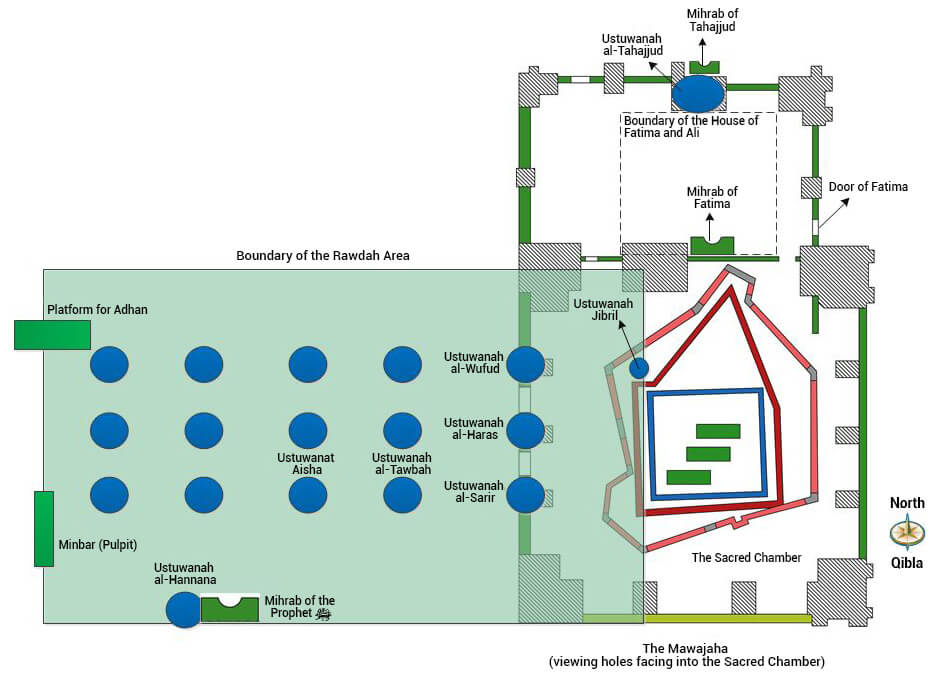
Today, the Rawdah is marked according to the most widely accepted scholarly opinion:
the area between the Prophet’s ﷺ pulpit and his blessed chamber.
It is visually distinguished by:
- Green carpets, unlike the red and beige carpets elsewhere in the mosque
- White marble pillars with gold inscriptions
In terms of size, the Rawdah is rectangular, measuring approximately:
- 22 meters in length (accessible portion)
- 15 meters in width
- Total accessible area of about 400 square meters
Part of the Rawdah lies within the Sacred Chamber behind the golden enclosure and is not accessible to visitors.
Recommended: Masjid Al Nabawi Map
Sacred Pillars, Minbar, and Mihrab Inside the Rawdah
Within the Rawdah are six historically significant pillars, each marking important events from the Prophet’s ﷺ life. These pillars were originally made from palm trunks and are now clearly marked.
Among the most notable are:
- Pillar of Repentance (Abu Lubabah)
- Pillar of Aisha, known as the most virtuous spot for prayer
- Pillar of the Guard (Ali ibn Abi Talib)
- Pillar of Delegations
The Prophet’s minbar, from which he addressed the companions, and the Prophet’s mihrab, where he led prayer, are also within the Rawdah, adding to its deep historical and spiritual meaning.
Scholarly Views on the Boundaries of the Rawdah
Islamic scholars historically discussed the exact extent of the Rawdah, based on different hadith narrations.
The most accepted view limits it to between the Prophet’s ﷺ chamber and his pulpit, which is how it is marked today. Other scholarly opinions extend the Rawdah to include:
- All the houses of the Prophet ﷺ
- Or even the area reaching his musalla (Eid prayer place)
Despite these differences, scholars agree that the Prophet ﷺ was describing one blessed garden, emphasizing its virtue rather than encouraging dispute over measurements.
How to Visit the Rawdah in Madinah
Due to its importance and limited space, visiting the Rawdah now requires official permission.
Rawdah Permit via Nusuk App
Access is strictly regulated through the Nusuk app, which is the official platform for Rawdah bookings.
The process involves:
- Creating a Nusuk account
- Selecting “Praying in the Noble Rawdah”
- Choosing gender, date, and available time slot
- Presenting the QR code permit at the mosque
Permits are usually limited to once every 365 days per person, and availability can be very competitive during peak Umrah seasons.
Entry Timings and Gender-Specific Access
Men and women have separate visiting windows and designated entry gates. These timings can change, so visitors must follow current mosque instructions and staff guidance.
Arriving 45–60 minutes early is strongly advised, as queues form well before the scheduled slot.
What to Do Inside the Rawdah
Once inside, visitors are encouraged to focus on simple, sincere acts of worship:
- Praying two rak‘ahs of nafl
- Making heartfelt duʿā
- Sending abundant salawat upon the Prophet ﷺ
- Seeking forgiveness and remembering Allah
Because time inside the Rawdah is limited, it is best to remain calm, avoid crowding, and allow others the opportunity to pray.
Rules of Conduct and Dress Code
The Rawdah is part of the Prophet’s Mosque, and proper etiquette is essential. Visitors should:
- Dress modestly (women with hijab)
- Avoid pushing or raising voices
- Be patient and respectful, especially toward the elderly
- Follow mosque staff instructions without argument
Maintaining good character is itself a form of worship in this sacred place.
Best Time to Visit the Rawdah
The least crowded periods are generally outside Ramadan, Hajj season, and school holidays. Late-night and early-morning slots are often calmer, but availability depends entirely on Nusuk permit releases.
Who Can Visit the Rawdah?
Only Muslims are permitted to enter the Rawdah and the inner areas of Masjid al-Nabawi. Non-Muslims may access certain outer courtyards but not the Rawdah or the Prophet’s Mosque prayer areas.
Planning Your Rawdah and Madinah Ziyarat Smoothly
A Rawdah visit is often part of a broader Umrah or Madinah ziyarat plan, which includes hotel transfers, mosque visits, and time-sensitive appointments. Many pilgrims prefer reliable local transport services to ensure punctual arrival for Nusuk permits, especially for families and elderly travelers.
For visitors performing Umrah and Madinah ziyarat, arranging professional taxi and transport services can greatly reduce stress. Trusted services that operate across Madinah, Makkah, and major Saudi cities help pilgrims focus on worship rather than logistics, particularly when moving between hotels, Masjid al-Nabawi, and other historical sites.
FAQs
What is the Rawdah in Madinah?
It is the blessed area between the Prophet Muhammad ﷺ’s chamber and pulpit inside Masjid al-Nabawi, described as a garden from Paradise.
Who is buried near the Rawdah?
The Prophet Muhammad ﷺ is buried in the Sacred Chamber adjacent to the Rawdah, along with Abu Bakr and Umar رضي الله عنهما.
How do I book Rawdah Madinah?
Booking is done only through the official Nusuk app using a timed permit.
What should I do inside the Rawdah?
Pray briefly, make duʿā, send salawat, and maintain calm and respectful conduct.
Conclusion
The Rawdah ash-Sharifah is one of the most spiritually powerful places in Islam, combining deep history, authentic prophetic tradition, and unmatched virtue. Visiting it is a rare and profound blessing that requires patience, preparation, and proper etiquette. By understanding its significance, booking correctly through Nusuk, and planning your Madinah journey carefully, your Rawdah visit can become one of the most meaningful moments of your Umrah or ziyarat—an experience that stays with the heart long after leaving Madinah.

Zeeshan is a professional driver and tour guide who has been living and driving in Saudi Arabia for the past 5 years. With deep knowledge of the roads, landmarks, and Ziyarat locations across Makkah, Madinah, Jeddah, and Taif, he helps pilgrims and travelers enjoy safe, smooth, and well-organized journeys. His experience in Umrah transport, city tours, and airport transfers makes him a trusted expert for visitors exploring Saudi Arabia.